Black Beauty by Anna Sewell: Free EPUB, AZW3 & KEPUB Download
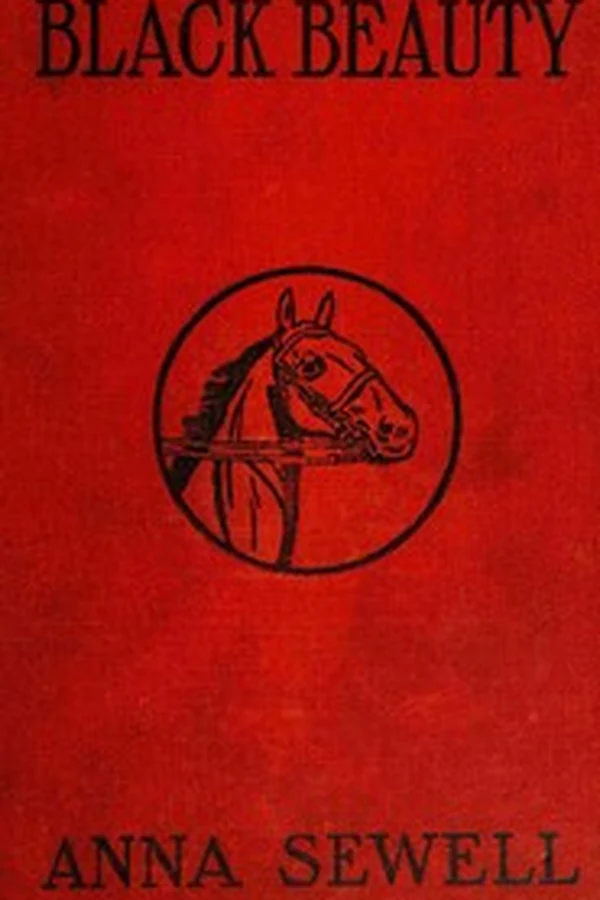
Black Beauty
📖 Click to Read the Opening Pages Online Preview
Chapter 1: My Early Home
The first place that I can well remember was a large pleasant meadow with a pond of clear water in it. Some shady trees leaned over it, and rushes and water-lilies grew at the deep end. Over the hedge on one side we looked into a plowed field, and on the other we looked over a gate at our master’s house, which stood by the roadside; at the top of the meadow was a grove of fir trees, and at the bottom a running brook overhung by a steep bank.
While I was young I lived upon my mother’s milk, as I could not eat grass. In the daytime I ran by her side, and at night I lay down close by her. When it was hot we used to stand by the pond in the shade of the trees, and when it was cold we had a nice warm shed near the grove.
As soon as I was old enough to eat grass my mother used to go out to work in the daytime, and come back in the evening.
The meadow, the mother and the master are all in these first three paragraphs. Download the complete novel to read on.
Download Full EPUB1877
~63,000 words (estimated)
Approx. 3.5 hours
Standalone
England, 1840s–1870s
49 chapters in four parts
EPUB · AZW3 · KEPUB
0.39 MB (EPUB) · 0.52 MB (AZW3) · 0.41 MB (KEPUB)
Public domain in the United States
Project Gutenberg #271
Black Beauty is the autobiography of a horse, told in his own voice: a well-bred black colt born on an English farm, broken in gently, sold from one owner to the next, and finally worked to collapse on the streets of London before a late rescue. Anna Sewell wrote it in the last years of her life, in constant pain, and it appeared in November 1877, five months before she died. It is a children’s book that was not written for children. Its subject is the working horse of Victorian England, and its argument is that the people who use animals owe them understanding as well as food.
Structurally the novel is a chain of transactions — sales, hires, loans — each new master a new test of what the animal can be made to bear: from Squire Gordon’s Birtwick Park, alongside Ginger and Merrylegs, through a hunting field, a peer’s carriage with its bearing rein hauled tight and a job-master’s shafts, to Jerry Barker’s London cab rank. Sewell keeps the plot simple and the observation exact: the cruelties are described from the height of the horse’s shoulders, so that a fashionable habit becomes a physical fact the reader cannot dismiss. See Wikipedia’s article on Black Beauty for its publication history. The text is available via Project Gutenberg #271.
Black Beauty by Anna Sewell: Summary, Characters & Themes
This summary and analysis of Black Beauty follows the novel through all forty-nine chapters, from the meadow where the colt is born to the orchard where he ends his days, and it treats the book as what Sewell made it: first-person testimony rather than a story about an animal. Nothing in the narrative is reported by a human. Beauty describes his own breaking in, the weight of the bit, the way a bearing rein shortens his neck, the taste of dirty water, the noise of a London street, and the reader is placed inside a body that cannot argue back. That single technical decision — the horse as narrator — is the source of the book’s odd authority and also of its limits, and it is worth watching how carefully Sewell manages it.
The author is Anna Sewell, and the text of Black Beauty itself has a long critical history. Sewell was born in 1820 into a Quaker family and spent most of her adult life as an invalid. At fourteen she fell and injured both ankles; the injury never healed properly, and she walked on crutches and later drove herself in a pony chaise. She never married, travelled with her mother Mary Wright Sewell, herself a writer of improving children’s books, and had no experience of publishing until this novel. She dictated Black Beauty to her mother in the last years of her illness, when she was too weak to hold a pen for long, and sold it outright to the Norwich firm of Jarrold & Sons for forty pounds. It was published on 24 November 1877. Sewell died on 25 April 1878, five months later, having seen the first reviews but not the sales that made the book famous.
Formally the book is an episodic memoir, and its engine is the sale. Beauty passes through the hands of a squire, a peer, a livery stable, a job-master, a London cab proprietor, a corn dealer and at last a farmer, and each transfer resets the terms of his existence: what he is fed, how he is shod, who handles him, whether his head is free. The four parts follow that arc deliberately. Part I is an idyll at Birtwick; Part II is the catastrophe at Earlshall; Part III is the long, vivid, sociable stretch in London with Jerry Barker; Part IV is the descent to Skinner’s yard and the rescue. Sewell uses the repetition the way a novelist uses a refrain, and she varies it with the stories other horses tell — Ginger’s, Captain’s, Sir Oliver’s, Seedy Sam’s — so that the book becomes a set of depositions rather than one animal’s complaint. The chapters are short and each closes on a small crisis or a piece of advice, which is why the novel reads aloud so well; the moralising is put in the mouths of grooms and carters, not a narrator, so the book argues by anecdote.
The argument is narrower and more practical than the book’s reputation suggests. Sewell is not a vegetarian and does not object to work; she objects to thoughtless work — the tight rein, the docked tail, the overloaded dray, the Sunday job, the cold water given to a hot horse, the boy who does not know enough to rub a horse down. Her recurring charge is not wickedness but ignorance, and the novel’s most famous outburst is John Manly’s: “Only ignorance! only ignorance! how can you talk about only ignorance? Don’t you know that it is the worst thing in the world, next to wickedness?” The characters who are merely cruel are rare. The ones who do the damage are fashionable, hurried, careless or poor. Sir Oliver’s docked tail is cut off because it is the mode; the check-rein is buckled because the lady will have style; the dray is overloaded because the foreman wants one more hundredweight. That is what makes the book feel modern, and it is also what makes it occasionally unfair to its own people, since the novel can be harder on a thoughtless groom than on the system that underpaid him.
Its afterlife has been enormous and slightly distorting. Black Beauty became a children’s classic almost immediately — abridged, illustrated, filmed, and shelved with talking-animal fantasies it does not resemble — while its real subject, the economics of horse labour in the 1870s, fell out of view. Sewell’s book is usually credited, more generously than anyone can verify, with hastening the retreat of the bearing rein from English fashion; what can be verified is that it was read both by people who drove horses and by people who never would, and that it made its case in the only way that could not be answered, from inside the animal. Readers who finish it often want the gentler animal books next: The Wind in the Willows takes the same countryside without the pain, The Call of the Wild takes the horse’s-eye view to the Arctic and to a sled, and The Secret Garden keeps the garden and the convalescence. The text used here is the Project Gutenberg transcription (#271), which is in the public domain in the United States.
Historical Context
By the 1870s the horse was the engine of the British economy, and London was its densest workshop. Cabs, omnibuses, brewers’ drays, coal carts, butchers’ boys, parcel deliveries and private carriages all ran on animals that had to be fed, shod, watered, rested and replaced, and the margin between a profitable horse and a ruined one was measured in months. Sewell’s cabmen do the arithmetic out loud. Seedy Sam works out that he must take eighteen shillings a day to keep a wife and six children, which leaves nine shillings a day for each of his two horses, out of which come their feed, shoeing and stabling. A horse that cannot earn is sold down the scale — from private carriage to job-master to cab to the knacker — and the novel follows that gradient exactly, which is why its second half reads like a descent rather than a journey.
Anna Sewell’s family were Quakers, and the book’s ethic — plain speech, practical duty, the refusal to separate religion from the treatment of animals — is Quaker in temper. Her mother wrote improving books for children and took Anna with her on visits to the poor; her father was a banker whose business failures moved the family about England and to Europe. Anna’s ankles, injured in a fall when she was fourteen, left her lame for life, and from her twenties she was usually a passenger in somebody else’s vehicle — which is precisely the position her narrator occupies. She wrote the novel in her final years, dictating it to her mother in the intervals of an illness that kept her indoors, and she did not live to negotiate a royalty. The forty pounds she was paid was the whole of her profit from a book that went on to sell in the hundreds of thousands.
The 1870s were also the decade in which animal welfare became a public argument in Britain. The Society for the Prevention of Cruelty to Animals had been founded in 1824 and took its royal prefix in 1840; by Sewell’s time its inspectors were prosecuting drivers in the police courts, and the question of the bearing rein — the strap that holds a carriage horse’s head high and back for the look of the thing — was live in the correspondence columns and in the new illustrated papers. Sewell gives the argument to her characters rather than to a tract. John Manly quarrels with a gentleman over a rein, Jerry Barker refuses a Sunday fare, and the anonymous lady in Chapter 46 asks the baker’s man whether “it is not better to lead a good fashion than to follow a bad one?” The book’s wager is that a reader who has been a horse for three hundred pages will not need the statute.
Key Characters & Literary Archetypes
- Black Beauty: is the narrator and the moral instrument: a well-bred black horse with a white star, one white foot and a knot of white hair the grooms call “Beauty’s three-penny bit”, patient, observant and almost entirely without power. He is not a saint. He admits to fear, to resentment, and once to a kick, and he is capable of a dry judgement on the men who handle him. Sewell makes him articulate without making him human: he can report what a rein does to his neck and what a whip feels like, but he can never ask for anything, and that asymmetry is the engine of the book.
- Ginger: is the chestnut mare who becomes Beauty’s closest friend and the novel’s clearest casualty. Bought and broken by force, driven with a check-rein until her mouth bled, sold from a fashionable stable to a job-master, put at a steeplechase by a drunken rider and finally worked to skin and bone in a shabby cab, she is the proof of Sewell’s thesis that good horses are made by good handling and ruined by bad. Her farewell to Beauty — “you by a drunkard, and I by a fool; it is very hard” — is the book’s anger concentrated into one line, and her death offstage is the cruellest thing Sewell withholds and then reports.
- Merrylegs: is the fat grey pony at Birtwick, twelve years old and entirely without illusions, who carries the vicar’s children and tips them into the grass when they use hazel sticks. He is the novel’s comic relief and its first lesson in stable politics. He explains that good places make good horses, defends his own temper as the product of good treatment, and is the one animal in the book who is never sold: the squire gives him to the vicar on condition that he is never parted with, and shot rather than traded when he can no longer work. In a novel built on sales, his exemption is the quietest possible argument.
- John Manly: is the Birtwick coachman and the novel’s model of the skilled servant: quiet hands, a settled temper and a habit of explaining. He refuses to whip a horse at a gate, he reads the weather and the road, he tells the young Joe Green that only ignorance is next to wickedness, and he argues against the check-rein and the docked tail in the orchard. Sewell gives him the book’s religious language and a history as well — orphaned young, with a crippled sister he supports — so that his kindness reads as character rather than as doctrine, and his scruples cost him something.
- Jerry Barker: is the London cabman who buys Beauty at the horse fair for twenty-four pounds ten and gives him the best years of his working life. Jerry keeps a six-day licence because he will not work on Sunday, sings on the box, keeps his cab clean, refuses to put on the steam for a shilling, and stops for a woman with a sick child when he has already been paid for another fare. He is the novel’s answer to the charge that kindness is a luxury of the rich: he is poor and hard-worked, his wife Polly and the children are always half a step from want, and he is still the most fully good man in the book.
- Joe Green: is the boy groom at Birtwick who nearly kills Beauty by giving him cold water while he is hot and forgetting the cloth, and who is saved by John’s patience rather than by punishment. He reappears at the very end as a grown man and a good groom, and recognises the horse by the star, the white foot and the three-penny bit before he recognises anything else. His small arc is the hopeful half of the book’s moral scheme: it is the argument that ignorance can be cured, where cruelty often cannot.
Core Literary Themes
- The animal’s voice, and the limits of speech: Sewell’s formal gamble is that a horse can narrate without turning into a person. Beauty has memory, judgement and a moral vocabulary, but no agency: he can refuse a bridge, and that is nearly the whole of his power. The book’s recurring sentence-shape is I could not tell them — the horse knows exactly what is wrong and has no way to say it — and the effect is to make speech itself look like a form of power. When Sewell does let an animal explain, as Sir Oliver explains his docked tail in the orchard, it is to listeners who cannot act. The theme is not sentimental; it is about who is permitted to give evidence, and what a court does with a witness who has no words.
- Ignorance, fashion and the ordinary cruelties: The villains are mostly not villains. The bearing rein is worn because it is smart, the tail is docked because it is the fashion, the boy whips because he has been shouted at, the carter overloads because the foreman told him to. Sewell’s phrase for all of it is John’s only ignorance, and her point is that ignorance stops being innocent when the cure is cheap: the knowledge sits in the stable, in the hands of grooms, and the people who need it will not ask for it. Her method is to make the reader complicit — we have all been the passenger who did not look at the horse, and the book is designed to make that position uncomfortable.
- Work, poverty and the arithmetic of the cab rank: The London chapters are an economic argument in disguise. Seedy Sam’s eighteen shillings a day, Skinner’s rule of working horses as long as they will go and then selling them for what they will fetch, Jerry’s refusal of a Sunday fare: these are calculations, not sermons, and Sewell shows that kindness is often a question of who can afford it. Her remedy is not charity but decent wages and a shorter day, a conclusion that made the book awkward for readers who wanted only a pony story about a nice horse, and which is why the cab chapters still read like reporting rather than fiction.
- Drink, temper and the ruined man: Sewell’s drinkers are not monsters. Reuben Smith is gentle and very clever with horses until the bout comes on him, and the drunken drayman who staves in Captain’s side is a warning rather than a caricature. She ties the vice to the trade — the public house at the end of the stage, the groom’s wages, the long wait on the stand — and treats it as a disease of the working life she is describing rather than a personal flaw. Jerry’s ten sober years are the counter-example, and his remark about the drink devil is the closest the book comes to preaching from the pulpit.
- Sale, home and the return that is only partial: Black Beauty is a book about being owned, and its emotional pattern is loss after loss: the meadow, Birtwick, Earlshall, Jerry’s yard, each home exchanged for a worse one until the low point in Skinner’s stable. The ending is a restoration, but Sewell is careful to make it incomplete. Ginger is dead, Captain is dead, Merrylegs is old, John is gone, and the orchard at Birtwick is remembered rather than recovered. The last sentence — “often before I am quite awake, I fancy I am still in the orchard at Birtwick, standing with my old friends under the apple-trees” — is a dream, and the book knows it is a dream.
Related on editions.ink: The Wind in the Willows — riverbank animals who talk, boast and drive motor cars; The Secret Garden — Burnett’s walled garden and the neglected child inside it; Oliver Twist — Dickens’s workhouse, where being small is a negotiating position.
Why Download Our Custom E-Reader Edition of Black Beauty?
This edition gives you the whole novel, not a retelling. All forty-nine chapters are here in Sewell’s four parts, with her own chapter headings — “My Early Home”, “A Strike for Liberty”, “Poor Ginger”, “My Last Home” — and not one scene cut or softened. That matters more than usual with this book, because the parts most often trimmed from children’s versions are the ones that carry the argument: the economics of Seedy Sam’s cab, the inquest after Reuben Smith’s fall, the steeplechase that ruins Ginger, the lady at the bakery who takes on a carter about his rein.
It is also a book that repays a grown-up reading. The narrative technique is genuinely unusual for 1877 — a first-person animal narrator who is intelligent, literal and powerless — and the social history in the background, from the horse fair to the cab licence, is the industrial revolution seen from the shafts. If you have only met Black Beauty as a children’s film, the novel will surprise you with how angry it is, how carefully the anger is documented, and how little comfort the last chapter actually offers.
Practically, the files are made for e-readers rather than for print. The text is set for small screens and e-ink, the table of contents is navigable chapter by chapter, and the download is DRM-free in EPUB, AZW3 and KEPUB, so it will open on a Kindle, a Kobo, an iPad or a phone without conversion. You can be reading the first chapter in the time it takes to make a cup of tea.
- Project Gutenberg transcription, via Project Gutenberg #271 — the complete text, unabridged, with the chapter headings the author set.
- Built for small screens — line length, margins and heading sizes are set for phones and e-ink readers, so the long paragraphs of the Victorian text do not turn into walls.
- Navigable by chapter — forty-nine chapter marks and four part headings, so you can jump straight to Earlshall, to the cab rank or to the last home.
- No conversion, no DRM — EPUB for Kobo and Apple Books, AZW3 for Kindle, KEPUB for Kobo’s own reader, all three in one download.
- The Wind in the Willows — free EPUB, AZW3 & KEPUB
- The Call of the Wild — free EPUB, AZW3 & KEPUB
- The Secret Garden — free EPUB, AZW3 & KEPUB
Chapter summaries
Black Beauty runs to forty-nine short chapters in four parts. The summaries below follow them in order, gathered into twelve movements, and they stay close to what the horse himself sees; the last chapter is not given away, though the shape of the ending will be clear enough.
- Chapters 1–4 — A meadow, a hunt, a breaking-in: Beauty remembers the meadow, his mother Duchess, and the plowboy Dick who stones the colts until his master turns him off. The hunt takes a hare and kills two horses and a young man — it was all for one little hare. He is broken in with bit, blinkers and crupper, learns to stand quietly at a railway, and arrives at Birtwick Park, where Merrylegs explains the rules and Ginger arrives with her teeth bared.
- Chapters 5–8 — A name, a mare and a check-rein: The squire’s family names him Black Beauty after a trial ride, and John Manly reveals that Rob Roy, killed in the hunt, was his brother. Ginger tells how she was broken by force and ruined by the check-rein, how her mouth bled on the road, and how she was sold at Tattersall’s; the old groom she called Mr Ryder leaves her the recipe for what the stable calls the Birtwick balls — patience and gentleness, firmness and petting, one pound of each to half a pint of common sense.
- Chapters 9–12 — Merrylegs, and the arguments in the orchard: Merrylegs deals with the vicar’s boys and explains that good places make good horses. In the orchard Sir Oliver, whose tail was docked for fashion, and the older horses argue about blinkers, docking and the rein, while John and the master take the horses’ side. Beauty then proves the point in a storm: an oak has fallen and the bridge is broken, and he refuses to cross until the master learns to trust his fear.
- Chapters 13–17 — A hedge, a fire and a new boy: John refuses to help a man whose pony has thrown him into a hedge, and the two of them talk about cruelty as the devil’s trade mark. James Howard leaves for a better place, and on the road the old ostler tells how Rob Roy died. At the inn a stable catches fire; James ties his scarf over the horses’ eyes and leads them out, and is called my brave lad. Joe Green, fourteen and a half, arrives to take James’s place.
- Chapters 18–21 — A night ride, a mistake and a parting: The mistress is taken ill and Beauty makes the eight-mile run for the doctor, then nearly dies of inflammation of the lungs because Joe gives him cold water while he is hot and forgets the cloth. John’s verdict is only ignorance, which he ranks next to wickedness. The family is leaving England; Ginger and Beauty are sold to the Earl of W——, and Merrylegs is given to the vicar on condition that he is never sold.
- Chapters 22–26 — Earlshall, and the rein drawn tighter: At Earlshall the coachman York insists on the check-rein because his lady will have style, and day by day the straps are shortened hole by hole. Ginger rears, knocks York down and kicks over the pole; Beauty carries Lady Anne in a runaway and saves her at the dike. Then Reuben Smith, a fine horseman with one fault for drink, rides him out with a loose nail in his shoe, falls, and Beauty is lamed for life.
- Chapters 27–30 — Downhill: livery, jobbing, the streets: Ginger is ruined at a steeplechase by a fool and Beauty is ruined by a drunkard, as she puts it, and both go to a Bath livery stable. He is hired out to drivers who haul his head up and to cockneys who treat him like a steam engine and take him downhill without a brake. A groom called Filcher steals his oats, and Beauty, found warm and damp in his stall, is nearly blamed for it before the police are sent for.
- Chapters 31–35 — A humbug, a fair, and Jerry Barker: A conceited groom lets him stand in wet litter until he has the thrush, and Mr Barry gives up keeping a horse. At a horse fair he is sold for twenty-four pounds ten to Jerry Barker, a London cabman who uses a plain snaffle and no check-rein. Jerry’s partner Captain, an old war horse, tells of the Crimea and of the charge in which his master was killed, and Beauty learns the cab rank, the water trough and the Sunday rest.
- Chapters 36–40 — The Sunday cab, and Ginger again: Jerry refuses a regular Sunday fare because his licence runs for six days, and argues the point with his wife, his friends and a parson. He lends his cab to a neighbour whose mother is dying, and stops for a woman with a sick child when he is already hired. Then, at the park railings, Beauty meets Ginger in a wreck of a cab: ruined, short of breath, and wishing she might drop down dead at her work rather than be sold to the knacker.
- Chapters 41–45 — Butchers, an election and a good man’s luck: Beauty watches the butcher’s boy driven by now be quick, now look sharp, and the coster’s pony called Prince Charlie. Jerry refuses to let his cab be hired for the election, and on polling day carries a woman and her sick child to the hospital instead of a paying fare. Captain is staved in by a drunken drayman and shot; Hotspur, ruined by a tight rein and a sharp curb, takes his place, and Jerry’s luck begins to turn.
- Chapters 46–47 — The lady at the bakery, and Skinner’s yard: A lady buying bread argues with the carter about his check-rein — you do not give him a fair chance; he cannot use all his power with his head held back — but the man’s master cares only for the load. Beauty, his eyesight failing, is sold to Nicholas Skinner, who works horses as long as they will go and then sells them for what they will fetch: seven days a week, the whip, and a collapse on Ludgate Hill that shames the passers-by.
- Chapters 48–49 — Thoroughgood, and the last home: At a sale a farmer called Thoroughgood and his grandson Willie pick out the ruined black horse for five pounds as a speculation. Rest, good food and a meadow bring him round, and the boy calls him Old Crony. Then a groom at a ladies’ house recognises the white star, the white foot and the three-penny bit: it is Joe Green, grown up and competent at last. Beauty is promised that he will never be sold again.
Black Beauty: Frequently Asked Questions
Is Black Beauty a children’s book?
Why did Anna Sewell write Black Beauty?
Are the events of Black Beauty true?
What is a bearing rein, and why does it matter so much here?
Does Black Beauty have a happy ending?
How long does Black Beauty take to read?
Is this edition complete and unabridged?
Where can I get Black Beauty as a free EPUB?
Part of: Children’s classics · Classic fiction