Oliver Twist by Charles Dickens: Free EPUB, AZW3 & KEPUB Download
Oliver Twist
📖 Click to Read the Opening Pages Online Preview
Chapter I: Treats of the Place Where Oliver Twist Was Born
Among other public buildings in a certain town, which for many reasons it will be prudent to refrain from mentioning, and to which I will assign no fictitious name, there is one anciently common to most towns, great or small: to wit, a workhouse; and in this workhouse was born; on a day and date which I need not trouble myself to repeat, inasmuch as it can be of no possible consequence to the reader, in this stage of the business at all events; the item of mortality whose name is prefixed to the head of this chapter.
For a long time after it was ushered into this world of sorrow and trouble, by the parish surgeon, it remained a matter of considerable doubt whether the child would survive to bear any name at all; in which case it is somewhat more than probable that these memoirs would never have appeared; or, if they had, that being comprised within a couple of pages, they would have possessed the inestimable merit of being the most concise and faithful specimen of biography, extant in the literature of any age or country.
Although I am not disposed to maintain that being born in a workhouse, is in itself the most fortunate and enviable circumstance that can possibly befall a human being, I do mean to say that in this particular instance, it was the best thing for Oliver Twist that could by possibility have occurred. The fact is, that there was considerable difficulty in inducing Oliver to take upon himself the office of respiration,—a troublesome practice, but one which custom has rendered necessary to our easy existence; and for some time he lay gasping on a little flock mattress, rather unequally poised between this world and the next: the balance being decidedly in favour of the latter. Now, if, during this brief period, Oliver had been surrounded by careful grandmothers, anxious aunts, experienced nurses, and doctors of profound wisdom, he would most inevitably and indubitably have been killed in no time. There being nobody by, however, but a pauper old woman, who was rendered rather misty by an unwonted allowance of beer; and a parish surgeon who did such matters by contract; Oliver and Nature fought out the point between them. The result was, that, after a few struggles, Oliver breathed, sneezed, and proceeded to advertise to the inmates of the workhouse the fact of a new burden having been imposed upon the parish, by setting up as loud a cry as could reasonably have been expected from a male infant who had not been possessed of that very useful appendage, a voice, for a much longer space of time than three minutes and a quarter.
The parish has already decided how much the boy is worth. Download the complete novel to read on.
Download Full EPUB1838
~161,000 words (estimated)
Approx. 8.9 hours
Standalone
London and the Home Counties, 1830s
10 parts
EPUB · AZW3 · KEPUB
0.49 MB (EPUB) · 0.70 MB (AZW3) · 0.54 MB (KEPUB)
Public domain in the United States
Project Gutenberg #730
Oliver Twist is the story of a workhouse foundling who survives starvation, apprenticeship and a London den of young thieves, and is finally given back a name, a family and a fortune. Charles Dickens published it in 1838, at twenty-six, and used it to turn the machinery of the New Poor Law and the trade of professional crime into a serial that respectable readers could not put down. Its most famous sentence — “Please, sir, I want some more.” — is a child’s request and an entire indictment in six words. The book moves from the parish to the city to a country house, and it gets funnier and darker as it goes.
The novel was Dickens’s second, written while The Pickwick Papers was still appearing, and it shows a young writer teaching himself how to build a plot: short chapters, hard hooks, and a narrator who mocks the parish officers as readily as he weeps over the child. The ending ties every thread, and the coincidence is the argument — a world arranged this carefully is a world with a moral in it. All fifty-three chapters are here, with his own headings. See Wikipedia’s article on Oliver Twist for its publication history. The text is available via Project Gutenberg #730.
Oliver Twist by Charles Dickens: Summary, Characters & Themes
This summary and analysis of Oliver Twist follows the novel through all fifty-three of its chapters, from the parish workhouse where the foundling is born to the village church where the last secret is cut in marble. Dickens tells the story of a boy raised on thin gruel, apprenticed to an undertaker, driven to London and taken up by a school for pickpockets, and he tells it as a comedy that keeps turning into a horror. What holds the two registers together is the narrator, who is by turns tender and merciless: he weeps over the child, then turns on the board, the beadle and the magistrate with a sarcasm that assumes the reader is already on his side. Read the book as a social report, a melodrama and a mystery at once, and every scene works in three directions.
The author is Charles Dickens, and the text of Oliver Twist itself has a long critical history. The novel appeared in parts, and it is built like a serial: short chapters, each closing on a hook — a face at a window, a knock at a door, a receiver of stolen goods shouting for his money. Dickens wrote it for Bentley’s Miscellany between 1837 and 1839, while The Pickwick Papers was still running, and the full title on the first title page, Oliver Twist; or, The Parish Boy’s Progress, borrows the language of Bunyan for a boy who makes almost no progress at all until the final hundred pages. The chapter headings are part of the performance: they promise to “treat of” and “relate” and “involve a critical position”, which tells you what is coming and turns suspense into irony.
The question the book keeps raising is why its plot leans so hard on coincidence. Oliver is taken in by the one man in London who knew his father; the house he is shot while robbing belongs to the family of the aunt he has never met; the criminal who is hunting him turns out to be his own half-brother. A strict realist would call this cheating. The novel’s answer is that the coincidences are the visible machinery of a providence which eventually pays everybody what they are owed. That design has a cost: Oliver himself barely acts. He asks for more, he refuses to steal, he prays for Fagin at the end, and otherwise he is a lamp carried through other people’s rooms. The energy is carried by the people around him, which is why Fagin, Nancy and Bumble are alive on the page while Oliver is often only good.
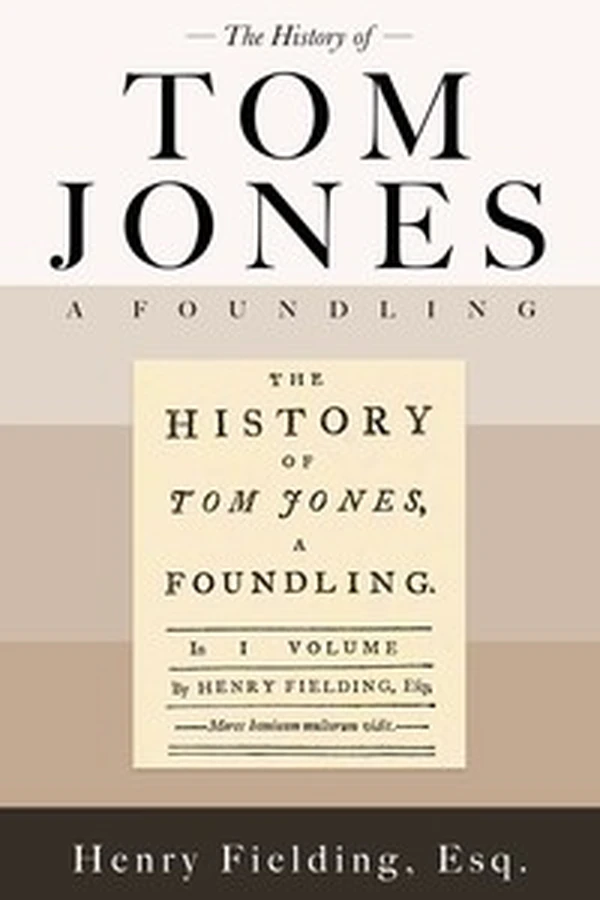
Oliver Twist was Dickens’s second novel, and the first English novel to put a workhouse child at its centre. The book edition appeared in three volumes in 1838, the year of Victoria’s coronation, and reviewers were uneasy: the subject was low, the criminals were vivid, and there was a suspicion, familiar from the Newgate novel controversy, that a writer who made thieves this interesting was making vice attractive. Dickens answered the charge in a preface, arguing that he had shown the trade in order to expose it, and the novel has never been out of print since. He was also working inside a tradition: Fielding’s The History of Tom Jones, a foundling novel from 1749, had already made a hero of a child of unknown parents — though Fielding’s foundling is a lusty young man rather than a starved one.
Read it today for the voice first. The narrator is the great invention: he can be sentimental about a child’s death and savage about a board of guardians in the same paragraph, and the swing between the two is the tone Victorian fiction spent the next forty years trying to reproduce. Then read it for the set pieces, which are still astonishing — the asking for more, the pauper’s funeral, the night walk over London Bridge, the trial of Fagin. Two warnings for a modern reader: the caricature of Fagin is antisemitic and was recognised as such in Dickens’s own lifetime, and the ending is as sentimental as the satire is sharp. If you want a shorter Dickens to start with, A Christmas Carol takes one evening; Robinson Crusoe shows where the inheritance plot came from. The text used here is the Project Gutenberg transcription (#730), which is in the public domain in the United States.
Historical Context
The novel was written three years after the Poor Law Amendment Act of 1834, and it is a report on that Act’s consequences. The new law was meant to make relief so unpleasant that only the desperate would ask for it: outdoor payments to the poor were cut back, and the workhouse became the test of need. Families were split up inside it, men from women, mothers from children, and the diet was deliberately worse than the worst paid labourer’s. Dickens had seen the old system at first hand as a boy, and he builds his opening chapters out of the new one’s language: the board, the ratepayers, the master, the beadle, the apprentice, and the contract for burying paupers at so much a head.
Dickens was twenty-five when he began the book, a parliamentary reporter with one comic success behind him and a childhood he did not discuss. His father, a navy pay clerk, had been imprisoned for debt in the Marshalsea in 1824, and the twelve-year-old Charles was put to work pasting labels on bottles in a blacking warehouse off the Strand. He never forgot it, and he told almost nobody: the story came out only after his death. That experience is not Oliver’s — the Dickens family was lower middle class, not destitute — but it gives the early chapters their particular anger. He had been a child whose labour had a cash value, and he wrote about children who were valued only in pounds, shillings and pence.
The London of the middle chapters is a real map. Field Lane and Saffron Hill, where Fagin’s den stands, were among the most crowded slums in the city, and they were cleared within a decade of the novel’s publication. Jacob’s Island, the mudbank settlement in Bermondsey where Sikes dies, was described in the press in 1839 as a place where the drainage ran into open ditches and the houses were built on piles over the filth. The legal details are exact: a boy could be bound apprentice by the parish with no say in the matter; burglary with violence was a capital offence, which is why Sikes threatens to shoot Oliver rather than be recognised; and the trade in stolen goods ran through receivers, who could be hanged for it.
Key Characters & Literary Archetypes
- Oliver Twist: is the centre of the book and deliberately its least vivid person. He is defined by what he will not do: he will not steal, he will not betray the boys who take him in, and in the condemned cell he asks to pray for the man who ruined him. His one act of aggression is a request for food — “Please, sir, I want some more.” — and the novel treats it as rebellion. Dickens keeps him passive so that the institutions around him can be seen clearly.
- Fagin: is the book’s most troubling creation: a receiver of stolen goods who runs a school for boys and calls them his dear, a man who weeps over his own neck and dies begging for time. He is introduced playing a game with handkerchiefs and coins, teaching Oliver how to empty a pocket, and congratulating him — “I never saw a sharper lad. Here’s a shilling for you.” The horror is domestic: he feeds, houses and loves his children, and then sells them.
- Nancy: is the novel’s real moral centre. She is introduced as a thief’s woman in Fagin’s den, then chooses, three times, to protect Oliver: she shields him from Sikes’s dog, she refuses to hand him over, and finally she goes to Rose Maylie and to Brownlow with what she knows, knowing what Sikes will do. “I am chained to my old life,” she tells Rose, and she keeps the appointment on London Bridge anyway. She is killed holding Rose’s handkerchief up as a shield.
- Bill Sikes: is violence with a dog and a white coat. He is a housebreaker by trade, first seen in Fagin’s room with his pistol and his stick, and he takes Oliver on the burglary as a tool small enough to go through a window. When Nancy betrays him he clubs her down, and the rest of his story is flight: the rope, the roof, the crowd, and the eyes of the dead woman following him over the parapet at Jacob’s Island until the noose does the work.
- Mr. Brownlow: is the benevolent gentleman whose handkerchief the Dodger steals, and who takes the thief home instead of prosecuting him. He is the novel’s instrument of recognition: he owns a portrait that looks like Oliver’s mother, he knew the Leeford family, and in the last chapters he confronts Monks with the evidence and forces the story out of him. His kindness is not soft; he is the one who insists that the promise to Nancy be kept when the doctor wants to break it.
- Mr. Bumble: is the parish beadle, and the novel’s comic masterpiece. He is pompous, self-important and cruel by routine, starves Oliver on principle, boxes his ears, and marries the workhouse matron for her money only to be governed by her. His great speech — “the law is a ass—a idiot” — comes when he is caught selling the dead woman’s trinkets, and it is the closest the book comes to letting an institution condemn itself.
Core Literary Themes
- The workhouse and the arithmetic of charity: Dickens’s target is not cruelty but economy. The board of guardians in Chapter II are not monsters; they are men doing sums. They have worked out what a child costs to keep and how much less it costs to let him die, and they congratulate themselves on the saving. “Please, sir, I want some more” is funny because it is polite, and terrible because the answer has already been decided by the accounts. The novel’s argument is that a charity administered as a business stops being charity and becomes a way of managing the poor out of sight.
- Crime as a trade: Fagin’s establishment is described in exactly the language of apprenticeship: pupils, lessons, a trade, wages, and an old man who says he is teaching the boys a living. That is the point. The novel refuses to separate the criminal economy from the respectable one. The beadle sells the parish’s dead; the undertaker profits from pauper funerals; the receiver sells what the boys steal. Everyone in the book is running a business, and the only difference between Fagin and Bumble is the colour of the coat.
- Inheritance, legitimacy and the plot of blood: The mystery is not who stole what but who was born to whom. Oliver’s fate depends on a will, a locket and a ring, and on the fact that his mother was not married. Monks’s hatred is the hatred of a legitimate son for a bastard half-brother who might take his money. Dickens makes the plot turn on documents — a burnt will, a pawned trinket, a deathbed confession — because in 1838 legitimacy, property and identity were all written down. The happy ending is a redistribution of names: Oliver is given his father’s, Rose is given a family, and Monks is left with nothing.
- The city as a labyrinth: London in this novel is a set of rooms connected by dark stairs. Fagin’s den is reached through a shop; Sikes’s house through a court; Jacob’s Island through a ditch. The respectable streets are two minutes away and completely unaware. Dickens uses the map morally: to move through the city is to move between degrees of guilt, and the reader follows a boy who does not know which door he is being pushed through. The famous set pieces — the walk to London, the burglary at Chertsey, the night on the bridge — all depend on a city large enough to hide in and small enough to meet in.
- Fallen women and the limits of mercy: The novel keeps returning to women who have lost their place: Oliver’s mother, who dies in the workhouse; Nancy, who is a thief; Rose, who believes she is illegitimate. Dickens is harder on the respectable than on the fallen. The parish condemns Agnes; Rose’s aunt refuses to hear her name; and Nancy’s speech to Rose — “I am chained to my old life” — is the book’s most direct plea for pity. The ending is careful: Nancy dies, Agnes’s name is restored on a tablet, and mercy is granted in marble rather than in life.
Why Download Our Custom E-Reader Edition of Oliver Twist?
This edition gives you the complete 1838 novel in a clean, reflowable text — all fifty-three chapters, from the workhouse board to the tablet in the church, with Dickens’s own chapter headings kept exactly as he wrote them. Nothing is abridged, modernised or annotated in the body of the book, so the novel reads the way it was printed: a long chapter still looks like a long chapter, not a screen of loose lines.
The files are DRM-free and come in three formats from a single page: EPUB for most readers, AZW3 for older Kindles, and KEPUB for Kobo devices. Each has real chapter marks and a linked table of contents, which matters more in a book of fifty-three chapters than in a short story — you can go straight to Chapter XXVII, or to Fagin’s last night, without scrolling through three hundred pages.
The guide above is written for readers who want the context as well as the text: the Poor Law of 1834 and the workhouse it built, the London slums Dickens knew at first hand, the coincidence that drives the plot, and the problem of Fagin. Read the novel first if you can — the analysis will still be here afterwards, and it will mean more once you have met Nancy on London Bridge.
- Project Gutenberg transcription, via Project Gutenberg #730 — the complete text, unabridged, with the chapter headings the author set.
- Formats included EPUB, AZW3 and KEPUB, DRM-free, each with a linked table of contents.
- Reading time about nine hours at a steady pace, or a chapter a night for two months.
- Chapter marks all fifty-three chapter headings, exactly as Dickens wrote them.
- A Christmas Carol — free EPUB, AZW3 & KEPUB
- The History of Tom Jones — free EPUB, AZW3 & KEPUB
- Robinson Crusoe — free EPUB, AZW3 & KEPUB
Chapter summaries
Oliver Twist runs to fifty-three chapters. They fall into ten movements, and the summaries below follow them in order, saying where the story goes without giving the final revelations away.
- Chapter I — A birth in the workhouse: Oliver is born in a parish workhouse, and his mother dies before anyone can ask who she is. The beadle and the surgeon agree that the parish has been spared the expense of a father, and the baby is named by the parish clerk, who picks Twist because it comes next in the alphabet. Dickens sets the tone in one chapter: the child is a nuisance, the officials are a joke, and the joke is that they hold his life in their hands.
- Chapters II–IV — The farm, the board and the undertaker: Oliver is sent to a branch workhouse run by Mrs Mann, where children are fed on scraps and die conveniently. At nine he returns to the main house, and the hungry boys draw lots: Oliver must ask for more. The board’s reaction — “Oliver Twist has asked for more!” — is the novel’s most famous scene. He is then apprenticed to Mr Sowerberry, an undertaker, with a fellow apprentice, Noah Claypole, who loses no time in reminding him of his parentage.
- Chapters V–VII — The funeral, the fight and the road: Oliver attends his first pauper’s funeral, where the husband’s grief is real and the undertaker’s talk is all economy. Then Noah Claypole taunts him about his dead mother, and Oliver — for the only time in the book — attacks somebody. He is flogged, locked up, and threatened with worse. Before dawn he runs away, and little Dick, who has come to say goodbye, asks to be kissed. That blessing matters; it comes back at the end.
- Chapters VIII–X — London, the Dodger and Fagin: Oliver walks the seventy miles to London and is picked up by the Artful Dodger, who offers him a night’s lodging in an old man’s house near Field Lane. The old man is Fagin, a receiver who keeps a room full of boys and teaches them a game of handkerchiefs and coins. Oliver is delighted by the game until he sees it played for real: the Dodger and Charley Bates lift a gentleman’s handkerchief and run, and Oliver, who has done nothing, is caught.
- Chapters XI–XIII — A magistrate, a portrait and a plan: Mr Fang, a police magistrate with a temper, is ready to commit the boy, but the gentleman whose pocket was picked refuses to prosecute: his name is Mr Brownlow, and he has seen something in Oliver’s face. He takes him home to a quiet street near Pentonville, where a portrait of a young woman on the wall unsettles everyone. Meanwhile Fagin, who fears the boy will talk, sets the girl Nancy and the housebreaker Bill Sikes to get him back.
- Chapters XIV–XVII — The watch, the errand and the recapture: At Brownlow’s, Oliver recovers, and the old gentleman’s friend Grimwig bets his own head that the boy will not come back from an errand. He is sent out with books and money and does not come back: Nancy, on Sikes’s orders, seizes him in the street and hauls him to a den in Whitechapel, where his new clothes are taken. Brownlow gives him up for lost. In the workhouse, the beadle Bumble begins courting the matron, Mrs Corney, at a dying woman’s bedside.
- Chapters XVIII–XXII — The job: a burglary at Chertsey: Fagin lectures Oliver on ingratitude and isolates him for weeks, until the boy will believe anything the old man says. Then a bargain is struck with a stranger called Monks: Oliver is to be made a thief. Sikes takes him as a tool for a night job — a house at Chertsey with a window small enough for a child — and at dawn he and Sikes, with Toby Crackit, set out through Bethnal Green. The household wakes, and Oliver is shot.
- Chapters XXIII–XXVIII — Death, a marriage and a ditch: While Oliver’s wound is dressed, the book follows the parish. Bumble courts Mrs Corney over teaspoons, marries her, and finds himself governed; old Sally, the nurse at Oliver’s birth, confesses on her deathbed that she took something from the dying mother, and Mrs Corney takes the paper in exchange for a sip of wine. In a storm Monks visits a terrified Fagin, and the two search the empty house. Oliver drags himself to a cottage where a servant is about to shoot him.
- Chapters XXIX–XXXVII — A household in the country, and two visitors: Dr Losberne hides the wounded boy while he decides what to do, then lets in the Bow Street men Blathers and Duff and tests the servants’ evidence over a glass — the shot, it turns out, was fired by Giles with powder and brown paper. The magistrate takes the joint bail of Mrs Maylie and the doctor, and Oliver recovers in a country idyll. Summer passes, Rose falls ill, Harry Maylie comes at her mother’s bidding, and Oliver sees two faces at the cottage window.
- Chapters XXXVIII–LIII — The plot, the murder and the end: The last third belongs to the villains. The Bumbles sell Monks the dead woman’s trinkets; Nancy overhears the plot and carries it to Rose; Noah Claypole follows her; and on London Bridge she keeps her promise but refuses to name Fagin. Sikes clubs her dead that night and dies himself on a roof at Jacob’s Island. Brownlow then traps Monks and gets the truth: Oliver is his half-brother, and Rose is Agnes Fleming’s sister. Fagin hangs; Oliver is adopted.
Oliver Twist: Frequently Asked Questions
Is Oliver Twist hard to read?
How long does it take to read Oliver Twist?
Is Oliver Twist suitable for children?
What is the “Please, sir, I want some more” scene about?
Why is Fagin portrayed as a Jew?
Does Oliver Twist end happily?
Is this the complete novel or an abridgement?
Where can I get Oliver Twist as a free EPUB?
Part of: Victorian Novels · Classic Fiction