The Decameron by Giovanni Boccaccio: Free EPUB, AZW3 & KEPUB Download
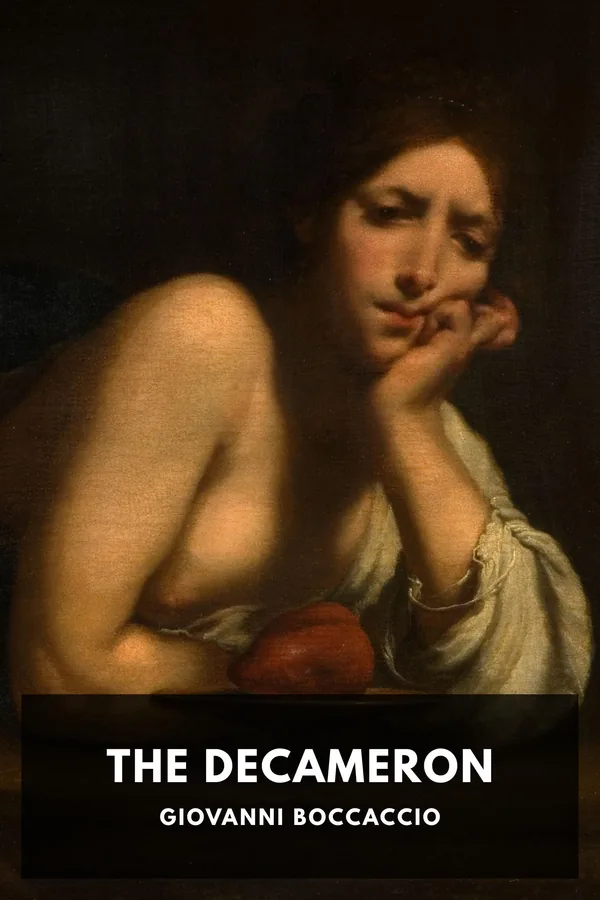
The Decameron
📖 Click to Read the Opening Pages Online Preview
The opening of the plague
Here beginneth the first day of the Decameron wherein (after demonstration made by the author of the manner in which it came to pass that the persons who are hereinafter presented foregathered for the purpose of devising together) under the governance of Pampinea is discoursed of that which is most agreeable unto each.
As often, most gracious ladies, as, taking thought in myself, I mind me how very pitiful you are all by nature, so often do I recognize that this present work will, to your thinking, have a grievous and a weariful beginning, inasmuch as the dolorous remembrance of the late pestiferous mortality, which it beareth on its forefront, is universally irksome to all who saw or otherwise knew it. But I would not therefore have this affright you from reading further, as if in the reading you were still to fare among sighs and tears. Let this grisly beginning be none other to you than is to wayfarers a rugged and steep mountain, beyond which is situate a most fair and delightful plain, which latter cometh so much the pleasanter to them as the greater was the hardship of the ascent and the descent; for, like as dolour occupieth the extreme of gladness, even so are miseries determined by imminent joyance. This brief annoy (I say brief, inasmuch as it is contained in few pages) is straightway succeeded by the pleasance and delight which I have already promised you and which, belike, were it not aforesaid, might not be looked for from such a beginning. And in truth, could I fairly have availed to bring you to my desire otherwise than by so rugged a path as this will be I had gladly done it; but being in a manner constrained thereto, for that, without this reminiscence of our past miseries, it might not be shown what was the occasion of the coming about of the things that will hereafter be read, I have brought myself to write them.4
I say, then, that the years [of the era] of the fruitful Incarnation of the Son of God had attained to the number of one thousand three hundred and forty-eight, when into the notable city of Florence, fair over every other of Italy, there came the death-dealing pestilence, which, through the operation of the heavenly bodies or of our own iniquitous dealings, being sent down upon mankind for our correction by the just wrath of God, had some years before appeared in the parts of the East and after having bereft these latter of an innumerable number of inhabitants, extending without cease from one place to another, had now unhappily spread towards the West. And thereagainst no wisdom availing nor human foresight (whereby the city was purged of many impurities by officers deputed to that end and it was forbidden unto any sick person to enter therein and many were the counsels given5 for the preservation of health) nor yet humble supplications, not once but many times both in ordered processions and on other wise made unto God by devout persons—about the coming in of the Spring of the aforesaid year, it began on horrible and miraculous wise to show forth its dolorous effects. Yet not as it had done in the East, where, if any bled at the nose, it was a manifest sign of inevitable death; nay, but in men and women alike there appeared, at the beginning of the malady, certain swellings, either on the groin or under the armpits, whereof some waxed of the bigness of a common apple, others like unto an egg, some more and some less, and these the vulgar named plague-boils. From these two parts the aforesaid death-bearing plague-boils proceeded, in brief space, to appear and come indifferently in every part of the body; wherefrom, after awhile, the fashion of the contagion began to change into black or livid blotches, which showed themselves in many [first] on the arms and about the thighs and [after spread to] every other part of the person, in some large and sparse and in others small and thick-sown; and like as the plague-boils had been first (and yet were) a very certain token of coming death, even so were these for everyone to whom they came.
It begins with the first three paragraphs of the plague description, as the sickness reaches Florence:
Download Full EPUB1348–1353
~292,000 words (estimated)
Approx. 16.2 hours
Standalone
Florence in the plague year of 1348, and a villa in the hills above the city
One prologue, ten days and a conclusion; twelve sections for a hundred stories
EPUB · AZW3 · KEPUB
1.13 MB (EPUB) · 1.42 MB (AZW3) · 1.20 MB (KEPUB)
Public domain in the United States
Standard Ebooks · Project Gutenberg #23700
The Decameron is Giovanni Boccaccio’s book of a hundred stories, told over ten days by ten young Florentines who have left the city to escape the plague of 1348. Seven women and three men meet in the church of Santa Maria Novella, where the dead are being carried out and the streets are full of fear, and agree to withdraw to a villa in the hills. There they set up a commonwealth: each day one of them is crowned queen or king, and the ruler names a subject for that day’s ten tales. The stories are of merchants wrecked and enriched, of husbands and wives outwitting one another, of lovers who die and lovers who are reconciled. After ten days they return to Florence, and the book closes with the author’s defence. The frame is a reply to death, and the stories are its argument: that wit, appetite, luck and generosity are what people have.
It is also a portrait of a whole society, and the reason later writers kept returning to it. Boccaccio’s Florence is a city of merchants and moneylenders, of law courts and confessionals, of men who have travelled to Tunis and Naples and women who are bargained over like goods. The tales move from comedy to catastrophe without warning, and the narrators comment on one another’s stories as they go. The Decameron was composed in the years after the plague and was copied across Europe before Boccaccio died in 1375; Chaucer knew it, and its framed collection of tales passed into English literature. The text here is John Payne’s complete translation of 1886. The text is available via Project Gutenberg #23700 and Standard Ebooks.
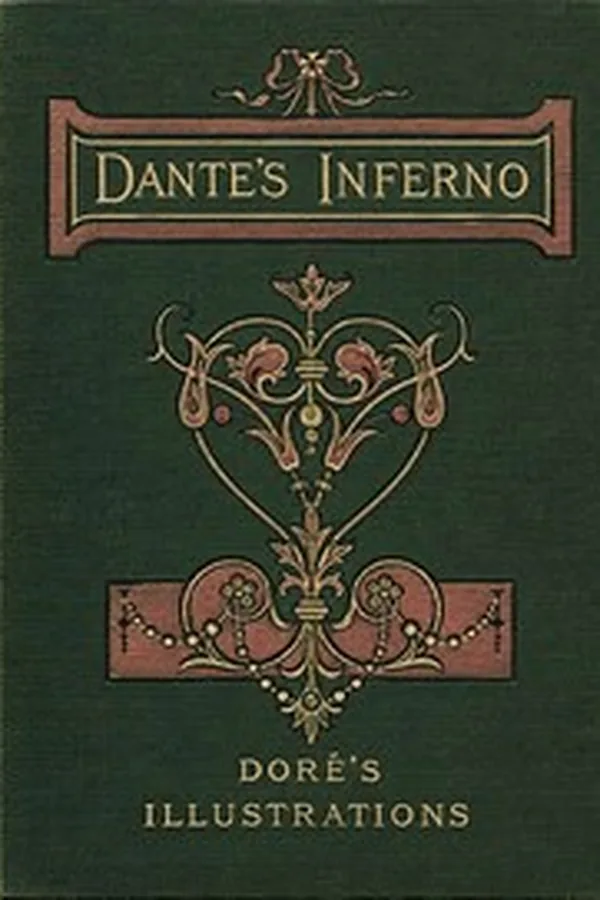
The Decameron by Giovanni Boccaccio: Summary, Characters & Themes
This is a summary and analysis of Giovanni Boccaccio’s The Decameron, the collection of a hundred tales that gave European prose its first great comic book. It opens with the plague that reached Florence in 1348, and with ten young people, seven women and three men, who decide that the only honest answer to a city full of corpses is to leave it. In a villa two miles from the walls they dance, sing, bathe and tell one story each every day for ten days. Each day has a king or queen, chosen in turn, who sets a subject, and the tales run from the obscene to the tragic. Around them sits the frame: meals, quarrels, songs and the return home.
The design is stricter than it looks. Nine of the ten days have a theme: fortune’s reversals, love that ends badly, love that ends well, tricks played by wives on husbands, tricks of every kind, and on the last day generosity. The first day has no subject at all, and the ninth leaves each narrator free. One of the men, Dioneo, asks at the end of the first day to speak last every day and to tell off the theme when it suits him, and the request is granted; it is he who closes the book with Griselda, which he calls a monstrous folly and warns nobody to imitate. The frame is not decoration: the dancing gives the tales a society to be told in, and the plague outside makes the laughter inside a decision rather than an escape.
Giovanni Boccaccio was born in 1313, the son of a Florentine merchant, and spent his twenties in Naples, sent there to learn banking and law and learning instead to read Dante, Ovid and the poets of King Robert’s court. He came back to Florence in the early 1340s, wrote the verse romances Filostrato and Teseida and the bitter Elegy of Lady Fiammetta, and was in the city when the plague killed his father and a large part of its people. The Decameron was written in the years that followed. In old age he was a friend of Petrarch, an ambassador for the commune and, in 1373, the man commissioned to lecture publicly on Dante in Florence; he died at Certaldo in 1375.
The book still works because its stories are about money, sex, appetite and power, and because Boccaccio never lets a moral settle. A friar is a hypocrite and also, sometimes, a man; a wife who deceives her husband may be the cleverest person in the tale. It is the ancestor of the novella. Readers who want the other great Florentine poem should take The Divine Comedy, Dante’s journey through the afterlife, written a generation earlier. Those who like stories gathered into one book can go on to Le Morte d’Arthur, Malory’s cycle of Arthur’s knights, or to The Canterbury Tales, where Chaucer sends a company of pilgrims down a road and lets each tell a tale.
The text here is John Payne’s translation, first printed for subscribers in 1886 and still one of the few complete English versions that keeps Boccaccio’s voice, his long sentences and his jokes without either bowdlerising the bawdy tales or turning them into slang. It follows the Standard Ebooks edition, prepared from Project Gutenberg #23700 and proofread against the printed text. The book is in the public domain in the United States, and the files are complete: all one hundred stories, the introductions, the songs and the author’s conclusion.
Historical Context
In 1348 the plague reached Florence. It had come west through Genoa and Sicily the year before, and it killed perhaps a third of Europe in three years. Boccaccio’s account is the most famous description of it ever written, and it is written by a survivor who was in the city: the swellings under the arms and in the groin that the Italians called gavoccioli, the black spots that followed, the doctors who could do nothing, the bodies carried out at night and left on doorsteps. He gives the dead of Florence as more than a hundred thousand, a figure probably larger than the whole population, and the exaggeration is part of the point, because the plague had made numbers meaningless.
What the introduction describes is not only a disease but a collapse. Law courts stopped, shops shut, families abandoned their sick, and gravediggers charged what they could. The brigata’s answer is neither heroism nor penance: it is a deliberate, orderly, cheerful withdrawal to a country house, with a steward, a cook, fixed hours, music and a story every afternoon. That plan belongs to the mercantile Florence of the 1340s, a city of banks and workshops that had just seen its great banking houses fail. He wrote the book over the following five years, and the earliest surviving copy in his own hand dates from the 1370s, when the plague had returned.
The Decameron was an immediate success and a long scandal. It was copied by scribes, printed in Venice before 1471, and placed on the Index of Forbidden Books in 1559; a censored edition followed in 1573, and for centuries many readers met Boccaccio’s friars and wives in a softened version. Its influence ran through Europe in two directions. Writers took individual plots, and Chaucer, who used the Filostrato for Troilus and Criseyde, took the idea of a company of talkers on a journey for The Canterbury Tales. Shakespeare’s All’s Well That Ends Well follows the tale of Gillette of Narbonne.
Key Characters & Literary Archetypes
- Pampinea: The eldest of the seven women, and the one who proposes the whole scheme. It is she who speaks in Santa Maria Novella when the others are frightened, argues that the city has become a place of death, and arranges the party of ten. As first queen she fixes the household: hours for meals, music and rest, a steward and cook, and no subject for the first day, so that everyone may speak freely. She tells the tale of Master Alberto and the story of the friar who passes himself off as the angel Gabriel.
- Filomena: Tall, fair and quick, queen of the second day, whose subject is fortune. Her own stories are among the book’s most famous: the parable of the three rings, with which a Jew escapes the snare Saladin sets for him, and the story of Lisabetta of Messina, who puts her murdered lover’s head in a pot of basil and waters it with her tears. She is the company’s most elegant narrator and its most argumentative, and when the heat grows on the third day it is she who proposes the move to a second palace.
- Neifile: Queen of the third day, the day of people who get what they want by their own efforts. She blushes like a rose when the crown is put on her, and she presides over the company’s longest excursion, from the first villa to the palace on the little knoll two thousand paces to the west. Her stories include the merchant Abraham, who goes to Rome, sees the wickedness of the clergy and becomes a Christian because a church so corrupt could not have survived without God, and Gillette of Narbonne, who cures the King of France and claims her unwilling husband as the reward.
- Filostrato: The melancholy one, king of the fourth day, which he gives to lovers whose stories end badly. When Neifile crowns him he jokes that the company will now see whether the wolf can govern the ewes, and he tells the day’s grimmest tale himself, of the Provencal husband who kills his wife’s admirer, cooks his heart and serves it to her. He is also the teller of Masetto, the pretended dumb gardener of a convent, so his gloom has a comic side, and he ends his own day with a song about the love that is ruining him.
- Fiammetta: Queen of the fifth day, the day of lovers who come through cruelty and misfortune to happiness. She plays the viol for the company on its first evening, and her name, the little flame, is the name Boccaccio gave the woman he loved in his earlier books. She tells the story of the Marchioness of Monferrato, who cures a king’s desire with a dinner of hens, Ghismonda, who drinks poison over her lover’s heart, and Federigo degli Alberighi, who cooks his last falcon for the woman he loves.
- Dioneo: The merriest of the ten, full of quips and never serious for long, and the only one who asks for a privilege. At the end of the first day he begs to be allowed to tell last every day and to speak off the subject when he pleases, and Pampinea grants it; the exemption becomes a running joke and a structural device. He is king of the seventh day, where he breaks his own rule to tell of two Sienese and a message from the dead, and he has the last word of the book with Griselda, which he calls a monstrous folly and tells nobody to imitate.
Core Literary Themes
- The plague and the garden: The book is built on a contrast between two places. Outside the walls is Florence in 1348, with its pits, its abandoned houses and its collapse of law; inside is a villa with gardens, wells, cold cellars and a fountain. The company does not deny the plague, it answers it: they keep hours, appoint servants, sing and dance, and tell stories as if order were a form of resistance. Boccaccio describes the symptoms in clinical detail and the garden with the same care, and the two descriptions argue with each other for the whole book.
- Fortune and reversal: The second day is given to fortune, and fortune never leaves the book. Merchants are shipwrecked and swim ashore on chests of jewels; a girl is sold from port to port and ends as a queen; a young man loses his money, his clothes and nearly his life in a single night in Naples. Boccaccio’s world is one in which luck, not merit, decides most outcomes, and his characters survive by reading the situation quickly. The wheel turns both ways, and the tales enjoy the turning rather than moralising about it.
- Love, comic and tragic: No other medieval book moves so fast between the bedchamber and the tomb. On the third day a hermit teaches a girl to put the devil back in hell, and the joke is on the hermit; on the fourth day a father sends his daughter her lover’s heart in a golden cup and she drinks poison over it. The same appetite is farce in one story and a death sentence in the next, and the arrangement is deliberate: the subject changes from day to day, and the reader feels how thin the line is between the two.
- Marriage and the war of the sexes: Days seven and eight belong to the trick, and most of the tricks are played in marriage. Wives hide lovers in vats and under hen-coops, husbands lock wives out of doors and are locked out in turn, a jealous man shears the wrong woman’s hair, and a wife makes her husband believe that what he saw with his own eyes never happened. Boccaccio is not a moralist here. The cleverness is admired for its own sake, and the husbands who deserve it are humiliated while the ones who learn to laugh keep their households.
- Wit, speech and the ready answer: The sixth day is a small treatise on talk: a baker teaches a great man manners with a glass of wine, a cook saves his neck with a joke about a crane’s leg, a poet answers a gang of young men among the tombs and walks away. Speech is how people in this book defend themselves, make money, wound enemies and get out of rooms. The tales themselves are spoken, not written, and the frame keeps reminding us of that: ten voices in a garden, each one trying to be worth listening to.
Why Download Our Custom E-Reader Edition of The Decameron?
Because it is a hundred short stories and one long argument, and the short stories are the easy way in. You can read a day at a time, or a single tale in ten minutes, and the book still holds together: the plague, the villa, the crown passed from hand to hand and the company’s jokes are a continuous thread. The text here is complete and unabridged, all ten days from the prologue to the author’s conclusion, and the Project Gutenberg #23700 transcription is listed for comparison, while every file on this page follows the Standard Ebooks text.
The files are built for reading rather than for archiving: clean text, working navigation, no page images and no scanning errors. A hundred stories need a table of contents that works, so the days and the individual tales are marked and linked, and you can find the ninth story of the fifth day without scrolling. The same file opens on a phone, a Kindle, a Kobo or an old e-ink reader, the type can be enlarged, and there is no account or conversion step between you and the first sentence.
Read it beside this page rather than instead of it. The day summaries, the character notes and the context are here for before and after, not as a substitute for the prose; the summaries name the stories and stop short of their endings. If you know the book, the second reading is the better one, because the pattern of the ten days is easier to see when you are watching for it. If you do not know it, skip the summaries and let Boccaccio’s ten Florentines surprise you.
- Based on the Standard Ebooks Edition, via Standard Ebooks, whose text is prepared from Project Gutenberg #23700 and proofread against the printed edition.
- One hundred stories, complete No abridgement and no expurgation: Payne’s full translation of 1886, with the bawdy tales, the anticlerical jokes, the songs and the author’s defence, in the order Boccaccio set them.
- EPUB, AZW3 and KEPUB One download per format, so the book opens on Kindle, Kobo, Apple Books and other readers without conversion, with a working table of contents for the ten days and their tales.
- Free and DRM-free Public domain in the United States, with no account and no lock on the file; download it once and it is yours to keep, to move between devices and to read again.
- The Divine Comedy — free EPUB, AZW3 & KEPUB
- Le Morte d’Arthur — free EPUB, AZW3 & KEPUB
- The Canterbury Tales — free EPUB, AZW3 & KEPUB
Chapter summaries
The Decameron has a structure that is easy to lose your place in: a prologue, ten days and a conclusion, with each day made of an introduction, ten stories and a closing song. The twelve sections below follow that order, naming each day’s ruler and subject and picking out the tales that matter most, without giving away how they end.
- The Prologue and the Plague: Boccaccio opens by addressing the ladies who are in love, explaining that he writes to give them the consolation he once received, and that his hundred stories were told in ten days by seven women and three men. The first day’s introduction is the chronicle of 1348: the plague arriving from the East, the swellings and black spots, the doctors’ helplessness, the bodies carried out at night, the collapse of law and family. On a Tuesday morning seven young women meet in Santa Maria Novella, and Pampinea persuades them to leave; three young men join them, and on Wednesday they walk two miles to a villa.
- Day I — The first crown, and no subject at all: Pampinea is the first queen. She appoints a steward, a purveyor and serving women, fixes the hours of meals and rest, sets the company dancing, and refuses to impose a subject, so the ten tales are free. Pamfilo begins with Ser Ciappelletto, the worst man in Florence, who lies to a dying friar and is buried as a saint; Filomena tells the parable of the three rings, and Neifile the story of the merchant who goes to Rome and comes back a Christian.
- Day II — Fortune turns the wheel: Filomena is queen for the day of those who, after many misfortunes, come to happiness beyond their hope. Martellino pretends to be cured at a saint’s shrine and nearly hangs for it; Rinaldo d’Asti is robbed and comforted by a widow; Landolfo Ruffolo floats ashore on a chest of jewels; Andreuccio of Perugia loses his money, his clothes and almost his life in one night in Naples; Alatiel passes from hand to hand across the Mediterranean and comes at last, still a maid, to the King of Algarve.
- Day III — Industry and appetite: Neifile takes the crown and leads the company on the Sunday to a second palace, two thousand paces west of the first and set on a little knoll. Her subject is people who get what they want by their own efforts. Masetto pretends to be dumb and becomes gardener to a convent of nuns; a king’s horsekeeper lies with the queen and escapes by shearing every man in the stable; Gillette of Narbonne cures the King of France and claims the unwilling Bertrand as her husband.
- Day IV — Loves that end badly: Filostrato, himself in love and unhappy, takes the crown and chooses loves that have had a sorrowful end. The tales are merciless. Tancred kills his daughter’s lover and sends her the heart in a golden cup, and Ghismonda drinks poison over it; Lisabetta’s brothers murder Lorenzo and she keeps his head in a pot of basil; Simona and Pasquino die of a sage leaf; the wife of Roussillon throws herself from a casement when she learns what she has eaten. Filostrato ends the day with a song about his own hopeless love.
- Day V — Lovers come through: Fiammetta’s day returns to happiness: lovers who suffer cruelly and end well. Cimon, a rich fool, becomes wise through love and carries off Iphigenia; Costanza drifts in a boat to Africa and finds the man she thought dead; Nastagio degli Onesti watches a knight hunt a woman through the pinewood at Chiassi and uses the vision to win the bride who refused him; Federigo degli Alberighi cooks his last falcon for the woman he loves, and she marries him.
- Day VI — The ready answer: Elisa’s subject is wit in self-defence: a person attacked with a mocking word who answers it, or escapes loss and shame with a quick reply. Madam Oretta asks to be set down from a story told at too hard a trot; Cisti the baker teaches a great man manners with a glass of wine; Chichibio saves his neck with a joke about a crane’s leg; Guido Cavalcanti answers a band of young men among the tombs; Fra Cipolla sells his congregation the coals that roasted St Lawrence.
- Day VII — Wives and husbands: Dioneo is king and chooses the tricks women play on their husbands, which may be why the company moves to the Valley of the Ladies, a green hollow with a lake where the women bathe and the carpets are spread on the grass. Peronella hides her gallant in a vat; Tofano locks his wife out and is locked out in turn; Arriguccio shears the wrong woman. Dioneo breaks his own rule to tell the last tale, of two Sienese and a message from the dead.
- Day VIII — Trick upon trick: Lauretta’s subject is the trick itself, whichever way it runs. Gulfardo borrows money from a husband, hands it to the wife as the price of her favours and tells the husband so in front of her; the priest of Varlungo leaves his cloak as a pledge and demands it back; Calandrino is convinced he has found the heliotrope that makes a man invisible and comes home loaded with stones; a scholar makes a widow sit naked on a tower; Master Simone is dropped into a trench of filth.
- Day IX — No subject at all: Emilia gives the company a holiday from subjects, and each tells what pleases him. They walk to a coppice where the deer and goats stand unafraid because the plague has emptied the country, and they wear oak leaves in their hair. A widow makes two suitors dig up a grave and carry out a corpse; an abbess puts a priest’s breeches on her head in the dark; Calandrino is told that he is pregnant; Solomon sends a man to Goosebridge to learn how to rule a wife.
- Day X — Magnificence and patience: Pamfilo takes the last crown and asks for generosity: deeds done greatly, in love or in anything else. King Alfonso gives a discontented courtier the coffer that fortune denied him; Ghino di Tacco robs an abbot, cures his stomach and is made a prior of the Hospitallers; Gentile takes a woman out of her tomb and returns her and her child to her husband; Dianora’s lover makes a garden bloom in January. Dioneo ends with Griselda, whose husband takes her children, her clothes and her place before restoring her; he calls the story a monstrous folly.
- The Conclusion: The tenth day ends with the company going home: after fifteen days away they return to Florence and part at Santa Maria Novella, where they met. Then Boccaccio speaks in his own voice, answering the charge that the tales are indecent, that he is too old for love and that his stories are lies. He thanks God and the ladies and gives the book its Greek name, ten days, and its second name, Prince Galahalt.
The Decameron: Frequently Asked Questions
What is The Decameron about?
Who are the ten storytellers?
Why do they leave Florence?
Is it one story or a hundred?
What is Dioneo’s privilege?
Which stories are the most famous?
Is the book indecent?
Where can I download the free files?
Part of: Classic Fiction · Giovanni Boccaccio