The Federalist Papers by Alexander Hamilton: Free EPUB, AZW3 & KEPUB Download
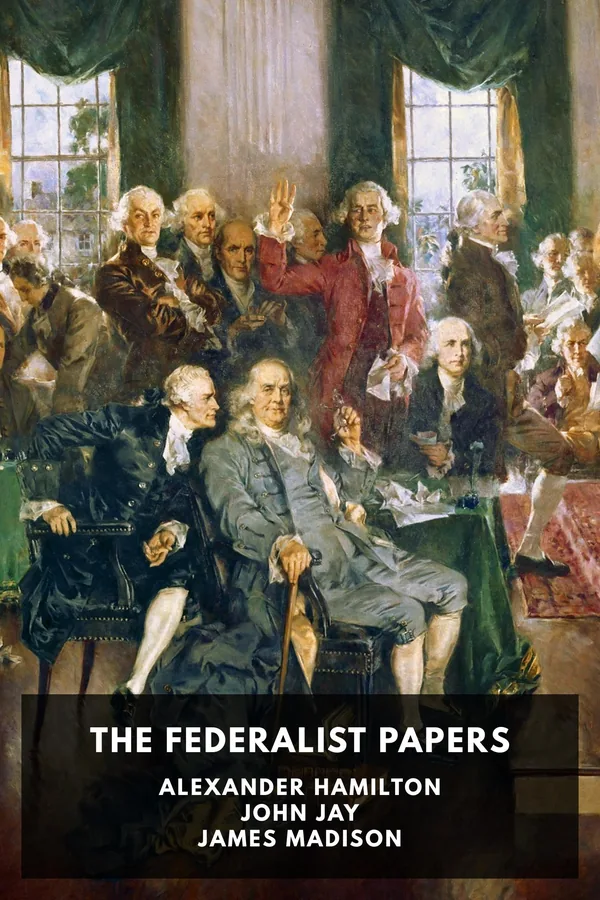
The Federalist Papers
📖 Click to Read the Opening Pages Online Preview
The opening of Essay No. 1
After an unequivocal experience of the inefficacy of the subsisting federal government, you are called upon to deliberate on a new Constitution for the United States of America. The subject speaks its own importance; comprehending in its consequences nothing less than the existence of the Union, the safety and welfare of the parts of which it is composed, the fate of an empire in many respects the most interesting in the world. It has been frequently remarked that it seems to have been reserved to the people of this country, by their conduct and example, to decide the important question, whether societies of men are really capable or not of establishing good government from reflection and choice, or whether they are forever destined to depend for their political constitutions on accident and force. If there be any truth in the remark, the crisis at which we are arrived may with propriety be regarded as the era in which that decision is to be made; and a wrong election of the part we shall act may, in this view, deserve to be considered as the general misfortune of mankind.
This idea will add the inducements of philanthropy to those of patriotism, to heighten the solicitude which all considerate and good men must feel for the event. Happy will it be if our choice should be directed by a judicious estimate of our true interests, unperplexed and unbiased by considerations not connected with the public good. But this is a thing more ardently to be wished than seriously to be expected. The plan offered to our deliberations affects too many particular interests, innovates upon too many local institutions, not to involve in its discussion a variety of objects foreign to its merits, and of views, passions and prejudices little favorable to the discovery of truth.
Among the most formidable of the obstacles which the new Constitution will have to encounter may readily be distinguished the obvious interest of a certain class of men in every state to resist all changes which may hazard a diminution of the power, emolument, and consequence of the offices they hold under the state establishments; and the perverted ambition of another class of men, who will either hope to aggrandize themselves by the confusions of their country, or will flatter themselves with fairer prospects of elevation from the subdivision of the empire into several partial confederacies than from its union under one government.
The excerpt below quotes the opening three paragraphs of Essay No. 1, which appeared in the Independent Journal on Saturday, 27 October 1787, and states the question the whole series was written to answer.
Download Full EPUB1788
~190,000 words (estimated)
Approx. 10.5 hours
Standalone
New York, 1787–1788, during the ratification of the Constitution.
Eighty-five essays grouped into twelve movements
EPUB · AZW3 · KEPUB
1.06 MB (EPUB) · 1.22 MB (AZW3) · 1.11 MB (KEPUB)
Public domain in the United States
Project Gutenberg #1404 · Standard Ebooks
The Federalist is a series of eighty-five essays written in 1787 and 1788 to persuade the people of New York to ratify the Constitution drafted at Philadelphia that summer. They appeared first in the city’s newspapers over the signature Publius, and were then gathered into a book. Three men wrote them: Alexander Hamilton, James Madison and John Jay. Jay took the dangers of disunion and foreign powers, Hamilton the defects of the Confederation, taxation, armies and the executive, Madison faction, the structure of the government and the House of Representatives. The result is at once a campaign document and the most sustained defence of the extended republic ever written by its own architects.
The essays open with a question rather than a plan: whether a people can found a government by reflection and choice. From there Publius answers the objections raised in the same newspapers by Cato and Brutus, defends the union against foreign arms and internal war, and then walks through the Constitution clause by clause, from the tax power to the tenure of judges. The Federalist Papers has been read ever since as the fullest commentary the framers left on their own design. The text is available via Project Gutenberg #1404 and Standard Ebooks.
The Federalist Papers by Alexander Hamilton: Summary, Characters & Themes
The Federalist Papers, as the collection is usually called, is a book of eighty-five essays on the Constitution of the United States, written between October 1787 and May 1788 and signed with the single name Publius. The edition is catalogued under Alexander Hamilton, who conceived the project and wrote fifty-one of the numbers, but the book was written by three men: Hamilton, John Jay, who wrote five, and James Madison, who wrote twenty-nine, three of them in collaboration with Hamilton. The essays first ran in New York newspapers, several times a week and usually unsigned, and were collected in 1788. This page gives a summary and analysis of the whole series: what each group of essays argues, who wrote which numbers, and the case the authors made to a state that had not yet decided.
The argument begins with the stakes. Hamilton’s first number asks whether societies can establish good government from reflection and choice, or must wait for accident and force. Jay then takes four essays to show that a disunited America would be prey to foreign intrigue and war, while Hamilton turns to the quarrels that would divide the states among themselves and to the armies and frontier disputes such quarrels would produce. The middle of the book is a sustained indictment of the Articles of Confederation, which could requisition money but not command it, and an answer to the objection that the proposed government is too large, too distant and too strong for liberty. The union is defended first as a guarantee of peace, and only then as an instrument of prosperity. Nearly every essay answers an objection that had already been made in print.
Two essays carry most of the weight in later reading. No. 10, by Madison, takes the complaint that republican government cannot control faction and reverses it: extend the sphere, multiply the interests, and a majority faction becomes harder to assemble, so that a large republic is safer than a small one. He names the factions he has in mind, among them a rage for paper money and for an abolition of debts. No. 51 explains how the departments are made to check one another, on the principle that ambition must be made to counteract ambition, and that the rights of the people need auxiliary precautions beyond paper declarations. Both essays are quoted in constitutional argument to this day, and both are examined in the themes below.
The second half is an anatomy of the document itself. Madison takes the House, apportionment and the design of the Senate; Hamilton takes the election of the executive, the unity and duration of the office, the veto, the treaty power and appointments; and the last eight numbers, first printed with the collected edition of 1788, defend the judiciary and answer the miscellaneous objections, including the demand for a bill of rights. No. 78 sets out the rule that a law contrary to the Constitution is void, and grounds it in the least dangerous of the three departments, which commands neither the sword nor the purse. Each number follows the order of the Constitution itself, so a reader can move from the preamble to the courts without losing the thread. The complete text is at Project Gutenberg #1404.
Read against the political theory of the century, the series is a reply to arguments made since Locke’s Two Treatises of Government and, in the economic register, in Adam Smith’s The Wealth of Nations: the problem of founding a government on consent without surrendering it to either a prince or a majority. Plato’s The Republic asked what justice is in a city and answered with a guardian class; Publius asks what institutions will keep one, and answers with interests and offices. The essays were written for a popular audience, not for a seminar, and the style shows it: short sentences, homely examples, and an argument that assumes the reader has a newspaper in hand. The text here follows Standard Ebooks, which prepared it from the Project Gutenberg transcription and checked it against scans of the printed volumes.
Historical Context
The Constitution the essays defend was written in Philadelphia in the summer of 1787 and published in New York on 27 September 1787, the day the newspapers carried both the document and the first of the objections to it. The government it replaced, the Articles of Confederation, had no independent revenue, no power to regulate commerce between the states and no means of enforcing its requisitions; the Annapolis convention of 1786 had failed for want of attendance, and the Philadelphia convention was called to repair a system most of its members believed could not be repaired. Ratification was left to conventions elected in each state, and the contest was fought in print.
New York was among the hardest states to win, and the friends of the Constitution there were scattered and few. The essays were written to answer a stream of newspaper attacks, above all the series signed Cato and Brutus, which warned that the new government would absorb the states, that its courts would override local law, and that a constitution without a bill of rights left liberty unprotected. Hamilton recruited Jay and Madison, and the three wrote at speed, Hamilton taking the largest share, with numbers appearing several times a week in the Independent Journal, the New York Packet and the Daily Advertiser. The opposition answered in the same papers, often within days, and both sides understood that the argument had to be won there rather than in a hall.
The essays ran from October 1787 into the spring of 1788; the last eight carry the date New York, 28 May 1788 and appeared with the collected edition rather than in a newspaper. New York ratified the Constitution that summer, after nine states had already made it law, so the series records the argument rather than deciding it. Later editors changed the text: the Hopkins edition of 1802 altered many passages, and the reprints of the nineteenth century diverged from one another, which is why the choice of copy text matters for anyone quoting Publius. The result is a book that has been cited in courtrooms and legislatures ever since, usually with an essay number attached.
Key Characters & Literary Archetypes
- Publius: The single name under which all eighty-five essays appeared. It let three writers speak with one voice and kept the argument on the merits of the plan rather than on the standing of its authors. Readers in 1787 did not know who Publius was, and the mask is part of the book’s method: the case had to stand on reasons that any citizen could weigh.
- Alexander Hamilton: New York lawyer and the driving force of the series. He wrote the first number and fifty-one in all, carrying the essays on the defects of the Confederation, the power of taxation, the army and the militia, the election and powers of the president, and the courts. He also wrote the last number, which closes the argument with an appeal to the reader’s own judgment.
- John Jay: A New Yorker who had served the state and the Continental Congress, Jay wrote the four essays on foreign danger that follow Hamilton’s introduction, and the sixty-fourth on the Senate’s share in making treaties. Illness kept him to five numbers, but they set the tone of the opening: a union that can speak for the whole country abroad is the first condition of safety.
- James Madison: The Virginia member of the convention, whose essays are the most quoted in the book. He wrote No. 10 on faction and the extended republic, the three numbers on the ancient confederacies, and the long sequence on the structure of the government, the House and the Senate. Three of his numbers, 18 to 20, were written in collaboration with Hamilton.
- Cato and Brutus: The two opposing series that appeared in the same New York papers and gave Publius his argument. Writing under Roman names, they warned that the new government would absorb the states, that its courts would override local law, and that a constitution without a bill of rights left liberty unprotected. The Federalist answers them at many points, sometimes directly and sometimes by implication.
- The State of New York: The audience. The essays are addressed to the people of the state, whose convention had not yet met when the series began and whose ratification was genuinely in doubt. Everything in the book is shaped by that contest: the constant appeal to farmers and mechanics, the fear of disunion, and the insistence that the choice was between the Constitution and something worse.
Core Literary Themes
- Union as the condition of peace: Jay and Hamilton open with security because it was the argument that reached every reader. A continent divided into rival confederacies would be courted and used by European powers, would fight over frontiers and trade, and would keep standing armies because it could not trust its neighbours. Union is not presented as a sentiment but as the cheapest defence: one fleet, one diplomacy, one army, and no war between the parts. Hamilton adds that a single commercial system would give American shipping the protection of a national navy, and that thirteen separate systems of trade would invite retaliation rather than agreement. Security, the authors repeat, is the first object of government, and no confederacy of thirteen sovereignties can supply it.
- Faction and the extended republic: No. 10 is the book’s most famous essay because it turns an objection into a promise. Faction cannot be cured without destroying liberty, so it must be controlled, and the control is size: extend the sphere, and both the number of interests and the difficulty of combining them increase. A large republic, Madison argues, is more likely to produce a majority that is both just and durable than a small one, where a single passion can carry the whole. He adds that a factious leader may kindle a flame in one state but cannot spread it through the union. The answer to majority tyranny is not a check on the majority but a geography of interests. No. 14 and No. 51 develop the same case.
- Energy in government: The essays insist that a government which cannot act is not free government but a failure of it. Hamilton gives the union power to tax, to raise armies and to regulate trade because a state that must beg for money and soldiers will break its promises at home and abroad. His analysis of the executive names the ingredients of energy: unity, duration, an adequate salary and competent powers. No. 70 is the clearest statement of the case, and the seven essays on taxation are its foundation. A plural executive, he argues, divides responsibility and invites intrigue, which is why the office is given to one man. The argument is aimed at readers who feared a standing army and a king, and it concedes much to that fear.
- Checks and balances: The Constitution separates the departments without making them strangers, and Nos. 47 to 51 explain why. Each department must have the means and the motive to defend itself, because parchment will not do it: if men were angels, no government would be necessary. Ambition is set against ambition, and the state governments are given a standing interest in resisting federal encroachment. The argument is institutional rather than moral, and that is why it has outlived the occasion: it does not assume that any office-holder is better than his neighbours. Madison also refuses the simpler remedy of periodic appeals to the people, on the ground that frequent appeals would destroy the government’s steadiness.
- The judiciary and judicial review: The courts, Hamilton argues, are the least dangerous branch, since they command neither the sword nor the purse, and their independence is what makes a written constitution more than a promise. Judges hold office during good behaviour; where a statute conflicts with the Constitution, the courts must follow the Constitution, and a law contrary to it is void. He answers the objection that this makes judges superior to legislators by distinguishing the Constitution from the statute, and the people from their agents. No. 84 then meets the demand for a bill of rights by arguing that the Constitution is itself one, and that added reservations might be read as grants of power never given. The essays on the courts are the most technical in the book, and the most consequential.
Why Download Our Custom E-Reader Edition of The Federalist Papers?
Eighty-five essays, each with its own number and date, are awkward to read in a single scroll, and the series was never meant to be read that way. This edition sets it as a book should be set: every number begins on its own page with the newspaper it first appeared in and the date it carried, the numbering of the original series is kept, and the volume’s introduction and note on the text come with it. A reader meets Publius as the newspaper reader did, one number at a time.
The files are built for reading rather than for display. They are small enough for a phone, reflow at any size, and keep the paragraphing and capitalisation of the printed text. The table of contents lists the numbers in order, so a reader can go straight to No. 10 or No. 78 without scrolling through a hundred thousand words, and the cover survives being sent to a device. EPUB, AZW3 and KEPUB all carry the same complete text, and the layout keeps out of the argument’s way.
Nothing has been abridged, modernised or annotated inside the text. If you want the transcription behind this edition to check a quotation against, it is at Project Gutenberg #1404, and the two can be compared line by line. That matters for a book quoted in court and in Congress. Each format carries the same series and the same apparatus, and none of the files is locked or watermarked. The note on the text is worth reading before quoting a paragraph.
- Based on the Standard Ebooks Edition, via Standard Ebooks prepared the text from the Project Gutenberg transcription and checked it against scans of the printed volumes, keeping the original newspaper numbering and the date printed with every essay. Its note on the text records which early editions changed the wording.
- Every essay on its own page The eighty-five numbers are separate sections, so you can move from No. 10 to No. 51 without scrolling through a hundred thousand words. The table of contents lists the numbers in order, and each one opens with the paper and the date of its first appearance.
- Three formats, one text EPUB for most readers, AZW3 for Kindle, KEPUB for Kobo. Each file carries the same complete text, a working table of contents and a cover that survives being sent to a device, and none of them is locked or watermarked. Pick the format your reader prefers and keep all three if you like.
- The apparatus kept, and no locks The introduction and the note on the text that accompany the edition are included, so a reader can see how the text was established, which early editions changed it, and why the numbering of the essays differs between the newspapers and the collected volumes. The essays are in the public domain in the United States, and the files are offered without an account, a subscription or a watermark. Copy a passage for a class or an essay without asking permission, and pass the file on to anyone who needs it.
- Two Treatises of Government — free EPUB, AZW3 & KEPUB
- The Wealth of Nations — free EPUB, AZW3 & KEPUB
- The Republic — free EPUB, AZW3 & KEPUB
Chapter summaries
The eighty-five essays fall into twelve movements: the opening case for union, the anatomy of faction, the indictment of the Confederation, taxation and arms, the convention defended, the powers granted, the structure of the government, the Senate and the executive, and the judiciary. Numbers follow the text and the dates printed with each essay, and the groups below follow the order of the series rather than the order of the Constitution.
- Essays 1–5 — The union and the danger from abroad: Publius introduces himself and the question: whether a people can choose its government. Hamilton’s opening number sets the stakes, then Jay takes the argument abroad for four essays, arguing that a divided America would be courted, bribed and fought over by European powers, and that one union would command a respect and safety no single state could buy.
- Essays 6–10 — Dissensions between the states: Hamilton turns from foreign war to war among the states themselves, and to the armies, taxes and frontier quarrels that disunion would produce. Madison’s No. 10 ends the group by taking the objection that republican government cannot control faction and turning it around: extend the sphere, and a majority faction becomes harder to form.
- Essays 11–14 — Commerce, revenue, and the extent of territory: Hamilton argues that union is the condition of trade, of a navy and of an independent revenue, and that a single commercial system is worth more than thirteen competing ones. Madison answers the objection that the republic is too large for free government, holding that the size of the country is a reason for union rather than against it.
- Essays 15–22 — The Confederation weighed and found wanting: Hamilton shows that the Articles of Confederation can make requisitions but not laws, and that a government which must beg the states for money and soldiers cannot keep faith at home or abroad. Madison’s three essays survey the ancient confederacies, the Amphictyonic council, the Achaean league, the Germanic body and the United Netherlands, and find in each the same failure of central authority.
- Essays 23–29 — Energy, armies, and the militia: The union needs powers equal to its purposes, and the first purpose is defence. Hamilton argues for a national army, for the militia as its proper complement, and against the notion that a legislature can control the army merely by keeping it small. No. 28 concedes that force may sometimes be needed to put down insurrection, and asks where it should be lodged.
- Essays 30–36 — The general power of taxation: Money is the nerve of government, and Hamilton gives seven essays to the tax power. He argues that the union must be able to tax what the states tax, that internal and external taxes fall on different objects, and that restricting the union to particular sources would throw an undue share of the burden on those sources. The group ends by meeting the objection that the tax power will reach land and labour.
- Essays 37–40 — The convention defended: Madison begins the constructive half by admitting how hard it is to frame a government, and how many of the objections to the plan are really objections to the compromises any plan would have needed. He then asks whether the convention exceeded its commission, and answers that a mixed government of the kind proposed was within the powers the states gave their delegates.
- Essays 41–46 — The powers granted, and the states’ fears: Madison walks through the powers the Constitution actually confers: war and armies, foreign affairs, the miscellaneous powers of No. 43, and the restrictions laid on the states. He then meets the charge that the union will absorb the state governments, and No. 46 compares the two governments’ means of influence and concludes that the states have little to fear.
- Essays 47–58 — Separation of powers and the House: Madison shows that the Constitution’s departments are separated without being made strangers, and that no department should be able to settle a dispute by itself. No. 51 is the centrepiece: ambition must answer ambition. The rest of the group takes up the House, its size, its apportionment, and the objection that it will be drawn from a narrow and ambitious class.
- Essays 59–66 — Elections, the Senate, and impeachments: Hamilton defends the power of Congress over the times and places of elections, then Madison introduces the Senate and its purposes, stability and a check on the House. Jay writes on the Senate’s share in treaties, and Hamilton closes the group on the Senate as a court of impeachments, arguing that a trial of that kind belongs there rather than in the ordinary courts.
- Essays 67–77 — The executive: Hamilton explains a presidency the opposition had misdescribed, defends the electoral method of choosing it, and compares the office with the king of Britain and the governor of New York. The long middle of the group argues for unity, duration, an independent salary and the veto, and the last numbers cover the commander’s commission, pardons, treaties and appointments.
- Essays 78–85 — The judiciary, a bill of rights, and the last word: The courts are the least dangerous branch, Hamilton argues, and their independence is what makes a written constitution more than a promise. He defends tenure during good behaviour, the jurisdiction of the federal courts and the jury. No. 84 answers the demand for a bill of rights, and No. 85 closes with the alternatives before the state.
The Federalist Papers: Frequently Asked Questions
Who wrote The Federalist Papers?
When and where were the essays first published?
What is the argument of The Federalist?
What is Federalist No. 10 about?
What does No. 51 say about checks and balances?
What does No. 78 say about the judiciary?
Does the book include a bill of rights?
What do the free downloads contain, and which text do they follow?
Part of: Philosophy Classics · Classic Fiction