The Return of Sherlock Holmes by Arthur Conan Doyle: Free EPUB, AZW3 & KEPUB Download
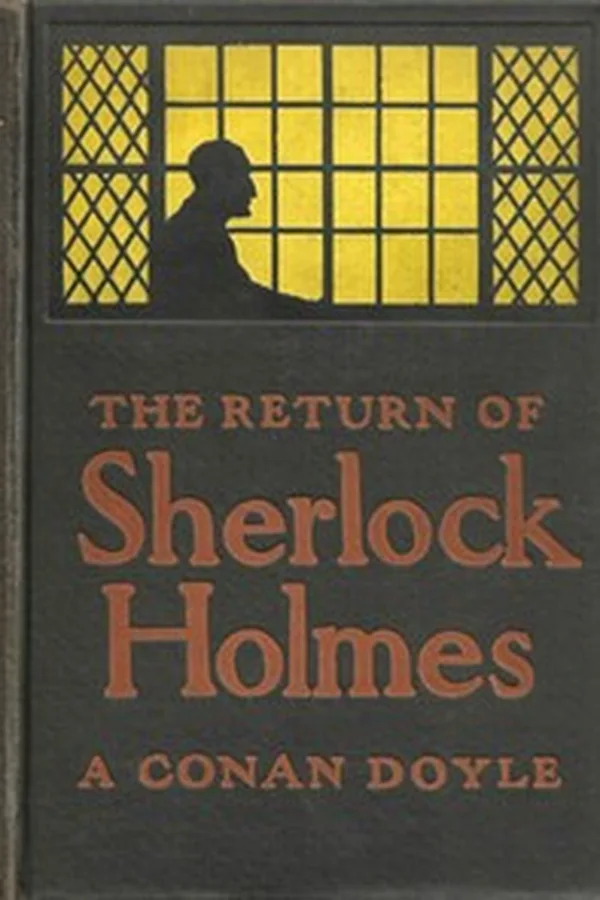
The Return of Sherlock Holmes
📖 Click to Read the Opening Pages Online Preview
The Adventure of the Empty House, opening pages:
It was in the spring of the year 1894 that all London was interested, and the fashionable world dismayed, by the murder of the Honourable Ronald Adair under most unusual and inexplicable circumstances. The public has already learned those particulars of the crime which came out in the police investigation, but a good deal was suppressed upon that occasion, since the case for the prosecution was so overwhelmingly strong that it was not necessary to bring forward all the facts. Only now, at the end of nearly ten years, am I allowed to supply those missing links which make up the whole of that remarkable chain. The crime was of interest in itself, but that interest was as nothing to me compared to the inconceivable sequel, which afforded me the greatest shock and surprise of any event in my adventurous life. Even now, after this long interval, I find myself thrilling as I think of it, and feeling once more that sudden flood of joy, amazement, and incredulity which utterly submerged my mind. Let me say to that public, which has shown some interest in those glimpses which I have occasionally given them of the thoughts and actions of a very remarkable man, that they are not to blame me if I have not shared my knowledge with them, for I should have considered it my first duty to do so, had I not been barred by a positive prohibition from his own lips, which was only withdrawn upon the third of last month.
It can be imagined that my close intimacy with Sherlock Holmes had interested me deeply in crime, and that after his disappearance I never failed to read with care the various problems which came before the public. And I even attempted, more than once, for my own private satisfaction, to employ his methods in their solution, though with indifferent success. There was none, however, which appealed to me like this tragedy of Ronald Adair. As I read the evidence at the inquest, which led up to a verdict of willful murder against some person or persons unknown, I realized more clearly than I had ever done the loss which the community had sustained by the death of Sherlock Holmes. There were points about this strange business which would, I was sure, have specially appealed to him, and the efforts of the police would have been supplemented, or more probably anticipated, by the trained observation and the alert mind of the first criminal agent in Europe. All day, as I drove upon my round, I turned over the case in my mind and found no explanation which appeared to me to be adequate. At the risk of telling a twice-told tale, I will recapitulate the facts as they were known to the public at the conclusion of the inquest.
All day I turned these facts over in my mind, endeavouring to hit upon some theory which could reconcile them all, and to find that line of least resistance which my poor friend had declared to be the starting-point of every investigation.
Download Full EPUB1905
~112,000 words (estimated)
Approx. 6.2 hours
Sherlock Holmes canon
London and the English countryside
13 stories
EPUB · AZW3 · KEPUB
0.65 MB (EPUB) · 0.84 MB (AZW3) · 0.70 MB (KEPUB)
Public domain in the United States
Project Gutenberg #108
The Return of Sherlock Holmes gathers thirteen stories that Doyle wrote between 1903 and 1904, nearly a decade after he had killed his detective at the Reichenbach Falls. The collection opens with Holmes walking back into Watson’s consulting room in 1894 and spends the rest of its length proving that the absence changed nothing: a locked room in Park Lane, a builder gone missing at Lower Norwood, chalk figures on a Norfolk window-sill, a bicycle ride to Farnham, a harpoon in a wooden hut, a blackmailer in Hampstead. Watson narrates every case in the same sober voice, and the settings move from Baker Street to Norfolk, Surrey, Cambridge, Kent and the north of England.
The stories appeared in The Strand Magazine from October 1903 to December 1904 and were collected in book form in March 1905, with Sidney Paget’s illustrations. Doyle wrote the last of them as a farewell to the character, then, as usual, came back. The volume assumes a reader who already knows the legend: Watson refers back to old cases, the police remember Holmes, and the return itself is treated as news. See Wikipedia’s article on The Return of Sherlock Holmes for the publication history. The text is available via Project Gutenberg #108.


The Return of Sherlock Holmes by Arthur Conan Doyle: Summary, Characters & Themes
This page is a summary and analysis of The Return of Sherlock Holmes, the 1905 collection in which Arthur Conan Doyle brought his detective back after a decade of silence. Thirteen stories follow one another without an overarching plot, but the book has a shape. It opens with a resurrection, settles into a run of cases that test Holmes’s method against very different kinds of secrecy, and closes with two stories in which the crime is less a puzzle than a matter of documents, reputation and private life. Watson narrates every case, and his habit of dating an adventure by the weather or the state of the London streets gives the sequence its continuity.
The return itself was a commercial decision as much as a literary one. Doyle had killed Holmes at the Reichenbach Falls in 1893 and spent the next decade insisting that the decision was final, while readers, editors and his own accounts argued otherwise. A stage play and the 1901 novel The Hound of the Baskervilles tested the water without committing him. In 1903 he wrote a single new story, The Adventure of the Empty House, and found that the character came back easily. The rest of the thirteen were written over the following eighteen months in the same burst, which is why the collection feels less like a plan than a man making up for lost time.
The cases move outward from Baker Street in every direction: a brick villa at Lower Norwood, a manor house in Norfolk, a preparatory school in the north of England, a Cambridge college the night before a scholarship examination, a cottage in Kent, a blackmailer’s house in Hampstead, a retired detective’s cottage in Sussex. A bicycle left in a shed, a timber-yard that has been burned, a garden gate a hundred yards from a main road, a chair moved across a carpet: each of these is a fact before it is a clue.
Holmes is older, more public and slightly harder to like. He has been dead in the newspapers and is now famous in a way that changes how people talk to him; he disguises himself as a book collector, a plumber and a man with a cold, and he enjoys the performance more than he used to. Watson, meanwhile, has a practice and a household of his own, so the partnership has to be reassembled each time a case begins. That distance is part of the book’s subject: the two men are no longer young, and the stories are full of returns, resumptions and things taken up again after a long interval.
The collection sold well and has stayed in print, and a good deal of the Holmes imagery that later adaptations borrow comes from these pages: the empty house opposite the old rooms, the blackmailer’s safe, the dancing figures on the window-sill, the missing three-quarter. The book is also self-conscious about its own return: a hero has to explain his absence, and a narrator has to decide whether to believe him. Readers who want the earlier books can find The Hound of the Baskervilles, The Adventures of Sherlock Holmes and A Study in Scarlet on this site. The full text of this collection is the Project Gutenberg transcription (#108), and Wikipedia’s article on Arthur Conan Doyle covers the author’s life.
Historical Context
The Strand Magazine, founded by George Newnes in 1891, sold for sixpence and built its circulation on illustrated serial fiction: Sherlock Holmes, Rudyard Kipling, H. G. Wells and a great deal of crime. A monthly with a fixed number of pages needed stories that could be read in one sitting, and Doyle’s cases fitted the format almost exactly, which is why the early collections read like a magazine rather than a novel. The stories are short enough for one sitting and long enough to carry a real investigation, a balance Doyle had been refining since 1891. The Return was serialised there from October 1903 to December 1904, with Sidney Paget’s drawings beside the text, and Newnes collected the stories in book form in March 1905.
Britain in 1903 was still paying for the Boer War. Joseph Chamberlain’s campaign for tariff reform was splitting the Unionist party, the Russo-Japanese War and the Russian revolution of 1905 filled the newspapers with spies, refugees and bombs, and the Aliens Act of 1905 brought in the first peacetime controls on immigration. Anarchist outrages in Europe and unrest in India made the foreigner a stock figure in fiction, usually a silent man with a bomb. Doyle uses him more carefully than most of his contemporaries, and the foreigners in these stories are as often victims of other people’s secrets as they are threats.
Policing was changing at the same time. Scotland Yard had opened a fingerprint branch in 1901 and was beginning to photograph and measure suspects; the telegraph, the safety bicycle and the suburban railway had widened the ground a single constable could cover. Holmes’s methods sit at the edge of that official science: he reads a thumb-print, but he also reads a room. The stories are full of the new machinery of communication, with cables to Chicago, telegrams delivered at dawn and letters locked in despatch-boxes, and of the older machinery of reputation, which in this book turns out to be the more dangerous of the two.
Key Characters & Literary Archetypes
- Sherlock Holmes: Holmes is in his forties in these stories, with the same long thin hands, the same dressing gown and the same refusal to explain himself twice. What is new is his public identity: he has been dead, he has been mourned, and he now works in a London that has read about him. He appears here as an old book collector, as a plumber courting a housemaid and as a man with a cold, and he is at his coldest in the blackmailer’s study, where the law cannot help and he does not pretend otherwise.
- Dr John Watson: Watson is a physician with a practice and a household of his own, and each story begins with him being pulled away from both. He is the reader’s anchor: he notices the mud on a boot, the ash on a carpet and the state of a client’s gloves, and he reports them without knowing which detail matters. His loyalty drives the first story, where he has to decide whether the man in front of him is a ghost, a fraud or his friend, and his ordinary decency is the measure against which the criminals are judged.
- Colonel Sebastian Moran: Moran is the collection’s first antagonist and its most professional one. He has shot big game in the Himalayas and written a book about it, he is a fine billiard player and a better shot, and he served as Professor Moriarty’s chief of staff. He is not a man who loses his nerve; he is a man who has been paid, and who assumes that the police will never look up. Holmes respects him because Moran, unlike most of the criminals here, is good at what he does and knows exactly how good he is.
- Inspector Lestrade: Lestrade is the collection’s recurring official: small, sallow, ferret-faced and convinced that this time the evidence is simple. He arrives at Baker Street with a theory and a pair of handcuffs, and leaves with a lesson he does not enjoy. He is not a fool, and the stories are fairer to him than his reputation suggests: he does the legwork, he knows the courts and the magistrates, and he is the person Holmes calls when a case finally needs an arrest rather than an explanation.
Core Literary Themes
- The returned detective: The collection is built on a resurrection, and it keeps returning to the idea of a man who comes back. Holmes reappears in disguise; a wax bust is shot in his place; a blackmailer’s victim lives a double life; a wife turns out to have another name. Doyle uses the return as a plot device and as a joke about his own hero, and the book asks, lightly, whether a person can be replaced by an image of himself. The answer it gives is reassuring and a little sad: the image can be destroyed, and the man can walk back in.
- Respectable crime: Most of these crimes happen indoors, in villas and country houses, among people with servants and settled incomes. The stakes are rarely money alone: a letter, a photograph, a past attachment, a will. Doyle understood that blackmail is the perfect crime for a magazine audience, because it turns the reader’s own respectability into the weapon, and Charles Augustus Milverton is the collection’s clearest statement of that idea. The violence, when it comes, is domestic and sudden, and it usually arrives through a window that was left open.
- Codes and documents: The Return is full of writing: a cipher chalked on a window-sill, a Greek unseen printed on slips of paper, a letter in a despatch-box, a telegram delivered at dawn, a diary hidden in a bureau. Holmes’s method is repeatedly described as reading rather than detection, since he looks for the order in a set of marks before he looks for a suspect. The stories are interested in what handwriting, seals and paper can prove, and in how easily all three can be made to lie by someone who understands them.
- Empire and the foreigner: The cases bring the Empire back to London: an American gunman from Chicago, an Italian plasterer from Stepney, Russian exiles in Kent, an Australian past that will not stay buried. Doyle’s foreigners are sometimes villains and sometimes victims, and the collection is more interested in the traffic between Britain and the rest of the world than in simple fear of strangers. What arrives from abroad is usually a piece of unfinished business, a debt or a marriage or a crime that was supposed to have been left behind, and it always finds its way to a quiet English room.
Why Download Our Custom E-Reader Edition of The Return of Sherlock Holmes?
Most readers meet Holmes through a single famous novel or a handful of stories. The Return is the collection that shows the machine working at scale: thirteen cases written in a burst after a decade of silence, each one built around a different kind of problem, from a locked room in Park Lane to a stolen letter in a despatch-box. Reading them together is a different experience from reading them separately, because the book keeps repeating its own gestures and then varying them. The famous stories are here, but so are the odd ones, and the odd ones are often the better reading. That repetition is a feature of the design rather than a shortage of invention, and it rewards a reader who goes straight through.
The collection also has a shape that a single story cannot show. Holmes comes back, works through the middle of the 1890s and ends with a case about reputation and statecraft; read in order, the thirteen stories trace a detective growing older and a narrator growing more confident in his own judgement. The last two stories in particular are quieter and more domestic than the famous ones, and they are the reason the book is worth reading as a book rather than as an anthology. Watson’s marriage and Holmes’s retirement are both taken seriously, which gives the last pages an unexpectedly elegiac tone.
This edition is built for reading rather than browsing. Every story is a chapter, the text is the Project Gutenberg transcription of the 1905 collection, and the EPUB, AZW3 and KEPUB files carry a cover, a working table of contents and no DRM. It is the whole book, not a selection, and it is free to keep, copy and read on whatever device you already own. The text has not been modernised: Doyle’s spellings and punctuation are left alone, and the chapter titles are the story titles he used.
- Project Gutenberg transcription, via Project Gutenberg #108 — the complete 1905 text, transcribed from the printed collection and checked against the page scans for the usual errors, with no cuts, no rewrites, no modernised spelling and no silent corrections of Doyle’s punctuation. The file is the base for every download on this page.
- Thirteen stories, unbroken — every case from The Empty House to The Second Stain, in the order Doyle arranged them for the book, each with a short summary on this page and the full text behind it, plus a note on where each case sits in the chronology and the name each story carried in the magazine.
- Real chapter marks — each story is a separate chapter in the EPUB, with its own entry in the table of contents, so you can finish one case at bedtime and start the next one tomorrow without losing your place, and the contents page lists all thirteen stories by name.
- Three formats — EPUB for most readers, AZW3 for Kindle and KEPUB for Kobo, all built from the same source text, with the same cover and no digital rights management of any kind, and each file opens at the first page of the first story without an account or a password.
- The Hound of the Baskervilles — free EPUB, AZW3 & KEPUB
- The Adventures of Sherlock Holmes — free EPUB, AZW3 & KEPUB
- The Valley of Fear — free EPUB, AZW3 & KEPUB
Chapter summaries
The thirteen stories are listed in the order Doyle placed them in 1905. Each entry sets up the case as Watson first met it, and none of them gives away the solution.
- I. The Adventure of the Empty House: In the spring of 1894 the Honourable Ronald Adair is found shot in a locked room at 427 Park Lane, and nobody in the street heard a report. Watson follows the inquest and the newspapers to Camden House, the empty house opposite the Baker Street rooms he once shared, where an old book collector with a stoop and a bundle of second-hand volumes has taken rooms. The bullet that killed Adair mushroomed against the wall; the window stood five feet above the pavement. The case turns on an air-gun, a wax effigy and a man the police had stopped looking for.
- II. The Adventure of the Norwood Builder: A young solicitor, John Hector McFarlane, arrives at Baker Street with a policeman at his heels. He had been summoned to Deep Dene House, Lower Norwood, by Jonas Oldacre, a builder of fifty-two who wanted a will drawn in the young man’s favour; by morning Oldacre had vanished, charred remains had been found in the ashes of the burned wood-pile and a print of a thumb in blood had appeared on the whitewashed wall. Lestrade is certain of his man. Holmes is more interested in the wax impression of a thumb that Lestrade has brought for comparison, the housekeeper’s sidelong eyes, and what the woman, as close as wax, will not say.
- III. The Adventure of the Dancing Men: Hilton Cubitt of Riding Thorpe Manor, Norfolk, brings Holmes a sheet of paper covered in little stick figures, each with arms and legs at a different angle. They first appeared in chalk on his window-sill, then on the black door of the tool-house, then under a pebble on the sundial. Cubitt has sat up with a revolver and seen nothing. His wife, Elsie, an American from Chicago, is frightened of them in a way he cannot explain. Inspector Martin of the Norfolk police has the case, a cable to Chicago produces the name Abe Slaney, and Holmes begins counting how often each figure repeats.
- IV. The Adventure of the Solitary Cyclist: In April 1895 Violet Smith, a music teacher, comes to Baker Street about a man who follows her bicycle. Every Saturday she rides to Farnham station for the 12:22 to town, and on one stretch of the road a stranger on a bicycle keeps pace behind her, then vanishes at the same point each time. She works at Chiltern Grange for Mr Carruthers, a quiet older man who has proposed to her; she is engaged to Cyril Morton, an electrical engineer. Her employer’s neighbour, the red-moustached Mr Woodley, has also made advances. Holmes takes the 9:13 train down, hires a bicycle himself and rides the same road.
- V. The Adventure of the Priory School: Thorneycroft Huxtable, headmaster of The Priory, collapses on the hearth-rug of Baker Street with a problem: Lord Saltire, the ten-year-old only son of the Duke of Holdernesse, has vanished from the school, the German master Heidegger went missing the same night, and his Grace has offered five thousand pounds for news of the boy. A bicycle is gone from the shed, ivy is torn on the lawn, and the duke, who owns a quarter of a million acres, will not hear of a public scandal. Holmes and Watson take the train north and find a game-cock sign, a sullen innkeeper and a moor that keeps its own secrets. Holmes sprains his ankle crossing it.
- VI. The Adventure of Black Peter: Captain Peter Carey, once master of the Dundee sealer Sea Unicorn, is found dead in the wooden cabin he used at Woodman’s Lee, pinned to the wall by a harpoon from his own rack. His daughter heard a cry at two in the morning; his tantalus was full, and his sealskin tobacco pouch lay on the floor. Stanley Hopkins, the young inspector, has a suspect: John Hopley Neligan, the son of a defaulting banker, who stayed at the local hotel under a golfing pretext. Holmes reads the cabin instead of its occupant, noting the empty slot on the rack, the marks on the floor and the way a heavy man falls.
- VII. The Adventure of Charles Augustus Milverton: Charles Augustus Milverton, of Appledore Towers, Hampstead, is the most successful blackmailer in London, and Holmes agrees to help a client recover a letter. The visit to Hampstead is conducted with the politeness of two men who would each happily see the other dead, and Milverton shows the butt of a revolver in his coat before he shows the door. Holmes then spends days in disguise and returns at night with Watson, black silk over their faces, to a study where the safe door stands a little open and a housemaid called Agatha is being courted by a plumber.
- VIII. The Adventure of the Six Napoleons: Inspector Lestrade brings Holmes a run of vandalism: plaster busts of Napoleon smashed in Kennington Road, in Lower Brixton and in a shop near High Street Station, Kensington. The owners have nothing in common except the manufacturer, Gelder and Company of Stepney, and a workman named Beppo who left the firm. Horace Harker of the Central Press Syndicate is pacing his sitting-room in a flannel dressing-gown when Holmes and Lestrade arrive, because his bust has been smashed and a man lies dead in the house; Dr Barnicot’s bust was broken in two places. Holmes buys a bust himself and waits for the next one to fall. The trail runs through Chiswick to a workshop and a man with a very particular reason for hating the emperor’s face.
- IX. The Adventure of the Three Students: Hilton Soames, tutor at the College of St Luke’s, arrives at Holmes’s lodgings in a university town the night before the Fortescue Scholarship examination. A Greek unseen has been set on three long slips of paper; one is found on the carpet, one on the side table by the window, and the third still in its place. Soames’s new writing-table has a clean cut three inches long in its red leather top, and a small ball of black clay lies nearby. Three students are in the running: Daulat Ras, Miles McLaren and Gilchrist. Holmes asks about the staircase, the latticed window and the servant Bannister, who nearly fainted when the slips were found.
- X. The Adventure of the Golden Pince-Nez: On a stormy November night Stanley Hopkins brings Holmes a pair of gold-rimmed spectacles and a problem. Willoughby Smith, secretary to the invalid Professor Coram, has been stabbed in the study at Yoxley Old Place in Kent, and the spectacles, with two broken ends of black silk cord, were still clutched in his hand. The maid had been hanging curtains upstairs; the professor was in bed; the garden gate opens a hundred yards from the London and Chatham road. Holmes examines a corridor of cocoanut matting, a writing-table and a bureau whose cupboard does not open for everyone before he will say what sort of visitor the house received.
- XI. The Adventure of the Missing Three-Quarter: Cyril Overton, captain of the Cambridge fifteen, arrives at Baker Street at dawn on the morning of the Wales match: Godfrey Staunton, the best three-quarter in England, has vanished from his hotel, leaving a half-finished telegram. Overton’s wire had reached Holmes the night before. Staunton’s uncle, Lord Mount-James, is a miser with a fortune and no interest in football; Dr Leslie Armstrong, the Cambridge physician, is more helpful than he sounds. Holmes borrows a bicycle from the shop next to the inn and follows a carriage across the Cambridgeshire lanes, through Chesterton, Histon, Waterbeach and Oakington, with a dog set on him for his trouble.
- XII. The Adventure of the Abbey Grange: “Come, Watson, come! The game is afoot,” Holmes says on a frosty morning at the end of the winter of 1897. Sir Eustace Brackenstall has been killed in the dining room at Abbey Grange in Kent; his wife, Lady Mary, was found bound to an oaken chair with a crimson bell-rope, and says that three men took the silver and killed her husband. The maid, Theresa Wright, has been with her since childhood in Australia. Holmes spends a long time on the knots, then climbs onto the mantelpiece among the deer’s heads, and measures the mark a chair made on the carpet.
- XIII. The Adventure of the Second Stain: A Tuesday in autumn, and two of the most powerful men in Britain are in Holmes’s sitting-room: Lord Bellinger, twice Prime Minister, and Trelawney Hope, Secretary for European Affairs. A letter from a foreign potentate has been taken from a locked despatch-box in Whitehall Terrace, and on the same night a man named Eduardo Lucas has been stabbed in Godolphin Street, Westminster. Lestrade sees no connection; Holmes sees a stain on a carpet that has no matching mark on the boards beneath it. Lady Hilda Trelawney Hope has already called at Baker Street once, and when Holmes asks her to step up in front of her husband, the interview is not the one Hope expects.
The Return of Sherlock Holmes: Frequently Asked Questions
What is The Return of Sherlock Holmes about?
How does Holmes come back?
Do I need to read the earlier books first?
How long does it take to read?
Are the stories connected to each other?
In what order should I read them?
Is this the complete text?
Where can I download The Return of Sherlock Holmes for free?
Part of: Classic Books by Length and Reading Time · Authors