A Midsummer Night’s Dream by William Shakespeare: Free EPUB, AZW3 & KEPUB Download
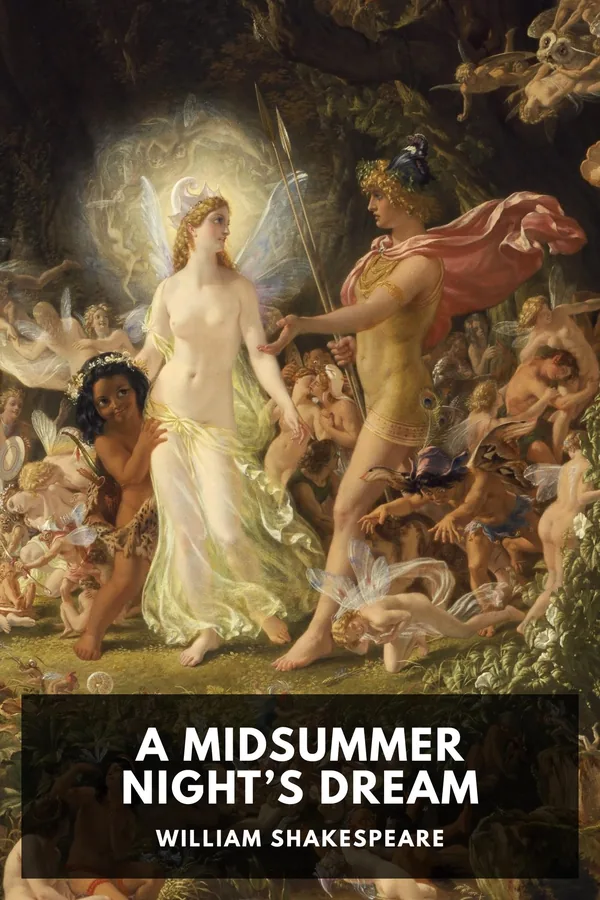
A Midsummer Night’s Dream
📖 Click to Read the Opening Pages Online Preview
The opening of Act I, Scene 1
Now, fair Hippolyta, our nuptial hour Draws on apace; four happy days bring in Another moon: but, O, methinks, how slow This old moon wanes! she lingers my desires, Like to a step-dame or a dowager Long withering out a young man’s revenue.
Four days will quickly steep themselves in night; Four nights will quickly dream away the time; And then the moon, like to a silver bow New-bent in heaven, shall behold the night Of our solemnities.
Go, Philostrate, Stir up the Athenian youth to merriments; Awake the pert and nimble spirit of mirth: Turn melancholy forth to funerals; The pale companion is not for our pomp. Exit Philostrate. Hippolyta, I woo’d thee with my sword, And won thy love, doing thee injuries; But I will wed thee in another key, With pomp, with triumph and with revelling.
The excerpt below quotes the opening three speeches of Act I, Scene 1, in which Theseus tells Hippolyta that their wedding is four days away and that the old moon seems to hang, she answers that four nights will dream the time away, and he sends Philostrate to stir the young Athenians to merriment before describing how he wooed her with his sword.
Download Full EPUB1600
Play
18,000 words
1.0 h
Standalone
Athens, and the wood a league outside its gates where the lovers, the fairies and the workmen all meet on the same night.
Five acts and nine scenes, grouped into ten movements
EPUB · AZW3 · KEPUB
0.54 MB (EPUB) · 0.54 MB (AZW3) · 0.57 MB (KEPUB)
Public domain in the United States
Project Gutenberg #1514 · Standard Ebooks
A Midsummer Night’s Dream is Shakespeare’s comedy of four plots that meet in one wood outside Athens. Theseus, duke of Athens, is four days from his wedding to Hippolyta, queen of the Amazons, when Egeus brings his daughter Hermia before him and asks the ancient privilege of Athens: she must marry Demetrius or die. Hermia and Lysander plan to run away, Helena tells Demetrius, and all four end in the wood, where Oberon, king of the fairies, is quarrelling with Titania over a changeling boy and sends Puck for a flower whose juice makes sleepers dote on the next creature they see. Six Athenian workmen rehearse a play in the same wood, and Bottom the weaver is given an ass’s head.
The play is written mostly in verse, with the lovers in rhyme, the fairies in short lines and the workmen in prose that keeps tripping over itself. Its engine is mistake: Puck anoints the wrong Athenian, two men who loved one woman come to love another, and a queen wakes in love with a man who has an ass’s head. Everything is undone before dawn, and the last act gives the three weddings and the workmen’s play. The Wikipedia article on the play covers its text and its place among the comedies. — The text is available via Project Gutenberg #1514 and Standard Ebooks.
A Midsummer Night’s Dream by William Shakespeare: Summary, Characters & Themes
This page offers a summary and analysis of A Midsummer Night’s Dream, with its five acts and nine scenes set out in order, the four plots traced through the wood, and the verse and stage business that hold them together. William Shakespeare wrote the comedy, and the edition’s byline dates it to the first quarto of 1600. The text here keeps the act and scene divisions the edition prints, and the page follows them from the law court of the first scene to the fairy blessing in the last. The ten groups below are ours; the acts and scenes are not, and no scene is given a title it does not have. Quotations are kept short and given to the character who speaks them, so the page can be read beside the play rather than instead of it.
The play opens in Athens four days before the wedding of Theseus and Hippolyta, and its first scene is a courtroom in all but name. Egeus claims the ancient privilege of Athens over Hermia, who must marry Demetrius, die, or enter a cloister; Lysander proposes flight to a widow aunt’s house seven leagues off, and the lovers agree to meet in the wood a league outside the town. Helena, who loves Demetrius and is loved by nobody, decides to tell him the plan. The text described here is the Standard Ebooks edition, and a complete reading text also sits at Project Gutenberg #1514. The play is in five acts and nine scenes, and the scene headings are the only keys the reader is given. Night in the wood and daylight in Athens are its two settings, and the action never leaves them for long.
Oberon and Titania, king and queen of the fairies, meet in the same wood, and their quarrel is the play’s engine. Titania keeps a changeling boy whose mother was a votaress of her order and died in bearing him; Oberon wants the child for his train and, when she refuses, sends Puck for a flower whose juice makes a sleeper dote on the first creature seen on waking. The flower has a history of its own: Oberon watched Cupid’s arrow fall on it after the shaft was quenched by the moon, and saw the imperial votaress pass on in maiden meditation, fancy-free. Puck brings the flower and anoints Titania, then mistakes Lysander for the youth Oberon described. Oberon then anoints Demetrius, believing he is mending Puck’s error, and by dawn two men who loved Hermia love Helena, and a queen has loved a weaver with an ass’s head.
The third plot belongs to six Athenian workmen who are cast in a play for the wedding. Quince the carpenter takes the prologue and Thisbe’s father, Bottom the weaver is Pyramus, Flute the bellows-mender is Thisbe, Snug the joiner is the lion, Snout the tinker is Wall and Starveling the tailor is Moonshine. They rehearse in the wood, worry that the ladies will be frightened by the sword and the lion, and settle on prologues to explain that nobody is really killed. Their scenes are in prose, and their mistakes with words, from odious savours to Ninny’s tomb, are half the joke. Puck gives Bottom an ass’s head, and the rehearsal turns into the fairy queen’s love affair. Romeo and Juliet, the tragedy of the same years, puts two lovers and a single night together without the flower or the farce.
The last act keeps the wood off the stage and brings the plots to a wedding. Theseus will not believe the lovers’ story, Hippolyta finds it strange and admirable, and the workmen perform Pyramus and Thisbe so badly that the court talks through it: the wall is praised, the lion is teased, and the moon is told to change. Then the duke sends everyone to bed, the fairies enter to bless the house and the three bridal beds, and Puck asks the audience to think it has been asleep. Hamlet turns the same interest in ghosts, plays and waking into tragedy. The rest of our Drama Classics shelf is free in the same three formats, and the other comedies on it make a good next step after this one.
Historical Context
The Athens of the play is a city with a marriage law and a duke who can overbear a father. Egeus asks for the ancient privilege of Athens, and Theseus spells out the choice: death, or a vow of single life at Diana’s altar, or a marriage she does not want. Theseus’s own wedding is the frame. He tells Hippolyta that he wooed her with his sword and won her love doing her injuries, and that he will wed her in another key, with pomp and triumph and revelling. The law is stated twice, once by Egeus as a right and once by Theseus as a sentence, and the second telling is the harsher. At dawn in the wood the same authority that threatened Hermia with death overrules Egeus and orders the weddings.
Puck is Robin Goodfellow, the hobgoblin of household stories, and the fairy who meets him lists his tricks: skimming the milk, hindering the quern, spoiling the churn, misleading night-wanderers. The play gives that folklore a court, with a king and queen who quarrel over a stolen boy, and makes the quarrel physical. Titania says the winds have sucked up contagious fogs, the corn has rotted, the fold stands empty, the nine men’s morris is filled with mud, and the seasons have changed their liveries. Love-in-idleness, the flower Puck fetches, is the play’s central magic object, and the fairies’ last office is a blessing on the three bridal beds, promising fortunate issue and no mole, harelip or scar. The blessing is the language of a birth-charm, spoken over a wedding bed rather than a cradle.
The workmen’s rehearsal is also an account of how the play was staged. Quince turns a green plot into a stage and a hawthorn brake into a tiring-house, promises a bill of properties, and plans a prologue in eight and six, while Bottom asks for eight and eight. The company worries about the lion and the sword, so Snug is to show half his face through the lion’s neck and say he is Snug the joiner, and Snout is to carry plaster and rough-cast to signify a wall. Theseus answers with the play’s own defence of playing, that the best in this kind are but shadows, and Puck closes on the same word. The court on the stage is part of the joke, since it watches the workmen as the play’s own audience watches the court.
Dramatis Personae & Archetypes
- Theseus: Duke of Athens, four days from his wedding to Hippolyta, and the magistrate before whom Egeus pleads. He offers Hermia death, a cloister or Demetrius, then overrules her father at dawn and orders three weddings. In the last act he refuses the lovers’ story, calls the workmen’s play a shadow, and chooses it over the other entertainments because simpleness and duty tender it.
- Hermia: Egeus’s daughter, in love with Lysander, small and fierce about it. She refuses the husband her father has chosen, agrees to meet Lysander in the wood, and wakes from a dream of a serpent to find him gone. When he turns on her she calls him a juggler, and when Helena mocks her height she offers to reach her eyes with her nails.
- Helena: In love with Demetrius, who spurns her, and convinced that everyone is mocking her. She tells Demetrius of Hermia’s flight in the hope of thanks, follows him into the wood, and compares herself to a spaniel. When both men turn to her she cannot believe it, and her line that love looks not with the eyes but with the mind is the play’s argument in a sentence.
- Oberon and Titania: King and queen of the fairies, whose quarrel over a changeling boy sets the wood’s magic going. Titania will not give up the child of her dead votaress, and Oberon takes revenge with the flower that makes her dote on Bottom. She says their dissension has drowned the fields and changed the seasons. By dawn he has the boy, she has her eyes back, and the two of them bless the bridal beds.
- Puck: Robin Goodfellow, Oberon’s servant, who fetches the flower, mistakes Lysander for the youth Oberon described, and fixes an ass’s head on Bottom. He leads the four lovers up and down in fog, imitating their voices, and squeezes the herb into Lysander’s eye that cures him. He speaks to the audience in the last lines of the play, asking them to think they have slept through it all.
- Bottom: The weaver, cast as Pyramus, who wants to play Thisbe and the lion as well and is sure he can move storms. He is confident, literal and unembarrassed, whether he is choosing a beard or planning how to roar, and his good sense survives the ass’s head. Woken by Titania, he asks for hay and dried peas and treats the fairies as fellow tradesmen; he wakes again with a dream he calls Bottom’s Dream.
Core Literary Themes
- Love as a kind of blindness: Helena says that love looks not with the eyes but with the mind, and the play makes the saying literal with a flower. The juice does not create love; it aims it, and the lovers’ speeches are full of eyes, lode-stars and glass. Demetrius describes his old obsession as a sickness and his return to Helena as coming back to health, a cure the audience may not trust. Theseus puts the lover beside the lunatic and the poet, all three shaping fantasies. Yet the love the play laughs at is not made by magic alone: Hermia and Lysander swear by Cupid’s bow before any flower is picked. Nobody at the end asks whether the marriages are wise, and the fairy blessing falls on them all the same.
- Dream, illusion and waking: The wood is a place where the rules of Athens do not run, and everyone who enters it has an experience they cannot report. Hermia dreams of a serpent at her breast before she wakes alone; Bottom calls his night a most rare vision and says man is but an ass if he tries to expound it; the four lovers wake unsure whether the duke was there. Theseus refuses the story as antique fable, while Hippolyta answers that all their minds transfigured together grow to something of great constancy. Puck’s epilogue offers a third answer, that the audience has been asleep.
- Law, the father and the duke: The comedy begins with a father asking the state to kill his daughter, and the threat is not withdrawn until the fourth act. Egeus claims the ancient privilege of Athens; Theseus tells Hermia she is a form in wax and offers her death, a cloister or Demetrius. The lovers’ answer is to run, and the wood gives them a night the law cannot reach. When the duke finds them asleep he does not pardon them; he overrules Egeus and marries them himself, so the same power that threatened death gives the wedding. The three weddings restore order, but it arrives by accident, as a hunting party and a mistaken flower.
- The fairy quarrel and the disordered land: Titania’s speech in the first fairy scene is the play’s one long passage of natural description, and it is a picture of a country out of joint. The winds have sucked up fogs, the rivers have broken their banks, the corn has rotted, the fold stands empty, the nine men’s morris is filled with mud, and the seasons have changed their liveries. She says the cause is the quarrel, and that the fairy king and queen are the parents and original of these evils. The ending answers her: Oberon and Titania dance in the house and bless the bride-beds, promising fortunate issue and no mark or blemish on the children.
- Playing, shadows and the workmen’s theatre: The mechanicals are a company of amateurs with a bill of properties and no idea of illusion, and their play is the comedy’s longest joke about the stage. They fear the lion will frighten the ladies, so Snug is to explain that he is Snug the joiner; they fear the sword, so a prologue will say that Pyramus is not killed; they cannot bring in a wall or the moonlight, so Snout carries plaster and Starveling carries a lantern. Theseus gives the defence the play needs, that the best in this kind are but shadows and the worst are no worse if imagination amend them, and Puck takes the same word for his epilogue.
Why Download Our Custom E-Reader Edition of A Midsummer Night’s Dream?
The download is the whole play: five acts and nine scenes, from Theseus’s first speech about the slow moon to Puck’s request for the audience’s hands, with the act and scene divisions the edition prints and nothing cut. The text is the Standard Ebooks edition, set from the Project Gutenberg transcription, so the spelling, the punctuation and the scene breaks are the edition’s throughout. No scene is abridged and no speech is summarised in place of the original.
Around the text the page supplies what a play of four interlocking plots needs: ten groups that follow the acts and scenes in order, six character notes, five themes, and a note on Athenian law, fairy lore and the workmen’s stagecraft. The groups are ours; the acts and scenes are not. Each summary names the scene it covers and stops where that scene stops, so the page can be read beside the play without running ahead of it.
The files come in three formats with the same text and the same scene breaks. The EPUB opens in Apple Books, Calibre and most Android readers; the AZW3 is the file for a Kindle, by USB or through Send to Kindle; the KEPUB is the one Kobo devices read best. No account is needed for any of them, and nothing in the downloads is locked, watermarked or time limited.
- Based on the Standard Ebooks Edition, via Standard Ebooks, whose text of A Midsummer Night’s Dream is set from the Project Gutenberg transcription, with the five acts and nine scenes kept as the edition prints them.
- Complete text in five acts Every act and scene from the palace to the fairy blessing, with the scene divisions and the speech prefixes as the edition prints them, and no scene cut or shortened.
- Ten groups in reading order Ten summaries keyed to the acts and scenes they cover, each stopping where its scene stops, from the complaint of Egeus to Puck’s epilogue.
- EPUB, AZW3 and KEPUB files The same text in three formats, for Apple Books, Kindle and Kobo, with the scene breaks and the verse lineation intact.
- The tragedy of the same years, with a feuding city, a night meeting and a marriage that the law and the families will not allow, and the nearest play to this one in its lovers and its haste. — free EPUB, AZW3 & KEPUB
- The tragedy that followed this comedy onto the stage, with a prince, a ghost, a play performed before a court and a hero who cannot decide what is real. — free EPUB, AZW3 & KEPUB
- The shelf where this edition sits, with the rest of our free plays in EPUB, AZW3 and KEPUB. — free EPUB, AZW3 & KEPUB
Act & scene summaries
The play has five acts and nine scenes, and this edition prints the act and scene headings with the locations the theatre used. The ten groups here are ours, added to make the play easy to follow; no scene is given a title it does not have. Each group begins where its scene begins and stops where its scene stops. Scenes are cited by act and number throughout, and the divisions are the same in all three downloads.
- Act I, Scene 1 — Theseus, Hippolyta and the law of Athens: Four days before his wedding, Theseus tells Hippolyta that the old moon seems to hang, and she answers that four nights will dream the time away. Egeus brings Hermia before him and asks the ancient privilege of Athens: she must marry Demetrius or die. Lysander answers that Demetrius once wooed Helena, and the two arrange to meet in the wood a league outside the town.
- Act I, Scene 2 — The mechanicals cast their play: At Quince’s house the carpenter, the joiner, the weaver, the bellows-mender, the tinker and the tailor are cast in The Most Lamentable Comedy and Most Cruel Death of Pyramus and Thisbe. Bottom wants to play Pyramus, Thisbe and the lion as well, and Flute objects to playing a woman because his beard is coming. They agree to rehearse by moonlight at the duke’s oak.
- Act II, Scene 1 — Oberon, Titania and the changeling: Puck and a fairy trade talk in the wood before Oberon and Titania meet and quarrel. She keeps a changeling boy whose mother, a votaress of her order, died after bearing him, and she will not give him up. Titania says their quarrel has drowned the fields and changed the seasons; Oberon sends Puck for the flower love-in-idleness, then overhears Demetrius spurning Helena.
- Act II, Scene 2 — The love-juice and the first mistake: Titania’s fairies sing her to sleep, and Oberon drops the juice on her eyelids. Lysander and Hermia lie down in the wood, Hermia insisting on distance between them. Puck, looking for a disdainful Athenian, mistakes Lysander and anoints him; Helena stumbles over him, he wakes and loves her, and Hermia wakes from a dream of a serpent at her breast.
- Act III, Scene 1 — Bottom translated: The workmen rehearse in the wood and worry about the sword, the lion and the moonlight. Puck watches, then returns with an ass’s head for Bottom; the others run away, and Bottom sings to show he is not afraid. Titania wakes, loves him at once and calls Peaseblossom, Cobweb, Moth and Mustardseed to wait on him.
- Act III, Scene 2 — The four lovers quarrel: Oberon anoints Demetrius, and now both men love Helena. Hermia accuses Helena of stealing Lysander, Helena calls her a puppet, and the two men go off to fight. Oberon sends Puck to cover the night in fog, lead them apart until all four sleep and then crush the herb into Lysander’s eye that will restore his sight.
- Act IV, Scene 1 — The changeling, the hunt and the waking: Titania dotes on Bottom and offers him hay and dried peas; Oberon pities her, says he has the boy, releases her eyes and has Puck remove the ass’s head. Theseus and Hippolyta arrive with hounds and find the four lovers asleep. Theseus overbears Egeus and decrees that the couples shall be married with him, and Bottom wakes to call his vision Bottom’s Dream.
- Act IV, Scene 2 — The play is preferred: At Quince’s house the workmen fear Bottom is lost and the play marred, since no one else can play Pyramus. Bottom returns with news that the duke has dined and their play is preferred, and gives his instructions: clean linen for Thisbe, no paring of the lion’s nails, and no onions or garlic before they speak.
- Act V, Scene 1 — Pyramus and Thisbe before the duke: Theseus will not believe the lovers’ story, and Hippolyta finds it strange and admirable. Of the entertainments offered he chooses the workmen’s play, against Philostrate’s advice and Hippolyta’s reluctance. Quince speaks the prologue, Snout is Wall, Starveling is Moonshine and Snug is the lion; Pyramus and Thisbe kill themselves, and Theseus calls for the Bergomask.
- Act V, Scene 1 — The fairies bless the house: Theseus sends the company to bed at midnight, calling the play a palpable-gross thing that has beguiled the night. Puck sweeps the hall, Oberon and Titania enter with their train and sing and dance a blessing on the house and the three bridal beds, promising fortunate issue. Puck closes the play, asking the audience to think it was a dream and to give him their hands.
A Midsummer Night’s Dream: Frequently Asked Questions
What is A Midsummer Night’s Dream about?
Who are the four lovers?
Why are Oberon and Titania quarrelling?
What does Puck do wrong?
Who are the mechanicals?
How many acts and scenes does the play have?
Is the play suitable for younger readers?
How do I read the free downloads?
On screen
A Midsummer Night’s Dream has seven screen versions we can verify between 1935 and 2000. All of them are listed below.
| Year | Version | Format |
|---|---|---|
| 1935 | A Midsummer Night’s Dream | film |
| 1959 | A Midsummer Night’s Dream | film |
| 1973 | A Midsummer Night’s Dream | TV film |
| 1990 | En midsommarnattsdröm | TV film |
| 1992 | Shakespeare: The Animated Tales | TV series |
| 1999 | A Midsummer Night’s Dream | film |
| 2000 | A Midsummer Night’s Cream | direct to video |
All versions are checked against Wikipedia and IMDb; the filmed classics index compares the thirteen best-covered novels side by side.
Part of: Drama Classics · Classic Fiction