Anna Karenina by Leo Tolstoy: Free EPUB, AZW3 & KEPUB Download
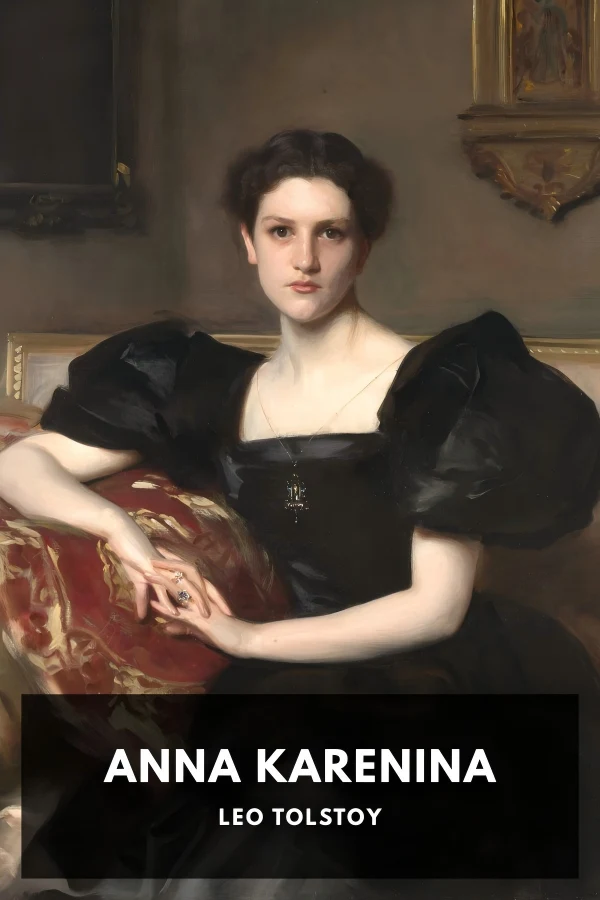
Anna Karenina
📖 Click to Read Part I: Chapter I Online Preview
Part I — Chapter I
Happy families are all alike; every unhappy family is unhappy in its own way.
Everything was in confusion in the Oblonskys’ house. The wife had discovered that the husband was carrying on an intrigue with a French girl, who had been a governess in their family, and she had announced to her husband that she could not go on living in the same house with him.
This position of affairs had now lasted three days, and not only the husband and wife themselves, but all the members of their family and household, were painfully conscious of it. Every person in the house felt that there was no sense in their living together, and that the stray people brought together by chance in any inn had more in common with one another than they, the members of the family and household of the Oblonskys. The wife did not leave her own room, the husband had not been at home for three days.
Experience Tolstoy’s panoramic masterpiece of Russian high society, passion, and spiritual truth. Download the complete unabridged edition for your e-reader.
Download Full EPUBAnna Karenina is an 1878 novel by Leo Tolstoy, a realist masterpiece of Russian society that intertwines the tragic adulterous passion of Anna Karenina and Count Vronsky with the moral and spiritual awakening of Konstantin Levin, exploring themes of love, marriage, hypocrisy, faith, and social convention. This Standard Ebooks edition, translated by Constance Garnett (1901), is based on Project Gutenberg eBook #1399 and is in the public domain in the United States; readers outside the US should check their local laws. The text is available via Standard Ebooks.
About Leo Tolstoy’s Anna Karenina: Summary, Characters & Themes
Anna Karenina is an 1878 realist novel by Leo Tolstoy, here translated by Constance Garnett (1901). This summary and analysis follows the novel’s dual structure: the socially condemned adultery of Anna Karenina and Count Alexey Vronsky, set against the moral and spiritual search of the landowner Konstantin Levin.
The novel opens in the Moscow household of Stepan Arkadyevitch Oblonsky (“Stiva”), whose affair with the family’s former French governess has driven his wife Darya Alexandrovna (“Dolly”) to the brink of leaving him. Anna, Stiva’s sister, arrives from St. Petersburg to reconcile the couple—and on the journey meets the young cavalry officer Count Alexey Kirillovitch Vronsky.
Anna is married to Alexey Alexandrovitch Karenin, a cold and rigidly dutiful senior government official. Refusing to conceal her love for Vronsky within society’s hypocritical rules, she leaves her husband and her young son Seryozha. Society, however, forgives private vice while punishing open honesty.
Cast out, isolated, and consumed by jealousy, Anna’s passion turns to despair, and she dies by suicide beneath the wheels of a train. In parallel, Levin works on his estate, marries Katerina Alexandrovna Shtcherbatskaya (“Kitty”), and moves from existential despair toward a life grounded in goodness, labor, and family.
Key Characters
- Anna Arkadyevna Karenina: Radiant, vital, and unwilling to live a lie. She rejects the emotional deadness of her marriage and the hypocrisy of aristocratic society, choosing love even at the cost of her social ruin.
- Konstantin Dmitrievitch Levin: An earnest, socially awkward country gentleman who seeks meaning through agricultural labor and family life, rather than through the hollow intellectualism of the city.
- Alexey Alexandrovitch Karenin: Anna’s elder husband, a senior government official who lives by duty, prestige, and outward propriety, and embodies the unfeeling rigidity of the imperial administration.
- Count Alexey Kirillovitch Vronsky: A wealthy, handsome cavalry officer whose love for Anna fractures against his need for social standing, ambition, and personal independence.
- Darya Alexandrovna (“Dolly”) and Stepan Arkadyevitch (“Stiva”) Oblonsky: Stiva’s careless infidelity opens the novel’s crisis, while Dolly endures it with the patience and maternal sacrifice of an ordinary marriage.
- Katerina Alexandrovna Shtcherbatskaya (“Kitty”): First drawn to Vronsky, Kitty passes through humiliation and growth to find domestic happiness and spiritual harmony with Levin.
Core Themes
- Hypocrisy of the Urban Elite vs. Rural Life: The novel contrasts the artificial, gossiping salons of St. Petersburg and Moscow with the honest rhythms of agricultural labor in the countryside.
- The Train as a Symbol of Modernity: The railway recurs throughout the novel—from the worker crushed at the station when Anna first meets Vronsky to her final leap—as an image of mechanical, unstoppable force.
Why Download Our Custom E-Reader Edition of Anna Karenina?
Leo Tolstoy’s Anna Karenina sets the socially ostracized passion of Anna Karenina and Count Alexey Vronsky against the spiritual searching, rural life, and domestic fulfillment of Konstantin Levin and Kitty Shtcherbatskaya. The novel’s ~350,000 words span eight parts and a large ensemble cast, which makes the quality of an e-book edition matter more than usual.
Automated conversions and generic scans often mishandle a book of this size: dropped Russian patronymics and diminutives, flattened part structure, and lost formatting in dialogue and correspondence. This edition is built from an archival transcription rather than a re-scan, and is calibrated for modern E-ink displays.
- 1901 Constance Garnett English Translation: Sourced from the unabridged translation by Constance Garnett, published in 1901. Includes all eight parts—from the opening turmoil of the Oblonsky household to Levin’s final reflections—preserving Tolstoy’s psychological nuance without modern truncation.
- Multi-Tiered NCX/Nav Navigation: A fully indexed table of contents lets you move easily through the novel’s dual structure, from Anna and Vronsky’s first encounter at the St. Petersburg railway station, through the Krasnoe Selo steeplechase, to Levin’s scything alongside the peasants and Anna’s final moments at the Obiralovka station.
- Typographical Layout for Long Russian Realism: Calibrated paragraph indentation, distinct formatting for telegrams and French salon exchanges, and consistent contrast across Kindle (AZW3), Kobo (KEPUB), and open EPUB devices.
- Verified Public Domain Sources: Based on Project Gutenberg eBook #1399 and the Standard Ebooks edition.