Moll Flanders by Daniel Defoe: Free EPUB, AZW3 & KEPUB Download
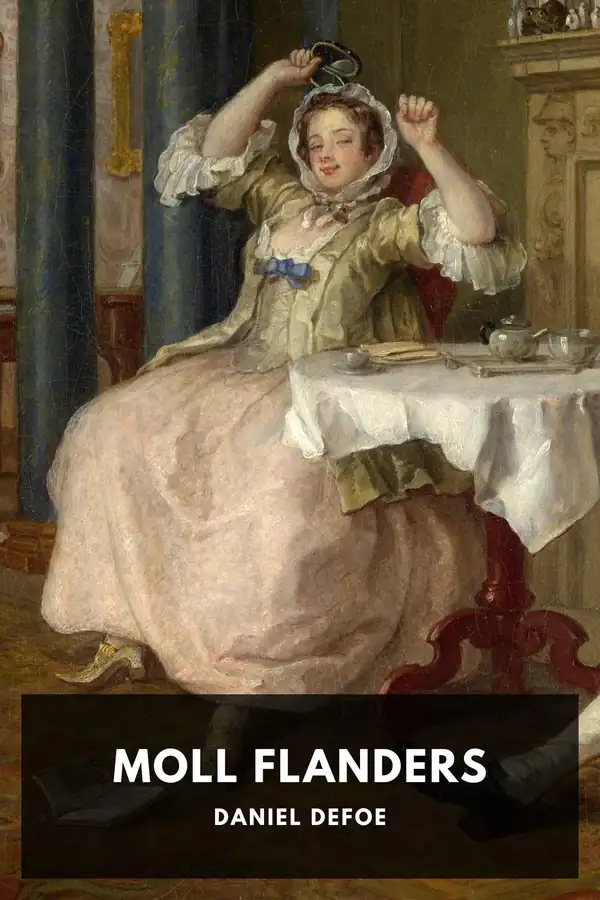
Moll Flanders
📖 Click to Read the Opening Pages Online Preview
The opening paragraph names Newgate before it names anything else
My true name is so well known in the records or registers at Newgate, and in the Old Bailey, and there are some things of such consequence still depending there, relating to my particular conduct, that it is not be expected I should set my name or the account of my family to this work; perhaps, after my death, it may be better known; at present it would not be proper, no, not though a general pardon should be issued, even without exceptions and reserve of persons or crimes.
It is enough to tell you, that as some of my worst comrades, who are out of the way of doing me harm (having gone out of the world by the steps and the string, as I often expected to go), knew me by the name of Moll Flanders, so you may give me leave to speak of myself under that name till I dare own who I have been, as well as who I am.
I have been told that in one of our neighbour nations, whether it be in France or where else I know not, they have an order from the king, that when any criminal is condemned, either to die, or to the galleys, or to be transported, if they leave any children, as such are generally unprovided for, by the poverty or forfeiture of their parents, so they are immediately taken into the care of the Government, and put into a hospital called the House of Orphans, where they are bred up, clothed, fed, taught, and when fit to go out, are placed out to trades or to services, so as to be well able to provide for themselves by an honest, industrious behaviour.
The preview stops inside the opening pages. The whole narrative is in the free download below.
Download Full EPUB1722
~136,000 words (estimated)
Approx. 7.6 hours
Standalone
London and the American colonies, in the 1680s and 1690s
One continuous narrative in twelve movements
EPUB · AZW3 · KEPUB
0.76 MB (EPUB) · 0.89 MB (AZW3) · 0.78 MB (KEPUB)
Public domain in the United States
Project Gutenberg #370 · Standard Ebooks
Moll Flanders is born in Newgate to a transported felon and raised in Colchester by a nurse who teaches her to spin, read and call herself a gentlewoman. At fourteen she is taken into a genteel household, where the elder son seduces her and the younger son marries her, and from there her life becomes a series of bargains: a bankrupt draper, a Virginia planter who proves to be her brother, a Bath gentleman, a banker, and a Lancashire husband she marries under a false fortune. When the money runs out she turns thief, is caught at last, condemned at the Old Bailey and transported to the colony where her mother had gone before her.
Defoe’s novel is a memoir disguised as a confession, written in the plain, accounting voice of a woman who treats marriage, trade and theft as versions of the same struggle for a competence. Its scandalous matter is held in place by precise sums, legal detail and a conscience that arrives late. Moll Flanders has been read as a warning, a picaresque adventure and a case for a woman with no property but her beauty and her nerve. The text is available via Project Gutenberg and in a carefully corrected Standard Ebooks edition, and the two versions agree closely on the narrative’s hard, unsentimental edge.
Moll Flanders by Daniel Defoe: Summary, Characters & Themes
This is a summary and analysis of Moll Flanders, Daniel Defoe’s 1722 narrative of a woman born in Newgate prison who spends sixty years making and losing fortunes. The book presents itself as a first-person memoir, introduced by an editor who claims to have cleaned up the language and left out the vicious passages of a real criminal’s manuscript. Defoe was a London merchant, journalist and pamphleteer, and the novel keeps the habits of his trade: inventories, prices, wages, legal procedure, the language of debt and credit. It is a long book, but it is built out of short, consequential episodes, each one a transaction with a price attached. Its full title promises both fortunes and misfortunes, and the narrative keeps the two in a single ledger. A stolen silver porringer and a marriage settlement are weighed in the same scales.
Defoe’s earlier Robinson Crusoe had shown how an account book could carry a whole narrative, and Moll’s story applies the method to a woman’s life. She is raised by a Colchester nurse, seduced by the elder son of a genteel family, married to his younger brother, widowed, and then launched into a series of marriages and disguises: a Virginia planter who proves to be her brother, a Bath gentleman who keeps her for six years, a banker who dies of grief, and a Lancashire husband as poor as herself. Each stage is measured in pounds, and each reversal teaches her another way to pass for something she is not. The prose is unhurried, repetitive and strangely compelling, like a ledger read aloud. When she is finally caught, the trial scenes return to the same vocabulary of value and proof that governed her marriages.
Defoe (c. 1660–1731) wrote the book late in a crowded career that included satire, economic journalism, travel writing and a long run of criminal biographies. Daniel Defoe had been pilloried for his political pamphlets and had gone bankrupt more than once, experience that gives Moll’s financial panic its edge. The novel appeared in 1722, the same year as Colonel Jack and A Journal of the Plague Year, and it shares their documentary texture. A plain text is available from Project Gutenberg. The first edition did not print Defoe’s name on its title page, only the phrase by the author of Robinson Crusoe, a fact that has fuelled arguments about authorship ever since.
Contemporaries read it as a scandalous chronicle, and later editors worried about its coarseness. Victorian reprints softened the language, while twentieth-century critics restored the book’s hardness and began to take its accounting seriously. Its reputation now rests on the voice, which is unsentimental, exact and oddly dignified even when Moll is picking a pocket. Defoe never lets her claim innocence, but he gives her a case: a woman without property, education or a family name must trade whatever she has. The novel’s moral is not that crime pays, but that the ledger is never balanced on this side of the grave. That ambiguity is why the book still provokes argument. Readers who want a moral fable can find one; readers who want a survival story can find that too.
This edition follows the text prepared by Standard Ebooks, with its care over Defoe’s long paragraphs and over the letters and documents embedded in the narrative, and it is offered here as a free download. Readers who enjoy the picaresque temper can continue with Gulliver’s Travels, another eighteenth-century voyage through human folly, or with Candide, which turns the same century’s optimism into a brisk nightmare. Both are free on this site. The present text keeps the memoir’s run-on energy rather than breaking it into modern scenes. The download also includes Defoe’s preface, so the reader meets the editor before meeting Moll. Each download is a complete book, not a sample or a teaser.
Historical Context
Defoe’s London was a city of paper: promissory notes, lottery tickets, insurance offices, newspaper advertisements and a funded national debt. The Bank of England had been founded in 1694, and the South Sea Bubble burst in 1720, two years before Moll Flanders appeared. Credit made it possible for a person with no land to live like a person with land, and the novel is fascinated by that possibility. Moll’s fortunes rise and fall with the reliability of other people’s promises, and her sharpest lesson is that a good name is a form of capital that can be spent or lost. Her own name is a fiction she keeps, like a note that circulates because everyone trusts the signature.
Crime and punishment in the period were public, theatrical and uneven. Newgate prison held debtors and felons together, the Old Bailey sessions were crowded with spectators, and the sentence of death could be avoided by benefit of clergy, a pardon, a reprieve or a plea of pregnancy. Transportation to the American colonies, regularised by the Transportation Act of 1717, gave the state a use for convicts and gave convicts a chance at another life. Moll’s mother is transported before the novel begins, and Moll’s own sentence returns her to the colony to which her mother had been sent. The law, in this book, is never far from the market. The prisons were also schools: Moll learns her trade from the people she meets in them.
Marriage in the novel is a contract in which a woman’s legal identity is absorbed by her husband’s. Under coverture, a married woman could not own property, sue or sign a contract in her own name, and a widow’s jointure was often her only security. Defoe uses this law as a plot engine: Moll passes as a widow because widowhood is the one condition in which a woman can bargain openly. Her beauty is an asset that depreciates, her reputation is collateral, and her several marriages are attempts to convert one into the other before the market closes. A woman could be comfortable one year and destitute the next, and the novel follows that uncertainty through every contract Moll signs.
Key Characters & Literary Archetypes
- Moll Flanders: Born in Newgate to a transported mother, raised in Colchester, married five times and transported at last for theft. She narrates her own life with the composure of a bookkeeper, admitting vanity, appetite and fraud while insisting that necessity did most of the work. Her charm lies in the gap between what she does and how reasonably she explains it. She is neither a heroine nor an anti-heroine, but a narrator who has learned to make her case.
- The elder brother: The eldest son of the Colchester family that takes Moll in at fourteen. He teaches her to want fine things, gives her money, seduces her, and then arranges her marriage to his younger brother to cover the affair. He is careless rather than wicked, and his departure leaves Moll with a taste for gentility she cannot afford. He is the first person to teach her that a promise can be spent like money.
- Mother Midnight: A receiver of stolen goods who runs a lying-in house and supplies thieves with disguises, nurses and buyers. The governess becomes Moll’s business partner and, in Newgate, her most loyal ally. She is practical, unsentimental and generous in her own way, and she gives the criminal world of the novel its institutional shape. Her trade is illegal, but her manners are those of a respectable businesswoman.
- The banker: A bank clerk, later a banker, who courts Moll with patience and good sense. His wife has run off with another man, and his divorce is slow and expensive. He offers Moll the prospect of respectable security, but his own fortunes are fragile, and his death leaves her to the trade she has been avoiding. He believes in calculation and respectability, and the novel quietly punishes that belief.
- James: An Irish gentleman Moll marries in Lancashire while both pretend to fortunes they do not have. He is handsome, improvident and, as she discovers at Newgate, a highwayman. Their mutual confession of poverty is the closest thing in the book to love, and their reunion in prison turns the plot toward Virginia. He is the novel’s most attractive man and its least reliable promise.
- The Virginia husband: A planter who courts Moll as a rich widow and marries her in London. In Virginia he proves to be her half-brother, the son of the mother Moll never knew, and the discovery ends the marriage without ending the family claim. He is decent, bewildered and finally generous, and his death frees Moll to live openly with Jemmy. He is a victim of the same family secret that makes Moll a bigamist.
Core Literary Themes
- Marriage as a market: Marriage in the novel is a market in which beauty, reputation and jointure are priced against title and income. Moll learns the language of the marriage market as a girl and uses it all her life: she passes as a widow, inflates her fortune, and calculates what a husband will pay for a wife who looks expensive. Defoe shows the transaction from the woman’s side without pretending it is anything but a bargain, and he lets the reader see how much skill the bargain demands. The comedy and the cruelty both come from the fact that everyone knows the rules and nobody admits them.
- Money and moral accounting: Sums recur on nearly every page: threepence for spinning, £15,000 of pretended fortune, £246 of stock carried to Virginia. The arithmetic is not decoration; it is the novel’s way of measuring a life. Moll’s penitence arrives when the accounts are finally closed, and the reader is left to decide whether the ledger balances. The book’s morality is inseparable from its bookkeeping. Defoe lets the figures do the moral work that a sermon would do in another kind of book, and invites the reader to audit the result.
- Disguise and self-invention: Moll moves through the world as a widow, a fortune, a man in a coat, a penitent. Clothes, accents and paperwork make these identities plausible, and Defoe is fascinated by how little it takes to become someone else. The novel treats identity as a performance that society is usually willing to accept if the performance is expensive enough, and Moll’s changes of costume are also changes of fortune. Each disguise exposes something true about her: she is always playing a part the world has taught her.
- Crime, class and gender: Moll steals because she is hungry and because she has been trained to want a genteel life. The novel refuses to separate her thefts from her marriages: both are ways of getting property without inheriting it. Defoe keeps the law in view, but he also keeps the reader aware of who is allowed to own things and who must take them. Her gender narrows her options and sharpens her ingenuity. Her crimes are petty in scale and enormous in consequence, and the law treats them with a seriousness the novel quietly questions.
- Repentance and Providence: Moll reads her life as a series of warnings and deliverances, and she credits Providence with rescuing her from worse crimes. Yet her repentance is always practical: it arrives after the money is safe. Defoe leaves the question open whether her conversion is a change of heart or one more strategy for surviving the next reversal, and the closing pages do not settle it. The final scene balances a real change of life against a comfortable income, and refuses to separate them. Her last word is penitence, but her last act is a return to comfort.
Why Download Our Custom E-Reader Edition of Moll Flanders?
This edition gives you the complete narrative in a clean, responsive e-reader layout, with Defoe’s long paragraphs preserved and the letters and documents set as the author intended. There are no advertisements, no interruptions and no missing pages. The file opens at the preface and runs to the last line of the memoir, so nothing is excerpted and nothing is held back.
The text has been proofread against the Standard Ebooks edition, which corrects obvious errors and standardises the presentation of Defoe’s long paragraphs, letters and documents. Chapter breaks have not been invented; the twelve movements are a reading aid, clearly separated from the text itself, so you can ignore them and read the narrative as Defoe left it. The result is a text that behaves like a book on every screen.
You can read it on any device, and if you prefer a different format the same text is available from Project Gutenberg in plain text and HTML. Downloads are free and carry no digital locks, and the files work offline once saved. No account or email address is required, and the download buttons sit at the top of this page, above the summary.
- Based on the Standard Ebooks Edition, via Standard Ebooks, whose editors prepare carefully proofread public-domain texts. This page follows that reading text, including the division between Defoe’s preface and the narrative proper. Nothing is abridged, modernised into slang or rewritten for a modern audience.
- Paragraphs that breathe Defoe wrote long paragraphs. This edition keeps them intact but sets them with generous spacing and a readable measure, so the memoir’s run-on sentences do not turn into a wall of type. Headings, letters and verse quotations are clearly distinguished from the main narrative.
- No invented chapter breaks The novel has no chapters, and this edition does not manufacture any. The twelve movements are presented as an editorial guide, kept visually separate from the text so the narrative remains continuous. Readers who prefer to ignore the guide can read straight through without meeting a single intrusion.
- EPUB, AZW3 and KEPUB Download the format that suits your reader. The EPUB works with most e-readers and apps, the AZW3 is provided for Kindle, and the KEPUB is sized for Kobo devices. All three are generated from the same corrected text, so your page numbers and notes stay consistent.
- Robinson Crusoe — free EPUB, AZW3 & KEPUB
- Gulliver’s Travels — free EPUB, AZW3 & KEPUB
- Candide — free EPUB, AZW3 & KEPUB
Chapter summaries
The novel has no chapter divisions. These twelve movements follow its own turns of fortune, from the Colchester schoolroom to the Virginia plantation and the reckoning that follows. They are a guide, not a substitute for the text.
- Movement 1 — Newgate and the Colchester nurse: Moll begins with her mother, convicted of a petty theft and transported to Virginia while pregnant. Born in Newgate, she is left at Colchester with a nurse who keeps a small school and teaches her to spin, read and sew. The child decides she will be a gentlewoman, and the town’s ladies take an interest in her clothes and her prospects. At fourteen she is taken into a great house, and the memoir’s first bargain begins. The nurse’s lessons in self-respect become the source of both Moll’s ambition and her trouble.
- Movement 2 — The elder brother and Robin: In the Colchester household Moll is courted by the elder son, who gives her money and promises, then persuades her to marry his younger brother Robin to conceal the affair. She obeys, is widowed, and her two children are taken off her hands by his parents. The elder brother marries elsewhere and leaves. The episode establishes the pattern of the whole book: desire, payment, a respectable cover and a disappearance. Moll learns that a family can close ranks around its own comfort and leave the servant to carry the shame.
- Movement 3 — The linen draper and the captain’s lady: Moll marries a linen draper whose vanity outruns his credit. When he goes bankrupt and flees to France, she hides her goods and separates from him. She then falls in with a captain’s lady, a woman of experience and appetite, who teaches her how to make the most of her looks and gives her a scheme for passing as a rich widow. The friendship is the novel’s first school in deliberate deception, and Moll proves an apt pupil.
- Movement 4 — The Virginia husband: Set up as a widow with a fortune, Moll marries a Virginia planter who has come to London for a wife. In the colony she finds a kind mother-in-law, then discovers that the woman is her own mother and her husband is her brother. Three children follow, two survive, and after eight years of quarrels she returns to England, her cargo spoiled and her conscience raw. The discovery turns the marriage plot inside out, making the family she wanted the family she must escape.
- Movement 5 — The Bath gentleman: In Bath, Moll becomes the mistress of a gentleman who keeps her in comfort for six years and fathers a son. His illness and fits of repentance end the arrangement, and she nurses him through a crisis before they part. She leaves with about £450, having lost £70 to a goldsmith’s failure, and begins to think about marriage again. The episode is the book’s quietest study of affection, and its most pointed lesson in how quickly comfort can be withdrawn.
- Movement 6 — The banker and the divorce: A banker, once a clerk, courts Moll with patience. His wife has run away and he is suing for a divorce, which keeps the marriage in suspension while Moll considers a trip to Lancashire. She delays signing a contract, half tempted by a friend’s plan, and the delay costs her the banker for a season. He returns, and she marries him. The interlude shows how easily a woman’s security depends on another person’s legal troubles, and how quickly a plan can be undone by someone else’s delay.
- Movement 7 — The Lancashire husband: Travelling north with a friend, Moll passes as a widow worth £15,000 and marries an Irish gentleman who is passing as a man of fortune. Each confesses poverty; his letter signs himself J E, and she calls him Jemmy. They part at Chester, she urging Virginia, he preferring Ireland, and she reaches London pregnant and alone. The marriage is the novel’s sharpest comedy of mutual imposture and its most durable attachment. Neither of them is honest, and each is more honest with the other than with anyone else.
- Movement 8 — The governess and the first theft: Moll’s lying-in is managed by a discreet governess known as Mother Midnight. She then marries the banker, who is ruined by a cheating clerk and dies of grief, leaving her nearly destitute. After two years of poverty she steals a bundle from an apothecary’s shop in Leadenhall Street, and the trade begins. The theft is small, and the relief it brings is immediate, which is precisely what makes it dangerous.
- Movement 9 — The trade of stealing: Moll steals a child’s gold necklace in Aldersgate Street, takes a bundle of plate from a burning house, and works Bartholomew Fair in disguise. The governess receives the goods and finds buyers. Moll prospers, moves among thieves, and begins to believe that her skill is a profession, until a shopkeeper’s counter and a constable remind her otherwise. The narrative keeps its accounting tone even here, pricing each risk against each reward.
- Movement 10 — The mercer and the silversmith: A quarrel in a mercer’s shop turns into a case before a justice, and Moll talks her way clear. On Christmas Day she enters a silversmith’s in Foster Lane and is seized by a neighbour, but the alderman releases her. Three days later she takes two pieces of brocaded silk from a factor’s house and is caught at the door by two servants. The two escapes make her bold, and the third attempt ends the career.
- Movement 11 — Newgate and the trial: Committed to Newgate, Moll is tried on a Friday, found guilty of felony and acquitted of burglary, and sentenced to death. The dead warrant includes her name; a minister helps her petition for transportation, and she is reprieved. In the prison she meets three highwaymen and recognises one as her Lancashire husband, Jemmy. The reunion turns her fear of death into a plan for a shared life abroad. The prison that terrified her becomes the place where her luck turns.
- Movement 12 — Return and the reckoning: Moll and Jemmy are transported to Virginia with their stock, £354 between them. Her mother is dead; her brother is old and blind; her son Humphrey receives her and settles £100 a year on her. The couple take up a plantation that will be worth £300 a year within eight years, the old husband dies, and Moll, nearly seventy, returns to England to live in what she calls sincere penitence. The memoir ends with an income, a husband and a profession of repentance that the reader must weigh.
Moll Flanders: Frequently Asked Questions
Is Moll Flanders a true story?
Why does the novel have no chapters?
Who is the elder brother?
Why does Moll marry her brother?
Is Moll Flanders a criminal?
What happens at the end?
Is Moll Flanders hard to read?
Where can I download a free EPUB of Moll Flanders?
Part of: Classic Fiction · Victorian Literature