The Woman in White by Wilkie Collins: Free EPUB, AZW3 & KEPUB Download
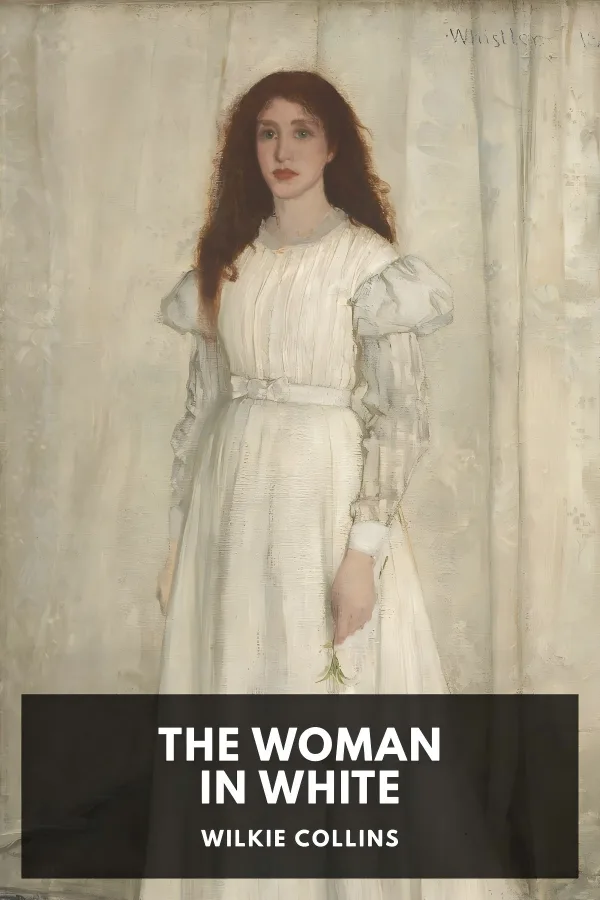
The Woman in White
📖 Click to Read First Epoch: Chapter 1 Online Preview
The First Epoch — Walter Hartright’s Narrative: I
This is the story of what a Woman’s patience can endure, and what a Man’s resolution can achieve.
If the machinery of the Law could be depended on to trace every crime to its source, and to lay bare every circumstance to the public eye, there would be no need for this book to be written. But the Law is still, in certain inevitable cases, the pre-engaged servant of the long purse; and the story which is told in these pages is something that no legal process could fully unfold.
As the Judge might once have heard it, so the Reader shall hear it now. No circumstance of importance will be omitted; each scene will be described by the persons who were immediately concerned in it, each event will be presented as it actually took place. Thus the truth will be maintained, and the story will be told.
Unravel Victorian literature’s greatest conspiracy of identity, asylum, and greed. Download the complete unabridged novel for your e-reader.
Download Full EPUBVictorian Suspense, Gothic Manors & Hidden Secrets
About Wilkie Collins’s The Woman in White
Serialized in Charles Dickens’s journal All the Year Round between 1859 and 1860, and published in three volumes in 1860, The Woman in White is Wilkie Collins’s sensation fiction triumph. It caused an immediate international sensation and laid the structural groundwork for the modern psychological thriller.
Adopting an innovative legal courtroom approach, Collins constructed the narrative through a sequence of first-person testimonies, letters, and diary entries from witnesses. This technique ensures readers pieced together the labyrinthine conspiracy along with the investigators. For readers seeking a free The Woman in White EPUB, this public domain edition offers the complete unabridged text based on a Standard Ebooks transcription from Project Gutenberg eBook #583.
The nightmare begins on a moonlit midnight road outside London. Drawing master Walter Hartright encounters a terrified, ghostly woman dressed entirely in white, recently escaped from an insane asylum, who whispers warnings about a mysterious baronet.
Arriving in Cumberland to tutor the wealthy Laura Fairlie and her fiercely intelligent half-sister Marian Halcombe, Hartright is stunned to find that Laura is the physical double of the mysterious woman in white. Despite a mutual love blossoming between Walter and Laura, she is bound by honor to marry Sir Percival Glyde.
Following the wedding, a ruthless conspiracy unfolds at Blackwater Park, orchestrated by Glyde and his brilliant, sinister confederate Count Fosco. Together, they scheme to steal Laura’s fortune by faking her death, switching her identity with the dying woman in white, and imprisoning the real heiress under a false name in an asylum.
Rescued by the relentless Marian and returned from South America, Walter must legally resurrect a woman who is legally registered as dead, uncover Glyde’s dark ancestral forgery, and outmaneuver the lethal genius of Count Fosco to restore Laura’s stolen identity.
Key Characters & Literary Archetypes
- Marian Halcombe (The Indomitable Intellect & Subversive Heroine): Defying conventional Victorian tropes of feminine fragility, Marian possesses exceptional deductive courage, physical endurance, and absolute devotion to her sister. She remains one of nineteenth-century literature’s most brilliantly conceived, active female heroines.
- Count Fosco (The Urbane Mastermind & Charismatic Villain): An eccentric, obese Italian aristocrat with a fondness for pet canaries and fine dining. Beneath his grand manners and philosophy lurks a terrifyingly efficient, cold-blooded intellect, serving as the blueprint for generations of cerebral criminal masterminds.
- Walter Hartright (The Determined Advocate & Restorative Hero): A modest drawing master whose initial romantic despair transforms into relentless legal and forensic grit. He embodies the rising Victorian middle-class professional whose perseverance triumphs over feudal villainy and forged privilege.
- Laura Fairlie (The Innocent Heiress & Persecuted Maiden): Gentle, passive, and deeply affectionate, Laura embodies traditional Victorian feminine ideals. Stripped of her name, wealth, and legal identity by greedy patriarchs, her plight highlights the utter legal helplessness of married women under contemporary property laws.
- Anne Catherick / The Woman in White (The Ghostly Double & Living Indictment): The mysterious fugitive from the asylum whose uncanny physical resemblance to Laura Fairlie becomes the instrument of the plot. Traumatized and fragile, she represents the tragic human wreckage created by patriarchal transgressions and abusive asylum incarcerations.
- Sir Percival Glyde (The Desperate Aristocrat & Fraudulent Noble): Laura’s cruel, heavily indebted husband whose polished social veneer conceals violent desperation, illegitimate birth, and a capital crime of parish register forgery.
Core Literary Themes & Historical Significance
- The Fragility of Identity and Civil Death: Collins exposes how easily a person’s existence, social status, and sanity could be erased by Victorian institutional complicity, corrupt doctors, and family conspiracies before the enactment of protective married women’s property legislation.
- The Domestic Sensation and Gothic Subversion: Rather than setting his gothic terror in remote continental castles, Collins transported dark secrets, forgery, and poison into modern English country estates and cozy domestic drawing rooms.
- Testimony, Subjectivity, and Forensic Justice: By delegating the story to diverse narrators with varying biases, Collins highlighted the subjective nature of human perception, pioneering forensic storytelling where the truth must be assembled piece by piece like courtroom evidence.
Why Download This Edition
Automated digital scans of Victorian triple-deckers frequently suffer from garbled chapter headings, incorrect indentation in epistolary journals, and broken navigation. This edition is crafted with archival care:
- Unabridged Multi-Volume Structure: Accurately reproduces all three Epochs, retaining every distinct narrative voice, date heading, and legal testimonial header.
- Calibrated E-Ink Typography: Hand-spaced drop capitals, proper em-dashes, and proportional serif styling tested for glare-free readability on Carta and Kaleido screens. Elegant classical drop caps are used in the online preview on editions.ink.
- Triple-Format Distribution: Available in standard EPUB, Kindle-optimized AZW3, and Kobo KEPUB with native support for chapter time estimates and reading progress.
Text based on a Standard Ebooks transcription from Project Gutenberg eBook #583. This work is in the public domain in the United States; users outside the US should check their local laws before using this ebook.