Little Women by Louisa May Alcott: Free EPUB, AZW3 & KEPUB Download
Little Women
📖 Click to Read Chapter I Online Preview
I — Playing Pilgrims
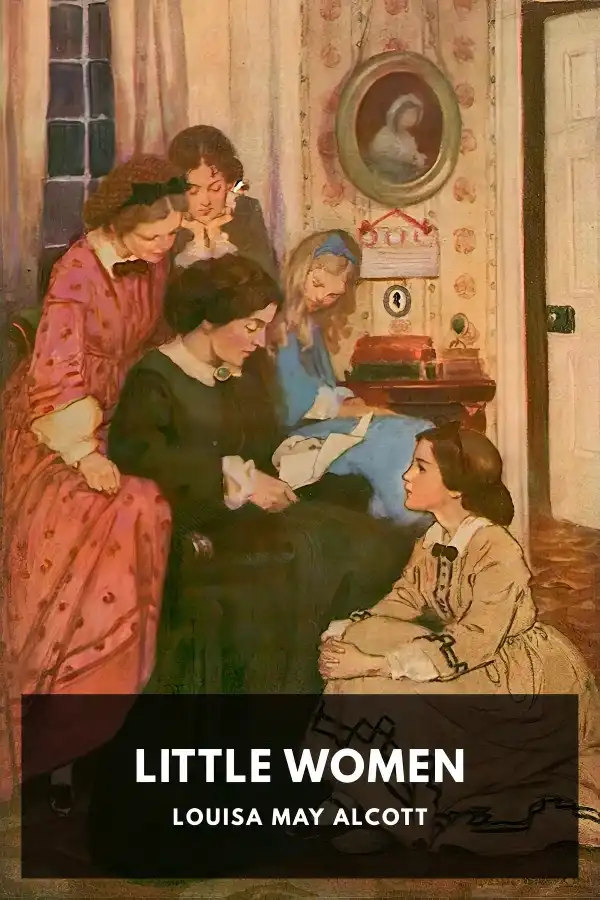
“Christmas won’t be Christmas without any presents,” grumbled Jo, lying on the rug.
“It’s so dreadful to be poor!” sighed Meg, looking down at her old dress.
“I don’t think it’s fair for some girls to have plenty of pretty things, and other girls nothing at all,” added little Amy, with an injured sniff. “We’ve got Father and Mother, and each other,” said Beth contentedly from her corner. The four young faces on which the firelight shone brightened at the cheerful words, but darkened again as Jo said sadly, “We haven’t got Father, and shall not have him for a long time.” She didn’t say “perhaps never,” but each silently added it, thinking of Father far away, where the fighting was.
Follow the March sisters through girlhood, love, loss, and creative independence. Download the complete unabridged edition for your e-reader.
Download Full EPUBLittle Women is an 1868–1869 coming-of-age novel by Louisa May Alcott, following the four March sisters—Meg, Jo, Beth, and Amy—as they grow from girlhood to womanhood in Civil War-era New England. The novel explores themes of sisterhood, sacrifice, ambition, and domestic love. This Standard Ebooks edition is based on Project Gutenberg eBook #37106 and is in the public domain in the United States.
About Little Women: Summary, Characters & Themes
Published in two volumes in 1868 and 1869, Little Women is Louisa May Alcott’s enduring American classic. This summary and analysis covers its plot, key characters, and major themes. Drawing heavily from Alcott’s own New England childhood, it remains one of the foundational coming-of-age novels in English literature.
Subverting the rigid, pious moralizing typical of nineteenth-century domestic fiction for girls, Alcott introduced an unvarnished realism. She captured the vibrant, flawed, and fiercely creative inner lives of young women navigating poverty, ambition, and sisterhood.
Set against the somber backdrop of the American Civil War while their father serves as an army chaplain, the story chronicles the lives of the four March sisters. Guided by their wise mother, Marmee, the girls stage amateur theatricals, conquer personal vanity, and forge their own “Pilgrim’s Progress.”
The fiery, literary second daughter, Jo, rejects conventional female domesticity to pursue a career as an independent author. Her passionate spirit sparks an inseparable bond with their wealthy, orphaned neighbor, Theodore “Laurie” Laurence.
As the sisters transition into womanhood, each confronts harsh worldly realities. Meg embraces the quiet sacrifices of domestic marriage, Beth succumbs to lingering complications from scarlet fever, and ambitious Amy studies painting in Europe.
Rejecting Laurie’s marriage proposal to preserve her freedom, Jo moves to a New York boarding house to write sensational tales for urban tabloids. There, guided by the intellectual encouragement of German scholar Professor Friedrich Bhaer, Jo discovers her authentic literary voice, trading melodrama for the quiet, resonant truth of family love.
Key Characters & Literary Archetypes
The novel’s main characters are defined by how each navigates the tension between personal ambition and domestic duty.
- Jo March is based directly on Alcott herself: quick-tempered, fiercely loyal, and passionately devoted to literature. Rejecting passive Victorian female subservience, she established the archetype of the independent, self-supporting female artist who insists on intellectual autonomy.
- Meg March is the eldest sister, characterized by beauty, domestic propriety, and a lingering desire for luxury. Her journey involves surrendering aristocratic vanities to embrace honest, unglamorous love and frugal cottage domesticity with John Brooke.
- Beth March is incurably shy, musical, and selfless, remaining sheltered at home. Her quiet resilience through lingering illness and early death serves as the profound spiritual heart that anchors the family’s moral compass.
- Amy March is the youngest sister, driven by visual aesthetics, refined manners, and social ambition. While initially vain, Amy evolves through European travel into a mature, self-aware artist who balances practical social realism with genuine romantic affection.
- Marmee / Mrs. March is an unconventional, progressive Victorian mother who models self-control, civic duty, and social radicalism. Her candid confession to Jo that she harbors an inward temper tames her daughter’s fury with shared human empathy.
- Theodore “Laurie” Laurence is wealthy, charismatic, but drifting aimlessly without family warmth. Finding purpose and belonging within the chaotic March parlor, his transition from boyish infatuation with Jo to mature partnership with Amy marks his entrance into grounded adulthood.
- Professor Friedrich Bhaer is a poor, warm-hearted German scholar living in New York. Unintimidated by Jo’s fiery intellect, his gentle criticism helps her abandon cheap sensational writing in favor of honest, heartfelt literature.
Core Literary Themes & Historical Significance
Three major themes structure the novel’s moral and social vision.
- Female Autonomy vs. Domestic Duty: Alcott explores the difficult tension nineteenth-century women faced between individual ambition—such as creative careers and financial independence—and the suffocating cultural expectations of marriage and family sacrifice.
- Transcendentalist Philosophy and Voluntary Poverty: Deeply influenced by the philosophy of Emerson and Thoreau, the novel celebrates spiritual and moral riches over material wealth, depicting poverty not as a badge of disgrace, but as an arena for building character and generosity.
- Work as Dignity and Self-Discovery: Unlike contemporary romantic novels where heroines merely waited for marriage, each March sister actively works—teaching, writing, painting, and sewing—affirming that purposeful labor is essential to human dignity and self-determination.
Why Download Our Custom E-Reader Edition of Little Women?
Louisa May Alcott’s Little Women is America’s definitive masterpiece of sisterhood, female autonomy, and moral resilience set against the backdrop of Civil War New England.
Automated digital conversions frequently compromise Alcott’s rich narrative: standard web scans regularly truncate the novel by offering only Part One (leaving out the sisters’ adult journeys), butcher the typographic layout of the girls’ theatrical playbills and The Pickwick Portfolio society newspapers, and collapse Jo’s sentimental poetry into unformatted paragraphs. Our bespoke digital edition restores the complete family epic with meticulous e-reader optimization.
- Complete & Unabridged Two-Volume Text (via Project Gutenberg #37106): Faithfully compiles both Part One (1868) and Part Two (1869) into a unified 47-chapter chronicle sourced from a Standard Ebooks transcription, preserving Alcott’s genuine, unvarnished 19th-century text.
- Archival Verse, Letter & Epistolary Formatting: Features custom CSS indentation and verse styling designed to cleanly display the March sisters’ handwritten letters, dramatic scripts, musical verses, and editorial club columns without overlapping text or broken stanzas on high-resolution E-Ink displays.
- Engineered Multi-Format Hardware Binaries: Reflowable EPUB featuring custom chapter drop caps and responsive breaks for Apple Books and Android; Amazon-native AZW3 tailored with native page flow and margin kerning for Kindle Paperwhite, Oasis, and Scribe; and dedicated KEPUB enabling granular chapter progress and live reading analytics across all 47 chapters on Rakuten Kobo ereaders.
- Verified Public Domain Sources: The text is in the public domain in the United States and is based on Project Gutenberg eBook #37106, with this edition produced by Standard Ebooks. Users outside the United States should check their local laws.