The Prince by Niccolo Machiavelli: Free EPUB, AZW3 & KEPUB Download
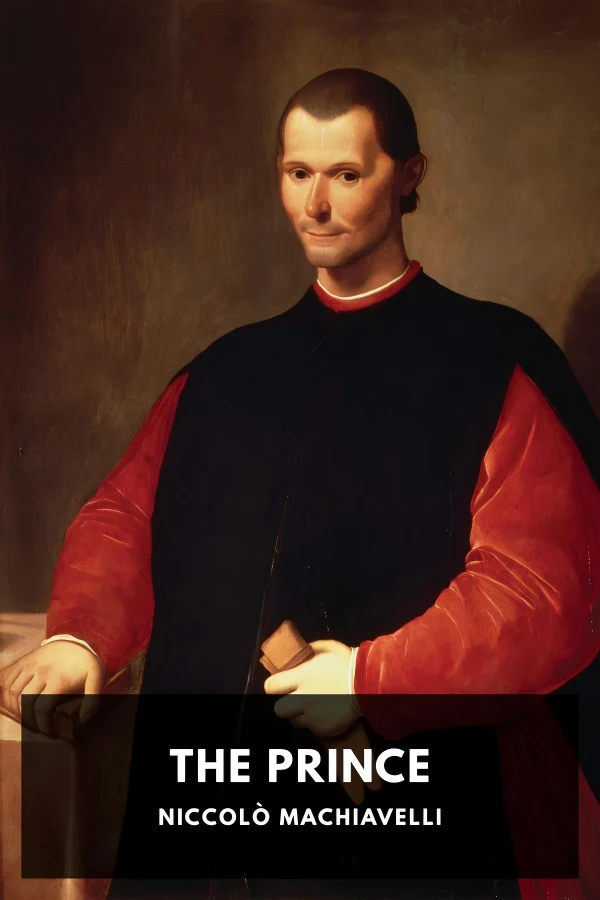
The Prince
📖 Click to Read Chapter I Online Preview
Chapter I — How Many Kinds of Principalities There Are, and by What Means They Are Acquired
All states, all powers, that have held and hold rule over men have been and are either republics or principalities.
Principalities are either hereditary, in which the family has been long established; or they are new.
The new are either entirely new, as was Milan to Francesco Sforza, or they are, as it were, members annexed to the hereditary state of the prince who has acquired them, as was the kingdom of Naples to that of the King of Spain.
Master Machiavelli’s timeless manual on power, virtù, and political survival. Download the complete unabridged edition for your e-reader.
Download Full EPUBThe Prince is a 1532 political treatise by Niccolò Machiavelli, advising a ruling prince on how to acquire, maintain, and secure political power. It argues that a successful ruler must be willing to use force and cunning, acting against conventional morality when the security of the state demands it. This Standard Ebooks edition is based on Project Gutenberg eBook #1232 and is in the public domain in the US.
The Prince by Niccolò Machiavelli: Summary, Characters & Themes
Written in 1513 during Machiavelli‘s political exile from Florence and published posthumously in 1532, The Prince (Il Principe) is the founding manifesto of modern political science.
Breaking decisively with medieval Christian scholasticism, Machiavelli stripped statecraft of theological illusion. He observed human nature and power dynamics not as they ought to be in utopian ideals, but as they truly operate in practical reality.
Composed as a concise handbook for Lorenzo de’ Medici, the treatise examines how rulers acquire, maintain, and expand sovereign power amid the brutal foreign invasions and domestic intrigues of Renaissance Italy.
Machiavelli famously argues that a ruler must master both the cunning of the fox and the ferocious strength of the lion. While it is ideal to be both loved and feared, he concludes that if one must choose, it is vastly safer to be feared than loved.
Far from a simple endorsement of cruelty, the work offers an urgent pragmatic defense of civic preservation. It concludes with an impassioned patriotic exhortation to liberate Italy from barbarian domination and restore civic order.
Its insights into power, fear, and political survival remain widely cited in modern leadership and strategy discussions.
Key Characters & Literary Archetypes
- The Prince (The Rational Sovereign Archetype): The pragmatic ruler who adapts his actions to shifting political reality. He transcends rigid moral dogma to preserve the state, treating ethics not as absolute laws, but as instruments of governance.
- Cesare Borgia / Duke Valentino (The Heroic Exemplar of Virtù): The illegitimate son of Pope Alexander VI, held up by Machiavelli as the supreme model of energetic, decisive statecraft whose daring conquests fell short only through extraordinary misfortune.
- The Fox and the Lion (The Dual Strategic Archetypes): Machiavelli’s iconic allegory for statecraft. The lion cannot protect itself from hidden snares, while the fox cannot defend itself against wolves; a prince must master both cunning deception and decisive force.
- Fortuna and Virtù (The Cosmic Dyad): Personified as a violent, overflowing river or an unpredictable woman, Fortuna represents the unpredictable tides of fate, which can be channeled and mastered only by a ruler possessing iron will, adaptability, and foresight (Virtù).
- The Mercenary Commander (The Treacherous Parasite): Military forces hired for pay rather than civic loyalty. Machiavelli identifies reliance on mercenary armies as the primary structural cancer that brought ruin and foreign subjugation to the Italian peninsula.
Core Literary Themes & Historical Significance
- The Autonomy of Political Realism: Machiavelli severed political science from classical ethics and theology, establishing politics as an autonomous field governed by empirical cause and effect rather than divine intervention.
- Pragmatic Necessity vs. Conventional Morality: The treatise explores the tragic burden of leadership, demonstrating that a ruler who seeks moral perfection among ruthless adversaries will inevitably orchestrate his own destruction and the ruin of his people.
- The Dynamics of Fear, Love, and Hatred: Machiavelli emphasizes that while love is sustained by a fickle bond of gratitude easily broken when self-interest dictates, fear is maintained by the dread of punishment which never fails; crucially, however, a prince must avoid becoming hated by respecting private property and women.
Why Download Our Custom E-Reader Edition of The Prince?
Written in exile in 1513 and published posthumously in 1532, Niccolò Machiavelli‘s The Prince (Il Principe) remains the foundational treatise of modern political realism and statecraft.
Dismantling medieval scholastic idealism, Machiavelli examined power as it actually operates—analyzing the interplay between virtù (pragmatic martial efficacy) and fortuna (unpredictable circumstance), the strategic utility of fear over love, and Cesare Borgia’s ruthless consolidation of the Romagna. Automated, low-effort digital versions frequently botch this masterwork: stripping W. K. Marriott’s indispensable historical annotations, mangling Machiavelli’s original Latin chapter headings, and flattening dense political aphorisms into unreadable blocks. Our bespoke digital edition provides an archival, unabridged reading experience calibrated precisely for modern E-ink displays.
- 1908 W. K. Marriott English Translation Integrity: Features the definitive, unabridged English translation by W. K. Marriott, preserving all twenty-six chapters alongside Machiavelli’s famous dedicatory letter to Lorenzo de’ Medici. All authentic Latin epigraphs and Italian political terms (such as stato, virtù, and armi proprie) are meticulously preserved without modern editorial bowdlerization.
- Granular Multi-Tiered NCX/Nav Architectural Navigation: Effortlessly study Machiavelli’s tactical arguments through our structured table of contents. Instantly jump between essential thematic sections—from hereditary and mixed principalities, the vital distinction between civic militias and treacherous mercenaries, and Agathocles of Syracuse’s calculated cruelty, to the famous moral inquiry of Chapter XVII on whether it is better to be loved than feared.
- Calibrated Typographical Layout for Political Treatises & Maxims: Designed specifically for close intellectual study, our edition implements calibrated indentations, clean semantic chapter divisions, and balanced contrast across Kindle Paperwhite (AZW3), Kobo Libra/Clara (KEPUB), and open EPUB devices. This guarantees footnote clarity and zero visual clipping on reflective E-ink screens.