Household Tales by Jacob & Wilhelm Grimm: Free EPUB, AZW3 & KEPUB Download
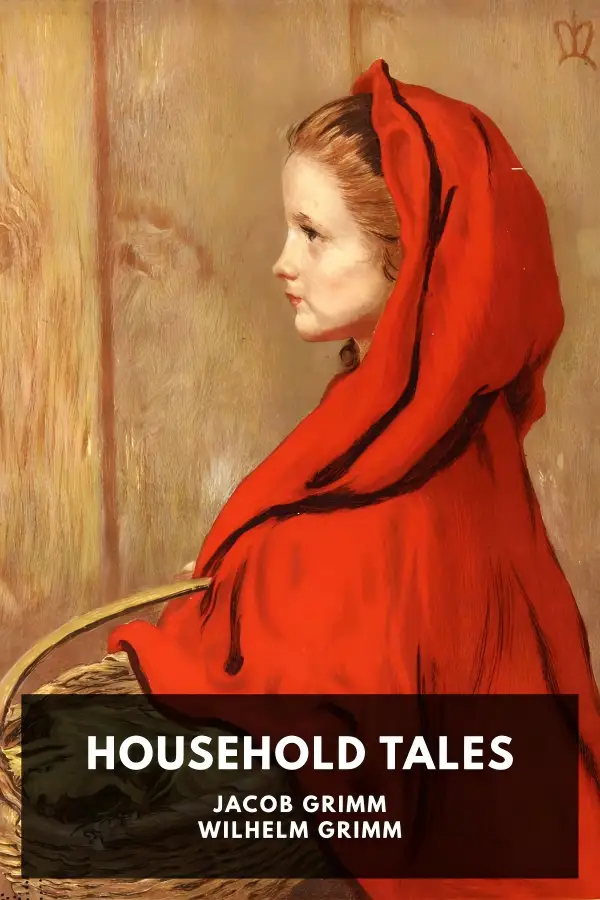
Household Tales
📖 Click to Read The Frog-King, or Iron Henry Online Preview
The Frog-King, or Iron Henry
In old times when wishing still helped one, there lived a king whose daughters were all beautiful, but the youngest was so beautiful that the sun itself, which has seen so much, was astonished whenever it shone in her face. Close by the King’s castle lay a great dark forest, and under an old lime-tree in the forest was a well, and when the day was very warm, the King’s child went out into the forest and sat down by the side of the cool fountain, and when she was dull she took a golden ball, and threw it up on high and caught it, and this ball was her favorite plaything.
Now it so happened that on one occasion the princess’s golden ball did not fall into the little hand which she was holding up for it, but on to the ground beyond, and rolled straight into the water. The King’s daughter followed it with her eyes, but it vanished, and the well was deep, so deep that the bottom could not be seen. On this she began to cry, and cried louder and louder, and could not be comforted. And as she thus lamented someone said to her, “What ails thee, King’s daughter? Thou weepest so that even a stone would show pity.” She looked round to the side from whence the voice came, and saw a frog stretching forth its thick, ugly head from the water.
“Ah! old water-splasher, is it thou?” said she; “I am weeping for my golden ball, which has fallen into the well.”
You’ve read the opening of the first tale. Download the full DRM-free EPUB to explore the complete collection.
Download Full EPUBHousehold Tales is a German folklore collection by Jacob Grimm and Wilhelm Grimm, first published in 1857 in Margaret Hunt’s 1884 English translation. The tales move through magical forests, enchanted castles, and ordinary village life, following resourceful wanderers, cursed royalty, and cunning peasants as they face tests of kindness and wit. This Standard Ebooks edition, based on Project Gutenberg #5314 and Google Books scans, is in the public domain in the United States; readers outside the US should check their local laws. The text is available via Standard Ebooks.
Household Tales by Jacob & Wilhelm Grimm: Summary, Characters & Themes
Jacob Grimm and Wilhelm Grimm published Household Tales in 1857. This summary and analysis examines how their German folklore collection preserved oral storytelling while reshaping global narrative culture.
The collection spans two hundred folktales alongside ten children’s legends. Characters venture into enchanted forests where talking beasts, spiteful witches, and generous strangers test moral worth. Simple choices between greed and kindness dictate every fate.
Underdogs consistently rise through patience and quick wit. Simple tailors outsmart giants, mistreated stepdaughters win royal favor, and banished heirs reclaim their birthrights. Magic rarely operates without cost, demanding absolute adherence to promises made in moments of peril.
Cruelty meets swift, proportional reckoning throughout the traditional accounts. Treacherous stepmothers face banishment, while honest drudges find enduring prosperity and communal peace. The tales resolve with stability restored to hearth and crown alike.
The Brothers Grimm compiled other vital cultural records, including Deutsche Sagen and the German Dictionary. These scholarly undertakings shared the same dedication to preserving linguistic heritage and regional mythology.
This digital edition provides the complete English translation completed by Margaret Hunt in 1884. The text reproduces the transcription from Project Gutenberg #5314 alongside Google Books scans. Readers can also consult the edition maintained by Standard Ebooks.
Historical Context
The brothers began gathering oral narratives from friends and informants, aiming to document a distinct Germanic cultural memory before industrial modernity erased it. The anthology evolved from an academic folklore study into the world’s most familiar fairy tale canon.
Key Characters & Literary Archetypes
- The Virtuous Outcast (The Pure Protagonist): Neglected youngest siblings and mistreated orphans whose humility and steadfast honesty attract supernatural assistance.
- The Wicked Stepmother (The Domestic Intruder): A ruthless maternal rival driven by vanity and inheritance anxieties, embodying domestic instability.
- The Cunning Trickster (The Resourceful Wanderer): Impoverished soldiers, clever tailors, and crafty peasants who substitute sheer wit for noble blood.
- The Animal Benefactor (The Earthly Guide): Grateful beasts that reward casual mercy by resolving impossible royal trials.
- The Sovereign Monarch (The Moral Arbiter): Kings who impose high stakes upon reckless suitors and dispense final judgments across realm borders.
Core Literary Themes
- Poetic Justice and Retribution: Evil acts invariably trigger inescapable punishments, reinforcing unambiguous moral boundaries for ordinary folk.
- Transformation Through Trial: Curses, exiles, and monstrous disguises serve as essential tests before characters achieve maturity or nobility.
- The Sanctity of Vows: Broken oaths bring instant catastrophe, asserting that social trust forms the foundation of community survival.
- Generosity to the Vulnerable: Aiding beggars and injured creatures proves far more valuable than gold or martial strength.
Why Download Our Custom E-Reader Edition of Household Tales?
Compiled by Jacob and Wilhelm Grimm, this comprehensive 1857 German anthology remains the best-known collection of European folk narrative. This custom release pairs Margaret Hunt’s unabridged 1884 English translation with refined typography designed for long-form reading.
The collection brings together over two hundred timeless stories, tracking enchanted quests, clever underdogs, and magical transformations across historic European landscapes. Its narrative range offers a direct look into traditional European folklore.
Standard transcriptions of massive story anthologies frequently suffer from broken tale divisions, chaotic verse formatting, and clumsy table of contents links. We carefully corrected these recurring flaws to ensure smooth navigation across all two hundred and ten entries.
- Based on the Standard Ebooks Edition, via Project Gutenberg #5314: Formatted directly from complete public domain sources and archival scans, retaining Hunt’s complete scholarly translation without editorial cuts.
- Granular Architectural NCX/Nav Structural Navigation: Includes an exhaustive multi-level table of contents linking directly to every individual story and children’s legend across the entire compendium.
- Calibrated Typographical Layout for Fairy Tales & Folk Narrative: Styled with customized CSS rules, distinct verse indentations, and elegant tale headers optimized for modern e-ink displays.
- Verified Public Domain Sources: Built from open-access transcriptions hosted at Project Gutenberg and refined through open standards developed by Standard Ebooks. The text is in the public domain in the United States, and readers outside the US should check their local laws before downloading.