The Man in the Brown Suit by Agatha Christie: Free EPUB, AZW3 & KEPUB Download
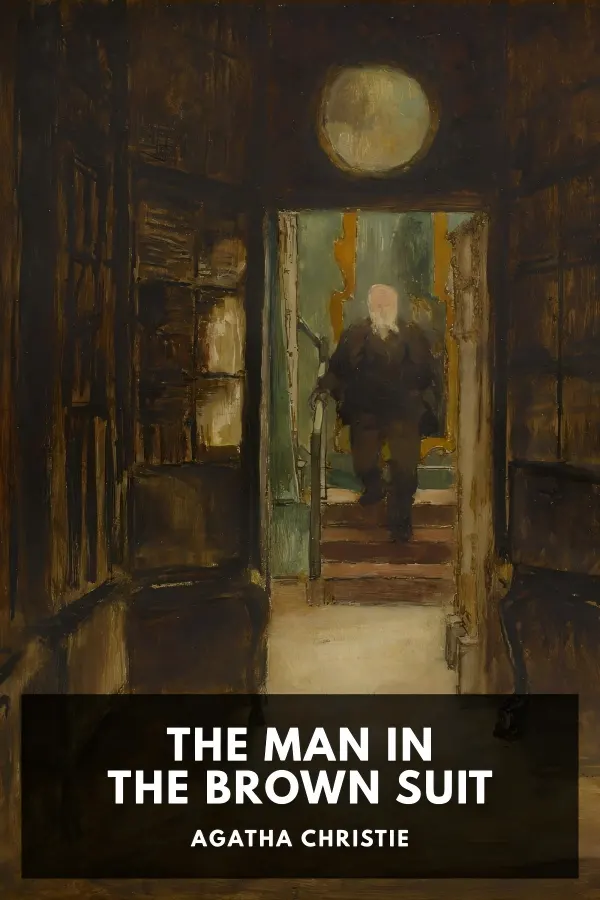
The Man in the Brown Suit
📖 Click to Read the Opening Pages Online Preview
Prologue · Paris
Nadina, the Russian dancer who had taken Paris by storm, swayed to the sound of the applause, bowed and bowed again. Her narrow black eyes narrowed themselves still more, the long line of her scarlet mouth curved faintly upwards. Enthusiastic Frenchmen continued to beat the ground appreciatively as the curtain fell with a swish, hiding the reds and blues and magentas of the bizarre decor. In a swirl of blue and orange draperies the dancer left the stage. A bearded gentleman received her enthusiastically in his arms. It was the manager.
“Magnificent, petite, magnificent,” he cried. “Tonight you have surpassed yourself.” He kissed her gallantly on both cheeks in a somewhat matter-of-fact manner.
Madame Nadina accepted the tribute with the ease of long habit and passed on to her dressing room, where bouquets were heaped carelessly everywhere, marvellous garments of futuristic design hung on pegs, and the air was hot and sweet with the scent of the massed blossoms and with more sophisticated perfumes and essences. Jeanne, the dresser, ministered to her mistress, talking incessantly and pouring out a stream of fulsome compliment.
A dancer in Paris, a death at a London Tube station, and a scrap of paper that sends an orphan with eighty-seven pounds and a taste for adventure to the other end of the empire. Download the complete unabridged novel for your e-reader.
Download Full EPUB1924
~76,000 words (estimated)
Approx. 4.2 hours
Stand-alone · introduces Colonel Race
London, Cape Town, Rhodesia
36 + prologue
EPUB · AZW3 · KEPUB
0.64 MB (EPUB) · 0.69 MB (AZW3) · 0.57 MB (KEPUB)
Public domain in the United States
Project Gutenberg #61168 · Standard Ebooks
The Man in the Brown Suit is Agatha Christie’s international thriller of 1924, published between The Murder on the Links and The Secret of Chimneys, and the book in which she put a Poirot-shaped hole in the middle of a Christie novel and filled it with a young woman who wants an adventure more than she wants to be safe. Anne Beddingfeld, orphaned, penniless and bored, sees a man die at a London Tube station and picks up the note the doctor drops.
The note says “17.122 Kilmorden Castle”, a woman is found murdered the next day at a house in Marlow, and Anne talks her way onto a South Africa-bound liner with a press commission and her inheritance. What follows is diamonds stolen at Kimberley, a criminal mastermind known only as the Colonel, an island in the Zambezi and a Romance of the sort Anne has only read about. This edition is based on Project Gutenberg #61168 and is in the public domain in the United States. The text is available via Standard Ebooks.
The Man in the Brown Suit by Agatha Christie: Summary, Characters & Themes
The Man in the Brown Suit is Agatha Christie’s fourth novel, published by The Bodley Head in August 1924, and the first of her books to be an adventure story without a detective at its centre. This summary and analysis follows Anne Beddingfeld, twenty-something, orphaned and encumbered with eighty-seven pounds, sees a man die at Hyde Park Corner station and decides that the incident is the beginning of the life she has been waiting for.
The plot she walks into is an international one. A woman is found dead at a house in Marlow called The Mill House; a note dropped at the Tube station mentions “Kilmorden Castle”, which turns out to be a ship; and on that ship Anne meets the people who will matter for the rest of the book: a society lady called Suzanne Blair, a missionary with a suspicious amount of muscle, a quiet man named Colonel Race, and a Member of Parliament, Sir Eustace Pedler, whose estate is the house where the murder happened.
Christie tells the story in two voices: Anne’s, direct and delighted, and Sir Eustace’s diary, complacent, self-satisfied and quietly damning. The alternation is the book’s best technical trick, because the reader is invited to enjoy a narrator who is not telling the truth. It is a thriller rather than a puzzle, closer to The Secret Adversary than to Poirot, and it moves from London to Cape Town, Bulawayo and a small island in the Zambezi with the cheerful implausibility of a serial adventure.
What makes it more than a romp is Anne herself. She is not a detective and does not pretend to be one; she is brave, nosy, physically capable and entirely willing to be frightened later. Christie, who had travelled to South Africa and knew the sea passage, gives her a heroine who wants to see the world and is not sorry about it — a decided change from the drawing-room women of the early Poirot books.
This edition follows the Project Gutenberg #61168 text and is based on the Standard Ebooks edition, which reproduces the 1924 first printing, its chapter divisions and its two narrators in the order Christie set them. It is in the public domain in the United States; readers elsewhere should check their own law before downloading.
Historical Context
1924 was the year Christie’s career changed shape. The Man in the Brown Suit appeared in August, the same year as Poirot Investigates, and it was written while she was becoming famous enough for publishers to want a book a year. The Bodley Head, her first publisher, was still issuing her work; the move to Collins, which would make her a brand, was two years away.
The novel draws directly on Christie’s own travels. In 1922 she had gone with her husband Archie on a ten-month tour of South Africa, Australia, New Zealand and Canada as part of the British Empire Exhibition mission, and the sea voyage, the Cape Town streets, the Rhodesian railway and the Victoria Falls hotel all come from that trip. The fictional island in the Zambezi is the one place she invents rather than remembers.
It is also a book about the aftermath of the Great War, in the specific form the war took for Christie’s generation: men who came home with new names and no pasts, fortunes that changed hands because someone died in France, and a whole class of people whose official identities no longer matched their lives.
Key Characters & Literary Archetypes
- Anne Beddingfeld (the adventuress): The narrator, the daughter of a Palaeolithic anthropologist, and the engine of the plot. She is clever without being a detective, brave without being reckless, and the first Christie heroine written to enjoy herself.
- Sir Eustace Pedler (the M.P.): Wealthy, genial, self-important, and the author of the diary chapters. He is the book’s most enjoyable voice and its most unreliable one.
- Suzanne Blair (the society lady): Travelling to South Africa for a wedding, takes Anne under her wing, and turns out to be a better ally than anyone expects.
- Colonel Race (the silent official): A big-game hunter and government man, introduced here and returning in later Christie novels. He watches, asks little and understands most of it.
- Harry Rayburn (the man in the brown suit): Found on an island in the Zambezi, wanted for a murder he did not commit, and the answer to several of Anne’s questions, including the romantic one.
- Guy Pagett (the secretary) and the Reverend Edward Chichester (the missionary): The two men closest to Sir Eustace, one fussy and loyal, the other not a missionary at all.
- Nadina (the dancer) and the Colonel (the mastermind): The prologue’s pair and the case’s origin: a blackmailing dancer with stolen diamonds and the man who has organised crime like a business and now wants to retire from it.
Core Literary Themes
- Adventure as a career for women: Anne’s ambition is not marriage but experience, and the novel treats that ambition seriously while still letting her fall in love.
- Two narrators, two truths: The alternation between Anne and Sir Eustace is a study in how a story changes depending on who is flattering himself by telling it.
- Empire and its machinery: Ships, railways, hotels, missions and mining fortunes form the map the plot runs on, and Christie uses the imperial network as a place to hide.
- Identity and reinvention: Nearly everyone on the Kilmorden Castle is travelling under a name that is not quite theirs, and the mystery turns on which of them is real.
- Organised crime as business: The Colonel runs theft, forgery and espionage like a firm with employees, payoffs and a retirement plan — an unusually modern criminal for 1924.
- The thriller’s fair-play rules: The clues are all in the text, but the book is designed to be read at speed, and the pleasure is in the chase rather than the deduction.
Why Download Our Custom E-Reader Edition of The Man in the Brown Suit?
The Man in the Brown Suit is Christie in holiday mode: around 75,000 words, thirty-six short chapters and a prologue, a heroine who runs towards danger and a plot that crosses three continents. It is the fastest of her early books and the one that reads most like a serial — which is exactly how it was first published in a magazine.
The text matters here because the novel has two narrators and a prologue, and later editions have been known to tidy the alternation into something smoother than Christie wrote. This edition keeps the 1924 order, the diary headings and Sir Eustace’s voice as she set it down.
It is DRM-free, unabridged and formatted for a screen rather than a page, with a navigable table of contents and chapter-level navigation, so a detail from the prologue can be checked against the last chapter in a couple of taps.
- Based on the Standard Ebooks Edition, via Project Gutenberg #61168: A corrected text checked against scans of the first printing, with the chapter divisions and the prologue intact.
- Granular Architectural NCX/Nav Structural Navigation: Every chapter and the prologue are individually addressable, which matters in a book with two narrators and a long sea voyage.
- Calibrated Typographical Layout: Body text in a readable serif face at a comfortable size, generous line spacing, and no page-thrashing layout on small screens.
- Verified Public Domain Sources: The text is in the public domain in the United States and was sourced from Project Gutenberg and Standard Ebooks, both freely available for anyone who wants to compare editions.
- The Murder of Roger Ackroyd by Agatha Christie — free EPUB, AZW3 & KEPUB
- The Murder on the Links by Agatha Christie — free EPUB, AZW3 & KEPUB
- The House of the Arrow by A. E. W. Mason — free EPUB, AZW3 & KEPUB
Chapter summaries
A prologue and thirty-six chapters, merged here into ten movements that follow Anne from a London Tube platform to an island in the Zambezi — with nothing given away that the book does not give away itself.
- Prologue: Paris. Nadina, a Russian dancer, receives Count Sergius Paulovitch and tells him she intends to blackmail the Colonel, the man who organised the De Beer diamond robbery before the war and is now retiring. She has kept back stones that can prove his guilt, and she has sent for her husband from South Africa to help her.
- Chapters I–III: Anne Beddingfeld loses her father, inherits eighty-seven pounds and moves to London. At Hyde Park Corner she sees a man fall onto the live rail; a doctor in a brown suit examines the body and hurries away, dropping a paper that Anne picks up. It reads “17.122 Kilmorden Castle”.
- Chapters IV–VI: Anne takes the paper to a newspaper and talks Lord Nasby into a commission to find the man in the brown suit. The next day a woman is found dead at The Mill House in Marlow, and Anne, who has the address from a house agent’s order, gets there ahead of the police and finds a canister of undeveloped film.
- Chapters VII–IX: The Kilmorden Castle turns out to be a ship, and Anne books a passage with her inheritance. On board she meets Suzanne Blair, Colonel Race, the Reverend Chichester, and Sir Eustace Pedler with his secretary Guy Pagett; a man named Harry Rayburn is also on the passenger list, and Anne begins to suspect him.
- Chapters X–XII: Colonel Race tells the story of the Kimberley diamond theft and of the two young men blamed for it, John Eardsley and Harry Lucas. Anne and Suzanne work out that the paper means cabin 17 — Suzanne’s own cabin, booked by a woman who never boarded — and that the film canister is connected to the diamonds.
- Chapters XIII–XV: Cape Town. Anne is lured to a house at Muizenberg and held prisoner overnight, escapes at dawn, and finds that Harry Rayburn has vanished and is wanted as the man in the brown suit. Sir Eustace offers her a job as his secretary on the Rhodesian train, and she takes it at the last minute.
- Chapters XVI–XIX: The train north, with Race, Suzanne, Sir Eustace and a new secretary called Miss Pettigrew. At Bulawayo a note from Harry draws Anne out to a ravine, where she is chased and falls; she wakes nearly a month later in a hut on an island in the Zambezi, tended by Harry, who tells her his side of the story.
- Chapters XX–XXIII: Harry explains that he is the man in the brown suit but not the murderer, and that he and John Eardsley both loved Anita Grünberg, the dancer, who cheated them. The island is attacked, the two escape and burn the house, and Anne is reunited with Suzanne; they agree on a code neither can be tricked into breaking.
- Chapters XXIV–XXVII: A telegram signed “Harry” arrives without the code, and Anne follows it to a meeting with Chichester, who is not a missionary. She demands to see his employer, works out that it is Sir Eustace Pedler, and is forced to write a letter that will lure Harry into a trap.
- Chapters XXVIII–XXXVI: The trap is sprung and reversed: Anne and Harry capture Sir Eustace, who escapes in the night, and Race reveals that Harry is really John Eardsley, heir to a mining fortune. The diamonds are accounted for, the Colonel’s organisation is broken, and Anne chooses the island, the man and the life she wanted.
The Man in the Brown Suit: Frequently Asked Questions
What genre is The Man in the Brown Suit?
What is The Man in the Brown Suit about?
Who narrates the novel?
Is it part of a series?
Where is The Man in the Brown Suit set?
How is it different from the Poirot novels?
How long does it take to read?
Where can I download The Man in the Brown Suit as a free EPUB, AZW3, or KEPUB?
Part of: Detective and mystery classics · Classic books by word count