The Interesting Narrative of the Life of Olaudah Equiano by Olaudah Equiano: Free EPUB, AZW3 & KEPUB Download
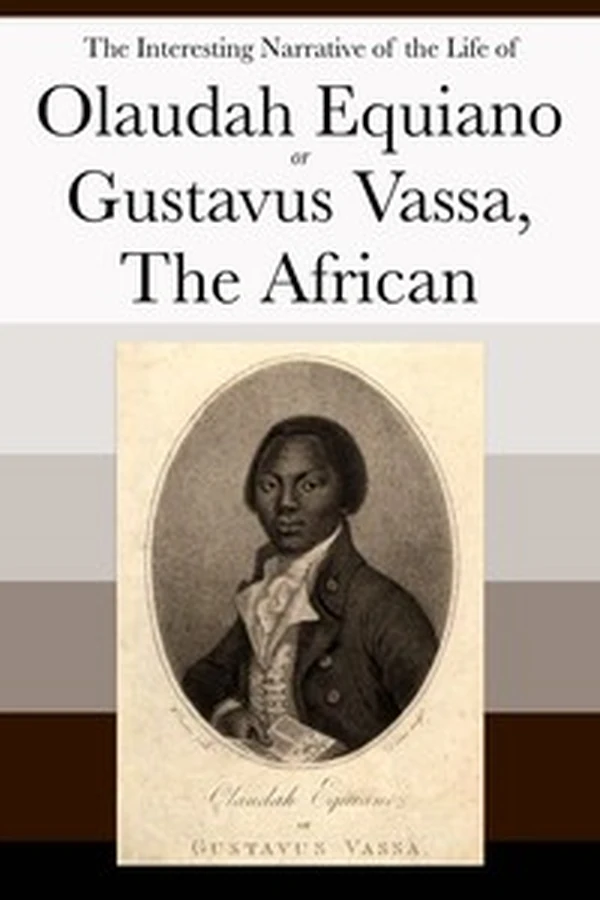
The Interesting Narrative of the Life of Olaudah Equiano
📖 Click to Read the Opening Pages Online Preview
The Interesting Narrative opens with its dedication to Parliament:
Permit me, with the greatest deference and respect, to lay at your feet the following genuine Narrative; the chief design of which is to excite in your august assemblies a sense of compassion for the miseries which the Slave-Trade has entailed on my unfortunate countrymen. By the horrors of that trade was I first torn away from all the tender connexions that were naturally dear to my heart; but these, through the mysterious ways of Providence, I ought to regard as infinitely more than compensated by the introduction I have thence obtained to the knowledge of the Christian religion, and of a nation which, by its liberal sentiments, its humanity, the glorious freedom of its government, and its proficiency in arts and sciences, has exalted the dignity of human nature.
I am sensible I ought to entreat your pardon for addressing to you a work so wholly devoid of literary merit; but, as the production of an unlettered African, who is actuated by the hope of becoming an instrument towards the relief of his suffering countrymen, I trust that such a man, pleading in such a cause, will be acquitted of boldness and presumption.
May the God of heaven inspire your hearts with peculiar benevolence on that important day when the question of Abolition is to be discussed, when thousands, in consequence of your Determination, are to look for Happiness or Misery!
The dedicatory letter is shown here; the complete narrative, all twelve chapters of it, can be read online or downloaded from the free edition below.
Download Full EPUB1789
~86,000 words (estimated)
Approx. 4.8 hours
Standalone
Essaka in the Eboe country, the Atlantic, Montserrat, London and the Mosquito Shore
Chapters I-XII
EPUB · AZW3 · KEPUB
0.25 MB (EPUB) · 0.39 MB (AZW3) · 0.28 MB (KEPUB)
Public domain in the United States
Project Gutenberg #15399
The Interesting Narrative of the Life of Olaudah Equiano is the autobiography of a man who was kidnapped as a child in the Eboe country, carried across the Atlantic, and bought his own freedom eleven years later. Published in 1789 in two volumes, it follows him from an African household of farmers and musicians to a slave ship, a Virginia plantation, the Royal Navy at Louisbourg and Belle-Isle, a Quaker merchant’s sloop at Montserrat, an Arctic expedition under Captain Phipps, a plantation on the Mosquito Shore, and finally to London, where he campaigned against the trade that had carried him away.
What keeps the book alive is not the adventure but the evidence. Equiano names ships, captains, prices and dates; he prints his manumission deed, his certificates and two petitions to the crown; and he argues, in his own voice and at his own pace, that the men who held him were corrupting themselves as well as their captives. He was also a religious convert, and the last third of the book turns inward, towards Providence and the state of his soul. His work as an abolitionist made the narrative a bestseller in its day, and its opening chapters are still among the earliest accounts of West African society written in English by an African. See Wikipedia’s article on The Interesting Narrative of the Life of Olaudah Equiano for its publication history. The text is available via Project Gutenberg #15399.
The Interesting Narrative of the Life of Olaudah Equiano by Olaudah Equiano: Summary, Characters & Themes
This page is a summary and analysis of The Interesting Narrative of the Life of Olaudah Equiano by Olaudah Equiano, with the historical context, the characters and the themes, followed by chapter summaries and the free download links. The book opens in Essaka, an Eboe village, where a boy expects to follow his father as an elder and is instead seized by kidnappers while his parents are away. What follows is a life told in voyages: the Middle Passage, a Virginia plantation, service with a naval officer who renames him Gustavus Vassa, gunpowder and prize money in the Seven Years’ War, a Quaker merchant’s trade in the West Indies, forty pounds saved to buy his freedom, and years of sailoring from the Mediterranean to the Arctic.
The author is Olaudah Equiano, and the text of The Interesting Narrative of the Life of Olaudah Equiano itself has a long critical history. Its author was born, by his own account, in 1745, the youngest son of a family of some standing, and he was eleven when he was taken. The name he was given in the Eboe country, Olaudah, he explains as meaning vicissitude, or fortune, or one favoured and loud-voiced; the name he carried through the Atlantic world was another man’s invention, since Michael Henry Pascal, the lieutenant who bought him in Virginia, called him Gustavus Vassa after a Swedish king. He learned to read and write in England, was baptized at St Margaret’s, Westminster, in 1759, and bought his freedom at Montserrat in 1766, eleven years after he had been carried away.
The book is built in twelve chapters, each opened by an argument that summarises what is coming, and the voice is direct, circumstantial and frequently angry. Equiano interrupts to address the reader, to answer planters, to quote Scripture and to explain how a sloop is worked; he counts in bits and pounds, describes the customs of the Mosquito Indians, and remembers the taste of a cocoa-nut. He also prints documents at length, including his manumission deed from Montserrat, the certificate of the merchant he had served, a memorial to the Bishop of London, the Navy Board’s warrant and the petition he presented to Queen Charlotte in March 1788. The insertions slow the story, and they are also the argument: they turn a personal history into a file of evidence.
Because the book was written for a political purpose, readers still disagree about how to use it. The Eboe chapters are among the earliest English descriptions of an African society written by one of its members, and they have been read as anthropology, as polemic and as memory. The naval chapters make the book a war memoir, the trading chapters make it a case for free Black commerce, and the conversion narrative in the tenth chapter belongs to the long tradition of spiritual autobiography that British readers knew from Bunyan. Very little of it has been dramatised, which is why its best-known passages are still quotations from the text rather than scenes from a film. It has stayed in print in one form or another ever since, and it is now among the most widely taught of all the eighteenth-century slave narratives.
This page is built on the Project Gutenberg transcription of the 1789 text, ebook 15399, which runs to 85,638 words in twelve chapters. The EPUB, AZW3 and KEPUB files carry the narrative complete and unabridged. The book is in the public domain in the United States, so it may be copied freely; the source text is the Project Gutenberg transcription (#15399). For the next stage of the same history, compare Frederick Douglass’s Narrative and The Souls of Black Folk; for another self-written life of the period, see The Autobiography of Benjamin Franklin.
Historical Context
The Interesting Narrative appeared in London in 1789, two years after the Committee for the Abolition of the Slave Trade was formed and in the same season as Wilberforce’s first motion in the Commons. Equiano published it largely by subscription, with a list of names headed by the Prince of Wales, and he sold it in person on a tour of Britain and Ireland, reading from it in bookshops and assembly rooms. Eight further editions had appeared by 1794, and it was translated into Dutch, German and Russian. The timing was not accidental: testimony from a man who had been enslaved was the strongest evidence the campaign could put before a committee, a parish meeting or a reading public.
It belongs to a short shelf of eighteenth-century narratives by Black British writers, among them the account of Ukawsaw Gronniosaw in 1772, the Letters of Ignatius Sancho in 1782 and Ottobah Cugoano’s Thoughts and Sentiments in 1787. The apparatus of the book, with its subscriber list, certificates and names of captains, answered a specific suspicion: that a Black author could not have written such a work, or could not have lived such a life. Equiano meets that suspicion inside the text too, in the first chapter, where he reflects on the vanity of memoir-writing and on the disbelief that greets anything uncommon.
After 1789 Equiano married Susanna Cullen of Soham in Cambridgeshire, in April 1792, and died in London on 31 March 1797, leaving two daughters; his will divided a modest estate between them. His birthplace has been argued over since 1999, when a baptismal record of 1759 led some biographers to suggest that he may have been born in the Americas, a reading other historians dispute. The narrative itself is unambiguous about Essaka and about the Middle Passage, and no document has been found that settles the question either way. What is not in doubt is that the account of the crossing was written by someone who had been in the hold.
Key Characters & Literary Archetypes
- Olaudah Equiano (Gustavus Vassa): the narrator, a kidnapped Eboe child who becomes a sailor, a trader, a convert and an abolitionist, and who writes his own life as evidence rather than as entertainment.
- Michael Henry Pascal: the naval lieutenant who buys him in Virginia, renames him Gustavus Vassa, takes him to England and to Louisbourg, then seizes him at Deptford and sells him to a West India captain.
- Robert King: the Quaker merchant of Philadelphia who buys him at Montserrat, employs him aboard his sloops, and agrees to sell him his freedom for forty pounds.
- Richard Baker: the American boy on the Aetna who is Equiano’s closest friend in the navy, teaches him a little reading, and dies of illness at Gibraltar in 1759.
- John Annis: a free Black man kidnapped in London in 1774 and shipped out by Mr Kirkpatrick; Equiano and Granville Sharp try to free him, and he dies after a flogging at St Kitts.
- Doctor Charles Irving: the promoter and naturalist who employs Equiano, teaches him to freshen sea water, takes him on the Arctic voyage and to the Mosquito Shore, and dies of poisoned fish in 1776.
- Prince George: the young Mosquito Indian who is baptized and taught to read on the voyage out, and who asks why the white men who can read and write still swear, lie and get drunk.
Core Literary Themes
- Testimony and the plain style: Equiano insists that the book is a history and not a performance, and the plainness is a claim to credibility rather than a lack of art.
- Providence and conversion: from the first chapter to the last he reads his life as a series of deliverances, and the tenth chapter turns the narrative inward towards grace.
- Commerce as a claim to personhood: buying, selling and saving are how he proves that he is a man and not a commodity, and his last pages argue that African trade will repay abolition.
- The corruption of the slave trade: ‘Such a tendency has the slave-trade to debauch men’s minds, and harden them to every feeling of humanity’, he writes of the planters, and the book shows the hardening at work.
- Law, liberty and Britishness: habeas corpus, Granville Sharp, the courts and the petitions of 1788 are the instruments he uses, and he claims British liberty as his own inheritance.
- Africa as civil society: the Eboe chapters answer the charge of barbarism with an account of laws, marriages, markets and manners, and with the dry observation that there were no beggars.
Why Download Our Custom E-Reader Edition of The Interesting Narrative of the Life of Olaudah Equiano?
The voice is the reason to read it. This is not a novel about slavery written by an outsider: it is a man counting the money he saved, naming the captains who cheated him, listing the ships he sailed in and the dates he sailed, and then telling you what it felt like to stand on a deck in the ice at eighty degrees north. The details are ordinary and cumulative, and they make the argument better than any rhetoric could.
It is also a travel book, and a strange one. A reader who expects only the plantation will find the Greenland ice, a Turkish seraglio, the cathedral at Malaga, a feast on the Mosquito Shore, Vesuvius by night and a collision at sea on the way to Philadelphia. Equiano went almost everywhere an eighteenth-century sailor could go, and he looked at all of it with the same patient attention.
The edition is made for reading. Twelve chapters, complete and unabridged, with the original dedication, arguments and subscription list, set for e-readers rather than photographed as page images, and free of charge, without an account or a lending window. The text keeps the 1789 spelling and punctuation, so the voice you hear is the one the first readers heard.
- Project Gutenberg transcription, via Project Gutenberg #15399 — the complete text, unabridged, with the chapter headings the author set.
- Complete and unabridged All twelve chapters, the dedication to Parliament, the subscription list, the manumission deed, the petitions and the closing argument on African commerce, without cuts or modernised spelling.
- E-reader typography The text is set in a single reflowing column with proper paragraph spacing and a working table of contents, so the narrative reads on a phone, a tablet or a dedicated e-reader.
- No DRM and no account Download the EPUB, AZW3 or KEPUB directly, keep the file, and read it on any device you own, offline, for as long as you like.
- Narrative of the Life of Frederick Douglass — free EPUB, AZW3 & KEPUB
- The Souls of Black Folk — free EPUB, AZW3 & KEPUB
- The Autobiography of Benjamin Franklin — free EPUB, AZW3 & KEPUB
Chapter summaries
The Interesting Narrative has twelve chapters and about 85,600 words. These twelve summaries follow the book in order, from an Eboe childhood to the petition to Queen Charlotte, skipping nothing and grouping nothing.
- I. The Eboe country: Equiano describes his own country before he describes the loss of it: Essaka in the Eboe province, the elders who wear the embrenche, marriages and public dances, plain food and clean houses, markets for salt and tobacco, and the ordeal in which a suspected poisoner must drink the bowl. He notes that there were no beggars and few luxuries, explains that his name means vicissitude or fortune, and answers the charge that an African could not have written such a book by quoting Isaiah on the title page and insisting that understanding is not confined to feature or colour.
- II. Kidnapping and the Middle Passage: Two men and a woman seize him and his sister while the family is away; the children are separated, briefly reunited, and then parted for good. He passes through several masters, is sold for a handful of shells, and reaches the coast, where the sight of the slave ship terrifies him and he asks whether the white men with red faces and loose hair mean to eat him. On the crossing he is chained below deck and hears ‘the shrieks of the women, and the groans of the dying, rendered the whole a scene of horror almost inconceivable’; at Barbadoes he is sold in an open yard while the buyers rush at the cargo like men at a market.
- III. Virginia, Pascal and the snow: Brought to a Virginia plantation, he is baffled by a watch and a portrait and has a heavy iron muzzle locked round his head. He is bought by Michael Henry Pascal, a naval lieutenant who renames him Gustavus Vassa and carries him to England, where he thinks the snow that fell overnight on the deck is salt, is amazed at his first church service, and is sent to school by the Miss Guerins. He had already learned how names were changed on him: ‘In this place I was called Jacob; but on board the African snow I was called Michael.’ The chapter then follows Pascal to Guernsey, to the press-gang at the Nore and to Louisbourg, where the boy carries powder to the guns in 1758.
- IV. Baptism, Lagos and Belle-Isle: Baptized at St Margaret’s, Westminster, in February 1759, he nearly drowns in the Thames soon afterwards and is taken to the Mediterranean, where he sees his friend Richard Baker die at Gibraltar. Off Lagos in August 1759 he watches the French ship Ocean blow up with a most dreadful explosion, and in 1761 he goes with the expedition against Belle-Isle, is nearly lost when the ship is damaged, and comes home to the talk of peace. At Deptford Pascal seizes him, refuses to return his wages and prize money, and sells him to Captain Doran: ‘Then,’ said he ‘you are now my slave.’
- V. Montserrat and Robert King: Sailed to the West Indies in February 1763 and sold at Montserrat to Robert King, a Quaker merchant of Philadelphia, he is set to work on a plantation and then aboard King’s sloops. The chapter is a catalogue of what he saw in the islands: the law that paid a planter fifteen pounds for a runaway caught with weapons, the slaves weighed in scales at three, six or nine pence a pound, the children sold away from their mothers, and the planters who fathered children they then held as property. He ends with an address to those planters and with the sentence that ‘such a tendency has the slave-trade to debauch men’s minds, and harden them to every feeling of humanity’.
- VI. Three pence and a Savannah jail: He begins trading with a single half bit, worth three pence, and works his way up to a tumbler and a venture in fruit and glasses, losing his stock at Santa Cruz and buying books with what he saves. Around him the kidnappings continue, including that of Joseph Clipson, a free mulatto taken to be sold in Bermuda, and he notes that a free negro is no safer in the islands than a slave. At Savannah in 1764 a quarrel with Doctor Perkins ends with a severe beating, an arrest and a night in jail before the captain and a doctor get him released, and the law offers him nothing.
- VII. Forty pounds: Disgusted with the West Indies, he calculates what his freedom will cost and saves for it through a series of voyages, refusing to spend. In 1766 he offers Robert King the forty pounds agreed, and King signs the manumission, which is registered at Montserrat on 11 July and printed later in the book. He enters as a freeman aboard one of King’s ships and sails for Georgia, where the impositions on free negroes begin again at once. On the passage to Montserrat his friend the captain falls ill, and Equiano navigates the sloop into port himself: ‘I now obtained a new appellation, and was called Captain.’
- VIII. Shipwreck on the Bahama bank: To oblige King he sails once more for Georgia, under a new captain who steers an unfamiliar course. Three dreams warn him of disaster, and the vessel is wrecked on the Bahama bank; he saves the crew, sets out with the captain in an open boat, meets a wrecker, is caught by a storm and reaches New Providence, from where he works his way back to Georgia. There two white men try to kidnap him by force, and he is saved by arguing his case and by the fright his talk of the law gives them. He also happens to officiate as a parson at the funeral of a dead child before he leaves the colony for Martinico.
- IX. London, Turkey and the North Pole: At Martinico the trade is poor, and he takes passage home, where he takes leave of King and meets Pascal again in Greenwich Park, with no satisfaction for his wages. He learns to play the French horn, works as a hairdresser, studies arithmetic, and enters the service of Doctor Irving. Voyages follow to Turkey and Italy, where he climbs Vesuvius, and to Portugal, Grenada and Jamaica, and in 1773 he joins Irving on Phipps’s expedition to the North Pole, describing the ice, the walruses and the bears from the deck of the Race Horse. The ships are frozen in and nearly lost before he returns to England.
- X. John Annis and the road to Cadiz: In 1774 he sails for Smyrna and becomes entangled in the case of John Annis, a free Black man kidnapped in London by a man named Kirkpatrick; Granville Sharp helps, and the law does nothing. His mind turns inward, and this chapter is the religious centre of the book: dreams, temptations, a long argument with a silk weaver, a period of despair and a voyage to Cadiz. On the morning of 6 October 1774 the words of Acts iv. 12 come to him on deck, and he dates his conversion from that hour. On his return he hears Mr Romaine preach at Blackfriars and is received into church fellowship at Westminster chapel.
- XI. Malaga, the Mosquito Shore and a prince: Back to Cadiz in March 1775, he survives a rock that knocks a plank out of the ship’s bottom, visits the cathedral at Malaga, disputes with a priest who offers to make him a pope, and on the return picks up eleven sailors from a sinking Portuguese vessel. He then joins Irving’s sloop Morning Star with four Mosquito Indians aboard, including a young prince he teaches to read and whose bewilderment at the behaviour of white Christians he records. On the Mosquito Shore he helps to open a plantation, learns the customs of the Indians, quells a riot with a show of firearms, and leaves after a quarrel over his passage, escaping to the Mosquito admiral and then to Jamaica.
- XII. Sierra Leone, the Queen and the case for trade: The last chapter covers a dozen years in shorter compass: service with Governor Macnamara, an application to the Bishop of London to be sent as a missionary to Africa, a visit to Wales, voyages to New York and Philadelphia, and an address of thanks to the Quakers. In 1786 he is appointed commissary to the expedition taking the Black Poor to Sierra Leone, exposes the agent’s peculation, and is dismissed in March 1787. He prints his memorial to the Treasury and the petition he presented to Queen Charlotte on 21 March 1788, and closes with an argument that lawful commerce with Africa would reward Britain better than the trade in people: ‘I hope the slave trade will be abolished. I pray it may be an event at hand.’
The Interesting Narrative of the Life of Olaudah Equiano: Frequently Asked Questions
Where can I read The Interesting Narrative of Olaudah Equiano free epub?
How long is The Interesting Narrative of Olaudah Equiano?
Is The Interesting Narrative a true story?
Who was Olaudah Equiano?
Why did Equiano write his narrative?
Is The Interesting Narrative in the public domain?
Why is he called Gustavus Vassa?
Where can I find the Project Gutenberg text of The Interesting Narrative?
Part of: All classic books · Classic books by shelf