The Nicomachean Ethics by Aristotle: Free EPUB, AZW3 & KEPUB Download
The Nicomachean Ethics
📖 Click to Read the Opening Pages Online Preview
Book I, Chapter I
Every art, and every science reduced to a teachable form, and in like manner every action and moral choice, aims, it is thought, at some good: for which reason a common and by no means a bad description of the Chief Good is, “that which all things aim at.”
Now there plainly is a difference in the Ends proposed: for in some cases they are acts of working, and in others certain works or tangible results beyond and beside the acts of working: and where there are certain Ends beyond and beside the actions, the works are in their nature better than the acts of working. Again, since actions and arts and sciences are many, the Ends likewise come to be many: of the healing art, for instance, health; of the ship-building art, a vessel; of the military art, victory; and of domestic management, wealth; are respectively the Ends.
And whatever of such actions, arts, or sciences range under some one faculty (as under that of horsemanship the art of making bridles, and all that are connected with the manufacture of horse-furniture in general; this itself again, and every action connected with war, under the military art; and in the same way others under others), in all such, the Ends of the master-arts are more choice-worthy than those ranging under them, because it is with a view to the former that the latter are pursued.
The argument runs on through ten books. Download the treatise to follow it.
Download Full EPUBc. 340 BC
~116,000 words (estimated)
Approx. 6.5 hours
Standalone
Athens, fourth century BC
10 Books + Introduction
EPUB · AZW3 · KEPUB
0.44 MB (EPUB) · 0.64 MB (AZW3) · 0.47 MB (KEPUB)
Public domain in the United States
Project Gutenberg #8438
The Nicomachean Ethics is Aristotle’s inquiry into the question every reader arrives with: what makes a human life go well? Rather than issuing rules, he works from the inside out — examining what people actually praise, what craftsmen aim at, what a decent person does in a hard case — and builds an account of happiness (eudaimonia) as activity of the soul in accordance with virtue and the Golden Mean. D. P. Chase’s translation is plain, patient and a little archaic, and it keeps Aristotle’s habit of arguing with himself: objections are stated at full strength, answered, then qualified. It reads less like a doctrine than like a seminar in which the reader is expected to take a side.
The central tension is between two pictures of the good life that the treatise never quite reconciles: the practical life of justice, courage and friendship, which needs other people, money and a city; and the contemplative life of Book X, which needs almost nothing and is called divine. Aristotle ranks contemplation first and then spends nine books on the social virtues, and the ranking has troubled readers since antiquity. Read the Ethics as an argument in progress — a defence of virtue as skill, habit and judgement rather than rule-following — and the tension becomes the point. See Wikipedia’s article on The Nicomachean Ethics for its publication history. The text is available via Project Gutenberg #8438.
The Nicomachean Ethics by Aristotle: Summary, Characters & Themes
This page is a summary and analysis of The Nicomachean Ethics by Aristotle: the argument of each of the ten books, the vocabulary Chase uses to carry it, the setting of the lectures, and the free download links. Aristotle’s subject is the good life, and his method is dialectical. He begins from what people say — that happiness is the chief good, that virtue is a mean, that the many are wrong about pleasure — and tests each opinion against the way craftsmen, doctors and decent men actually proceed. Nothing is asserted without an objection being raised, and the objections are usually the strongest available. The result is not a system to be memorised but a set of positions a reader can argue with, which is why the book has held its place in philosophy for twenty-three centuries.
The author is Aristotle, and the text of The Nicomachean Ethics itself has a long critical history. The author is Aristotle, and the book opens with the claim that every action aims at some good, then asks which good is final. The answer is eudaimonia, rendered here as happiness, and the argument for it is the famous function argument: if the good of a flute-player is to play the flute well, the good of a human being is to exercise well the distinctively human capacity, reason. Happiness is therefore “a working of the Soul in the way of Excellence”, and because a life is a whole it cannot be judged in a day: “as it is not one swallow or one fine day that makes a spring, so it is not one day or a short time that makes a man blessed and happy.”
Books II to V work out what excellence is. Virtue of character is not a feeling and not a capacity but a trained state, produced by doing the actions: “by doing just actions we come to be just.” It is a mean between excess and defect — courage between rashness and cowardice, liberality between prodigality and stinginess — and the mean is not arithmetic but relative to the agent. Chase’s rendering of the definition is deliberately clotted: virtue is “a state apt to exercise deliberate choice, being in the relative mean, determined by reason, and as the man of practical wisdom would determine.” The catalogue of virtues in Book IV is a portrait gallery of the decent Athenian, from the magnificent man who funds a trireme to the witty man who knows which joke to make at dinner.
Book VI turns to the intellectual virtues and makes the treatise’s most contested claim: practical wisdom cannot be separated from goodness of character. The clever man can find means to any end; the practically wise man has been trained to see which ends are worth having. Book VII then confronts the obvious objection — people know what is good and do the opposite — by reconstructing the practical syllogism: the incontinent man has the universal premise but is dragged away by the particular one, like a drunk reciting Empedocles’ verses. The standard of correctness is not a rule but a person: “the most distinguishing characteristic of the good man is his seeing the truth in every instance, he being, in fact, the rule and measure of these matters.”
The last four books are about living with others and living well. Friendship occupies two of them, because a friend is “a second Self” and no one would choose to live without friends even with every other good. Book X returns to happiness, ranks contemplation above the practical virtues, and then breaks off into legislation, looking forward to the Politics. The treatise has been read ever since as the founding text of virtue ethics, and its questions — whether character can be taught, whether the good life needs luck, whether theory is better than action — are still live. The text here is D. P. Chase’s translation, with J. A. Smith’s Introduction, the ten books and the translator’s notes. Related shelves: The Republic, Meditations and The Prince. The text used here is the Project Gutenberg transcription (#8438), which is in the public domain in the United States.
Historical Context
Aristotle wrote the Ethics in Athens in the second half of the fourth century BC, after twenty years in Plato’s Academy and a spell tutoring Alexander. The work is almost certainly a set of lecture notes: the prose is compressed, the transitions are abrupt, and the same topic is sometimes treated twice. It was edited after his death, perhaps by his son Nicomachus, whose name it carries. The ten books never mention Aristotle by name and address no patron, which is why readers have treated the text as a working document rather than a published argument. Its audience was the young men of the governing class, and its question was practical: what should a man be, and what should a city do to make him so?
The treatise reached the modern world through a chain of copies, commentaries and translations: Andronicus of Rhodes in the first century BC, the Greek commentators, the Arabic and Latin Middle Ages, and Aquinas, who wrote a commentary on it and folded its virtues into Christian theology. In the Renaissance and the Enlightenment it was the school text on ethics; in the nineteenth century it was edited, annotated and turned into an object of philology. Its modern revival came with Elizabeth Anscombe’s 1958 essay “Modern Moral Philosophy”, which used Aristotle’s vocabulary of character, habit and flourishing to attack the language of obligation that had dominated ethics since Kant. Since then virtue ethics has been a standing option in the field, and this treatise is its founding document.
D. P. Chase’s translation is one of the oldest English Aristotles still in print: 1847, revised in 1861. It keeps the chapter divisions, renders the technical vocabulary in slightly Victorian dress — self-mastery for temperance, great-mindedness for magnanimity, working for activity — and prints the translator’s notes at the back. It is not the most elegant Aristotle in English, and readers who want the Greek terms transliterated and debated should look at later versions. What Chase gives is a text that reads as an argument, sentence by sentence, with the joins visible. The edition digitised here is dated 1908, which is the year this page lists; the treatise behind it is fourth-century BC.
Key Characters & Literary Archetypes
- The good man (spoudaios): The Ethics has no characters, only types, and the central type is the man whose life is in order. He is the standard by which everything is measured: in Book III Aristotle says the good man is the rule and measure of such matters, and in Book IX he is the one who can love himself rightly. He is not a saint. He needs money, friends and a city, and he is allowed to be angry at the right things. What distinguishes him is that his pleasures and pains have been trained to fit his judgements, so that he does the right thing without a struggle.
- The practically wise man (phronimos): Book VI’s invention, and the hinge of the whole treatise. He is neither a theorist nor a clever manipulator: practical wisdom is a true state of mind about what is good for a human being, acquired by experience. Aristotle names Pericles, and insists that the young can be geometers but not practically wise, because wisdom needs a life’s worth of particulars. He is also the person whose judgement settles hard cases. The mean is not a formula but “as the man of practical wisdom would determine”, which makes his character the rule that a rule-based ethics cannot supply.
- The great-minded man (megalopsychos): Book IV’s aristocrat, and the treatise’s most vivid portrait. He claims great things and deserves them, and honour is his currency. He walks slowly, speaks in a deep voice, is slow to admire, remembers the kindnesses he has done and forgets those he has received. Aristotle knows the type is easy to mock — the small-minded man, who deserves much and claims little, is said to be both more common and worse — but the portrait is a serious claim: greatness of soul is the ornament of the other virtues, because it presupposes that a man has them.
- The uncontrolled man (akrates): Book VII’s test case, and the reason the treatise is not mere moralising. He knows the better and does the worse, and Aristotle refuses both Socrates’ denial that this is possible and the easy answer that he must be ignorant. Instead he analyses the practical syllogism: the universal premise is present, the particular judgement is swamped by appetite, and the man acts as if drunk. He is half bad, curable, and less disgraceful than the vicious man because his principle is still intact. He does wrong against his own standard, which is exactly what the vicious man does not do.
- The friend (philos): Friendship takes two of the ten books, and the friend is the answer to the charge that virtue ethics is disguised egoism. There are three kinds, by utility, by pleasure and by virtue, and only the last is friendship in the full sense, because it loves the other for what he is and lasts as long as character lasts. Friends must be equal, share their lives and wish each other well for the other’s sake. “Friend” is “but a name for a second Self”, and Book IX argues that the good man’s love of his friend is an extension of a rightly ordered love of himself.
- The contemplative (the philosopher): Book X’s surprising winner. After nine books on courage, justice and friendship, Aristotle says the happiest life is the one spent in contemplation — not because action is bad, but because contemplation is the activity of the highest thing in us, needs least from outside, is most continuous, and is what the gods do. He concedes that such a life is higher than mere human nature, and immediately adds that a man must still eat, be just and keep his friends. The philosopher here is not a dropout. He is a citizen who has ranked his activities and chosen the best.
Core Literary Themes
- Happiness is an activity, not a feeling: The treatise’s first move is to refuse the equation of happiness with pleasure, honour or wealth; its second is to define it as activity. Happiness is a working of the soul in the way of excellence, which means it is something you do across a complete life, not something you feel at a moment. This has consequences. A child cannot be happy, a sleeping man cannot be happy, and a man on the rack cannot be happy however serene his inner state. The definition also explains why Aristotle needs external goods — friends, health, a modest competence — since some excellent activities cannot be performed without them.
- Excellence is a habit, and the mean moves: Virtue is neither innate nor contrary to nature; it is a capacity completed by practice, which is why Aristotle compares moral training to learning an instrument. “By doing just actions we come to be just.” The mean between excess and defect is not a midpoint between two numbers but a target relative to the agent and the situation, so the same act can be courageous in one man and rash in another. That is why the treatise has no rule for every case, and why Book II ends by telling the reader to steer away from the pleasure nearest at hand. It is advice rather than an algorithm, and the reader is meant to notice the difference.
- Justice is the whole of virtue, seen from outside: Book V is the longest and most technical stretch of the treatise, and its claim is double. Justice in the broad sense is lawfulness, and since the law commands every virtue, the Ethics concludes that “All virtue is in Justice comprehended”: justice is the whole of virtue considered as it affects other people. Justice in the narrow sense is fairness, analysed as two proportions. Distributive justice divides goods according to merit, corrective justice restores equality between parties, and money is the measure that makes exchange possible. The book ends with equity, the correction of a law that is too general, which is the admission that justice needs judgement.
- Weakness of will, and the limits of knowledge: Book VII is a sustained argument against the Socratic identification of virtue with knowledge. If knowing the right assured doing it, incontinence would be impossible, and yet it happens constantly. Aristotle’s solution is to distinguish having knowledge from using it, and to show how a particular judgement is overwhelmed by appetite while the universal premise stays in place. The analysis is unflattering. The incontinent man is not a monster but a man whose training has not reached his appetites, and the cure is habit rather than information. Ethics, on this account, is not a subject anyone can learn from a book alone.
- Friendship as the second self: The books on friendship are the heart of the treatise’s social vision. Aristotle treats friendship as both a virtue and a need, and sorts it into three kinds by its object: utility, pleasure, and the good. Only the third is stable, because it loves the person rather than the benefit. Friendship requires equality, shared activity and time — “it is a matter for contentment to find even a few such” — and it is the model for political life, since every constitution has an analogue in a household. The claim that a friend is another self grounds the argument that self-love and love of others need not be rivals.
Related on editions.ink: The Republic — Plato’s just city, the cave and the divided soul; Meditations — Marcus Aurelius’s notes on living by principle; The Prince — Machiavelli’s manual on power, written for a ruler rather than a student.
Why Download Our Custom E-Reader Edition of The Nicomachean Ethics?
This edition gives the complete treatise in Chase’s translation, preceded by J. A. Smith’s Introduction — all ten books with their numbered chapters and the translator’s notes — as one continuous, reflowable text. The chapter headings are kept, so the argument about distributive justice sits exactly where Aristotle put it in Book V, and the notes are gathered at the back rather than buried in footnotes. Nothing is abridged, modernised or paraphrased, so a long chapter still reads like a long chapter rather than a screen of loose lines.
The files are DRM-free in three formats: EPUB for most readers, AZW3 for older Kindles, and KEPUB for Kobo devices. Each has a linked table of contents with the ten books as top-level entries, which matters in a work you will want to consult by book and chapter rather than read straight through from the first page. The text reflows to your own type size, and every reader app remembers where you stopped.
The analysis above is written for readers who want the argument as well as the text: what the function argument is doing, why the mean is not a compromise, what Aristotle means by practical wisdom, and why Book X ranks contemplation above justice. Read a book, then read the summary of it. The two are meant to be used together, and the chapters are numbered so they line up with the book-and-chapter references used in courses and commentaries.
- Project Gutenberg transcription, via Project Gutenberg #8438 — the complete text, unabridged, with the chapter headings the author set.
- Chapter marks all ten books and their numbered chapters, as Chase divided them.
- Notes included the translator’s notes, grouped at the back and keyed to the books.
- Formats EPUB, AZW3 and KEPUB, DRM-free, each with a linked table of contents.
- The Republic — free EPUB, AZW3 & KEPUB
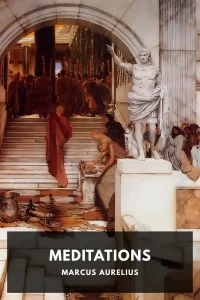
- Meditations — free EPUB, AZW3 & KEPUB
- The Prince — free EPUB, AZW3 & KEPUB
Chapter summaries
J. A. Smith’s Introduction, then the ten books in Chase’s translation. Each summary below reconstructs the argument of its book — the premises, the objections and the moves — in the order Aristotle makes them, and stops short of the translator’s notes.
- Introduction — J. A. Smith on the philosophy of human life: Smith spends eight thousand words persuading the reader that the Ethics is a fragment of a larger design. His case is that the treatise is the second half of a single inquiry whose first half is the Politics, and that its subject is not private morality but what he calls the philosophy of human life: the science of how a man becomes good and how a community makes him so. He defends Aristotle’s loose procedure against the charge of vagueness, argues that the argument moves from common opinions toward first principles rather than the reverse, and warns that the book is lecture material, not finished prose. Read it as a map of the ground the ten books will cross.
- Book I — The highest good and the work of man: Every action aims at a good, and the goods form a hierarchy, so there must be one that is sought for itself alone. Aristotle calls it happiness, then tests the candidates: pleasure is too servile, honour depends on other people, wealth is a means. His own answer is the function argument — the good of a thing lies in doing its characteristic work well, and the characteristic work of a human being is rational activity. Hence “a working of the Soul in the way of Excellence”, over a complete life, with enough external goods to act. The book ends by dividing the soul into rational and irrational parts, which sets up everything after it.
- Book II — Virtue of character as a mean: Virtue is not inborn and not against nature; it is a capacity completed by habit, so “by doing just actions we come to be just.” Aristotle is careful about the objection that this is circular: the just man does just acts knowingly, from choice, and from a settled state, which is not true of the beginner. Virtue is a state, not a feeling, because we are praised for states and not for passing emotions. It is a mean between excess and defect, relative to the agent, and Book II ends with the table of virtues — courage, self-mastery, liberality, magnificence, great-mindedness, meekness, truthfulness, wit, friendliness, shame — each with its two vices.
- Book III — Choice, responsibility, and the first virtues: The book opens with the voluntary: compulsion, ignorance, and the mixed actions of the man who throws cargo overboard in a storm. Moral choice is voluntary but narrower, because it follows deliberation about means; wish has the end, choice the means, and deliberation never concerns what cannot be otherwise. That is why responsibility attaches to what is in our power, and why Aristotle answers the determinist by arguing that habits are formed by acts, so the vicious man is the author of his own blindness. The last chapters turn to particular virtues: courage as the mean about fear and confidence, and self-mastery as the mean about bodily pleasure.
- Book IV — The social virtues, from liberality to wit: This is the treatise’s portrait gallery. Liberality is the right use of money, and the liberal man gives to the right people, at the right time, with pleasure, and is not sorry afterwards. Magnificence is liberality on a large scale, for public works and festivals; great-mindedness is the claim to great honour when the claim is true, and its excess is vanity, its defect small-mindedness. Meekness is the mean about anger; truthfulness is the mean about self-presentation, with the braggart above and the self-deprecating man below; wit is the mean about jokes, between the buffoon and the boor. Shame closes the book, and is not a virtue at all, only a feeling that suits the young.
- Book V — Justice, the complete virtue: Justice is the whole of virtue in its bearing on others: the just man is lawful, and the law commands courage, self-mastery and the rest. Aristotle quotes the poet to the effect that “neither Hesper nor the Morning-star” is so worthy of admiration. But there is also justice as a part of virtue, the fair share, and here the book turns technical. Distributive justice is a geometrical proportion, dividing honours and goods by merit; corrective justice is arithmetical, restoring equality between the parties to a transaction. Money appears as the measure of need that makes exchange possible. The book ends with equity, which corrects the law where its generality fails, and with the puzzle of whether one can be unjust to oneself.
- Book VI — The intellectual virtues and practical wisdom: The soul has two rational parts, one about things that cannot be otherwise, one about things that can, and each has its virtue. Art is the state that makes things, science demonstrates, intuition grasps first principles, and wisdom is their combination. The book’s real subject is the fifth, practical wisdom: a true state concerned with what is good for a human being, acquired by experience, and therefore rare in the young. Aristotle’s claim, worked out against Socrates, is that practical wisdom and virtue of character need each other. Virtue supplies the end; wisdom supplies the means. Cleverness without virtue is merely the power to serve any end whatever.
- Book VII — Self-control, incontinence, and pleasure: The puzzles come first: how can a man act against his knowledge? Socrates said he could not, and the facts say otherwise. Aristotle’s solution separates having a piece of knowledge from using it, then analyses the practical syllogism, in which the universal premise survives while the particular judgement is displaced by appetite. Anger is treated separately, because it half listens to reason; appetite does not. Brutishness and morbid states are then distinguished from vice proper. The book closes with a long appendix on pleasure, answering the arguments that pleasure is a process, that it impedes thought, and that it is not choice-worthy — pleasure, he argues, is the unimpeded activity of a natural state.
- Book VIII — Friendship: the three kinds: Friendship is either a virtue or something close to one, and it is necessary for life: “no one would choose to live without friends though he should have all the other good things in the world.” The three kinds are sorted by their object — the useful, the pleasant, the good — and only the third is friendship in the full sense, because it is stable and loves the person. Aristotle then works through the politics of friendship: equality and proportion, the friendship of ruler and ruled, the household, and the constitutions, each of which has its analogue in a family. Friendship, he concludes, holds cities together more effectively than justice does.
- Book IX — Friendship, self-love and the happy life: The puzzles here are practical. Can a man have many friends? Not many of the good kind, because intimacy cannot be divided. Ought friends to be called in when things go well or badly? Both, but for different reasons. The centrepiece is the defence of self-love: the vulgar self-lover takes money, honour and pleasure for himself, while the good man takes the noble, and so is the truest self-lover. From this Aristotle argues that the good man’s friendship is an extension of a rightly ordered relation to himself, and that happiness needs friends because it is an activity, and activity is easier and better shared.
- Book X — Pleasure, contemplation, and the turn to politics: Pleasure is first defended against its critics: it is not a process but a whole, it completes activity the way bloom completes youth, and it differs in kind with the activities it completes. Happiness is then identified with the best activity, and the best activity is contemplation, because it is continuous, self-sufficient and divine. The practical virtues are ranked second, since they need other people and circumstances. Aristotle concedes that such a life exceeds the human, then tells the reader to become immortal so far as possible. The final chapter turns to law and education, and the treatise breaks off pointing toward the Politics.
The Nicomachean Ethics: Frequently Asked Questions
What is the Nicomachean Ethics about?
Is the Nicomachean Ethics hard to read?
Which translation is this?
Why is it called the Nicomachean Ethics?
Does Aristotle believe in the gods?
Where should a beginner start?
Why does the book end with politics?
Where can I get the complete text?
Part of: Philosophy classics · Classic fiction