The House of the Seven Gables by Nathaniel Hawthorne: Free EPUB, AZW3 & KEPUB Download
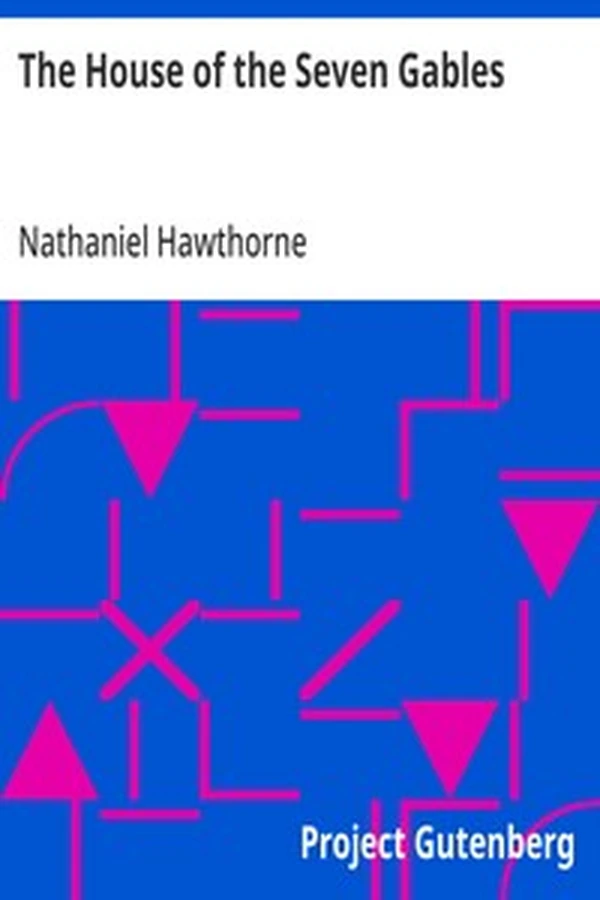
The House of the Seven Gables
📖 Click to Read the Opening Pages Online Preview
The story begins
Old Matthew Maule, in a word, was executed for the crime of witchcraft. He was one of the martyrs to that terrible delusion, which should teach us, among its other morals, that the influential classes, and those who take upon themselves to be leaders of the people, are fully liable to all the passionate error that has ever characterized the maddest mob. Clergymen, judges, statesmen,—the wisest, calmest, holiest persons of their day stood in the inner circle round about the gallows, loudest to applaud the work of blood, latest to confess themselves miserably deceived. If any one part of their proceedings can be said to deserve less blame than another, it was the singular indiscrimination with which they persecuted, not merely the poor and aged, as in former judicial massacres, but people of all ranks; their own equals, brethren, and wives. Amid the disorder of such various ruin, it is not strange that a man of inconsiderable note, like Maule, should have trodden the martyr’s path to the hill of execution almost unremarked in the throng of his fellow sufferers. But, in after days, when the frenzy of that hideous epoch had subsided, it was remembered how loudly Colonel Pyncheon had joined in the general cry, to purge the land from witchcraft; nor did it fail to be whispered, that there was an invidious acrimony in the zeal with which he had sought the condemnation of Matthew Maule. It was well known that the victim had recognized the bitterness of personal enmity in his persecutor’s conduct towards him, and that he declared himself hunted to death for his spoil. At the moment of execution—with the halter about his neck, and while Colonel Pyncheon sat on horseback, grimly gazing at the scene Maule had addressed him from the scaffold, and uttered a prophecy, of which history, as well as fireside tradition, has preserved the very words. “God,” said the dying man, pointing his finger, with a ghastly look, at the undismayed countenance of his enemy,—“God will give him blood to drink!”
After the reputed wizard’s death, his humble homestead had fallen an easy spoil into Colonel Pyncheon’s grasp. When it was understood, however, that the Colonel intended to erect a family mansion—spacious, ponderously framed of oaken timber, and calculated to endure for many generations of his posterity over the spot first covered by the log-built hut of Matthew Maule, there was much shaking of the head among the village gossips. Without absolutely expressing a doubt whether the stalwart Puritan had acted as a man of conscience and integrity throughout the proceedings which have been sketched, they, nevertheless, hinted that he was about to build his house over an unquiet grave. His home would include the home of the dead and buried wizard, and would thus afford the ghost of the latter a kind of privilege to haunt its new apartments, and the chambers into which future bridegrooms were to lead their brides, and where children of the Pyncheon blood were to be born. The terror and ugliness of Maule’s crime, and the wretchedness of his punishment, would darken the freshly plastered walls, and infect them early with the scent of an old and melancholy house. Why, then,—while so much of the soil around him was bestrewn with the virgin forest leaves,—why should Colonel Pyncheon prefer a site that had already been accurst?
But the Puritan soldier and magistrate was not a man to be turned aside from his well-considered scheme, either by dread of the wizard’s ghost, or by flimsy sentimentalities of any kind, however specious. Had he been told of a bad air, it might have moved him somewhat; but he was ready to encounter an evil spirit on his own ground. Endowed with commonsense, as massive and hard as blocks of granite, fastened together by stern rigidity of purpose, as with iron clamps, he followed out his original design, probably without so much as imagining an objection to it. On the score of delicacy, or any scrupulousness which a finer sensibility might have taught him, the Colonel, like most of his breed and generation, was impenetrable. He therefore dug his cellar, and laid the deep foundations of his mansion, on the square of earth whence Matthew Maule, forty years before, had first swept away the fallen leaves. It was a curious, and, as some people thought, an ominous fact, that, very soon after the workmen began their operations, the spring of water, above mentioned, entirely lost the deliciousness of its pristine quality. Whether its sources were disturbed by the depth of the new cellar, or whatever subtler cause might lurk at the bottom, it is certain that the water of Maule’s Well, as it continued to be called, grew hard and brackish. Even such we find it now; and any old woman of the neighborhood will certify that it is productive of intestinal mischief to those who quench their thirst there.
The walk down Pyncheon Street, the seven gables and the spring where Matthew Maule built his hut stop here. The claim, the hanging and the curse that follows the house down to Hepzibah’s cent-shop are in the free EPUB below.
Download Full EPUB1851
~105,000 words (estimated)
Approx. 5.8 hours
Standalone
Salem, Massachusetts, in the 1850s, and a house with two hundred years of history behind it
Chapter summaries
EPUB · AZW3 · KEPUB
0.34 MB (EPUB) · 0.49 MB (AZW3) · 0.37 MB (KEPUB)
Public domain in the United States
Project Gutenberg #77
The House of the Seven Gables is Nathaniel Hawthorne’s romance of a New England family and a curse that outlives the man who earned it. Colonel Pyncheon took Matthew Maule’s land, saw Maule hanged for witchcraft, and built his seven-gabled mansion on the very spot; Maule’s last words, that God would give him blood to drink, came true in the Colonel’s chair, and come true again, generations later, in the same room. What is left of the family is a proud, near-sighted old woman keeping a cent-shop, a brother newly out of prison, a country cousin of seventeen, a lodger who takes photographs, and a judge who wants what they have.
It appeared in 1851, the year after The Scarlet Letter, and it is the slower, stranger book: a ghost story in which no ghost walks, a murder mystery whose murder happened thirty years before the first page, and a comedy about a lady learning to sell gingerbread to schoolchildren. Hawthorne called it a Romance and asked to be judged by different rules, and the novel keeps changing its ground to match — omen in one chapter, railroad satire in the next. This page carries the complete text as a free epub, with the chapter summaries, characters and themes that follow. See Wikipedia’s article on The House of the Seven Gables for its publication history. The text is available via Project Gutenberg #77.
The House of the Seven Gables by Nathaniel Hawthorne: Summary, Characters & Themes
The House of the Seven Gables is a summary and analysis of Nathaniel Hawthorne’s romance of 1851, written at Lenox in the year after The Scarlet Letter. It is a book about inheritance in both senses: property that cannot be sold without a curse, and character that cannot be escaped. Hepzibah Pyncheon is sixty, near-sighted, frightened of strangers, and down to her last few dollars when she opens a cent-shop in the front gable of the family mansion; the first thing she sells is a gingerbread figure to a schoolboy. Her brother Clifford comes home from thirty years in prison the next morning. Their cousin Phoebe, seventeen, arrives the morning after that, with a bandbox and a talent for making rooms habitable. Behind them stands Judge Jaffrey Pyncheon, who holds the family money, wears the family smile and carries the family crime. Hawthorne gives the Pyncheons two centuries of paper — a deed, a will, a portrait — and lets the furniture do the haunting.
The author is Nathaniel Hawthorne, and the text itself has a long critical history. The plot has the shape of a clock running down. The first third opens the house: a shop window, a breakfast of mackerel and Mocha coffee, a garden with a brackish spring in it, a lodger in a gable who makes portraits out of sunshine. The middle belongs to Phoebe. She buys yeast, sells spruce beer, reads to Clifford for whole afternoons in an arbour and brings him back far enough to shake his fist at a passing procession from an arched window. Then Judge Pyncheon comes into the shop out of an easterly rain to demand a secret his cousin does not have, and two people walk out of the house into the weather and board a train with no destination. The last third is a death in an arm-chair, a love scene beside the body, and a parchment worth nothing. Nobody is ever rescued by a ghost.
There are twenty-one chapters and very little plot of the ordinary kind: a shop opens, a guest arrives, a man dies, two people run away, and everybody comes home. What holds the book together is Hawthorne’s habit of stepping in front of it. The narrator is a visitor to the town — “On my occasional visits to the town aforesaid” — and he interrupts to explain what a cent-shop stocked, to speculate about what the hens are thinking, to give a whole chapter to the appointments a dead man is failing to keep. Chapter XIII is a legend he hands to his photographer and lets him read aloud. Chapter XVIII is a satire announced as a ghost story and then withdrawn, and the withdrawal is the joke. The comedy is always at the expense of dignity: a lady’s first customer is a boy with one copper, and the most respectable man in town dies in a chair and is then lectured for twenty pages.
Around the Pyncheons Hawthorne sets four kinds of pressure. Judge Jaffrey Pyncheon is respectability itself — gold-headed cane, Sunday smile, five glasses of old sherry — and the book’s one thorough hypocrite. Holgrave, the lodger, is twenty-two, self-educated, a Fourierist and a mesmerist, who argues that the past lies on the present “like a giant’s dead body” and admits he lives in the house only “that I may know the better how to hate it”. Phoebe is the one person who does not treat the building as a monument, and the one who is never afraid of it. Uncle Venner, who does odd jobs and plans to retire to the workhouse, is the chorus, and the only voice never frightened. Behind them stands Alice Pyncheon, long dead, whose name is on the roses between the gables and whose harpsichord is heard whenever a Pyncheon is about to die.
Hawthorne wrote it at Lenox, in the small red house where he had taken his family after Salem, and finished it about the middle of January 1851. He had told his publisher in October that he would not be ready by November, “for I am never good for anything in the literary way till after the first autumnal frost”. The book was a success, and it has never been as popular as The Scarlet Letter, which is a pity, because it is the more experimental of the two: slower, funnier, and willing to stop dead for an essay on the wrong kind of architecture. Readers who want the earlier book can take The Scarlet Letter; the machinery this one inherits — the castles, the portraits that watch, the persecuted heroine — is in The Mysteries of Udolpho and The Monk. The text used here is the Project Gutenberg #77 transcription.
Historical Context
Hawthorne’s own family carried a Salem trial in it. His great-grandfather John Hathorne (as the name was then spelled) sat as a magistrate in the witchcraft prosecutions, and the introductory note printed in this edition records that he “used peculiar severity towards a certain woman who was among the accused”, whose husband prophesied that God would take revenge on her persecutors. The family, the note says, came to believe that a curse lay on it. Writing at Lenox in 1850, Hawthorne gave the belief a house: a hanged wizard called Maule, a Puritan colonel who took over his acre of garden ground, and a malediction that passes down the generations with the property, so that the deed and the revenge can never be separated. He never names the curse in his own voice; the neighbours do.
In his preface Hawthorne refuses the word novel. A Romance, he says, may “present that truth under circumstances, to a great extent, of the writer’s own choosing or creation”, and may “mingle the Marvelous rather as a slight, delicate, and evanescent flavor” than as the substance of the dish. He names his moral in one sentence — “the wrong-doing of one generation lives into the successive ones” — and then declines to impale the story on it “as with an iron rod”. He also asks that no real town be recognised, though he has laid out a street, built a house and furnished it with “materials long in use for constructing castles in the air”. Salem readers recognised it anyway, and the note in this edition points out that the two families marry at the end.
The decade is in the book as machinery. Clifford, let out into a world that has been building railways while he sat still, preaches a sermon against houses from a carriage seat: the railroad, he says, will “do away with those stale ideas of home and fireside”, and the telegraph ought to carry lovers’ messages rather than reports of murder. The photographer in the gable is a new kind of tradesman, half artist and half pedlar of other people’s faces, and the novel’s women go on believing in mesmerism because they have seen what one pair of eyes can do to another. The family’s own delusion is older still: a grant of land in Waldo County, Maine, with an Indian deed attached, that the Pyncheons have never been able to make good, and that keeps them proud and poor together.
Key Characters & Literary Archetypes
- Hepzibah Pyncheon: Sixty years old, near-sighted, and shut up in the house for above a quarter of a century, she has a scowl she cannot help and a pride she cannot spend. She holds the mansion for life, keeps her brother’s miniature in a secret drawer, opens the cent-shop because there is nothing else left to do, and repents within a minute of every unkind thought. She is the one person in the book who loves without wanting anything back, and the one asked to give up the most.
- Clifford Pyncheon: Hepzibah’s brother, taken out of prison after thirty years, an old man with a young man’s tastes: flowers, music, crimson curtains and a hatred of the family portrait. He is gentle, selfish in the way that beautiful natures are, and frightened of exactly one man in the world. In the garden, and again on the train, he becomes briefly the person he was at twenty. The change is the novel’s cruellest measure of what prison took from him, and of how little of it came back.
- Phoebe Pyncheon: A fatherless country cousin of seventeen, sent for a single night and kept because the house needs her. She has “the gift of practical arrangement”, stocks the shop with yeast and spice-cakes, mends Clifford’s spirits and falls in love with the lodger without ever losing her footing. She is the novel’s one unfrightened character, the only one who does not treat the past as a creditor, and the reason the last chapters can be a comedy instead of an inquest. Without her the book would be a case study.
- Judge Jaffrey Pyncheon: The family’s successful man: judge, congressman, landowner, president of a Bible society, with a smile “a good deal akin to the shine on his boots”. He is the image of the old Colonel, down to the gurgle in his throat, and he is certain that his cousin Clifford knows where a fortune is hidden. He is courteous, powerful and entirely without pity, and the novel kills him in the chair his ancestor died in without ever letting him speak again. He leaves the book as furniture.
- Holgrave: A daguerreotypist of twenty-two who lodges in a gable, and has already been a schoolmaster, a salesman, a newspaper editor, a pedlar and a Fourierist. He hoes the garden, mesmerises a hen to prove a point, holds that “the house ought to be purified with fire”, and argues that the past sits on the present like a corpse. He is the book’s young radical and its chief witness, and, though he keeps the fact for the last chapters, a Maule — the last word in the family quarrel that began on the gallows.
- Uncle Venner: The old man who does odd jobs up and down the street, trundles a wheelbarrow, keeps a pig and intends to retire to the workhouse, which he calls “my farm”. He has known three generations of Pyncheons, speaks to them without fear, compares himself to a Roxbury russet apple that improves with keeping, and supplies the book with its only untroubled wisdom. He is also the only character never asked to inherit anything, which may be why he is the happiest person in it.
Core Literary Themes
- The curse as inheritance: Maule’s dying sentence is not a spell but a debt: the Colonel’s land, the Colonel’s chair, the Colonel’s blood. Hawthorne gives the prophecy an unglamorous explanation — a family predisposition to apoplexy, which the doctors call by its medical name — and keeps it anyway, so a reader may believe the medicine or the malediction or both, and the family never has to choose between them. What is inherited here is never only money: the will that makes Hepzibah secure is the will that keeps her poor, and the family face passes down with the family claim.
- Work, and the shame of it: Hepzibah’s cent-shop is the novel’s real scandal: a Pyncheon selling gingerbread across a counter, in the front gable, to children. The book is exact about the humiliation — the neighbours’ pity, the wrong change, the coppers in the till — and then quietly takes it away, because trade brings her Phoebe, an income of her own and the first unforced pleasure of her life. “So wholesome is effort!” the narrator says, and the sentence turns the whole chapter. Work is the one thing here that is not inherited, and the one thing nobody despises for long.
- The past as dead weight: Holgrave’s lecture in the garden is the book arguing with itself: the past lies on the present “like a giant’s dead body”, the dead sit on the judgment-seats, the house should be burned down and its ashes scattered. Hawthorne lets him say all of it, then marries him into the family and hands him a house to keep. The novel cannot decide whether to inherit or to demolish, and that hesitation, rather than any ghost, is what makes it feel haunted on every page, from the shop window to the last morning. It is also the most modern thing in the book.
- Power over another mind: Mesmerism runs through the book from the first chapter to the last: Maule’s eye, Alice at the harpsichord, Holgrave’s hand above Phoebe’s drowsy head. The legend in Chapter XIII is its cruellest story, a woman made to laugh, weep and dance at a wave of the hand, and Holgrave’s refusal to finish the same spell in Chapter XIV is the quiet answer to it. The horror in this novel is never a ghost; it is a will taken out of someone else’s head and used against them, and it is always a man doing it to a woman.
- The family as an idea: Holgrave’s cure for the Pyncheons is unfashionable and the novel never quite retracts it: a family should be merged, every half-century or so, into the great obscure mass of humanity, because blood keeps its freshness only by running in hidden streams. The Pyncheons have done the opposite for two hundred years, and the house is the machine that keeps them separate, keeps them proud and keeps them presentable long after the money has gone. Hawthorne’s target is not ancestry but the vanity of preserving it. The last chapter quietly agrees with him.
Why Download Our Custom E-Reader Edition of The House of the Seven Gables?
This is the complete novel, not an abridgement or a retelling: the author’s preface, all twenty-one chapters, from the by-street and the elm to the barouche at the door. The text is the Project Gutenberg transcription, reset with real paragraphs, working navigation and a linked table of contents, so that Hawthorne’s long sentences and his odd punctuation arrive intact.
It is built for e-readers rather than for scans: chapter marks that work, a cover made for a modern shelf, and a file small enough to open at once. Take the EPUB for Apple Books and most other readers, the KEPUB for Kobo, and the AZW3 for Kindle; all three come from the links at the top of this page and without a watermark or a password. The three files hold the same text in three wrappers, so take whichever one your reader opens best.
About a hundred and five thousand words, or five and three-quarter hours at an ordinary pace. The house takes its time, and the opening is thick with genealogy and weather; if you want the shape of the story before you start, the ten chapter summaries, the character notes and the themes on this page will take ten minutes and tell you what the curse does and who pays for it. If you are reading for a class or a book club, the ten summaries make a serviceable map of where each chapter leaves you, and the character notes will keep the cousins straight.
- Project Gutenberg transcription, via Project Gutenberg #77 — the complete text, unabridged, with the chapter headings the author set.
- Complete 1851 text The preface and all twenty-one chapters, unabridged, with Hawthorne’s own chapter titles.
- EPUB, AZW3 and KEPUB Apple Books and Kobo take the EPUB or KEPUB, Kindles take the AZW3.
- Summary and analysis Chapters, characters, themes and context on this page, if you want the reading first.
- The Scarlet Letter — free EPUB, AZW3 & KEPUB
- The Mysteries of Udolpho — free EPUB, AZW3 & KEPUB
- The Monk — free EPUB, AZW3 & KEPUB
Chapter summaries
The novel runs in twenty-one chapters. This guide follows them in ten movements, from the shop-window to the last morning on Pyncheon Street.
- I: The Old Pyncheon Family: The narrator walks down Pyncheon Street past the elm and the seven gables, and tells the house’s history: Matthew Maule’s hut at the spring, Colonel Pyncheon’s claim, the hanging and the curse, and the housewarming at which the Colonel is found dead in his chair with blood on his ruff and a voice in the room saying that God has given him blood to drink. Two hundred years of the family follow, down to Hepzibah, Clifford, Phoebe and the Judge.
- II–III: The Little Shop-Window: Hepzibah rises before dawn, looks at her brother’s miniature, prays, and lifts the bar from the shop-door she has kept shut all her life. Holgrave calls it one of the fortunate days of her life and is refused his money; two labourers outside pronounce the venture poor business; the schoolboy Ned Higgins buys a gingerbread man for a cent and comes back for a second. By evening she has sold flour, thread and advice, and found that effort is wholesome.
- IV–V: A Day Behind the Counter: The Judge passes under the elm and smiles at the window, and Hepzibah reads his face in the portrait of the old Colonel: this is the very man, she thinks, to build up a new house or to draw down a new curse. Uncle Venner pays a call and asks when Clifford is expected. That evening Phoebe arrives from the country with a bandbox, and by the next afternoon she has taken over the counter, stocked it with yeast and spice-cakes.
- VI–VII: Maule’s Well: Phoebe explores the garden — the ruined arbour, the brackish fountain, Chanticleer’s degenerate family — and meets the lodger, who warns her not to drink the water and shows her a portrait taken in sunlight that looks exactly like the old Puritan on the wall. The next morning Clifford comes down to breakfast: mackerel, Mocha coffee, a crimson rose, a demand that the portrait be taken down, and the discovery that his sister keeps a shop and that they are very poor.
- VIII–IX: The Pyncheon of To-day: Judge Pyncheon enters the shop, takes Phoebe for an assistant, offers the country-seat and then insists on seeing Clifford, until a voice from the inner room begs him to kneel and kiss the Judge’s feet. He withdraws smiling. Afterwards Hepzibah reads Pope and Rasselas to her brother without the least success, and Phoebe’s singing begins the slow return of his youth. The household settles into its new shape, with the shop at the front and a prisoner at the back.
- X–XI: The Pyncheon Garden: Clifford is carried into the garden, where the scarlet runners, the humming-birds and the hens at the well give him back his childhood for an afternoon; Uncle Venner talks about his farm, Holgrave about Fourier, and Clifford cries out that he wants his happiness and has waited too long. From the arched window he watches the street, nearly leaps into a procession, fails to go to church, and blows soap-bubbles that burst on the nose of the one man he fears.
- XII–XIII: The Daguerreotypist: Holgrave tells Phoebe his history and his opinions: the past on the present like a dead body, the house fit only for fire, the family that should be merged into humanity and forgotten. Then he reads her his manuscript, the legend of Alice Pyncheon, in which his ancestor mesmerises a Pyncheon daughter, keeps her as a servant of his will, humbles her at his own wedding and kills her without ever meaning to, and the lost deed of the eastern lands goes down with the secret.
- XIV–XV: Phoebe’s Good-Bye: Holgrave sees that Phoebe is falling into the mesmeric sleep and deliberately refuses the power. She goes home to the country. In the rain Judge Pyncheon comes back, accuses Hepzibah of ingratitude, demands the secret he is sure Clifford knows, and threatens him with an asylum; she yields and goes to fetch her brother. The Judge settles into the ancestral chair and takes out his watch to time him. The chapter ends there, with the clock and the chair.
- XVI–XVIII: Clifford’s Chamber: Clifford’s room is empty, the Judge does not answer, and Clifford comes down the stairs in a strange elation: the weight is gone, and the two of them walk out of the house and take a train. He lectures the carriage on railways, houses and dead men in chairs, then collapses at a country station where his sister prays. At home the dead Judge sits through a whole chapter of appointments he will not keep, while a fly walks over his face and the watch runs down.
- XIX–XXI: Alice’s Posies: The morning after the storm: the crimson flowers between the gables in full bloom, the neighbours gossiping over the counter, Phoebe home again and let in by an unseen hand. Holgrave shows her a daguerreotype of the dead Judge, then confesses that he loves her, and the family comes back to find them together. The last chapter settles the inheritance, empties the recess behind the portrait, marries the two families and sends them off in a barouche, with an old man promised a cottage.
The House of the Seven Gables: Frequently Asked Questions
What is The House of the Seven Gables about?
Is it a ghost story?
How does Judge Pyncheon die?
What happened thirty years before the novel begins?
Who is Holgrave, and is he a Maule?
Does it end happily?
How long does it take to read?
Where can I read the original text?
Part of: Gothic & Horror Classics · Classic Fiction