Thuvia, Maid of Mars by Edgar Rice Burroughs: Free EPUB, AZW3 & KEPUB Download
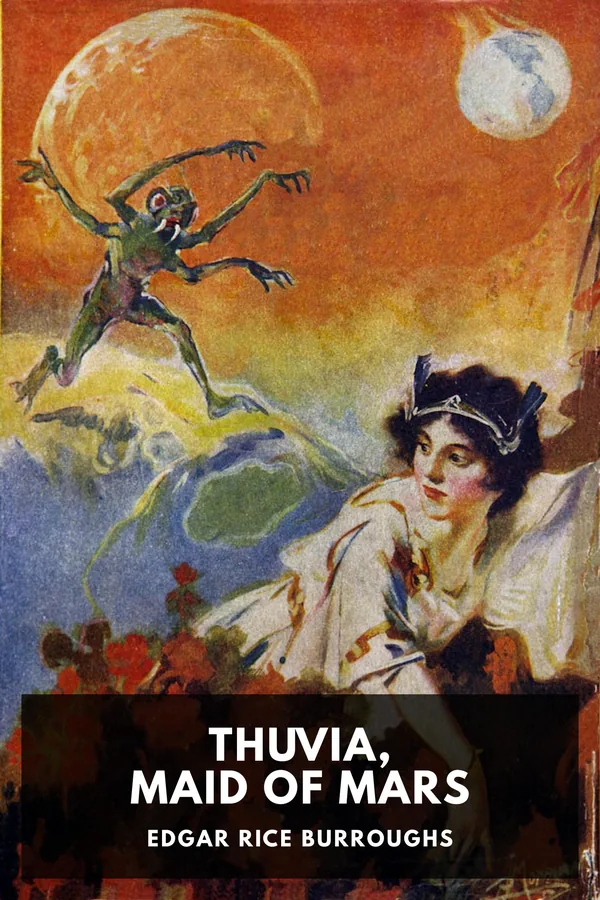
Thuvia, Maid of Mars
📖 Click to Read the Opening Pages Online Preview
The opening of Chapter 1
Upon a massive bench of polished ersite beneath the gorgeous blooms of a giant pimalia a woman sat. Her shapely, sandalled foot tapped impatiently upon the jewel-strewn walk that wound beneath the stately sorapus trees across the scarlet sward of the royal gardens of Thuvan Dihn, Jeddak of Ptarth, as a dark-haired, red-skinned warrior bent low toward her, whispering heated words close to her ear.
“Ah, Thuvia of Ptarth,” he cried, “you are cold even before the fiery blasts of my consuming love! No harder than your heart, nor colder is the hard, cold ersite of this thrice happy bench which supports your divine and fadeless form! Tell me, O Thuvia of Ptarth, that I may still hope—that though you do not love me now, yet some day, some day, my princess, I—”
The girl sprang to her feet with an exclamation of surprise and displeasure. Her queenly head was poised haughtily upon her smooth red shoulders. Her dark eyes looked angrily into those of the man.
The excerpt below quotes the opening three paragraphs of Chapter 1, in which Thuvia of Ptarth sits on a bench of polished ersite in her father’s gardens while Astok, Prince of Dusar, presses his suit, and then rises in anger and calls for the guard, who come running across the scarlet sward.
Download Full EPUB1920
Novel
46,000 words
2.6 h
Standalone
Barsoom, from the court of Ptarth and the twin cities of Helium to the dead city of Aaanthor, the hidden valley of Lothar, the Torquasian hills and the palace of Dusar.
Fourteen chapters grouped into eight movements
EPUB · AZW3 · KEPUB
0.62 MB (EPUB) · 0.61 MB (AZW3) · 0.63 MB (KEPUB)
Public domain in the United States
Project Gutenberg #72 · Standard Ebooks
Thuvia, Maid of Mars is Edgar Rice Burroughs’s Barsoom novel of 1920, and the first of the series to put John Carter aside. Carthoris, his son by Dejah Thoris, loves Thuvia of Ptarth, who is promised to Kulan Tith, Jeddak of Kaol. When Thuvia is carried off from her father’s garden, Carthoris is suspected of the theft, and his own flier is sabotaged to carry him to the dead city of Aaanthor instead of Ptarth. There he finds her in the hands of a green warrior, follows her into an unknown valley, and meets the Lotharians, a fair-skinned people who defend themselves with bowmen made of thought.
The book mixes a rescue chase with an argument about the mind: in Lothar the archers are imaginary, and the Torquasians die because they believe in the arrows. Burroughs keeps the romance moving through ruined cities, banths, airships and a war that a single abduction set off. Its Mars is a planet of dead oceans and buried cities, and the book is as much a tour of them as it is a love story. Wikipedia’s entry on the novel lists its chapters and its place in the series. — The text is available via Project Gutenberg #72 and Standard Ebooks.
Thuvia, Maid of Mars by Edgar Rice Burroughs: Summary, Characters & Themes
This page offers a summary and analysis of Thuvia, Maid of Mars, with its fourteen chapters set out in reading order, the people of Ptarth, Helium and Dusar described, and the hidden city of Lothar read beside the rescue that carries the plot. Edgar Rice Burroughs published the book in 1920, the fourth of the Barsoom novels and the first in which John Carter steps back to let his son take the lead. What the novel does is narrower than its title suggests. It is a chase across a dying planet, with an abduction, a sabotaged compass and a war among the great powers behind it, and a long middle section that turns on the power of suggestion. The page follows the book chapter by chapter, so it can be read beside a copy rather than instead of one.
The story begins in the gardens of Thuvan Dihn, Jeddak of Ptarth, where Astok, Prince of Dusar, forces his attentions on Thuvia and is knocked down by Carthoris, son of John Carter and Dejah Thoris. Thuvia is promised to Kulan Tith, Jeddak of Kaol, and tells Carthoris so. That night Dusarian agents carry her off, and by morning the crew wear the insignia of Helium; the same agent who planned the theft sabotages the controlling destination compass in Carthoris’s flier, so that he wakes above the dead city of Aaanthor instead of Ptarth. The text described here is the Standard Ebooks edition, and a complete reading text also sits at Project Gutenberg #72. Nothing is cut: the ruined cities, the banths, the airships and the last chapter’s rescue are all here.
The cast is drawn with the same care as the plot. Astok is a coward who wants the princess and has not the courage to take the consequences; his father Nutus, Jeddak of Dusar, is ready to have her murdered to bury the guilt of the abduction. Vas Kor, a Dusarian noble with a sword-cut from temple to mouth, is the agent who steals into Ptarth as a servant, copies the key to Carthoris’s compass and later agrees to do the killing for the promise of a jed’s rank. Against them stand Thuvan Dihn, who declares war on Helium, and Kulan Tith, who rides to that war as an ally and behaves at the end better than the alliance deserves. Carthoris has only his sword, his father’s name and a friend he meets in a valley. The novel gives him a rival he can respect, which is a harder test than a rival he can kill.
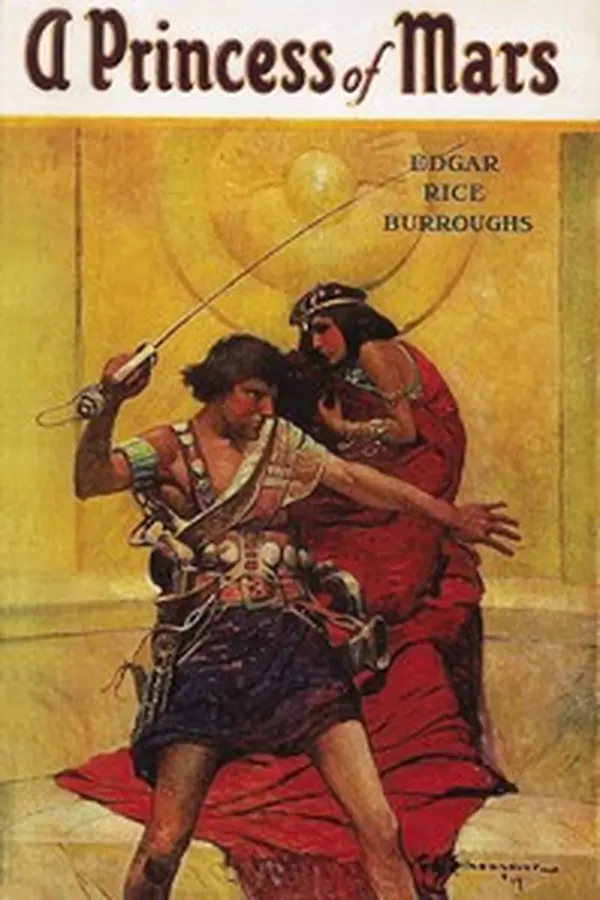
The middle of the book belongs to Lothar, a city hidden in a valley inside the Torquasian hills, where a fair-skinned, auburn-haired people have outlived their world. They have no soldiers. Their bowmen are made of thought, and the green men who besiege them die because they believe in the arrows. Tario, the last jeddak, holds that matter is only mind; Jav, his second, holds that mind needs matter and feeds the god Komal, a banth, with realists and prisoners. Into this argument come Carthoris and Thuvia, and a bowman called Kar Komak, who has been imagined so long that he has become real. The city is guarded by a god who is only a lion, and by an argument its own people cannot settle. A Princess of Mars, the first Barsoom book, is the place to meet John Carter and Dejah Thoris before this one.
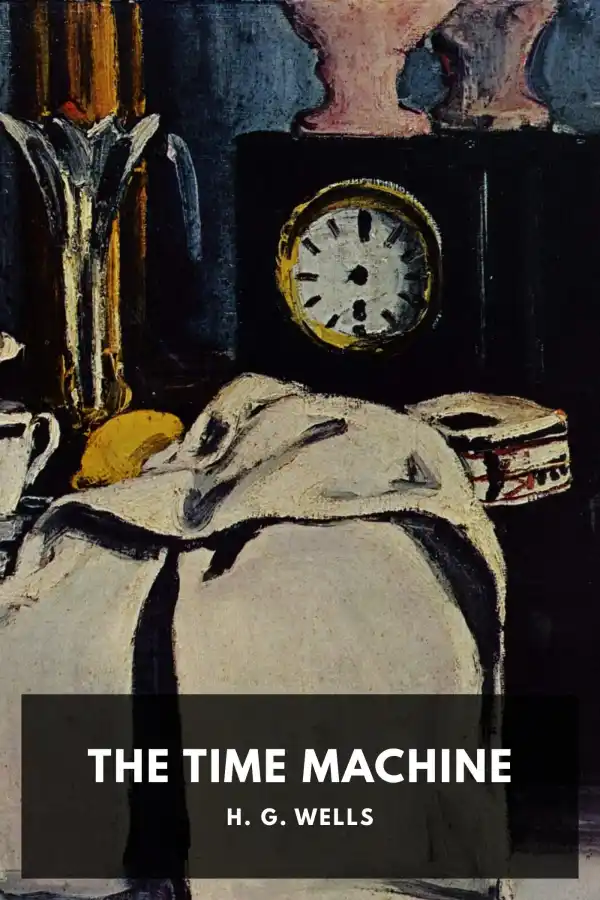
The last third is a pursuit: Thuvia a prisoner in the east tower at Dusar, Carthoris disguised as a wandering panthan called Turjun, a stolen flier, a running fight over the dead sea-bottom. The war that the abduction set off is still unresolved on the last page; what is resolved is the betrothal. For the other founding text of the scientific romance, see The Time Machine, and for the shelf where these books are collected, science fiction classics. The novel is the fourth of its series, and it is the one that shows Burroughs thinking hardest about what a made world is. Kulan Tith’s last speech, and the promise of a sword for the new Princess of Helium, are the kind of ending Burroughs rarely allows his heroes: the rival is not defeated but converted.
Historical Context
Barsoom is a planet of dead seas. Its sea-bottoms are ochre deserts, its abandoned cities stand on quays where no water has run for ages, and the green hordes camp in the ruins. Burroughs had been building this world since A Princess of Mars, and by the fourth book the map is thick with names: Ptarth and Dusar, Kaol and Helium, the twin cities of Greater and Lesser Helium seventy-five miles apart, the Torquasian hills, the hidden valley of Lothar. Distance is measured in haads, and the characters put Lothar more than eight thousand haads from Helium, with Ptarth nine thousand five hundred beyond it. That care with measurement is part of the pleasure: the fliers, the farms along the waterways and the embassies in the Palace of Peace are all given a working geography.
The technology belongs to the adventure fiction of the period rather than to any prediction of it: fliers driven by repulsive rays, radium rifles, pneumatic tubes under the cities, and a telepathy that quiets a thoat or steers a craft. Carthoris’s contribution is a controlling destination compass, set for a city and left to fly itself, with an obstruction evader that throws the vessel aside when its radium field is interrupted. The plot turns on the fact that such a machine can be opened and its pointer disconnected, which is exactly what Vas Kor does with a pair of cutters. Burroughs is not much interested in how the radium works. He is interested in what happens when a man wakes above the wrong ruin with no idea how he came there.
The politics are the most modern thing in the book. Dusar keeps embassies, employs agents in the foreign offices of its neighbours, and alters the messages that pass between jeddaks until three former allies are on the edge of war. Thuvan Dihn declares war on Helium; John Carter, Warlord of Mars, refuses to believe his son guilty and refuses to let Helium declare war in return; Kulan Tith of Kaol brings his fleet to the side of Ptarth. Relief is coming from outside the alliance, from Talu of Okar in the north and Xodar of the First Born in the south. Burroughs wrote the book in 1920, and its picture of a war made by forged dispatches is the least fantastic thing in it.
Key Characters & Literary Archetypes
- Carthoris: Prince of Helium, son of John Carter and Dejah Thoris, with his father’s fighting smile and a lighter skin than the red men around him. He has invented a controlling destination compass and an obstruction evader, and he is proud of both. He spends the book proving that he can fight and keep his word without his father’s help, and he wins Thuvia by saving the man she is promised to.
- Thuvia of Ptarth: Daughter of Thuvan Dihn, Jeddak of Ptarth, and promised to Kulan Tith of Kaol. She has had power over banths since Sator Throg threw her into the banth pit of the Holy Therns, and she uses it on the scavengers before Lothar and on Komal himself. She is not a passive captive: she stabs Tario, keeps her promise to Kulan Tith, and fires the Thuria’s guns during the escape from Dusar.
- Astok of Dusar: Prince of Dusar and son of Nutus. He forces his suit on Thuvia in her father’s garden, has her stolen, and lets the blame fall on Carthoris. He is a coward who cannot bring himself to kill her, and he looks for another hand to do it; he offers Vas Kor a jed’s rank for the murder. He escapes at the end through a panel in the wall and is last seen on the landing stage above his palace.
- Vas Kor: A Dusarian noble with a thin sword-cut from temple to mouth, which Carthoris half remembers and cannot place. He enters Ptarth as a forward servant, presses the key of the compass under the sole of his sandal so that it can be copied, and later cuts the pointer so that the flier will fly where he chooses. He recruits for the war and agrees to murder Thuvia for a jed’s rank. Carthoris kills him in the tower room.
- Tario: The last jeddak of Lothar and the novel’s strangest antagonist. He believes that matter does not exist and that his people are thoughts maintained by thought, and he keeps a banth called Komal as the god who eats the realists. He tries to take Thuvia by suggestion, telling her that she has always loved him, and she stabs him in the side. He survives, condemns Jav, and retreats through a hidden door while the audience chamber sinks.
- Kar Komak: A Lotharian bowman, odwar of the archers, who in his own past commanded the fleets of Lothar on the five seas. Tario’s long concentration makes him permanent by accident, and he is left naked and unarmed on the plain when his fellows fade. He can call up bowmen of his own, and he uses them against the white apes at Aaanthor and against the green men at the end, then goes off with them and does not return.
Core Literary Themes
- Mind is all: The middle of the novel is a philosophical joke with teeth. The Lotharians have no army, so they imagine one, and the Torquasians die because they believe in the arrows. Jav explains the rule of realism: the bowmen must behave as real soldiers would, must fall when hit, and their dead must seem to be cleared away, or the enemy will guess the truth. Tario pushes the argument further and says that nothing is real at all, including his own people. Burroughs does not settle the question. He lets Carthoris eat a meal that was not there a moment before and enjoy it, and leaves the reader to decide what that proves.
- The son of the Warlord: Carthoris is the first Barsoom hero who is not John Carter, and the book is careful about the comparison. He has his father’s grey eyes, his half-Earthly muscles and his fighting smile, and Thuvia sees the resemblance every time he draws a sword. He also has a reputation to escape. His inventions are his own, and so is the code that keeps him from taking Thuvia when she is promised to another. When he refuses to abandon Kulan Tith on the dead sea-bottom, he makes the choice his father would have made, and is accepted on his own terms. The novel’s answer is that the name is a burden and a gift at once, and that the only way to carry it is to act as if it were not there.
- A promise kept: Thuvia is betrothed to Kulan Tith before the book begins, and the betrothal is the novel’s real obstacle. Carthoris could carry her off; Barsoom would hardly blame him; the whole plot gives him the opportunity. He does not take it, and Thuvia does not encourage him, and the long coldness between them is the sound of two people doing the harder thing. Kulan Tith’s last speech is the payoff. He has overheard her declare her love, and instead of claiming her he gives her back her liberty and promises his sword to the new Princess of Helium. The code is not mocked; it is outbid by the man who has most to lose.
- The war made by a lie: The war is a chain of small forgeries. Dusarian agents find posts in the foreign offices of Helium, Ptarth and Kaol, and messages between the three jeddaks are altered until friendship turns into insult. Thuvan Dihn declares war; the messenger carrying the proclamation is a Dusarian who makes sure no warning reaches Helium; two fleets move on the twin cities while John Carter refuses to believe his son a thief. Burroughs keeps the villainy domestic: Astok’s crime is not conquest but a refusal to be refused, and Nutus’s solution is to kill the woman and bury the evidence. The fighting at the end is between armies that have been lied to.
- The dying planet: Barsoom is old. The seas have dried to ochre moss, the cities stand empty with their quays high above nothing, and the races that remain camp in the ruins of races that did not. Burroughs likes the melancholy of it: Aaanthor’s windows are eyeless sockets, and the dead are always someone’s ancestors. Lothar carries the idea furthest, a city of a thousand people in a valley, keeping its past alive by imagining it, so that Jav can wave his hand and show Carthoris the seafarers of Throxus coming up from their ships. The novel’s most striking image is not a battle but a city remembering itself, a thousand people holding a dead civilisation in their heads because they have nothing else to hold it in.
Why Download Our Custom E-Reader Edition of Thuvia, Maid of Mars?
The download is the whole novel: fourteen chapters, from the first scene in the gardens of Ptarth to the last speech of Kulan Tith, numbered as the edition numbers them and abridged nowhere. The text is the Standard Ebooks edition, set from the Project Gutenberg transcription, and the chapter numbers here match the edition, so a passage found on this page can be looked up in the book. The chapters print no titles, and none have been supplied. What the edition gives is the story, and that is what the file contains.
Around the text the page supplies what a chase across a planet needs: eight grouped chapter summaries that stop where their chapters stop, six character notes, five themes, and a note on the Lotharian argument and the diplomacy that starts the war. The groups are ours; the chapters and their numbering are not. The summaries are written to be read beside the novel rather than instead of it, so they name what happens without quoting the prose, and they keep the order in which Burroughs tells it.
The files come in three formats with the same text and the same chapter breaks. The EPUB opens in Apple Books, Calibre and most Android readers; the AZW3 is the file for a Kindle, by USB or through Send to Kindle; the KEPUB is the one Kobo devices read best. No account is needed for any of them, and nothing in the downloads is locked, watermarked or time limited. Each file is generated from the same source, so a passage found in one can be found in the others at the same point in the chapter.
- Based on the Standard Ebooks Edition, via Standard Ebooks, whose text of Thuvia, Maid of Mars is set from the Project Gutenberg transcription and is offered here chapter for chapter, without abridgement.
- Complete text in fourteen chapters Every chapter from the garden at Ptarth to the rescue on the dead sea-bottom, numbered as the edition numbers them, with no chapter text cut.
- Chapter summaries in reading order Eight grouped summaries, each keyed to the chapters it covers and stopping where they stop, from the abduction to Kulan Tith’s last speech.
- EPUB, AZW3 and KEPUB files The same text in three formats, for Apple Books, Kindle and Kobo, with the chapter breaks and the chapter numbers intact.
- The first Barsoom novel, in which John Carter arrives on the red planet, meets Dejah Thoris and becomes the Warlord of Mars; the book this one continues. — free EPUB, AZW3 & KEPUB
- Wells’s 1895 scientific romance, the short book usually read beside Burroughs as the other founding text of the planetary adventure. — free EPUB, AZW3 & KEPUB
- The shelf of science fiction classics on this site, where the Barsoom books and their neighbours are collected. — free EPUB, AZW3 & KEPUB
Chapter summaries
The novel has fourteen chapters and the edition prints no titles, only the numbers I to XIV. The eight group names on this page are ours, added to make the book easy to follow; each group begins where its first chapter begins and stops where its last chapter stops. Chapters are cited by number throughout, so a group can be found in any copy that prints the numbers. The numbering is the same in all three downloads. Each group is a reading unit, not a division of the edition.
- Chapters 1–2 — A garden in Ptarth: Astok of Dusar forces his suit on Thuvia in her father’s garden and is knocked down by Carthoris. Thuvia tells Carthoris she is promised to Kulan Tith, and he shows her father the compass he has invented. A servant presses the key of the compass under the sole of his sandal; that night Dusarian agents carry Thuvia off, and by morning their harness bears the sign of Helium. Carthoris’s compass is cut so that it will fly him to Aaanthor.
- Chapters 3–4 — The dead city of Aaanthor: The council at Helium sends Carthoris to Ptarth to clear himself, but his tampered flier lands him above Aaanthor, where Thuvia is a prisoner of Dusarians wearing Helium metal. A green warrior, Thar Ban, seizes her and rides off on his thoat. Carthoris fights three Dusarians, has his flier crippled by a rifle shot, and follows on foot until a banth leads him to a tunnel under the cliffs.
- Chapters 5–6 — The valley of Lothar: In the tunnel Carthoris fights two banths and blinds one. Beyond it lies a hidden valley with a besieged city and the body of Thar Ban’s thoat. A bloodstained ornament points to Thuvia’s death, but she is alive, and he reaches her as the city’s bowmen and banths rout the Torquasians. She calms the beasts with a word, the dead bowmen vanish from the field, and the two enter Lothar, where Jav tells them there are no soldiers.
- Chapters 7–8 — The bowmen of the mind: The bowmen appear at a sword cut and vanish again, and Jav explains the defence of Lothar: archers made by concentration, arrows that kill by suggestion, and a quarrel between realists and etherealists over whether anything is real. Tario keeps Thuvia behind, tries to take her by suggestion, and is stabbed in the side. Carthoris reaches her, Jav is condemned by his own words, and the audience chamber sinks into a funnel that drops the three of them toward Komal.
- Chapters 9–10 — Komal and the bowman: Komal turns out to be a banth, and Thuvia’s voice stops it. The three escape through the arena, and Jav shows them Lothar’s past, the seafarers of Throxus and their bowmen. Outside the gate the two sides fight a battle of imaginary armies, and Jav tricks Carthoris into leaving Thuvia behind. Komal mauls Jav, Thuvia goes south with the beast, and Carthoris meets Kar Komak, a bowman made permanent, and follows her trail to Aaanthor.
- Chapter 11 — Green men, white apes and a farm: Green warriors and Dusarian fliers close on Thuvia at once; Carthoris is struck down, and she is carried off while Komal dies across his body. He wakes, reaches Aaanthor for water, and is chained in the palace pits. White apes drag him to a courtyard where Kar Komak is also a captive; the bowman calls up his own archers, and the two escape on stolen thoats to a farm on a Dusarian waterway.
- Chapter 12 — A prisoner in the east tower: Komal kills Jav, and Thuvia travels south with the banth until Astok’s warriors take her from the field and fly her to Dusar. Astok admits the abduction, and his father Nutus orders her death so that the guilt can be buried. Astok cannot do it himself, offers Vas Kor a jed’s rank, and leaves to fetch her; Thuvia waits in the east tower for the assassin.
- Chapters 13–14 — The panthan and the rescue: Calling himself Turjun, Carthoris joins Vas Kor’s recruits and gets aboard the flier Thuria with Kar Komak. He hears the murder ordered, reaches the tower room as Vas Kor draws his sword, kills him, and escapes with Thuvia in the stolen flier. They find Kulan Tith’s ship stranded and attacked by green men, and Kar Komak’s bowmen turn the fight. Kulan Tith, who has heard everything, gives Thuvia her liberty.
Thuvia, Maid of Mars: Frequently Asked Questions
What is Thuvia, Maid of Mars about?
Who is Carthoris?
Who is Thuvia of Ptarth?
Who are the Lotharians?
Who is Kar Komak?
Who is Astok of Dusar?
How does the book end?
How do I read the free downloads?
Part of: Science Fiction Classics · 1920s