The Last of the Mohicans by James Fenimore Cooper: Free EPUB, AZW3 & KEPUB Download
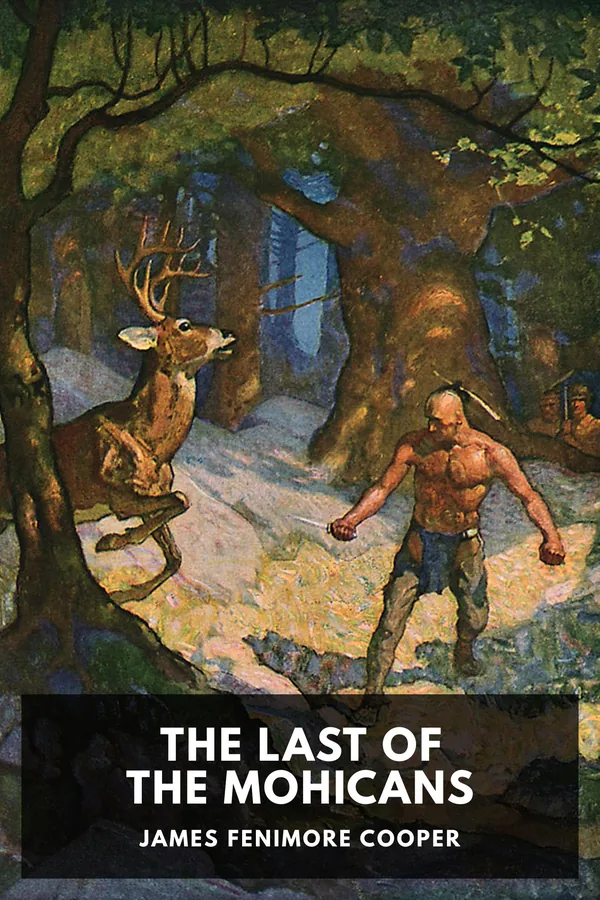
The Last of the Mohicans
📖 Click to Read the Opening Pages Online Preview
The opening of Chapter 1
It was a feature peculiar to the colonial wars of North America, that the toils and dangers of the wilderness were to be encountered before the adverse hosts could meet. A wide and apparently an impervious boundary of forests severed the possessions of the hostile provinces of France and England. The hardy colonist, and the trained European who fought at his side, frequently expended months in struggling against the rapids of the streams, or in effecting the rugged passes of the mountains, in quest of an opportunity to exhibit their courage in a more martial conflict. But, emulating the patience and self-denial of the practiced native warriors, they learned to overcome every difficulty; and it would seem that, in time, there was no recess of the woods so dark, nor any secret place so lovely, that it might claim exemption from the inroads of those who had pledged their blood to satiate their vengeance, or to uphold the cold and selfish policy of the distant monarchs of Europe.
Perhaps no district throughout the wide extent of the intermediate frontiers can furnish a livelier picture of the cruelty and fierceness of the savage warfare of those periods than the country which lies between the head waters of the Hudson and the adjacent lakes.
The facilities which nature had there offered to the march of the combatants were too obvious to be neglected. The lengthened sheet of the Champlain stretched from the frontiers of Canada, deep within the borders of the neighboring province of New York, forming a natural passage across half the distance that the French were compelled to master in order to strike their enemies. Near its southern termination, it received the contributions of another lake, whose waters were so limpid as to have been exclusively selected by the Jesuit missionaries to perform the typical purification of baptism, and to obtain for it the title of lake “du Saint Sacrement.” The less zealous English thought they conferred a sufficient honor on its unsullied fountains, when they bestowed the name of their reigning prince, the second of the house of Hanover. The two united to rob the untutored possessors of its wooded scenery of their native right to perpetuate its original appellation of “Horican.”1
The excerpt below quotes the opening three paragraphs of Chapter 1: the epigraph in verse, then the paragraph on the colonial war and the forest that separated the French and English provinces, and then the paragraph that calls the district between the head waters of the Hudson and the adjacent lakes the liveliest picture of that warfare.
Download Full EPUB1826
Novel
~149,000 words (estimated)
Approx. 8.3 hours
Standalone
The Hudson valley and the shore of Lake George in 1757, from Fort Edward and the gorge at Glenn’s Falls to Fort William Henry, a Huron village and a Delaware camp in the mountains.
Thirty-three chapters grouped into twelve parts
EPUB · AZW3 · KEPUB
0.89 MB (EPUB) · 1.01 MB (AZW3) · 0.92 MB (KEPUB)
Public domain in the United States
Project Gutenberg #940 · Standard Ebooks
The Last of the Mohicans is James Fenimore Cooper’s novel of the frontier war of 1757, published in 1826. Major Duncan Heyward is escorting Cora and Alice Munro, the daughters of the commandant of Fort William Henry, from Fort Edward when their Indian guide leads them astray. A hunter called Hawkeye and two Mohicans, Chingachgook and his son Uncas, bring them to the fort in time for its surrender, and in the massacre that follows the guide, Magua, carries the sisters off. The last part of the book is a pursuit through lakes, mountains and villages to a ledge of rock above a Huron camp.
The novel moves between council fires and trails: war songs, psalmody and long speeches about blood and justice sit beside the reading of footprints and the paddling of canoes. Cooper writes in the formal prose of the 1820s, and his narrator keeps pausing to explain the country, the tribes and the campaign; the Indian names are given in the French forms that the characters themselves use. The Wikipedia entry on the novel covers its publication and the long argument about its treatment of race. — The text is available via Project Gutenberg #940 and Standard Ebooks.
The Last of the Mohicans by James Fenimore Cooper: Summary, Characters & Themes
This page offers a summary and analysis of The Last of the Mohicans, with the thirty-three chapters set out in reading order, the people of the story described one by one, and the campaign of 1757 followed from the forest road to the ledge above the Huron village. James Fenimore Cooper published the novel in 1826, and the edition used here prints his own introduction, a long note on the names of the tribes and of the lake that is best read as a gloss on the story and not as part of it. What the book does is simple and large: it puts two young women and their escort into a wilderness at war and tests every man they meet by his skill, his nerve and his loyalty. It is a book to be read beside a copy rather than instead of one, and the summaries here stop where the chapters stop.
The action begins at Fort Edward, where General Webb lies with his army, and where Heyward takes a shortcut through the woods with an Indian runner, Magua, as guide. With him ride Cora and Alice Munro and, by accident, David Gamut, a singing master from Connecticut who carries a pitch-pipe and a book of psalms. Magua is a Huron who has been flogged on Munro’s orders, and he leads the party into an ambush. The rescue comes from Hawkeye, a white hunter who lives with the Mohicans, and from Chingachgook and Uncas. The sisters are as different as the two worlds of the book: Cora is dark and steady, Alice fair and easily frightened, and Heyward’s preference between them is one of its quiet subjects. The complete text is at Project Gutenberg #940, and no chapter is abridged here.
The party reaches William Henry during the siege. The novel’s central sequence follows the French guns, the parley with Montcalm, and the captured letter from Webb that tells Munro no help is coming. The garrison marches out under terms, and the Indian allies of France fall on the column: this is the massacre of William Henry, which Cooper names and treats as a stain on Montcalm’s reputation. In the confusion Magua seizes Alice, and Cora is carried to a camp of Delawares. Munro loses his command, his health and one of his daughters within a few days, and Heyward’s loyalty is tested by the disaster as much as by the enemies in the woods. The text described here is the Standard Ebooks edition, set from the Project Gutenberg transcription.
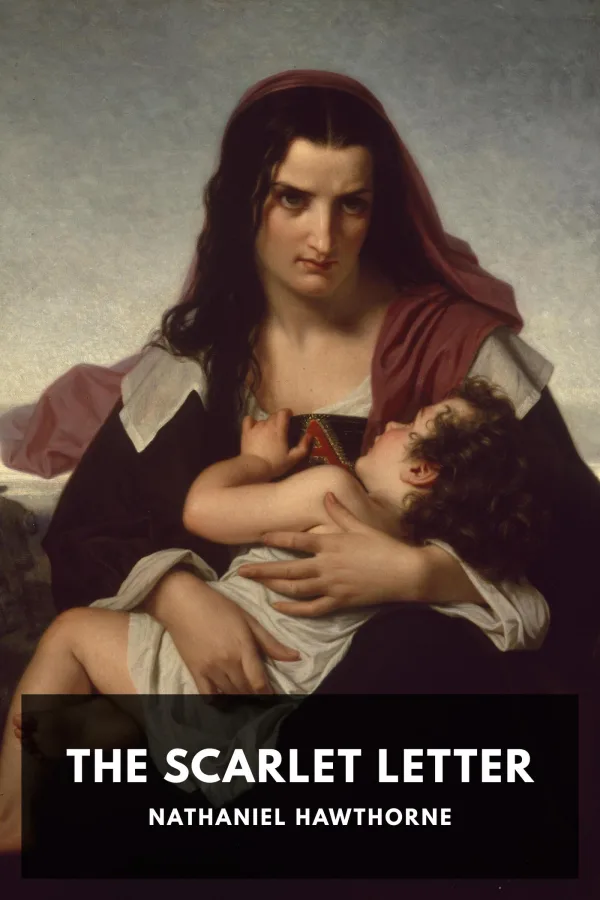
The rest of the book is a pursuit, and its interest lies in the tracking: the reading of a footprint, the choice of a canoe, the guessing of which smoke belongs to which band. Cooper keeps returning to names. Hawkeye is La Longue Carabine to his enemies and the Open Hand to his friends; Magua is Le Renard Subtil; Uncas is Le Cerf Agile; and the Delaware council knows Uncas at last by the tattoo of the tortoise on his breast. The title is a statement about a people rather than about a man. The Delaware council scene is the novel’s courtroom, and Cooper lets the Huron and the Mohican speak before the old man decides. The Scarlet Letter, written a generation later, is the other American novel of the period about a community and the people it shuts out.
The prose will not suit every reader. Cooper stops the action to describe a hillside, to explain the politics of the tribes, or to let a chief make a speech, and the speeches are long. What rewards the patience is the physical world: the falls at Glenn’s Falls, the beaver pond at dawn, the caves, the war canoe, the cliff above the Huron camp. Moby-Dick is the other American book of the 1850s that takes a small party into a hostile element and lets the argument run; the two are often read together. More fiction of this kind is collected on the adventure and sea stories shelf. Readers who come to Cooper from a later novel should expect the pace of 1826: the story is carried by the descriptions as much as by the plot.
Historical Context
The war behind the story is the colonial struggle between England and France for the interior of North America. Cooper sets his tale in its third year, and the geography is exact: Webb at Fort Edward on the Hudson, Munro at William Henry on the lake the novel calls the Horican, Montcalm coming down the Champlain with his regulars and his Indian allies. The distance between the two posts was short, and the forest between them was as dangerous as either army. Cooper notes that the campaign was fought by men who had learned from the natives how to move through woods, and that the fate of the forts turned on who could cross the wilderness first. The surrender of William Henry and the killing of its column are historical.
Cooper’s introduction is a note on language rather than a preface. It reports that the name in his title has been written Mahicanni, Mohicans and Mohegans; that Lenni-Lenape, Lenope, Delawares, Wapanachki and Mohicans all mean the same people; and that Mengwe, Maquas, Mingoes and Iroquois are used for their enemies. It also confesses a small invention: the lake’s Indian name, Horican, was taken from a tribe on an old map because the French name was too long, the English name too plain and the Indian one unpronounceable. The introduction argues that the Mohicans were the first of the natives to be dispossessed, and that the region of the story has changed less than most of the United States. It also remarks that the forest the characters cross on foot is now crossed by roads, and that the fort is a ruin.
The machinery of the campaign is the machinery of a frontier war: provincial levies beside regulars of the Sixtieth, bateaux and bark canoes on the lakes, a march with women and children and baggage, and Indian allies on both sides who took scalps and expected gifts. Cooper is careful about the etiquette of the councils, the wampum, the law that a guest must be fed and a prisoner judged by the nation. He is equally careful about the New England of David Gamut, whose psalms come from a Boston edition of 1744 and who sings through the massacre because he has no other weapon. In this world a man’s standing depends on what he can read in the woods, and a nation’s standing depends on the gifts it can still give.
Key Characters & Literary Archetypes
- Hawkeye: The scout, called Natty Bumppo in Cooper’s introduction, La Longue Carabine by the Hurons and the Open Hand by the Delawares. He hunts with a long rifle he calls Killdeer, speaks Delaware, lives between the settlements and the tribes, and despises the Mingoes with a prejudice the novel lets stand. He kills the foal to lay a false trail, and he is the one who ends Magua.
- Chingachgook: The sagamore of the Mohicans, called Le Gros Serpent, a chief who has seen his people driven from the shore and has never visited the graves of his fathers. He is grave, patient and silent in council, and his pride is the pride of a line that is ending. He says that when Uncas follows him there will be no blood of the sagamores left, and at the graves he says that he is alone.
- Uncas: Chingachgook’s son, the last of the Mohicans, called Le Cerf Agile for his running. He tracks a trail that no one else can see, saves Heyward in the fight at the falls, is taken prisoner in the Huron village, and is freed by Hawkeye and David Gamut. In the Delaware camp the tattoo of the tortoise on his breast proves his descent, and he dies on the rock above the Huron village.
- Cora Munro: Munro’s elder daughter, dark-haired and dark-eyed, with a West Indian mother, calm where Alice is frightened and quick to answer a threat. Magua wants her for his wife as the instrument of his revenge on her father, and she refuses him on the hill and again before Tamenund. One of Magua’s companions stabs her on the ledge, and the Delaware women bury her with their own rites.
- Magua: A Huron chief whom the French call Le Renard Subtil, once flogged on Munro’s order, who guides the party into ambush and then spends the book trying to take Cora from the Delawares. He is eloquent in council, patient in pursuit, and honest about his motive: good for good, bad for bad. He stabs Uncas in the back and is shot by Hawkeye as he leaps from the ledge.
- Duncan Heyward: A major of the Sixtieth, the Royal Americans, in love with Alice and trusted with the escort of both sisters. He is brave, correct and slow to see what the woodsmen see, and his education in Indian signs is one of the novel’s quiet subjects. He has himself painted as a fool and enters the Huron camp as a conjurer to find Alice, and the Delawares call him the Open Hand.
Core Literary Themes
- The last of a people: The title is spoken in the third chapter, when Chingachgook says that his boy is the last of the Mohicans, and it is answered in the last, when Tamenund says that he has lived to see the last warrior of the wise race of the Mohicans. Around that sentence Cooper builds a book about extinction: the Mohicans have been driven from the salt water, the Delawares are called a nation of women in the Huron taunt, and the old chiefs remember a world they cannot recover. The novel does not pretend that the process can be stopped. It asks instead what a man is worth while his people last, and answers with Uncas.
- Reading the woods: Skill is the novel’s real measure of character. Hawkeye can tell from a bent leaf which way a party went and from the sound of a rifle whose it is; Uncas can find a trail where the Hurons thought it hidden; Heyward cannot, and has to be taught. The book is full of instruction, and it treats tracking as a form of literacy. This is why the long descriptions of country are not decoration: the plot turns on who can read the ground, and the reader is invited to learn the signs with Heyward, who is brave and often wrong. What he learns is not a set of facts but a habit of attention.
- Revenge and judgment: Magua’s grievance is precise: Munro had him flogged, and Magua means to take a daughter in return. He states the rule as good for good and bad for bad, and the novel lets him argue it in front of a nation. Against him stands the Delaware idea of justice, which Tamenund administers even when it gives Cora to her enemy, because the law must be kept or the tribe is nothing. Cooper holds both positions in view, and the ending is not a victory of one over the other but a slaughter in which both are lost. The law that Tamenund keeps is the law that kills Cora, and the novel knows it.
- Names, paint and disguise: Nearly everyone in the book is someone else to somebody. Hawkeye carries more than one name, Magua two, Uncas one in Delaware and one in French; Heyward is painted as a fool and passes as a conjurer; Hawkeye wears a bear’s skin and growls his way past the Hurons; David is taken for a madman and is safe because of it. Identity here is a set of signs that can be read or faked, and the one sign that cannot be faked is the tattoo on Uncas’s breast. The disguises are comic and the tattoo is tragic. What the book finally says is that a name can be taken up and put down, while a lineage cannot.
- Two sisters, two futures: The marriage plot is settled early: Heyward loves Alice, the fair daughter, and Cora is the one he admires without wanting to marry. Munro explains that Cora’s mother came from the West Indies and was descended, remotely, from the people the old man calls that unfortunate class, and he reminds Heyward that a man born in the south is taught to think such a race inferior to his own. Cooper does not make this a speech and does not let Heyward off; he lets the preference stand, and then kills Cora. Alice survives to be married, and the book’s silence about the difference is louder than an argument.
Why Download Our Custom E-Reader Edition of The Last of the Mohicans?
The download is the whole novel: thirty-three chapters, from the forest road in the first chapter to the graves in the last, with the chapter numbers the edition prints and nothing abridged. The text is the Standard Ebooks edition, set from the Project Gutenberg transcription, and the spelling and punctuation are the edition’s. The chapter numbers match the edition, so a passage found here can be looked up in the book. Cooper’s introduction is included too, so his own account of the names sits in front of the text where he put it.
Around the text the page supplies what a long romance needs: twelve grouped chapter summaries that stop where their chapters stop, six character notes, five themes, and a note on the war, the tribes and the naming of the lake. The groups are ours; the chapters and their numbering are not. The introduction printed at the front of the edition is treated as what it is, Cooper’s own note on the country, and not as part of the story. Every statement in those notes is drawn from the text of the edition itself.
The files come in three formats with the same text and the same chapter breaks. The EPUB opens in Apple Books, Calibre and most Android readers; the AZW3 is the file for a Kindle, by cable or through Send to Kindle; the KEPUB is the one Kobo devices read best. No account is needed for any of them, and nothing in the downloads is locked, watermarked or time limited. Each file opens at the first chapter and holds the whole book.
- Based on the Standard Ebooks Edition, via Standard Ebooks, whose text of The Last of the Mohicans is set from the Project Gutenberg transcription, with the chapter numbering and spelling of that edition.
- Complete text in thirty-three chapters Every chapter from the road out of Fort Edward to the graves by the Delaware camp, numbered as the edition numbers them, with no chapter text cut.
- Chapter summaries in reading order Twelve grouped summaries from the first ambush to the last fight, each keyed to the chapters it covers and stopping at their end.
- EPUB, AZW3 and KEPUB files The same text in three formats, for Apple Books, Kindle and Kobo, with the chapter breaks and the chapter numbers intact.
- Hawthorne’s 1850 romance of the Puritan colonies, the nearest American book of the period in its concern with a community’s judgment and with the people it shuts out. — free EPUB, AZW3 & KEPUB
- Melville’s 1851 sea epic, another American novel that takes a small party into a hostile element and lets the long argument run. — free EPUB, AZW3 & KEPUB
- The shelf of voyages, frontier tales and sea fiction, where Cooper’s novel sits beside the later adventures that took the same road. — free EPUB, AZW3 & KEPUB
Chapter summaries
The novel has thirty-three chapters and prints no titles. The edition numbers them and keeps them plain, so the numbers here are the edition’s, and the twelve group names are ours, added for navigation. Each group begins where its first chapter begins and stops where its last chapter stops, so the page can be read beside the book without running ahead of it. The introduction printed at the front is Cooper’s own note on the tribes and the lake, not part of the story, and it is not summarised in the groups.
- Chapters 1–2 — The road out of Fort Edward: Webb’s camp on the Hudson is sending fifteen hundred men to William Henry. Major Heyward takes a shorter path with Cora and Alice Munro, and a Huron runner, Magua, goes as guide; David Gamut, a singing master, joins them on the way. The second chapter ends with a painted face watching them from a thicket.
- Chapters 3–5 — The scout, the Mohicans and a false guide: By a stream Hawkeye and Chingachgook talk of the tribes, and Uncas reports that the Maquas number as many as the fingers of his two hands. The parties meet, and the guide is found to be a Huron by birth. Heyward tries to seize him, Magua escapes, and the party goes on to Glenn’s Falls after killing a foal to lay a false trail.
- Chapters 6–8 — The cave above the falls: The party hides in a cave on the island at Glenn’s Falls, where David is named and Alice sings a psalm. A horse’s shriek, then the wolves above it, are followed at dawn by an attack. Hawkeye shoots a Huron out of an oak, the last of the powder is spent, a Huron escapes in the canoe, and Cora sends the scout and Uncas for help.
- Chapters 9–12 — Captives on the hill and the rescue: Hidden in the inner cave, Heyward, David and the sisters are found by Magua and taken. On a hilltop Magua offers to send Alice back to her father if Cora will become his wife, and both refuse; his tomahawk is in the air when Hawkeye fires. The Hurons are killed, Magua rolls down the slope, and the party is free.
- Chapters 13–16 — The fort, the siege and Webb’s letter: The party passes a night in a ruined blockhouse and comes down to the lake to see William Henry invested. Heyward carries Munro’s answer to Montcalm, who shows him Webb’s captured letter: no relief is coming. Munro tells Heyward the story of his two marriages, and the surrender is arranged on terms.
- Chapters 17–18 — The surrender and the massacre: On the night of 9 August 1757 Montcalm walks his camp and hears Magua’s grievance. In the morning the garrison marches out, Magua raises the whoop, and two thousand warriors fall on the column. Three days later five men cross the plain, find Cora’s veil and David’s pitch-pipe, and take the trail.
- Chapters 19–21 — The trail, the lake and the beaver pond: In the ruins of the fort Uncas kills a lurking Oneida, and the chiefs argue over the dead man’s tribe. At dawn the party crosses the Horican in a captured canoe, is chased by Huron canoes, and lands to carry the boat into the woods. The trail leads to a beaver pond, where a voice is singing.
- Chapters 22–25 — A painted fool in the Huron camp: David is found among the beavers and reports that Alice is with the Hurons, Cora with the Delawares. Chingachgook paints Heyward as a fool and he enters the Huron camp as a conjurer. Uncas is taken and made to run for his life against a young Huron, and wins. In a sick woman’s cave a bear speaks to him, and Alice is carried out.
- Chapters 26–27 — The bear, the escape and Magua’s plan: Hawkeye frees Uncas, and David changes clothes with him to hold his place in the lodge. The two get clear of the village before the trick is discovered. Magua, gagged and left in the cave, is released by his people and leads his band toward the Delaware camp.
- Chapters 28–30 — Tamenund’s judgment: Magua comes to the Delawares with gifts and a warning that his enemy is among them. The prisoners are brought before the patriarch Tamenund, Heyward and Hawkeye shoot for their lives, and Magua makes his speech on the Great Spirit and the Lenape. Uncas proves his blood by the tortoise, but Cora is judged to be Magua’s, and he takes her.
- Chapters 31–32 — The war song and the last fight: Uncas sings his war song, divides his force, and David brings word of Magua’s position. The fight rolls through the woods to the Huron village, and the pursuit ends on a ledge. Cora is killed by one of Magua’s men, Uncas by Magua, and Hawkeye shoots Magua as he leaps.
- Chapter 33 — The graves: The Delaware women bury Cora with their own rites, and David sings a hymn over her. Uncas is buried facing the sunrise with his weapons beside him, Chingachgook says that he is alone, and Hawkeye answers that he is not. Tamenund closes the book with a sentence about the last warrior of the Mohicans.
The Last of the Mohicans: Frequently Asked Questions
What is The Last of the Mohicans about?
Who are Hawkeye, Chingachgook and Uncas?
Where and when is the novel set?
Who is Magua, and why does he hate Munro?
What happens at Fort William Henry?
How does the novel end?
How many chapters does the book have?
How do I read the free downloads?
On screen
The Last of the Mohicans has nine screen versions we can verify between 1920 and 1992, eight for cinema and one for television. Eight of them are listed below, the earliest four and the latest four.
| Year | Version | Format |
|---|---|---|
| 1920 | The Last of the Mohicans | film |
| 1920 | The Deerslayer and Chingachgook | film |
| 1920 | The Last of the Mohicans | film |
| 1932 | The Last of the Mohicans | film |
| 1965 | Fall of the Mohicans | film |
| 1965 | The Last Tomahawk | film |
| 1977 | The Last of the Mohicans | TV film |
| 1992 | The Last of the Mohicans | film |
All versions are checked against Wikipedia and IMDb; the filmed classics index compares the thirteen best-covered novels side by side.
Part of: Adventure & Sea Stories · Classic Fiction