The Aeneid by Virgil: Free EPUB, AZW3 & KEPUB Download
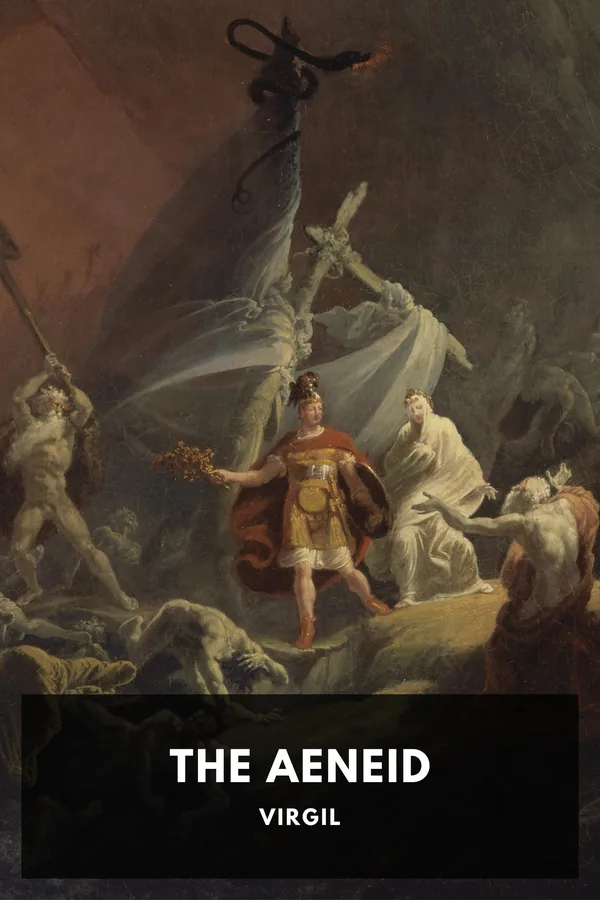
The Aeneid
📖 Click to Read the Opening Pages Online Preview
The opening of Book I
Arms, and the man I sing, who, forc’d by fate, And haughty Juno’s unrelenting hate, Expell’d and exil’d, left the Trojan shore. Long labours, both by sea and land, he bore, And in the doubtful war, before he won The Latian realm, and built the destin’d town; His banish’d gods restor’d to rites divine, And settled sure succession in his line, From whence the race of Alban fathers come, And the long glories of majestic Rome.
O Muse! the causes and the crimes relate; What goddess was provok’d, and whence her hate; For what offence the Queen of Heav’n began To persecute so brave, so just a man; Involv’d his anxious life in endless cares, Expos’d to wants, and hurried into wars! Can heav’nly minds such high resentment show, Or exercise their spite in human woe?
Against the Tiber’s mouth, but far away, An ancient town was seated on the sea; A Tyrian colony; the people made Stout for the war, and studious of their trade: Carthage the name; belov’d by Juno more Than her own Argos, or the Samian shore. Here stood her chariot; here, if Heav’n were kind, The seat of awful empire she design’d. Yet she had heard an ancient rumour fly, (Long cited by the people of the sky,) That times to come should see the Trojan race Her Carthage ruin, and her tow’rs deface; Nor thus confin’d, the yoke of sov’reign sway Should on the necks of all the nations lay. She ponder’d this, and fear’d it was in fate; Nor could forget the war she wag’d of late For conqu’ring Greece against the Trojan state. Besides, long causes working in her mind, And secret seeds of envy, lay behind; Deep graven in her heart the doom remain’d Of partial Paris, and her form disdain’d; The grace bestow’d on ravish’d Ganymed, Electra’s glories, and her injur’d bed. Each was a cause alone; and all combin’d To kindle vengeance in her haughty mind. For this, far distant from the Latian coast She drove the remnants of the Trojan host; And sev’n long years th’ unhappy wand’ring train Were toss’d by storms, and scatter’d thro’ the main. Such time, such toil, requir’d the Roman name, Such length of labour for so vast a frame.
The excerpt is the first three paragraphs of the verse. The poet names his subject, the man driven by fate from Troy to Italy, and asks the Muse for the causes of Juno’s anger. Then Carthage, the Tyrian colony she loves above every city, and the rumour that a race of Trojans will one day pull it down. Then the old grievances that keep her hatred alive, and the seven years in which the remnant of Troy has been scattered over the sea.
Download Full EPUB19 BC
Epic poem
~108,000 words (estimated)
Approx. 6.0 hours
Standalone
The Mediterranean from Troy to Latium, in the generation after the Trojan War
Twelve books in twelve groups
EPUB · AZW3 · KEPUB
0.65 MB (EPUB) · 1.00 MB (AZW3) · 0.82 MB (KEPUB)
Public domain in the United States
Project Gutenberg #228 · Standard Ebooks
The Aeneid is an epic in twelve books on the wanderings of Aeneas from the burning of Troy to a war in Italy, where he is to marry the daughter of a Latin king and found the line that will produce Rome. Virgil left the poem unfinished at his death in 19 BC, and it was published afterwards. The first half is a voyage: a storm, a stay in Carthage, the tale of the fall of Troy, and a descent into the underworld to see his father. The second half is a war in Latium against Turnus, and it ends with a single combat and a killing the poem does not soften.
The English is Dryden’s verse translation of 1697, in rhymed couplets, and the names come through in their Roman form: Jove for Zeus, Juno for Hera, Ulysses for Odysseus, Venus and Dido as themselves. Each book opens with a short prose argument printed by the edition, so the story is laid out before the verse begins, and the twelve groups below follow the books in order. The Wikipedia article on the Aeneid traces the same books one by one. — The text is available via Project Gutenberg #228 and Standard Ebooks.
The Aeneid by Virgil: Summary, Voices & Forms
This page gives a summary and analysis of the Aeneid, with the twelve books in reading order and the events that carry the poem from the fall of Troy to the founding of the Roman line. Virgil left the poem unfinished when he died in 19 BC, and it was published after his death. The text here is the verse translation John Dryden published in 1697, in rhyming couplets, with a short prose argument at the head of every book. Those arguments belong to the edition and not to Virgil: they name the characters and the events in order, in plain prose, before the verse begins. The groups below follow the books one to one, and the summaries are editorial. The poem is long, and the summaries are meant to be read beside the verse rather than instead of it.
Book I scatters the Trojan fleet with a storm that Juno begs from Aeolus, brings Aeneas to the Libyan coast, and takes him into Carthage, where Dido receives him and Cupid, wearing the face of Ascanius, sets her heart on fire. Book II is Aeneas’s own account of the last night of Troy: the horse, the lies of Sinon, the serpents that kill Laocoon, Hector’s ghost, the burning city, his father on his shoulders, and Creusa lost in the streets and returned as a ghost to tell him of the western land. Book III follows the fleet from Thrace to Delos, to Crete and to Sicily, past the Cyclops and the Harpies, and ends with the death of Anchises. Book IV is Dido, the cave, the warning of Mercury, and her death on the pyre.
Book V is a stay in Sicily, with funeral games for Anchises, the Trojan women burning the ships, and the loss of the pilot Palinurus. Book VI takes Aeneas to the Sibyl at Cumae, through the golden bough and past Charon and Cerberus, to the fields of mourning where Dido turns away from him without a word, and at last to Anchises in Elysium, who explains the soul of the world and shows him the line of Roman heroes down to Augustus and the young Marcellus. Book VII brings him to the Tiber, to King Latinus and Lavinia, and to the war that Juno and the Fury Allecto kindle through Turnus. Book VIII is Evander, the site of future Rome, and the shield that Vulcan makes, with Actium worked on it.
Book IX is the war without Aeneas: Turnus in the Trojan camp, the ships turned into sea nymphs, and the night raid of Nisus and Euryalus, which ends with both of them dead. Book X brings Aeneas back with Tuscan allies, and the day on which Turnus kills Pallas and Aeneas kills Lausus and then Mezentius, who asks only to be buried beside his son. Book XI is the truce for the dead, the council at which Drances and Turnus quarrel over the war, and the death of Camilla, who is killed while chasing a Trojan. Book XII is the single combat, the broken treaty, the wound that Venus heals, and the death of Turnus at the hand of Aeneas, with the belt of Pallas in view.
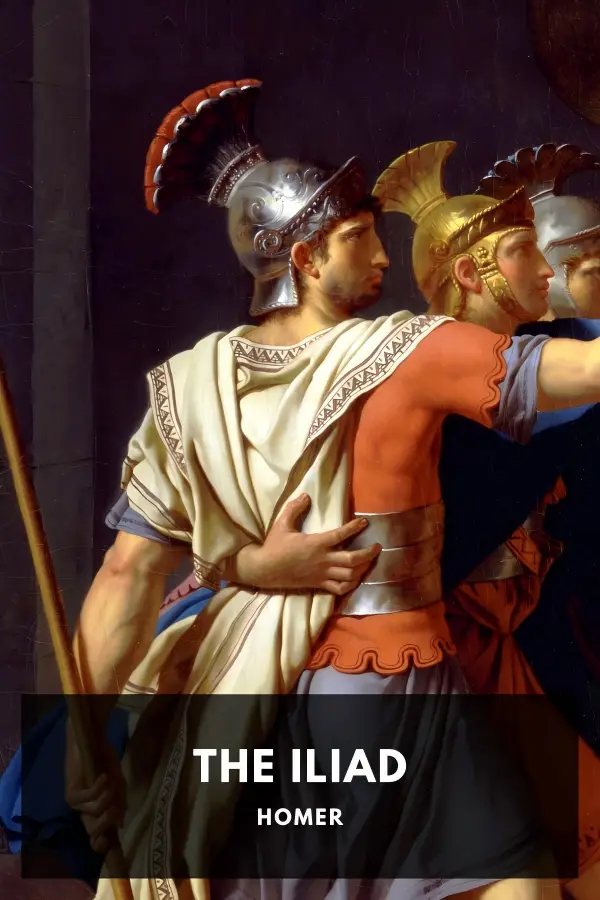
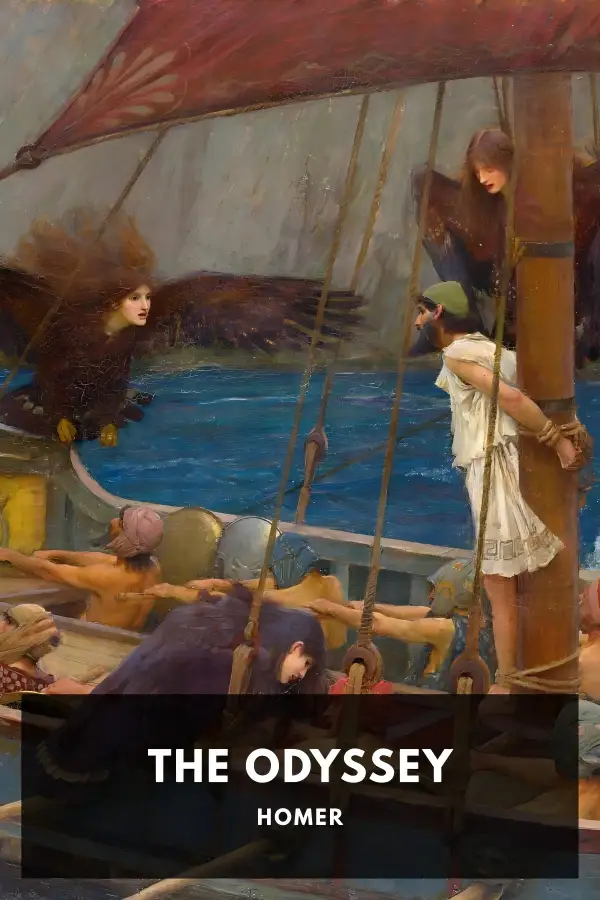
The poem has been read for two thousand years as the Roman answer to Homer, and the two Greek poems are free here as well: The Iliad, whose war the second book of the Aeneid ends, and The Odyssey, whose voyages the first half repeats in a different key. The rest of the Poetry & Epics shelf is free here too. The whole text is at Project Gutenberg #228 and at Standard Ebooks, and the files on this page are set from the Standard Ebooks text.
Historical Context
The poem was written in the last decade of Virgil’s life and left unfinished. The colophon of this edition dates it between 29 and 19 BC, and Virgil died in 19 BC, before it had the shape he wanted; it was published after his death. That circumstance is part of how the poem reads. It stops in the middle of a fight, with Turnus dead and Aeneas standing over him, and it never narrates the marriage to Lavinia or the founding of the town. The last line of the translation is a killing and the flight of a soul, not a settlement. Whatever Virgil meant to add, the poem as it survives moves from a burning city into a new war and never rests in the peace it keeps promising.
The translation is John Dryden’s, published in 1697, and it is a poem of its own century as much as of Virgil’s. Dryden keeps the twelve books and the order of events, but he writes in rhymed pentameter couplets, closed and balanced, and he expands wherever the couplet wants room. The Latin hexameter becomes a sequence of paired lines, so that the second line of a pair commonly turns the first, and a speech can run for pages in a level, public voice. The names are Roman: Jove, Juno, Venus, Vulcan, Neptune, Ulysses, Alecto, the Dirae. Readers who know the Greek names will find them here under the Latin ones, and the gods behave exactly as badly.
The story was already old when Virgil took it up. Aeneas is a minor Trojan in the Iliad, and the tradition that he escaped the fall and went west to found a line was older than Rome’s claim to it. The Aeneid turns that claim into a prophecy: Jupiter in Book I promises empire without end, Anchises in Book VI shows the Julian line down to Augustus, and the shield in Book VIII carries Actium and the Egyptian queen. The poem is a foundation story and a piece of Augustan history at once, and its most quoted lines are the ones that promise Rome the world. It is also a poem about what those promises cost the people who carry them.
Voices & Forms
- The epic narrator: The poem is told in the third person by a narrator who opens with the line about arms and the man, asks the Muse for the causes of Juno’s anger, and then keeps out of the way of his story. He is not neutral: he calls Aeneas pious and Turnus proud, and he breaks into the narrative with apostrophes, as when he addresses Palinurus before the god of sleep takes him. The public voice, the stated subject and the promise of long labour for a vast frame set the tone for everything that follows.
- The heroic couplet: Dryden’s translation is in rhymed pentameter couplets, and almost every couplet closes with a stop. The effect is formal and spoken: the second line completes, turns or comments on the first, and the sense rarely runs past the pair. It suits the set speech and the sententious line, and it can sound cramped in the middle of a battle. A reader hears the rhyme before the sense, which is one reason the translation is easy to read aloud and easy to remember, and why so many of its lines have been quoted out of context ever since.
- The prose argument: Every book in this edition opens with a prose argument of a hundred words or so, naming the characters and the events in order before the verse begins. These are editorial, printed with the translation and not written by Virgil. They are plain, workmanlike prose, joined in long sentences, and they tell you the storm, the cave, the death and the war in advance. A reader who wants the shape of a book before the couplets begin can take it from the argument, then read the verse to see how the events are actually made.
- The set speech: Direct speech fills the poem and is quoted at length, marked off by quotation marks: Juno’s rage at the opening, Ilioneus begging shelter, Dido’s reproaches, the Sibyl’s prophecy, Latinus and Turnus in council, and the last plea of Turnus. These are the passages where the couplet is most rhetorical, and where Dryden is freest. The speeches do the work of characterisation, since the narrator rarely explains a motive; what a person wants is what that person says, at length, in front of witnesses, and the poem lets the speech stand.
- The epic simile: The poem is full of similes, and they come from work, weather, hunting and the sea: the Tyrians building Carthage like bees in a flowery meadow, the crowd hushed by a grave and pious man, Turnus at bay like a lion ringed with spears, the fall of a mountain, the stag closed in by the hounds. They slow the narrative and widen it, and they often carry the judgement the narrator does not state, as when Aeneas pursuing Turnus is a huntsman and Turnus a wounded deer with the sea behind him.
- Epithet and formula: People are named with fixed epithets: the pious prince, the good Aeneas, the gracious queen, the false Trojan, the haughty Juno. Deaths are recorded with a formula that repeats almost word for word, the soul issuing out of the wound or rushing through it, and that formula closes the deaths of Mezentius and of Turnus. The repetition is deliberate, and it makes the poem sound like something recited rather than something read. It also means that the last use of the formula, in the final line of the poem, is the loudest line in the book.
Core Themes
- Duty and fury: Aeneas is the pious man: he carries his father out of Troy, his gods into Italy, and his men through a war he did not want. The poem’s word for him is pious, and it is used without irony for eleven books. Turnus is the opposite, a man of fury, and the Fury Allecto is literally sent to inflame him. Yet the ending complicates the pair. Aeneas, who has been the patient one, kills a beaten man who is begging for mercy, and the poem stops there, on the sword and the escaping soul, without explaining or excusing it.
- Juno’s anger and the delay of fate: Juno cannot stop what is fated, so she delays it, and the poem’s engine is obstruction. She bribes Aeolus for the storm, keeps Aeneas in Carthage through Dido, and opens the gate of war in Latium. The prophecy in Book I and the pageant in Book VI both announce an outcome she cannot prevent, and both are spoken by gods who know it. The poem is therefore a story whose end is never in doubt and whose interest lies in the cost of arriving there, in the years and the deaths that fate’s delay requires.
- Rome foretold: The Aeneid keeps pointing past its own story. Jupiter promises Aeneas empire without bounds, Anchises shows him the line from Silvius to Augustus, and the shield of Vulcan carries the battle of Actium and the queen with the Egyptian gods against her. These are the passages a Roman reader was meant to hear as his own present, and they are why the poem was read in schools for centuries. They also sit oddly with the story being told, since the future is glorious and the people living through its preconditions are mostly exhausted, shipwrecked or dead.
- Dido and the cost of love: Book IV is the poem’s most famous book and its most painful. Dido is given the strongest arguments against Aeneas, the sharpest reproaches, and the longest death. She builds a city, is ruined by a guest, and dies on a pyre with his sword in her side. When Aeneas meets her again among the dead he speaks to her with tears, and she turns away without answering and goes back to the shade of her first husband. The poem gives her the last word in that exchange and does not let its hero have it.
- The defeated enemy: The poem gives its best deaths to the other side. Lausus dies saving his father, Mezentius asks only to lie beside his son, Camilla is killed from ambush while the Latins watch, and Turnus, beaten and wounded, asks for mercy and for his body to be returned. Nisus and Euryalus die for each other in a raid that gains nothing. A poem about Roman victory spends much of its second half making the reader pity the people Rome defeats, and the last line is a killing the reader has been led to regret.
Why Download Our Custom E-Reader Edition of The Aeneid?
The download is the whole poem: twelve books in Dryden’s 1697 verse, each with its prose argument, and nothing cut. The couplets keep their shape, so the turn of the line still works on a small screen, and every book begins where the edition begins it. The same text is at Project Gutenberg #228 if you want to check a passage against another copy.
Around the text the page supplies what a poem of this length needs: twelve summaries that follow the books and stop where each book stops, six notes on the voices and forms the translation uses, five on the themes that hold it together, and a short account of the world it was written in. The groups are editorial, but the divisions are the edition’s own. Nothing here stands in for the verse, and nothing is summarised that the verse does not say.
The files come in three formats with the same text and the same book divisions. The EPUB opens in Apple Books, Calibre and most Android readers; the AZW3 is the file for a Kindle; the KEPUB is the one Kobo devices handle best. No account is needed for any of them, nothing is locked, and the poem can be read in the order it was written or opened at the book a summary refers to.
- Based on the Standard Ebooks Edition, via Standard Ebooks, with the twelve books and the prose argument before each one in Dryden’s 1697 verse translation.
- Complete text of the twelve books Every book from the storm in Book I to the death of Turnus in Book XII, with the fall of Troy, the descent to the dead, the shield of Vulcan and the war in Latium, nothing abridged.
- Twelve groups in the poem’s order Twelve summaries, one for each book, each stopping where its book stops and keeping the events in the order the verse gives them.
- EPUB, AZW3 and KEPUB files The same text in three formats, for Apple Books, Kindle and Kobo, with the book divisions intact and no account needed for any of them.
- Homer’s poem of the war at Troy, the war whose last night Aeneas narrates in Book II and whose heroes the Aeneid keeps measuring itself against. — free EPUB, AZW3 & KEPUB
- Homer’s poem of the voyage home, the Greek model for the first half of the Aeneid, where a fleet is scattered over the same seas by the same angry goddess. — free EPUB, AZW3 & KEPUB
- The shelf where this edition sits, with the rest of our free poetry and epic in English translation, from Homer to the moderns. — free EPUB, AZW3 & KEPUB
Canto & book summaries
This edition prints the twelve books in Dryden’s 1697 verse, each opening with a short prose argument. The twelve groups below follow the books one to one. The labels are editorial; the book numbers and the arguments are the edition’s own, and each summary stops where its book stops.
- Book I — The storm, and the queen of Carthage: Juno bribes Aeolus to sink the Trojan fleet, and Neptune drives the winds off the sea. Aeneas reaches the Libyan coast with seven ships, shoots stags for his men, and is carried in a cloud into Carthage, where Dido is building her city. She welcomes him, and Cupid takes the shape of Ascanius at the feast.
- Book II — The fall of Troy: Aeneas tells of the wooden horse and the lies of Sinon, of Laocoon and the two serpents, of Hector’s ghost telling him to fly, and of the last night of the city, with Deiphobus’ house in flames and Priam killed at his altar. Venus stops his arm, and he leaves with Anchises on his shoulders and Creusa lost behind him.
- Book III — The wanderings, and the death of Anchises: The fleet puts in at Thrace, at Delos and in Crete, where the household gods correct a mistaken oracle in a dream. The Harpies curse the Trojans with hunger, Helenus warns them of what is ahead, and Achaemenides tells them of the Cyclops. They escape Polyphemus and coast round Sicily, and at Drepanum Anchises dies.
- Book IV — Dido, and the pyre: Dido confesses her passion to her sister Anna, and at the hunting party a storm drives her and Aeneas into the same cave. Mercury comes down with Jupiter’s command, and Aeneas has the fleet prepared in secret. Dido begs and reproaches him; when he sails, she mounts the pyre, lays his sword in her side, and three times lifts her head before Iris cuts the lock of hair.
- Book V — The games, and the burning ships: A storm drives the fleet to Sicily and to Acestes, who receives them. Aeneas holds funeral games for Anchises, with prizes for those who win them. Juno sends Iris, who persuades the Trojan women to set the ships on fire, and Jupiter puts the fire out with rain. Aeneas founds a city for those who stay, and Palinurus is lost overboard on the passage to Italy.
- Book VI — The Sibyl, and the descent to the dead: At Cumae the Sibyl prophesies wars in Latium and sends Aeneas for the golden bough, which the doves of Venus show him. Charon ferries him over Acheron and Cerberus is put to sleep. In the fields of mourning Dido turns away without a word; in Elysium Anchises explains the soul of the world and shows him the Roman line down to Augustus and the young Marcellus.
- Book VII — Latium, and the opening of the war: The fleet reaches the Tiber, and Latinus offers Aeneas his daughter Lavinia, but Turnus is already in love with her and her mother favours him. Juno opens the gate of war, and the Fury Allecto drives Amata and the country people to arms against the strangers. The book ends with the catalogue of the Italian forces, with Turnus in his armour and Camilla at the head of the Volscians.
- Book VIII — Evander, and the shield of Vulcan: Aeneas sails up the Tiber to Evander, who lives on the site of future Rome and gives him men, with his son Pallas among them. Venus asks Vulcan for arms, and the god makes a shield on which the Roman future is worked: the wolf and the twins, the Sabine women, and at the centre the battle of Actium, with Caesar and the Egyptian queen. Aeneas lifts it without knowing the names.
- Book IX — The night raid of Nisus and Euryalus: Turnus attacks the Trojan camp while Aeneas is away, and the ships, which the gods turn into sea nymphs, refuse to burn. Nisus and Euryalus go out at night to fetch Aeneas and are killed for the plunder they take. Turnus is shut inside the camp, kills many, and at last leaps into the Tiber and is carried out of the fight.
- Book X — The death of Pallas, and of Mezentius: Jupiter calls a council of the gods and forbids them to take sides. Aeneas returns with the Tuscan ships, and in the day that follows Turnus kills Pallas, and Aeneas kills Lausus, who dies to save his father. Mezentius then comes out to die, rides three times round the shield, and asks only to be buried beside his son.
- Book XI — The truce, and the death of Camilla: Aeneas raises a trophy from the spoils of Mezentius and grants a truce for burying the dead. He sends the body of Pallas home with an escort, and at the council of Latinus, Drances and Turnus quarrel over the war. In the fighting that follows Camilla holds the field for the Latins, kills and is killed, and Turnus is drawn away from the pass by the news of her death.
- Book XII — The single combat, and the death of Turnus: Turnus challenges Aeneas to single combat and the treaty is sworn, but Juturna, the sister of Turnus, breaks it among the Rutulians. Aeneas is wounded and healed by Venus, and at last the two meet inside the walls. The sword of Turnus shatters on the shield of Vulcan, and when Aeneas sees the belt of Pallas on his shoulder he kills him.
The Aeneid: Frequently Asked Questions
What is the Aeneid about?
Who wrote it, and when?
Whose translation is this?
Why does each book begin with a prose paragraph?
How is the poem arranged?
What happens at the end?
Why is Juno so angry with Aeneas?
How do I read the free downloads?
Part of: Poetry & Epics · Virgil