Fundamental Principles of the Metaphysic of Morals by Immanuel Kant: Free EPUB, AZW3 & KEPUB Download
Fundamental Principles of the Metaphysic of Morals
📖 Click to Read the Opening Pages Online Preview
The opening of the preface, on the division of philosophy
Ancient Greek philosophy was divided into three sciences: physics, ethics, and logic. This division is perfectly suitable to the nature of the thing; and the only improvement that can be made in it is to add the principle on which it is based, so that we may both satisfy ourselves of its completeness, and also be able to determine correctly the necessary subdivisions.
All rational knowledge is either material or formal: the former considers some object, the latter is concerned only with the form of the understanding and of the reason itself, and with the universal laws of thought in general without distinction of its objects. Formal philosophy is called logic. Material philosophy, however, which has to do with determinate objects and the laws to which they are subject, is again twofold; for these laws are either laws of nature or of freedom. The science of the former is physics, that of the latter, ethics; they are also called natural philosophy and moral philosophy respectively.
The excerpt below is the first two paragraphs of the preface. The first recalls the division of ancient Greek philosophy into three sciences, physics, ethics and logic, and says that the only improvement to be made in it is to add the principle on which the division rests. The second supplies that principle by dividing rational knowledge into the material and the formal: formal philosophy is logic, while material philosophy is twofold, since its laws are either laws of nature or laws of freedom, and these are physics and ethics, or natural and moral philosophy.
Download Full EPUB1785
Treatise
~29,000 words (estimated)
Approx. 1.6 hours
Standalone
Königsberg, 1785, the year on the title page. The book is a treatise on the supreme principle of morality, argued in the schools and addressed to the common understanding alike.
A preface and three sections in twelve parts
EPUB · AZW3 · KEPUB
0.13 MB (EPUB) · 0.20 MB (AZW3) · 0.14 MB (KEPUB)
Public domain in the United States
Project Gutenberg #5682
Kant’s Fundamental Principles looks for the supreme principle of morality and finds it in the form of the maxim rather than in the consequences of the act. Nothing can be called good without qualification except a good will, and an action has moral worth only when it is done from duty rather than from inclination. Duty is the necessity of acting from respect for the law, and the law that remains when every object of desire is set aside is the requirement that a maxim be fit to serve as a universal law. From that one principle follow the treatment of persons as ends in themselves and the idea of a kingdom of ends.
The argument moves in three steps. The first section begins from the moral judgement of ordinary people and arrives at the formula of universal law. The second turns from popular moral philosophy to a metaphysic of morals, separates hypothetical from categorical imperatives, and states the three formulae of the one law: universal law, humanity as an end in itself, and the will as universally legislative. The third asks how a categorical imperative is possible and answers with the idea of freedom. The Wikipedia article on the Groundwork sets out the argument in outline. The text is available via Project Gutenberg #5682.

Fundamental Principles of the Metaphysic of Morals by Immanuel Kant: Summary, Ideas & Arguments
This page offers a summary and analysis of Fundamental Principles of the Metaphysic of Morals, following the preface and the three sections in the order the translation prints them, with the step each one takes described and the terms the argument turns on explained as they come up. Immanuel Kant published the book in 1785, and it is printed here in Thomas Kingsmill Abbott’s English translation. The object is narrow and is stated in the preface: to find and establish the supreme principle of morality, and to keep that principle clear of every empirical addition. It is not a system of duties but the foundation of one, and it belongs with the rest of the Philosophy Classics on this site.
The first section begins from ordinary moral judgement. Nothing in the world, or out of it, can be called good without qualification except a good will; intelligence, courage, power and even happiness can be turned to mischief without it, and the moderation the ancients praised is no exception. The good will is good by virtue of its volition, not by what it effects, and would shine like a jewel even if it achieved nothing. Kant then takes the notion of duty and separates it from every motive of inclination: the honest shopkeeper, the man who preserves a life he no longer values, and the philanthropist who helps from temperament rather than from duty all show where moral worth does not lie. The section ends with the formula of universal law and with common reason driven into philosophy.
The second section asks what a law that commands unconditionally would have to be. Kant separates imperatives of skill and counsels of prudence, which command an action as a means, from the categorical imperative, which commands it as necessary in itself, and states that imperative in one formula: act only on that maxim whereby thou canst at the same time will that it should become a universal law. Four examples test it, suicide, a lying promise, neglected talents and indifference to the distress of others, and they divide duties into the strict and the meritorious. A second formula forbids treating humanity, in one’s own person or another’s, merely as a means; a third presents the will of every rational being as universally legislative. The section closes with the kingdom of ends, with the distinction between value and dignity, and with autonomy set against every heteronomous principle.
The third section turns to freedom. A will is a causality, and freedom is the property of that causality that it can act independently of foreign causes; since a free will is not lawless but a law to itself, freedom and subjection to the moral law come to the same thing. Kant argues that the idea of freedom must be presupposed by every being that has a will, notices the circle this involves, and escapes it by distinguishing the world of sense from the world of understanding. A man belongs to both: as intelligence he gives himself the law, as appearance he is subject to nature. How pure reason can be practical is then declared beyond explanation, and the book ends by conceding that the unconditional necessity of the imperative remains incomprehensible.
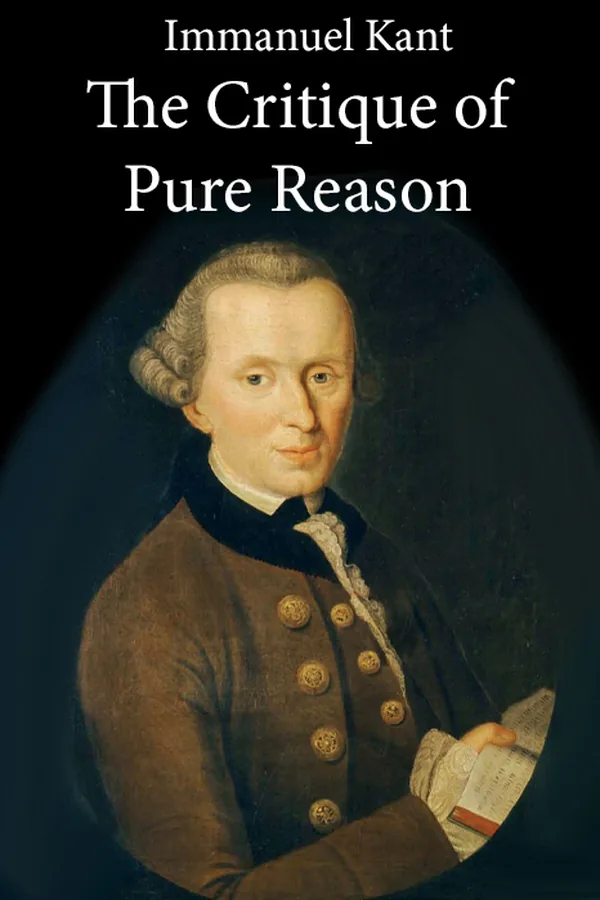
The translation is Abbott’s, and its section headings and subheadings are kept. The book opens with a short preface that names the critical examination of pure speculative reason as already published, and that examination is the argument of The Critique of Pure Reason, the other half of the critical project. The ethics the book answers without naming is the virtue ethics of the ancients, whose praise of moderation and self-control is set aside in the first section; The Nicomachean Ethics of Aristotle is the classic statement of that position. The whole text is at Project Gutenberg #5682, and this page follows it.
Historical Context
The book is printed as its title page has it: the title, the author’s name, the year 1785, and the translator, Thomas Kingsmill Abbott. The contents list a preface, three sections under their full headings, and a concluding remark. The second section carries three subheadings of its own, on the autonomy of the will as the supreme principle of morality, on the heteronomy of the will as the source of spurious principles, and on the classification of principles founded on heteronomy. The third section carries five, from the concept of freedom as the key that explains autonomy to the extreme limits of all practical philosophy. The text ends with the words THE END.
The preface explains the method the book follows: it ascends analytically from common knowledge to the determination of its ultimate principle, and then descends synthetically from that principle to the common knowledge in which it is employed. Kant says he intends to publish a metaphysic of morals later, and that this preliminary treatise is issued first so that the subtle discussions need not be repeated in a more popular book. He also explains the title: he would have called the work a critical examination of the pure practical reason, but the critique is not complete here, so he keeps the more modest name. The book, he says, is nothing more than the investigation and establishment of the supreme principle of morality.
The positions the book is answering are named inside it. The preface sets aside Wolff’s general practical philosophy, which treats volition in general rather than a pure will, and it separates the empirical part of ethics, which it calls practical anthropology, from the rational part, to which it gives the name morality. The second section reviews the moralists who ground morality on the special constitution of human nature, on perfection, on happiness, on a moral sense or on the fear of God, and rejects them all as heteronomy. Socrates is named for drawing out the principle common reason already employs, the Holy One of the Gospels for the point that even a model must be measured against an ideal framed by reason, and the South Sea islanders serve as an example of talents left uncultivated.
Key Ideas & Arguments
- The good will: The one thing that can be called good without qualification. Its worth does not lie in what it performs or brings about but in the volition itself, so that it would still shine like a jewel if it achieved nothing. Intelligence, courage, power and happiness are good only on condition that the will that uses them is good.
- Duty: The necessity of acting from respect for the law. Actions that merely conform to duty may spring from self-interest or from temperament, and then have no moral worth; worth appears only when the maxim is adopted for the sake of the law and every object of inclination is set aside. Duty is the notion in which a good will appears under human restrictions.
- The categorical imperative: The single imperative that commands an action as necessary in itself, without presupposing any end to be attained: act only on that maxim whereby thou canst at the same time will that it should become a universal law. It is an a priori synthetic practical proposition, and the only imperative that carries the necessity a moral law requires.
- The end in itself: Rational nature, which exists as an end in itself and not merely as a means. Things have relative worth and may be used; persons must always be regarded as ends as well. The practical imperative that follows is to treat humanity, in one’s own person or in that of another, in every case as an end, never as means only.
- Autonomy: The property of the will by which it is a law to itself, independently of any property of the objects of volition. It is contrasted with heteronomy, where the will takes its law from something outside itself, and it is the basis of the dignity of human and of every rational nature. The third section connects it with freedom.
- The kingdom of ends: A systematic union of rational beings under common laws, in which each is at once a member, subject to the laws he gives, and ideally a sovereign, subject to no other will. Kant calls it an ideal. In it everything has either value, which admits of an equivalent, or dignity, which admits of none.
Core Arguments & Influence
- The good will and the limits of happiness: Kant begins by denying that happiness is what reason is for. In an organized being every organ has its purpose, and if happiness were the purpose of a rational creature, instinct would have been a far better guide than reason. The failure of cultivated reason to deliver satisfaction is not an objection to providence but evidence that our existence has another end, the production of a will good in itself. Hence the good will is the supreme good and the condition of every other, including the worthiness to be happy, and its value is untouched by success or failure. The argument gives the book its tone: the moral question is not what will make us happy but what deserves to be called good.
- Duty against inclination: The first section turns the notion of duty into a test. Actions that accord with duty may be done from self-interest, as the prudent tradesman keeps a fixed price for his own advantage, or from temperament, as the sympathetic man spreads joy because it pleases him; in either case the maxim lacks moral import. What gives an action worth is that it is done from duty, and duty is the necessity of acting from respect for the law. Kant sharpens the point with the man who preserves his life when he no longer values it, and with the philanthropist who helps when his own sorrow has deadened his sympathy. This is why he says that love of neighbour, as a command, must be practical love seated in the will, not a feeling that cannot be commanded.
- The form of law: The first formula of the imperative does not supply a list of duties; it supplies a test of the maxim’s form. Strip the will of every object of desire and nothing remains but the conformity of the maxim to law as such, so the question becomes whether the maxim could be willed as a universal law. The false promise fails because a universal law of promising falsely would destroy promising, and the man who makes an exception in his own favour shows that he does recognise the law he breaks. The four examples divide strict from meritorious duty, and the second formula, the law of nature, is offered as the same test brought nearer to intuition. The section insists that the principle must hold for all rational beings, not for men only.
- Persons, dignity and the kingdom of ends: The second formula rests on a distinction: what has only relative worth may be used as a means and is called a thing, while what is an end in itself is a person and must never be used merely as a means. From this Kant derives the idea of a will that gives universal law to itself, and with it the kingdom of ends, a union of rational beings under common laws which he calls an ideal. In that kingdom skill has market value, wit has fancy value, and morality alone has dignity, because it is the condition under which a rational being can be an end in himself. Autonomy, the will’s being a law to itself, is what grounds that dignity and what separates the principle from every heteronomous substitute.
- Freedom and the limits of explanation: The third section asks how a categorical imperative is possible and answers with freedom. A will is a causality, and a free will is not lawless but a law to itself; freedom and subjection to the moral law are therefore one and the same. The idea of freedom must be presupposed by every being that has a will, yet arguing from freedom to morality and back again looks like a circle. Kant escapes it by distinguishing the world of sense from the world of understanding, and a man belongs to both. What he refuses to do is explain how pure reason can be practical: at that point explanation stops and only defence remains. The book ends by saying that we comprehend the incomprehensibility of the imperative.
Why Download Our Custom E-Reader Edition of Fundamental Principles of the Metaphysic of Morals?
The download is the whole book, not an abridgement. The preface, the three sections with their subheadings, and the concluding remark are all here, in Abbott’s translation, with the section divisions and the numbered arrangement the printed text uses. Nothing is summarised in place of itself, so a formula can be followed from its first statement in the first section through the three formulae of the second to the question about freedom in the third.
The page is arranged to be read beside the text. Twelve groups follow the book’s own divisions and stop where each division stops; six entries explain the terms the argument turns on; five themes trace the argument from the good will to the limits of explanation. A short historical section names the positions the book answers and the parts of the text that are easy to miss, such as the preface’s account of its own method.
The files come in three formats with the same text and the same divisions. The EPUB opens in Apple Books, Calibre and most Android readers; the AZW3 is the file for a Kindle; the KEPUB is the one Kobo devices read best. No account is needed for any of them, and nothing in the downloads is locked or time limited. The translation is Abbott’s throughout, so a passage found here can be looked up in any printing of it.
- Project Gutenberg transcription, via Project Gutenberg #5682 — the complete text, unabridged, with the preface, all three sections, their subheadings and the concluding remark.
- The whole argument, not a digest The formulae of the categorical imperative, the four examples and the turn to freedom are printed as Kant wrote them, with the distinctions between strict and meritorious duty left intact.
- Twelve groups, one for each step Every division of the book has its own summary, from the preface on the division of philosophy to the concluding remark on the limits of what can be explained.
- EPUB, AZW3 and KEPUB files The same text in three formats, for Apple Books, Kindle and Kobo, with the section divisions intact and nothing to install beyond the reading app you already use.
- Kant’s critical examination of pure speculative reason, the work the preface of this book names as already published. The method of the moral treatise is continuous with it, though the subject here is the will rather than the understanding, and the third section marks the point where the two meet. — free EPUB, AZW3 & KEPUB
- Aristotle’s ethics, the account of virtue and of the good life that Kant’s first section answers without naming it. Read the two together to see what happens to happiness, to the virtues and to the example of the temperate man once duty rather than habit becomes the standard of moral worth. — free EPUB, AZW3 & KEPUB
- Hobbes’s Leviathan, which grounds morality in law and in the command of the sovereign, the kind of foundation the second section rejects as heteronomy. It is the shortest way to see why Kant insists that the will must give the law to itself, and what is lost when it does not. — free EPUB, AZW3 & KEPUB
Chapter summaries
The twelve groups below follow the edition’s own divisions in the order it prints them: the preface, the first section in three groups, the second section in six, and the third section in two. Nothing has been merged or renamed, and every label names the section it belongs to. Each summary states the step the passage takes and stops where the passage stops, from the division of philosophy to the concluding remark.
- Part 1 — The preface and the plan of the work: The preface divides ancient philosophy into physics, ethics and logic, and asks what a pure part of ethics would be. Moral laws must hold with absolute necessity and cannot rest on human nature or on experience. Kant announces a method that ascends analytically from common knowledge to its principle and then descends synthetically again.
- Part 2 — First Section, the good will: Nothing can be conceived, in the world or out of it, that is good without qualification except a good will. Talents of mind and gifts of fortune turn bad without it, and the moderation the ancients praised is no exception. The good will is good by its volition, not its effects; like a jewel it shines by its own light.
- Part 3 — First Section, duty against inclination: Duty is introduced as the notion that contains a good will under human restrictions. The honest shopkeeper, the man who preserves a life he no longer values, and the philanthropist who acts from temperament rather than duty all show where moral worth does not lie. Duty is the necessity of acting from respect for the law.
- Part 4 — First Section, the formula of universal law: If the will is to be determined by law alone, nothing remains but the conformity of the maxim to universal law. Kant tests a false promise, separates prudence from right, and finds that ordinary reason already uses this standard. Because inclination argues against it, common reason is driven into philosophy.
- Part 5 — Second Section, against examples and popularity: Experience cannot show a single action done purely from duty, and examples cannot supply the concept of morality: even the Holy One of the Gospels must be measured against the ideal reason frames. Imitation has no place in morals. A philosophy that seeks popularity before it has fixed its principle produces a medley, not a science.
- Part 6 — Second Section, hypothetical and categorical imperatives: Everything in nature acts according to laws; a rational being acts according to the conception of a law, and that is a will. Because the human will is not always determined by reason, its rule is an imperative. Hypothetical imperatives of skill and prudence command as means; the categorical imperative commands an action as necessary in itself.
- Part 7 — Second Section, the imperative applied: There is one categorical imperative: act only on a maxim that you could will to be a universal law. In the form of a law of nature it is tested on four cases, suicide, a lying promise, neglected talents and indifference to others, which divide into strict and meritorious duties. Transgression shows that we make an exception for ourselves.
- Part 8 — Second Section, humanity as an end in itself: If a categorical imperative exists, it must rest on something whose existence is an end in itself. Things have relative worth and may be used as means; persons are ends in themselves. The practical imperative follows: treat humanity, in your own person or another’s, always as an end, never as means only.
- Part 9 — Second Section, the kingdom of ends and dignity: A will that gives universal law to itself leads to the idea of a kingdom of ends, a systematic union of rational beings under common laws, of which each is member and, ideally, sovereign. In it everything has either value or dignity; skill has market value, wit fancy value, and morality alone dignity. Autonomy is its basis.
- Part 10 — Second Section, autonomy against heteronomy: Autonomy is the property of the will by which it is a law to itself; heteronomy is every principle that takes its law from an object. The empirical principles of happiness and moral feeling and the rational principles of perfection fail for that reason. A section that has argued analytically cannot yet prove the principle’s reality.
- Part 11 — Third Section, freedom and the two standpoints: Freedom is the property of a will’s causality that it can act independently of foreign causes. It is not lawlessness: a free will is a will under its own law, so freedom and subjection to the moral law are one and the same. The idea of freedom is presupposed for every rational being, and the argument ends in a circle.
- Part 12 — Third Section, the limits of practical philosophy: The circle is escaped by distinguishing the world of sense from the world of understanding: as intelligence a man belongs to the latter and gives himself the law, as appearance he is subject to nature. How pure reason can be practical cannot be explained, only defended. The concluding remark concedes that the imperative’s necessity stays incomprehensible.
Fundamental Principles of the Metaphysic of Morals: Frequently Asked Questions
What is this book about?
Why is a good will the only thing good without qualification?
What does Kant mean by duty?
What is the categorical imperative?
What are the three formulae of the one law?
What is the kingdom of ends, and what is dignity?
Why does the book end with freedom?
How do I read the free downloads?
Part of: Philosophy Classics · Immanuel Kant