The Great Gatsby by F. Scott Fitzgerald (Free EPUB, AZW3)
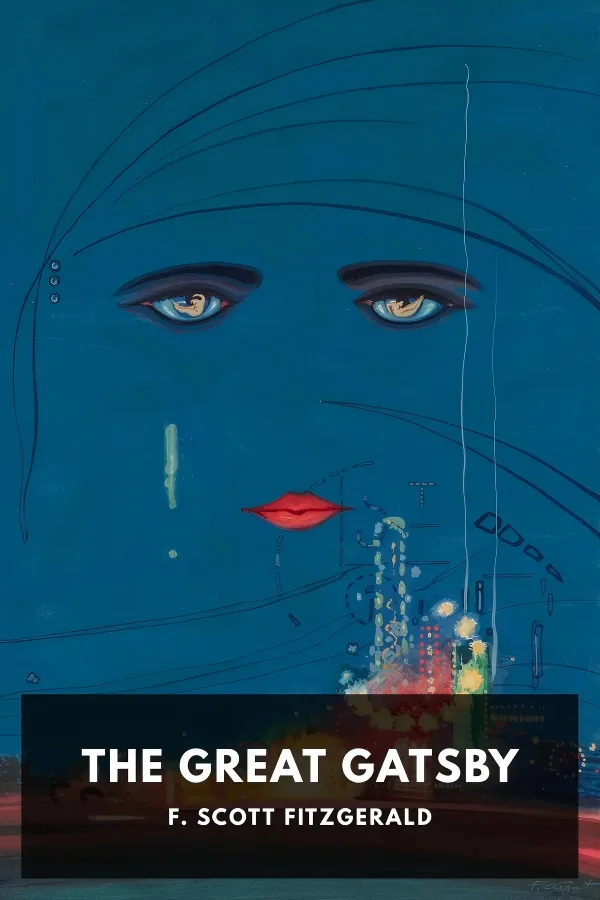
The Great Gatsby
📖 Click to Read Chapter 1 Online Preview
I
In my younger and more vulnerable years my father gave me some advice that I’ve been turning over in my mind ever since.
“Whenever you feel like criticizing anyone,” he told me, “just remember that all the people in this world haven’t had the advantages that you’ve had.”
He didn’t say any more, but we’ve always been unusually communicative in a reserved way, and I understood that he meant a great deal more than that. In consequence, I’m inclined to reserve all judgements, a habit that has opened up many curious natures to me and also made me the victim of not a few veteran bores.
Reserving judgements is a matter of infinite hope. I am still a little afraid of missing something if I forget that, as my father snobbishly suggested, and I snobbishly repeat, a sense of the fundamental decencies is parcelled out unequally at birth.
Enjoying the opening chapter? Download the full unabridged novel to read on your e-reader.
Download Full EPUBThe Great Gatsby is a 1925 novel by F. Scott Fitzgerald. It follows Nick Carraway as he witnesses Jay Gatsby’s pursuit of Daisy Buchanan, a dream built on wealth, longing, and the illusion of the American Jazz Age. This Standard Ebooks edition is based on a transcription from Faded Page and is in the public domain in the US.
Obsession, Vanity & The Illusions of Wealth
About F. Scott Fitzgerald’s The Great Gatsby
Published on April 10, 1925, by Charles Scribner’s Sons in New York, The Great Gatsby is F. Scott Fitzgerald’s definitive masterpiece. Widely heralded as the supreme portrait of the Roaring Twenties, it stands as the quintessential dissection of the American Dream in modern literature. This editions.ink edition is based on the Standard Ebooks version, derived from Faded Page and Internet Archive scans, and the novel is in the public domain in the United States.
Set during the sweltering summer of 1922 on Long Island, in the fictional villages of West Egg and East Egg, the novel captures a post-World War I America awash in illicit bootleg wealth, jazz rhythms, and dizzying social mobility, counterbalanced by profound spiritual disorientation. The novel’s setting—West Egg and East Egg on Long Island—is central to its themes.
The story is observed through the eyes of Nick Carraway, a young Yale graduate from the Midwest who rents a modest bungalow in West Egg next to a colossal Normandy Hôtel de Ville-style mansion. Every weekend, this neighboring palace hosts extravagant, chaotic parties for hundreds of uninvited socialites, hosted by the enigmatic, fabulously wealthy Jay Gatsby.
Nick soon discovers that Gatsby’s entire display of wealth is an elaborate theatre constructed to attract Daisy Buchanan, Nick’s married second cousin once removed living across the bay in fashionable East Egg. Five years earlier, Gatsby had fallen in love with Daisy as a penniless young army officer before losing her to the brutally wealthy Tom Buchanan.
Reuniting through Nick’s quiet tea party, Gatsby and Daisy resume their romance. However, Gatsby is not satisfied with mere love; he demands that Daisy erase her entire past with Tom and declare she never loved her husband, seeking an impossible metaphysical triumph over time.
The tension erupts on an intensely hot afternoon in Manhattan’s Plaza Hotel. In the fallout, Myrtle Wilson—Tom’s mistress—is struck and killed by Gatsby’s yellow car driven by Daisy. Shielding Daisy, Gatsby takes the blame, leading Myrtle’s grieving husband to murder him in his pool, while the careless Buchanans retreat safely into their vast fortune. The novel is divided into nine chapters, and its climax takes place in Manhattan’s Plaza Hotel and the Valley of Ashes.
Key Characters & Literary Archetypes in The Great Gatsby
- Jay Gatsby / James Gatz (The Romantic Visionary & Tragic Dreamer): Born poor in North Dakota, he reinvents his identity through sheer will and criminal underworld alliances. Gatsby embodies the tragic romance of the American Dream: believing that limitless wealth and idealistic longing can magically erase the past and buy emotional innocence.
- Nick Carraway (The Ambivalent Moralist & Honest Witness): The first-person narrator who reserves judgment while quietly judging everyone around him. Torn between attraction to the vibrant East and disgust at its moral corruption, he serves as the reader’s grounded moral compass.
- Daisy Buchanan (The Golden Siren & Fragile Idol): Nick’s cousin whose voice sounds “full of money.” Beautiful, charming, and aristocratic, she represents the unattainable ideal that Gatsby pursues, masking a hollow, superficial nature that prioritizes material comfort over genuine devotion.
- Tom Buchanan (The Brutal Aristocrat & Entitled Bully): Daisy’s arrogant, unfaithful husband, armored with ancestral wealth, athletic power, and white-supremacist anxieties. He personifies the careless cruelty of the old-money oligarchy that uses up people and retreats into untouchable privilege.
- Jordan Baker (The Cynical Flapper & Modern Cynic): A poised, dishonest championship golfer who navigates society with aloof indifference. She represents the new twentieth-century woman unburdened by traditional sentimentality, treating human relationships with breezy detachment.
- George & Myrtle Wilson (The Crushed Proletariat & Tragic Victims): Myrtle longs to escape her station through a vulgar affair with Tom, while George is a weary garage owner living in the desolate Valley of Ashes. Their violent destruction illustrates the collateral human cost of elite self-indulgence.
Core Literary Themes & Historical Significance of The Great Gatsby
- The Corruption of the American Dream: Fitzgerald shows how the original American ideal of individual self-discovery devolved into a grotesque worship of illicit cash, consumer spectacle, and predatory status.
- The Irreversibility of Time: Gatsby’s famous conviction that he can repeat the past exposes the profound human tragedy of clinging to an idealized memory that the living present cannot sustain.
- The Valley of Ashes and Spiritual Emptiness: The desolate wasteland guarded by the faded billboard eyes of Doctor T. J. Eckleburg serves as an iconic symbol of moral ruin, where commercial exploitation has replaced divine conscience.
These themes are developed across all nine chapters of the novel.
Why Download Our Custom E-Reader Edition of The Great Gatsby
- Standard Ebooks–Based Text: This edition is derived from the Standard Ebooks version of The Great Gatsby, which in turn is based on Faded Page transcriptions and Internet Archive scans of the 1925 text. It is not a re-typed or scraped copy.
- All Nine Chapters, Unabridged: The novel is presented complete, from Chapter I through Chapter IX, with no cuts, no abridgements, and no editorial omissions.
- 100% DRM-Free: Every file is DRM-free and can be read on any device or app that supports EPUB, AZW3, or KEPUB, without registration or regional restrictions.
- E-Ink Optimized Typography: Paragraph indentation, line height, and drop caps are tuned for high-contrast e-paper screens, so the text stays readable on Kindle, Kobo, and similar devices.
- Public Domain in the United States: The Great Gatsby entered the U.S. public domain on January 1, 2021. Users outside the United States should check their local copyright laws before downloading.
For a full breakdown of the text source, typography work, and legal status, see the Quality, Typography & Legal Compliance Notes section below.