The Reign of Greed by José Rizal: Free EPUB, AZW3 & KEPUB Download
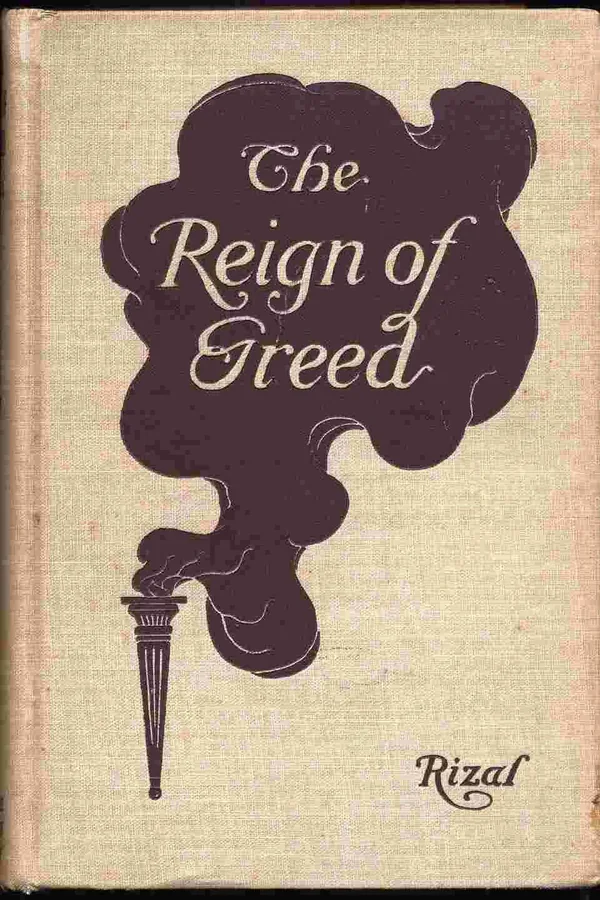
The Reign of Greed
📖 Click to Read the Opening Pages Online Preview
The opening of Chapter I
One morning in December the steamer Tabo was laboriously ascending the tortuous course of the Pasig, carrying a large crowd of passengers toward the province of La Laguna. She was a heavily built steamer, almost round, like the tabú from which she derived her name, quite dirty in spite of her pretensions to whiteness, majestic and grave from her leisurely motion. Altogether, she was held in great affection in that region, perhaps from her Tagalog name, or from the fact that she bore the characteristic impress of things in the country, representing something like a triumph over progress, a steamer that was not a steamer at all, an organism, stolid, imperfect yet unimpeachable, which, when it wished to pose as being rankly progressive, proudly contented itself with putting on a fresh coat of paint. Indeed, the happy steamer was genuinely Filipino! If a person were only reasonably considerate, she might even have been taken for the Ship of State, constructed, as she had been, under the inspection of Reverendos and Ilustrísimos.…
Bathed in the sunlight of a morning that made the waters of the river sparkle and the breezes rustle in the bending bamboo on its banks, there she goes with her white silhouette throwing out great clouds of smoke—the Ship of State, so the joke runs, also has the vice of smoking! The whistle shrieks at every moment, hoarse and commanding like a tyrant who would rule by shouting, so that no one on [2]board can hear his own thoughts. She menaces everything she meets: now she looks as though she would grind to bits the salambaw, insecure fishing apparatus which in their movements resemble skeletons of giants saluting an antediluvian tortoise; now she speeds straight toward the clumps of bamboo or against the amphibian structures, karihan, or wayside lunch-stands, which, amid gumamelas and other flowers, look like indecisive bathers who with their feet already in the water cannot bring themselves to make the final plunge; at times, following a sort of channel marked out in the river by tree-trunks, she moves along with a satisfied air, except when a sudden shock disturbs the passengers and throws them off their balance, all the result of a collision with a sand-bar which no one dreamed was there.
Moreover, if the comparison with the Ship of State is not yet complete, note the arrangement of the passengers. On the lower deck appear brown faces and black heads, types of Indians,1 Chinese, and mestizos, wedged in between bales of merchandise and boxes, while there on the upper deck, beneath an awning that protects them from the sun, are seated in comfortable chairs a few passengers dressed in the fashion of Europeans, friars, and government clerks, each with his puro cigar, and gazing at the landscape apparently without heeding the efforts of the captain and the sailors to overcome the obstacles in the river.
On board the Tabo, ascending the Pasig
Download Full EPUB1891
~114,000 words (estimated)
Approx. 6.4 hours
Standalone
Manila and the Philippine provinces in the 1880s, under Spanish colonial rule
39 chapters in 12 groups
EPUB · AZW3 · KEPUB
0.43 MB (EPUB) · 0.70 MB (AZW3) · 0.48 MB (KEPUB)
Public domain in the United States
Project Gutenberg #10676
The Reign of Greed is José Rizal’s second novel, published in 1891 as El Filibusterismo and translated into English by Charles Derbyshire in 1912. Thirteen years after the supposed drowning of Crisóstomo Ibarra, a jeweller called Simoun moves through Manila society, selling diamonds to officers and friars and quietly arming a revolution. Around him Rizal assembles a country: a farmer stripped of land he cleared himself, students petitioning for a school where Spanish is taught, a Chinese merchant with a warehouse of smuggled rifles, and a wedding in a house with powder under the floor. The last pages are a confession by the sea.
The plot is a machine, and Rizal is careful to show who is caught in it: Basilio, the medical student who is jailed for books he never opened; Isagani, the poet who loses the girl to a richer rival; Juli, who sells herself into service to buy her father’s freedom; Cabesang Tales, who takes to the hills with a rifle. The satire is ferocious and specific — a friar lecturing on mirrors the class has never seen, an official who answers a petition with a project, a newspaper printing the opposite of what happened. El Filibusterismo has been read as a political novel since its first printing. The text is available via Project Gutenberg #10676.

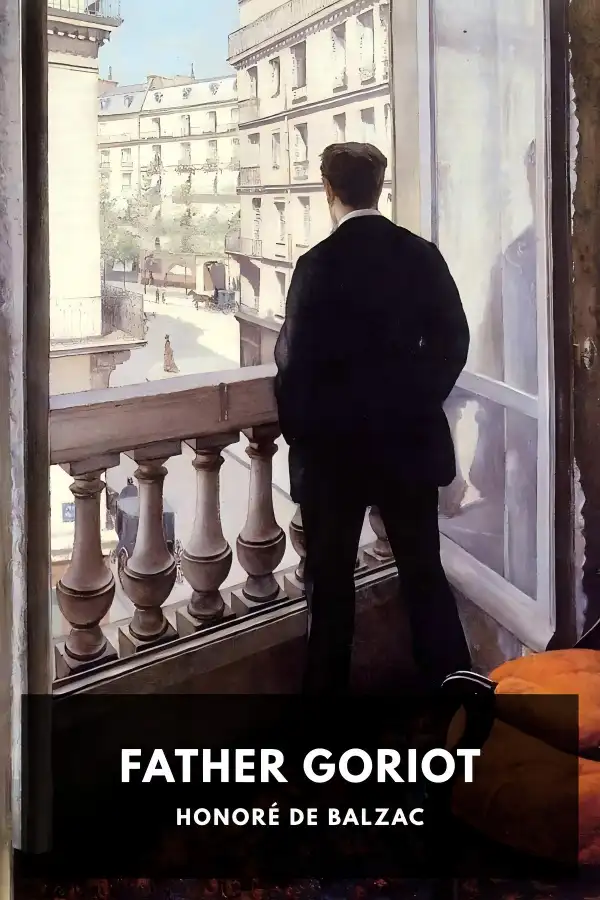
The Reign of Greed by José Rizal: Summary, Characters & Themes
This is a summary and analysis of José Rizal’s The Reign of Greed, the novel he published in Ghent in 1891 as El Filibusterismo and Charles Derbyshire translated for the Philippine Education Company in Manila in 1912. The setting is Manila and the provinces in the last decades of Spanish rule. Simoun, a jeweller with a fortune and a grievance, has spent years making himself useful to the Captain-General: he sells diamonds, lends money, and waits. His plan uses the discontent he has helped to sharpen — a shipment of rifles in a Chinese merchant’s warehouse, a band of outlaws in the hills, a city worth burning. Against him and with him stand students, priests, a lawyer, a poet and a girl in a nunnery.
Rizal builds the book out of set pieces. A steamer labours up the Pasig with friars on the upper deck and natives packed below; a farmer near San Diego loses fields he cleared to a religious corporation and takes a revolver into the hills; a class in physics recites the properties of mirrors from memory because there are no instruments; a Chinese merchant gives a dinner and is blackmailed into smuggling; a fair on the Quiapo plain sells wooden friars and a talking head; a students’ banquet in a noodle shop ends with the discovery that a spy has been watching them. Each scene is comic until it is not, and the comedy sharpens the cruelty.
José Rizal was thirty when the book appeared: a doctor and novelist from Laguna who had studied in Madrid, Paris and Berlin, published Noli Me Tángere in 1887, and spent the years after it in the Propaganda Movement, writing for its newspapers and lobbying in Madrid. This second novel was printed in Ghent in 1891, in a small edition. He went home in 1892, was exiled to Dapitan in Mindanao, and was executed in Manila on 30 December 1896. The friars, officials and students in the book were drawn from a society he knew at close quarters, and it was read as a portrait of that society within a year of his death, and has been read that way ever since.
Where Noli Me Tángere is a romance with a reformer at its centre, this book is a satire with a conspirator at its centre, and it is harsher about almost everyone. Rizal gives the friars their own voices and lets them condemn themselves in conversation; he gives the students eloquence and then shows how little it buys; he gives the poor patience and then shows what patience costs. The result is closer to the European novels of ambition and money than to an adventure story, and readers who respond to it often go on to Upton Sinclair’s The Jungle, another book that turned a social scandal into fiction, or to Balzac’s Father Goriot, the study of a young man learning what a city charges for success.
This edition follows the Project Gutenberg #10676 transcription of Derbyshire’s translation, which keeps the thirty-nine numbered chapters and their titles, the translator’s footnotes signed ‘—Tr.’, and the glossary of Spanish and Tagalog terms that closes the volume. The three downloads on this page are built from the same transcription, so the wording is identical in every format. Nothing has been cut or modernised: the Spanish and Latin are left in place, the chapter epigraphs stand where Rizal set them, and the orthography of 1912 is kept, including forms that look odd today. The summaries below cover all thirty-nine chapters. For a novel of conscience pushed to its limit, Crime and Punishment makes an obvious next shelf.
Historical Context
Spanish rule in the Philippines ran on a short list of institutions: the friar orders, which owned the best land in the provinces and ran the parishes; the gobernadorcillo and the cabeza de barangay, who collected the tribute; the Civil Guard, which patrolled the roads and the hills; and a censorship that could close a newspaper or a theatre. Nothing in the book is invented furniture: the offices, the titles and the forms of address are those of the 1880s. The novel’s central demand is modest — a school where Spanish is taught — and the debate over it is a small masterpiece of obstruction, each speaker defending a position that is really an interest. Rizal had sat in those rooms and heard those voices.
In 1872 a mutiny at the Cavite arsenal was followed by the execution of three priests, Mariano Gómez, José Burgos and Jacinto Zamora, at Bagumbayan. The event is the novel’s dedication and its moral starting point: Rizal addresses the three as victims of the evil he undertakes to combat and says that anyone who attacks their memory without proof stains his hands in their blood. He wrote the dedication nineteen years after the executions, and it is the angriest page in the book. The word filibustero, which gives the book its Spanish title, was an accusation that could end a career or a life. Rizal had made that accusation the subject of his first novel; here he shows how it is manufactured and used.
The book appeared in Ghent in 1891, in a small edition from the press of F. Meyer-van Loo, and it has been read as both a warning and a weapon ever since: the colonial authorities saw a blueprint for rebellion, and the generation that made the revolution of 1896 read it as a diagnosis. Rizal was executed on 30 December 1896, five years after publication, and the novel’s ending — a priest throwing a fortune into the sea rather than let it fund another conspiracy — has been argued over since. Derbyshire’s English version, made in Manila in 1912 for the Philippine Education Company, was the first complete translation and is still the one most readers meet.
Key Characters & Literary Archetypes
- Simoun: A jeweller in English clothes and blue goggles, with white hair and a black beard, said to advise the Captain-General and to be Crisóstomo Ibarra thirteen years on. He sells diamonds to the people he means to ruin, lends money to the man he means to use, and calls himself the judge of a system he has spent years corrupting. His grief is private and his politics are a theory of force: a colony must be made worse before it can be made free.
- Basilio: A medical student from San Diego, the son of Sisa, taken up by Capitan Tiago and educated at Letran and the Ateneo. He is practical, patient and indebted: he nurses the opium-eater who paid for his schooling, plans to marry Juli, and is two months from his licentiate when the police take him. He refuses Simoun’s revenge in the wood and later asks him for a weapon, which is the measure of what prison has done to him. He survives the book.
- Isagani: A poet from the Ateneo, nephew of Padre Florentino, in love with Paulita Gómez, and the most articulate of the students who ask for a school of Castilian. He argues with a lawyer, a Dominican and a jeweller in turn, and loses every argument in practice while winning most of them in principle. He is brave in the way that costs him everything: he goes into a house he knows is mined and throws a lamp into the river. At the end he gives up the city, and his uncle, for good.
- Padre Florentino: A native priest who gave up his parish after 1872 and lives on a family estate by the sea, with a harmonium and a library. His mother put him into the seminary; the woman he loved married another man; he raised his nephew Isagani and hides Don Tiburcio from Doña Victorina. He is the book’s one figure of moral authority, and he uses it at the end not to console Simoun but to argue with him. His answer to the revolution is a sentence: suffer and work.
- Cabesang Tales: A farmer of Sagpang, a barrio of Tiani in the hills above San Diego, who cleared forest land, paid rent on it, and then lost it to a religious corporation with a better claim. His son is conscripted, his daughter is sold into service to raise his ransom, and he comes home to a court order to leave his house. He kills the men who took his fields, joins the outlaws, and becomes Matanglawin, the terror of Luzon. He is the novel’s proof that the system makes its own enemies.
- Juli: Tales’s daughter, who sells her jewels and then her labour to Sister Penchang to raise the ransom for her father, and who is engaged to Basilio. She is pious, literal-minded and brave, and the town’s gossip makes her the price of Basilio’s freedom. Her visit to the convento is the novel’s most painful scene, and it is told from outside: a window, a fall, a woman running into the street. Her death is the hinge on which her father’s and her grandfather’s fates turn.
Core Literary Themes
- The reign of greed: The title is the argument. Simoun’s diamonds buy deportations and restorations, Quiroga’s bazaar is a warehouse of contraband, the friars hold their land by paperwork, and the Captain-General’s expeditions are run for plunder. Rizal shows an economy in which everyone from the minister to the cochero takes a cut, and he is precise about the way a debt softens a man’s principles. The greed is not a vice of individuals but the working language of the colony, which is why Simoun can use it as an instrument and why the novel’s moral problem is not how to punish it but how to live inside it.
- Education and the language question: The students want a school where Spanish is taught, and the book’s longest argument is about whether they should have it. Padre Camorra says the Indians must obey, not argue; Padre Sibyla calls the petition a revolution on stamped paper; Don Custodio proposes a compromise that gives nobody anything. Against them Rizal sets the classroom itself, where a Dominican teaches physics by recitation and the students leave as ignorant as they came in. The question is not only who may learn but what learning is for, and the novel’s answer is that a people taught to repeat will be ruled by people who repeat.
- Reform or revolution: Simoun has a plan, a fortune and a theory, and Rizal gives all three their full force before refusing them. Isagani argues for persuasion and law; Padre Florentino argues for worthiness, for the slow exaltation of intelligence and dignity, and tells Simoun that hate produces only monsters. The novel does not pretend the system is tolerable or that patience is rewarded. It ends with a priest who has just buried the conspirator’s treasure and a sentence that is neither consolation nor programme: suffer and work.
- The friars: Padre Salvi, withered and watchful, Padre Camorra, coarse and dangerous, Padre Sibyla, cold and political, Padre Irene, comfortable and evasive, and Padre Fernandez, honest and therefore isolated: together they are the most fully drawn institution in the book. Rizal gives each a distinct way of holding power, from the confessional to the classroom to the dining room, and shows how the orders function as landlords, censors, election agents and employers. The satire is savage, but it is not indiscriminate, and the honest friar is there to keep the accusation exact.
- Private love and public disaster: Basilio loves Juli and cannot protect her; Isagani loves Paulita and is outbid by a mestizo with a rich father; Simoun has loved Maria Clara for thirteen years and learns of her death minutes before he means to free her. Rizal uses these loves the way a tragedy uses them, to measure what politics costs the people who are not making it. The weddings, the serenades and the letters are not relief from the argument; they are the argument’s price, paid by girls in conventos and students in prison.
Why Download Our Custom E-Reader Edition of The Reign of Greed?
Because the book is a thriller as well as a tract. There is a steamer, a fair, a theatre, a police raid, a wedding and a lamp full of nitro-glycerin, and Rizal keeps the plot moving while he argues. Nothing in the story exists only to make a point: the jewels, the rifles and the fire all belong to the same economy, and the suspense is real even when you know how the argument ends.
Because this edition is the whole book, not an abridgement: thirty-nine chapters with their titles, the dedication to the three priests of 1872, the translator’s notes and the glossary. The text comes from Project Gutenberg #10676, the 1912 translation that has carried the novel to English readers for a century, with the Spanish and Latin left where Rizal put them. Nothing is paraphrased and nothing is summarised in place of the text.
Because the novel is best read twice: once for the story and once for the argument, which is conducted in conversations — a lawyer’s office, a professor’s classroom, a dinner table, a deathbed. The summaries on this page will see you through the first reading, and the character notes will help with the second, when the speeches turn out to be the action. The novel rewards it: on the second pass the speeches read as plot.
- Project Gutenberg transcription, via Project Gutenberg #10676, the source of this edition: Derbyshire’s 1912 translation, complete with its chapter titles, translator’s footnotes and glossary.
- Complete thirty-nine-chapter text No abridgement and no modernised spelling; the dedication, the epigraphs, the Spanish and Latin quotations and the notes signed ‘—Tr.’ are all left where Rizal and his translator put them.
- EPUB, AZW3 and KEPUB One download per format, so the book opens on Kindle, Kobo, Apple Books and older e-ink readers without conversion, with a table of contents and chapter breaks that survive a change of font.
- Free and DRM-free Public domain, with no account, no sample chapter and no lock on the file; download it once, move it between devices, and keep it.
- The Jungle — free EPUB, AZW3 & KEPUB
- Father Goriot — free EPUB, AZW3 & KEPUB
- Crime and Punishment — free EPUB, AZW3 & KEPUB
Chapter summaries
Thirty-nine chapters, each with a title of its own, from the steamer on the Pasig to the confession by the sea. These twelve groups follow the book in order.
- Chapters 1–3 — On the Upper Deck; On the Lower Deck; Legends: A December morning on the steamer Tabo, ascending the Pasig toward La Laguna, friars on the upper deck and natives packed below. Doña Victorina hunts her runaway husband, Ben-Zayb plans articles, Don Custodio sleeps, and Simoun talks of canals and forced labour. Below, Basilio and Isagani discuss the students’ plan for a school of Castilian. On the lake, Padre Florentino tells the legend of a woman walled up in the bank, and the captain remembers where Ibarra drowned thirteen years before.
- Chapters 4–6 — Cabesang Tales; A Cochero’s Christmas Eve; Basilio: Tales cleared forest at Sagpang, paid rent on it, and lost it to a religious corporation; his son is conscripted, and his daughter Juli sells her jewels and then her service to raise the ransom after outlaws take him. Basilio comes home to San Diego on Christmas Eve through a town of processions and higher taxes, dines at Capitan Basilio’s with a curate buying earrings on credit, and at midnight goes to the balete where his mother died, and remembers the stranger who buried her.
- Chapters 7–9 — Simoun; Merry Christmas!; Pilates: At the grave Simoun drops his disguise and tells Basilio he is Ibarra, rich now and bent on making the colony’s corruption unbearable; he scorns the school as a halfway house and offers the student a share in his revenge, which Basilio refuses. Juli leaves before dawn for Sister Penchang’s, and Tandang Selo finds he cannot speak. Then everyone washes his hands: the lieutenant, the friar-administrator, the pious woman with the debt, while Tales comes home to find his fields in other hands and three days to leave his house.
- Chapters 10–12 — Wealth and Want; Los Baños; Placido Penitente: Simoun lodges with Tales and opens his chests: Cleopatra’s necklace, Sulla’s ring, diamonds worth a province. Tales sees his dispossessors laughing over his fields and that night kills them, their mouths full of earth and his name in blood, then joins the outlaws; the Civil Guard arrests his father instead. At Los Baños the Captain-General plays cards while friars debate the school petition. In Manila, Placido Penitente, sick of the University, is dragged through a morning of processions and a counter-petition he refuses to sign.
- Chapters 13–15 — The Class in Physics; In the House of the Students; Señor Pasta: Padre Millon teaches physics without instruments and examines by memory; a boy calls a block of kamagon a wooden mirror, and Placido, caught prompting, is told he has fifteen absences. At Makaraig’s house the students learn that Don Custodio will decide the petition, and Isagani undertakes to convert him through his lawyer. In Señor Pasta’s office the argument is made and lost: prestige, order, charity begins at home, and the advice to marry a rich devout girl and charge well.
- Chapters 16–18 — The Tribulations of a Chinese; The Quiapo Fair; Legerdemain: Quiroga gives a dinner over his bazaar, ruined by three diamond bracelets a lady has kept, and agrees to warehouse smuggled rifles in exchange for a discount on his debt. The Quiapo fair sells toys, cosmoramas and wooden friars; Ben-Zayb and Padre Camorra quarrel over a talking head. At Mr. Leeds’s show the head of Imuthis tells of a priest who destroyed him and drove his beloved mad, and Padre Salvi, hearing the accusation, cries out that she still lives.
- Chapters 19–21 — The Fuse; The Arbiter; Manila Types: Placido’s mother arrives from Batangas with money and a sermon on patience; he refuses to return to the University and follows Simoun to a pyrotechnist’s hut, where powder and bombs are stored and a rising is planned within the week. Don Custodio, asked to settle the school petition, reviews his own projects and reaches a decision. At the theatre the city watches an operetta, and two men in the crowd are heard promising that the signal will be a gunshot.
- Chapters 22–24 — The Performance; A Corpse; Dreams: The operetta runs, the students’ box faces the dancing girl’s, and Isagani watches Paulita in another box with Juanito. Afterwards Camaroncocido overhears enough to frighten him. That night Simoun comes to Basilio with an offer of death or a future and a single errand: take Maria Clara out of St. Clara’s while the city is distracted. Basilio tells him she died that afternoon, and Simoun runs into the street. The next day Isagani walks the Malecon to be told, gently, that he is not to be married.
- Chapters 25–27 — Smiles and Tears; Pasquinades; The Friar and the Filipino: Fourteen students banquet in a noodle house, make speeches about Spain and the Philippines, and end by discovering that they are watched, Padre Sibyla’s spy leaving in Simoun’s carriage. Seditious placards appear on the University doors, and the arrests begin: Makaraig, Pecson, Tadeo, Juanito, and Basilio, who is warned too late to burn his papers. Simoun is reported ill. Isagani goes to Padre Fernandez to argue about education and duty, and the Dominican, who is honest, tells him what the friars have made of the young.
- Chapters 28–30 — Tatakut; Exit Capitan Tiago; Juli: Fear is the subject of chapter twenty-eight: Ben-Zayb’s paper exults, Quiroga shuts his shop, and a girl’s body is found near the Luneta. Capitan Tiago dies without confession, leaving his fortune to the Church; the funeral is first class, and the jokes at the wake are about cockfights in heaven. Juli is told that only Padre Camorra can save Basilio, goes to the convento, and does not come out. Her grandfather comes for her, is driven off, and disappears.
- Chapters 31–34 — The High Official; Effect of the Pasquinades; La Ultima Razón; The Wedding: The high official pleads for Basilio and then for the country, and resigns when the General refuses; he tells a native servant that some in Spain have fought for his rights. The students are released by their families’ money, Basilio stays in Bilibid, and the city prepares a wedding: Juanito Pelaez and Paulita, with the Captain-General as patron and Simoun presenting the lamp. Simoun shows Basilio the pomegranate lamp, a litre of nitro-glycerin, and the plan for nine o’clock.
- Chapters 35–39 — The Fiesta; Ben-Zayb’s Afflictions; The Mystery; Fatality; Conclusion: The wedding fills the house on Calle Anloague; the lamp is lit in the kiosk and the guests find the words Mene, Tekel, Phares signed with Ibarra’s name. Isagani, told that the house is mined, throws the lamp into the Pasig and jumps after it. The papers are forbidden to mention it. Tales becomes Matanglawin; Tandang Selo is shot by his own grandson. Simoun, wounded, takes poison in Padre Florentino’s house, confesses, and dies; the priest throws the treasure into the sea.
The Reign of Greed: Frequently Asked Questions
What is The Reign of Greed about?
Is it a sequel to Noli Me Tángere?
Who is Simoun?
Where and when is the novel set?
Is it a novel about revolution?
How much of it is true?
Which translation is this?
Where can I read the full text online?
Part of: Classic fiction · Victorian novels