Father Goriot by Honoré de Balzac: Free EPUB, AZW3 & KEPUB Download
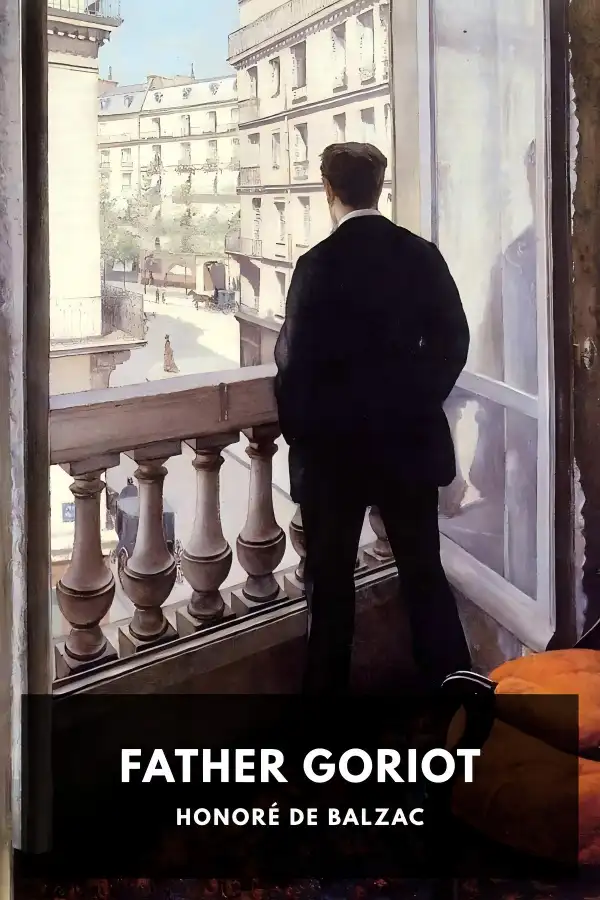
Father Goriot
📖 Click to Read Opening Passage Online Preview
Opening Passage
Mme. Vauquer (née de Conflans) is an elderly person, who for the past forty years has kept a lodging-house in the Rue Neuve-Sainte-Geneviève, in the district that lies between the Latin Quarter and the Faubourg Saint-Marcel. Her house (known in the neighborhood as the “Maison Vauquer”) receives men and women, old and young, and no word has ever been breathed against her respectable establishment; but, at the same time, it must be said that as a matter of fact no young woman has been under her roof for thirty years, and that if a young man stays there for any length of time it is a sure sign that his allowance must be of the slenderest. In 1819, however, the time when this drama opens, there was an almost penniless young girl among Mme. Vauquer’s boarders.
That word “drama” has been somewhat discredited of late; it has been overworked and twisted to strange uses in these days of dolorous literature; but it must do service again here, not because this story is dramatic in the restricted sense of the word, but because some tears may perhaps be shed intra et extra muros before it is over.
Descend into Balzac’s masterly portrait of social ruthlessness, ruined fatherhood, and cold Parisian ambition. Download the complete unabridged edition for your e-reader.
Download Full EPUBFather Goriot is an 1834–1835 novel by Honoré de Balzac, a realist work set in Paris that follows the impoverished student Eugène de Rastignac as he enters high society, and the retired vermicelli merchant Father Goriot as he ruins himself for his two ungrateful daughters, exploring themes of paternal love, ambition, social corruption, and money. This Standard Ebooks edition, translated by Ellen Marriage (1896), is in the public domain in the United States; readers outside the US should check their local laws. The text is available via Standard Ebooks.
About Honoré de Balzac’s Father Goriot: Summary, Characters & Themes
Father Goriot is an 1834–1835 realist novel by Honoré de Balzac, here translated by Ellen Marriage (1896). This summary and analysis follows two intersecting lives in Restoration Paris: the impoverished law student Eugène de Rastignac, who is learning the price of social ambition, and the retired vermicelli merchant Father Goriot, who ruins himself for his two ungrateful daughters.
The novel unfolds inside the Maison Vauquer, a shabby boardinghouse in the Rue Neuve-Sainte-Geneviève. Among its lodgers are Rastignac; the mysterious, cynical Vautrin; and Father Goriot, who has given away his entire fortune to secure aristocratic marriages for his daughters, Anastasie de Restaud and Delphine de Nucingen. In return, they strip him of his last sou and abandon him to die in squalor.
Rastignac seeks entry into high society through his aristocratic cousin, Madame de Beauséant, who advises him to treat women as stepping-stones. Vautrin presents a darker path: he proposes arranging a murder to secure a wealthy heiress for Rastignac, arguing that crime is the true law of modern civilization. When Vautrin is exposed as the escaped convict Jacques Collin, Rastignac is left to reckon with the corruption of the world he wishes to enter.
Rastignac stays by Goriot’s deathbed, witnessing the old man’s realization that his daughters’ love was purchased with money, and pays for his pauper’s funeral out of his own pocket. Standing in the cemetery of Père-Lachaise overlooking Paris as twilight falls, Rastignac sheds his last tear of youth and turns to face the city.
Historical Setting
The novel is set in 1819, when the restored monarchy competed for power with a rising financial capitalism, and when money had become the effective sovereign of Parisian society. Balzac depicts a world in which family bonds, marriage, and honour are increasingly reduced to cash transactions. Father Goriot’s tragedy lies in his belief that endless financial sacrifice could buy true filial devotion.
Key Characters
- Eugène de Rastignac: A noble but impoverished student whose moral education forms the spine of the novel. Caught between his empathy for Goriot and his own ambition, he ultimately trades his provincial conscience for the armour of social cynicism.
- Father Goriot: A retired pasta merchant whose love for his daughters borders on monomania. He embodies a paternal devotion crushed by a society that discards the poor and the old.
- Vautrin (Jacques Collin): An escaped convict with immense willpower and sharp insight into society. He acts as the dark tutor who strips away legal illusions, exposing high society as a polite syndicate of thieves.
- Madame de Beauséant: One of the great hostesses of the Faubourg Saint-Germain. Betrayed by her lover, she gives Rastignac an unvarnished account of social hypocrisy before withdrawing from Parisian society.
- Anastasie de Restaud and Delphine de Nucingen: Goriot’s daughters, who live in luxury while their father starves. They show how social ambition can smother natural affection and gratitude.
- Madame Vauquer: The calculating landlady of the boardinghouse, whose hospitality rises and falls strictly with each lodger’s ability to pay.
Core Themes
- The Power of Money: Money serves as the ultimate moral force in Balzac’s Paris; it creates beauty, commands obedience, and tears families apart. Without wealth, the novel suggests, an individual ceases to exist socially.
- The Loss of Moral Innocence: Rastignac’s transformation traces the trajectory of an ambitious provincial who discovers that success may require becoming either an unprincipled executor or an exploited victim.
- Paternal Love and Betrayal: Goriot’s self-immolating devotion to his daughters is measured against their indifference, and against the wider social machinery that rewards calculation over affection.
Why Download Our Custom E-Reader Edition of Father Goriot?
Honoré de Balzac’s Father Goriot, published between 1834 and 1835, is set in the damp, decaying rooms of the Maison Vauquer, a boarding house in the Latin Quarter. The novel intertwines the self-destroying paternal devotion of the retired vermicelli merchant Jean-Joachim Goriot with the moral corruption and social ascent of the ambitious young law student Eugène de Rastignac.
Automated web conversions and unformatted public domain transcriptions often mishandle a book of this kind: dropped aristocratic French honorifics, inconsistent currency annotations, and flattened pacing in Rastignac’s social manoeuvres. This edition is built from an archival transcription rather than a re-scan, and is calibrated for modern E-ink displays.
- 1896 Ellen Marriage English Translation: The complete 1896 translation by Ellen Marriage, presented unabridged, without textual abridgment or modern paraphrase.
- Structured NCX/Nav Navigation: A fully indexed table of contents lets you move easily through the novel’s settings and turning points—from the description of the Vauquer dining table and Vautrin’s garden temptation of Rastignac, to Goriot’s pawnshop sacrifices, the police trap for Trompe-la-Mort, and the closing scene at Père-Lachaise.
- Typographical Layout for Long Social Realism: Calibrated paragraph indentation, distinct formatting for letters and formal invitations, and consistent contrast across Kindle (AZW3), Kobo (KEPUB), and open EPUB devices.
- Verified Public Domain Sources: Available via the Standard Ebooks edition.