Northanger Abbey by Jane Austen: Free EPUB, AZW3 & KEPUB Download
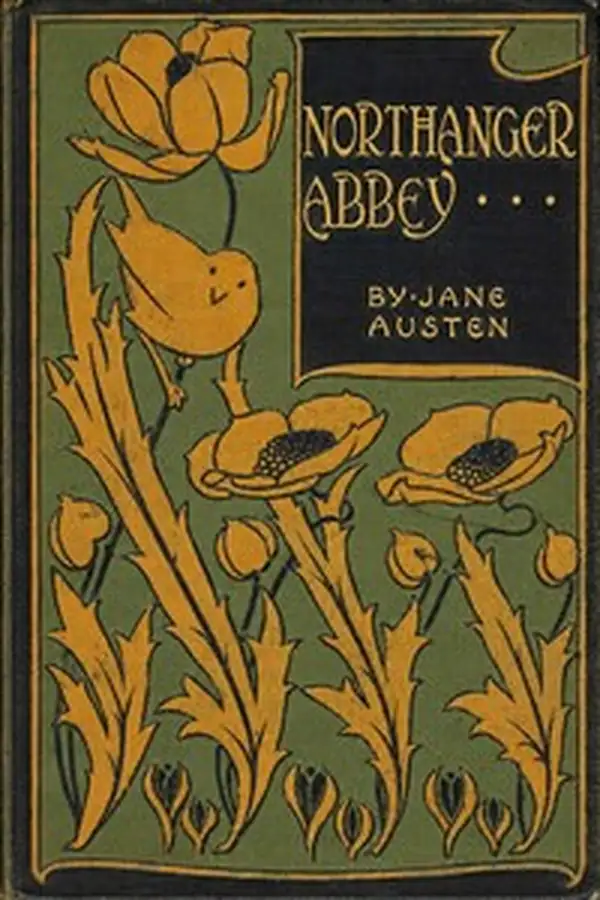
Northanger Abbey
📖 Click to Read the Opening Pages Online Preview
Chapter 1: the heroine’s introduction
No one who had ever seen Catherine Morland in her infancy would have supposed her born to be an heroine. Her situation in life, the character of her father and mother, her own person and disposition, were all equally against her. Her father was a clergyman, without being neglected, or poor, and a very respectable man, though his name was Richard—and he had never been handsome. He had a considerable independence besides two good livings—and he was not in the least addicted to locking up his daughters. Her mother was a woman of useful plain sense, with a good temper, and, what is more remarkable, with a good constitution. She had three sons before Catherine was born; and instead of dying in bringing the latter into the world, as anybody might expect, she still lived on—lived to have six children more—to see them growing up around her, and to enjoy excellent health herself. A family of ten children will be always called a fine family, where there are heads and arms and legs enough for the number; but the Morlands had little other right to the word, for they were in general very plain, and Catherine, for many years of her life, as plain as any. She had a thin awkward figure, a sallow skin without colour, dark lank hair, and strong features—so much for her person; and not less unpropitious for heroism seemed her mind. She was fond of all boys’ plays, and greatly preferred cricket not merely to dolls, but to the more heroic enjoyments of infancy, nursing a dormouse, feeding a canary-bird, or watering a rose-bush. Indeed she had no taste for a garden; and if she gathered flowers at all, it was chiefly for the pleasure of mischief—at least so it was conjectured from her always preferring those which she was forbidden to take. Such were her propensities—her abilities were quite as extraordinary. She never could learn or understand anything before she was taught; and sometimes not even then, for she was often inattentive, and occasionally stupid. Her mother was three months in teaching her only to repeat the “Beggar’s Petition”; and after all, her next sister, Sally, could say it better than she did. Not that Catherine was always stupid—by no means; she learnt the fable of “The Hare and Many Friends” as quickly as any girl in England. Her mother wished her to learn music; and Catherine was sure she should like it, for she was very fond of tinkling the keys of the old forlorn spinnet; so, at eight years old she began. She learnt a year, and could not bear it; and Mrs. Morland, who did not insist on her daughters being accomplished in spite of incapacity or distaste, allowed her to leave off. The day which dismissed the music-master was one of the happiest of Catherine’s life. Her taste for drawing was not superior; though whenever she could obtain the outside of a letter from her mother or seize upon any other odd piece of paper, she did what she could in that way, by drawing houses and trees, hens and chickens, all very much like one another. Writing and accounts she was taught by her father; French by her mother: her proficiency in either was not remarkable, and she shirked her lessons in both whenever she could. What a strange, unaccountable character!—for with all these symptoms of profligacy at ten years old, she had neither a bad heart nor a bad temper, was seldom stubborn, scarcely ever quarrelsome, and very kind to the little ones, with few interruptions of tyranny; she was moreover noisy and wild, hated confinement and cleanliness, and loved nothing so well in the world as rolling down the green slope at the back of the house.
Such was Catherine Morland at ten. At fifteen, appearances were mending; she began to curl her hair and long for balls; her complexion improved, her features were softened by plumpness and colour, her eyes gained more animation, and her figure more consequence. Her love of dirt gave way to an inclination for finery, and she grew clean as she grew smart; she had now the pleasure of sometimes hearing her father and mother remark on her personal improvement. “Catherine grows quite a good-looking girl—she is almost pretty to-day,” were words which caught her ears now and then; and how welcome were the sounds! To look almost pretty is an acquisition of higher delight to a girl who has been looking plain the first fifteen years of her life than a beauty from her cradle can ever receive.
Mrs. Morland was a very good woman, and wished to see her children everything they ought to be; but her time was so much occupied in lying-in and teaching the little ones, that her elder daughters were inevitably left to shift for themselves; and it was not very wonderful that Catherine, who had by nature nothing heroic about her, should prefer cricket, baseball, riding on horseback, and running about the country at the age of fourteen, to books—or at least books of information—for, provided that nothing like useful knowledge could be gained from them, provided they were all story and no reflection, she had never any objection to books at all. But from fifteen to seventeen she was in training for a heroine; she read all such works as heroines must read to supply their memories with those quotations which are so serviceable and so soothing in the vicissitudes of their eventful lives.
The opening of the first chapter is shown here; the complete novel, all thirty-one chapters, is in the free download below.
Download Full EPUB1817
~80,000 words (estimated)
Approx. 4.5 hours
Standalone
Fullerton, Bath and Northanger Abbey, England
31 chapters, plus the author’s Advertisement
EPUB · AZW3 · KEPUB
0.45 MB (EPUB) · 0.56 MB (AZW3) · 0.48 MB (KEPUB)
Public domain in the United States
Project Gutenberg #121
Northanger Abbey is a novel about a girl who has read too many Gothic romances, and the book is happy to let her keep reading. Catherine Morland, one of ten children, leaves the parsonage at Fullerton for a season in Bath with Mrs. Allen, and Austen uses her heroine’s innocence to send up the fashions of the 1790s along with the conventions of fiction. Catherine meets Henry Tilney at a ball, is courted by the Thorpes more by accident than design, and ends the first volume invited to Northanger Abbey, the seat of Henry’s father. It was written in 1797-98, sold in 1803, and published in December 1817, after Austen’s death, with Persuasion.
What follows is the part readers remember: an abbey that is small, modernised and entirely without skeletons, and a heroine who mistakes a laundry list for a manuscript and a dull man for a murderer. Austen’s target is not the Gothic but the reading that confuses it with life, and she makes the correction funny rather than cruel. The last chapters bring Henry to Fullerton and an ending that cheerfully refuses to pretend the couple earned their happiness. See Wikipedia’s article on Northanger Abbey for its publication history. The text is available via Project Gutenberg #121.
Northanger Abbey by Jane Austen: Summary, Characters & Themes
This summary and analysis of Northanger Abbey follows the novel in Austen’s order: Fullerton, Bath, the journey west and the abbey itself. Catherine Morland is the fourth child of a clergyman with ten children, a girl whose ‘mind about as ignorant and uninformed as the female mind at seventeen usually is’ makes her, as the narrator cheerfully admits, an unlikely heroine. Mrs. Allen, the wife of a wealthy neighbour, takes her to Bath for the season, and there the Tilneys and the Thorpes pull her in opposite directions. The first half of the book is a comedy of the marriage market, the second a comedy of reading, and the two meet when Henry Tilney follows her home to Fullerton. Almost everything Catherine fears turns out to be imaginary, and almost everything she believes on hearsay turns out to be false.
Bath supplies the engine. The pump-room, the Upper and Lower Rooms, the shops, the walks and the endless small negotiations over partners and visits make a theatre in which every acquaintance is a calculation. Austen gives Catherine one friend in the city, Isabella Thorpe, ‘four years older than Miss Morland, and at least four years better informed’, and lets the reader watch the friendship being managed. Isabella’s raptures are professional, her brother John’s opinions are pure bluster, and the narrator’s aside that ‘Friendship is certainly the finest balm for the pangs of disappointed love’ is delivered with a straight face that Catherine entirely shares. When James Morland falls in love with Isabella, the engagement gives the Thorpes a stake in the Morland family that they are quick to inflate. His sisters’ calculations are more efficient than his affection. Isabella’s warmth is a form of bookkeeping.
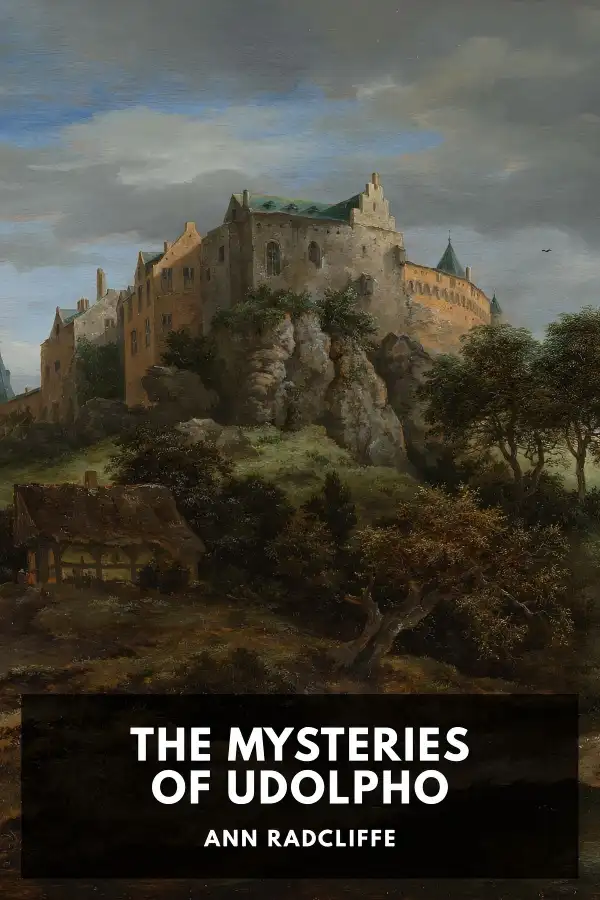
The subject, though, is reading. Catherine has been ‘in training for a heroine’ on Gothic fiction, and arrives in Bath with a head full of The Mysteries of Udolpho. Isabella lends her seven more horrors, from ‘Castle of Wolfenbach’ to ‘Horrid Mysteries’, and the narrator steps forward to defend the novel as ‘an injured body’. Jane Austen wrote the book as a parody, and Henry Tilney speaks for the defence: ‘The person, be it gentleman or lady, who has not pleasure in a good novel, must be intolerably stupid.’ The parody is affectionate. Henry’s teasing in the curricle invents exactly the abbey Catherine wants, and the real Northanger then disappoints her with a house whose fourth side was rebuilt long after the monks had gone. The parody works because the pleasure is shared.
General Tilney is the novel’s most alarming figure and its least Gothic one. He is punctual to the minute, orders dinner on table directly, lectures on his pinery and his plantations, and keeps his dead wife’s picture in his own bed-chamber. Catherine, well read in Radcliffe, concludes that he murdered her, and Eleanor’s remark that her mother died nine years earlier does nothing to shake the theory. Henry’s rebuke in the next chapter is the centre of the book: ‘Remember the country and the age in which we live. Remember that we are English, that we are Christians.’ The general’s real motive is money. Told that Catherine is an heiress, he invites her; told the truth, he turns her out of the house at seven in the morning without a servant to attend her. Nothing supernatural is needed to frighten a girl with no fortune.
Northanger Abbey was written in 1797-98 under a different title, revised around 1803 and sold to Crosbie & Co., who sold it back in 1816, and it reached print in December 1817, with a title page dated 1818, the year after Austen’s death. It carries the Advertisement in which she says the little work ‘was finished in the year 1803’. This edition follows the first-edition text from Project Gutenberg #121, whose note records that spelling and punctuation have been largely brought into conformity with modern British usage, and it keeps all thirty-one chapters. It is the most openly bookish of the novels, and its heroine’s education is a lesson in reading evidence rather than romances. For the cooler Austen who could make a heroine of a girl nobody notices, Emma is the natural next book.
Historical Context
The Gothic boom of the 1790s is the book’s immediate context. Ann Radcliffe’s The Mysteries of Udolpho appeared in 1794 and Matthew Lewis’s The Monk in 1796, and Minerva Press novels and the circulating libraries supplied a voracious readership with castles, skeletons and persecuted heroines. Novels were still widely treated as rubbish, and ‘It is only a novel!’ is quoted by Austen as the common cant. A clergyman’s daughter who filled her head with them was thought to be wasting her time. Austen’s joke is to take that furniture seriously enough to test it against a real house, a real income and a real father, and to find that the father is worse than any villain in a book. That is the whole of the joke.
Bath in the 1790s was the fashionable watering-place where the marriage market was most visible. The Pump Room, the Assembly Rooms, the Crescent, the lodgings in Pulteney Street and the walk up Beechen Cliff were all familiar to Austen’s first readers, and she names them because they had been part of her own life since the family moved to Bath in 1801. The season’s economy, who is seen with whom, who dances, who is said to be worth what, is the medium in which Catherine’s innocence is tested, and the town’s geography is plotted as carefully as its marriages. The place was small enough for every outing to be watched, which is why a single false report about a phaeton can rearrange a week.
Two short documents in this edition frame the date. The Advertisement at the front of the first edition says the work ‘was finished in the year 1803, and intended for immediate publication’, and explains that it was ‘disposed of to a bookseller’. The note on the text adds that it was written in 1797-98, revised for publication in 1803, sold to Crosbie & Co., bought back in 1816 and first printed by John Murray in 1818 in a four-volume set with Persuasion. The novel itself never gives a year: the Bath it describes belongs to the 1790s, and its heroine reads the novels of that decade. The manuscript was bought back and then forgotten until after Austen’s death, when her brother Henry arranged its publication with Persuasion.
Key Characters & Literary Archetypes
- Catherine Morland: Seventeen, the fourth child of a clergyman with ten children, and, in the narrator’s own words, ‘as plain as any’, with a good heart and a head full of novels. She plays cricket, cannot get through history, and accepts whatever a friend tells her; the narrator calls her mind ‘about as ignorant and uninformed as the female mind at seventeen usually is’, then spends the book proving that such a mind can be educated. Her terrors at Northanger are ridiculous and entirely sincere, and Austen never lets the reader despise her for them.
- Henry Tilney: The general’s second son, a clergyman of five and twenty with a living at Woodston and a habit of teasing. He meets Catherine at a ball, mocks her journal, argues about muslin, and invents the horrors of his father’s house to amuse her on the road. His rebuke in his mother’s room is the moral centre of the novel, and the narrator explains that his affection grew from gratitude and from a flattering sense of her preference rather than from any sudden passion. He is the only man here who reads.
- Isabella Thorpe: Catherine’s first friend in Bath, ‘four years older than Miss Morland, and at least four years better informed’. Beautiful, demonstrative and entirely governed by prospects, she lends Catherine a list of horrid novels, becomes engaged to James Morland, and drops him the moment Captain Tilney’s attentions promise more. Her letters at the end of the book are the most wounding documents in it, and even Catherine, who forgives almost everything, reads them for what they are. Her affection is real, and so is her arithmetic. She is sorry for herself, not for him.
- John Thorpe: Isabella’s brother, a boaster whose conversation is a sequence of prices: his gig, his horses, his friend’s phaeton, the money he means to spend. He is coarse, cheerful and completely without shame, and his two reports of Catherine’s fortune, one inflated and one deflated, decide the plot. ‘I never read novels; I have something else to do’, he says, and Austen lets the reader hear exactly what that something is: driving, drinking and talking about both. His good nature is genuine, which makes him harder to dislike.
- General Tilney: Master of Northanger, a widower of nine years and a man of system in everything from his dinner hour to his plantations. His politeness to Catherine is calculated on a false valuation of her fortune, and it ends the moment the valuation is corrected. He is not a murderer, but he is a bully and a snob, and Austen gives him no Gothic secret: the cruelty is entirely domestic, and that is what makes the last chapters frightening. He is a tyrant of the dinner table and the account book.
- Eleanor Tilney: The general’s daughter, motherless since she was thirteen, quiet, generous and used to managing her father. She walks the grounds with Catherine, answers her questions as far as she dares, and is the only person at the abbey who treats her as a friend rather than a visitor. Her marriage to a viscount at the end of the book restores her to her father’s favour, and no hour of the general’s life suited him so well as the one in which he first hailed her ‘Your Ladyship!’
Core Literary Themes
- Gothic fiction turned inside out: Austen takes the machinery of Radcliffe, the chest, the cabinet, the manuscript and the locked room, and gives each one a household explanation. The effect is not to dismiss the Gothic but to measure it against a house whose fourth side is modern and a servant carrying a laundry list. Catherine’s disappointments are funny because they are corrections, and every terror turns out to have an itemised bill attached to it. Radcliffe supplies the fear, and Austen supplies the invoice. The invoice is the joke.
- Reading and judgment: Catherine’s reading is both her charm and her weakness. She has been ‘in training for a heroine’, and she applies the plots she knows to people who do not fit them. Henry’s rebuke is a lesson in evidence rather than in taste; the novel never asks her to stop reading, only to read the country and the age as well as the book, and to notice who benefits from the story she is being told. Austen’s narrator makes the same demand of her readers, and mocks them gently for needing it. The lesson is repeated in the abbey.
- The marriage market: Bath is a market, and the novel is candid about the price of everything. Isabella calculates, Thorpe boasts, the general appraises, and even the happy ending is settled by an income. Catherine and Henry are the exception because they are allowed to like each other before the accounts are known, and Austen makes the reader feel how narrow that exception is: one false valuation of a fortune almost ends the book, and no amount of affection repairs it. Money is discussed in the same breath as love. The arithmetic of the last chapter is the romance.
- Fortune, reputation and rumour: Thorpe’s inflation of the Morland fortune, and his later retraction of it, is the real engine of the plot. Austen shows how a rumour of money produces hospitality, and how its correction produces cruelty. The general’s change of front is the novel’s sharpest comment on a world where a young woman’s welcome depends on a figure supplied by a man who has never seen her home, and where the same information can be worth a dinner or a dismissal. Reputation follows fortune at a distance of one rumour. A rumour, once spoken, is hard to recall.
- Testimony and the fallible witness: Catherine is surrounded by reports: Thorpe’s sightings, Isabella’s letters, the general’s compliments, Eleanor’s explanations. Each is testimony with an interest behind it, and Catherine’s education consists of learning to ask who is speaking and why. The narrator keeps insisting on her own artifice at the same time, which makes the reader practise the same scepticism on the book itself. Her last mistake is not a Gothic one but a social one, and she corrects it without help. The reader is asked to distrust the narrator as well. Distrust is the skill the novel teaches.
Why Download Our Custom E-Reader Edition of Northanger Abbey?
This edition gives the whole of Northanger Abbey as its first readers met it: thirty-one chapters, the Advertisement by the Authoress and the short note on the text, in one clean file. The text comes from Project Gutenberg #121 and runs to 80,264 words, about four and a half hours of reading. Nothing is abridged, and no editor interrupts the novel; the only additions are the author’s Advertisement and the short note on the text, both printed in full. That is all the apparatus the book needs.
The chapter breaks matter more here than in most novels, because Austen’s jokes are paced by them: the chest at the end of one chapter, the washing-bill at the start of the next, the general’s watch and Henry’s teasing held over a whole night. A text that keeps the breaks keeps the comedy, and a reader who loses them loses the timing that makes the book work. The comedy is built out of interruptions, and the breaks are where the interruptions land. The jokes arrive at the exact moment a chapter stops.
The file is DRM-free and opens on Kindle, Kobo and any standard EPUB reader, and the three formats come from one text so the chapter numbering agrees across all of them. If you come to the book from the Gothic side, read Udolpho first; if you come from Austen, start here and then go on to Emma. Either way, this is the text to argue with, and the argument is the pleasure. Take it on a phone, a Kindle or a laptop. Nothing in the file depends on a network. Two formats cover the two e-readers most people actually own.
- Project Gutenberg transcription, via Project Gutenberg #121 — the complete novel, unabridged, with the author’s Advertisement and the note on the text.
- Chapter breaks preserved: every one of the thirty-one chapters keeps its original number, so the pacing of the first edition survives.
- Three formats, one text: EPUB, AZW3 for Kindle and KEPUB for Kobo, all built from the same file and all DRM-free.
- Text of the first edition: the novel’s wording and chapter divisions follow the 1818 John Murray edition, with the spelling normalised as its note explains.
- The Mysteries of Udolpho — free EPUB, AZW3 & KEPUB
- Emma — free EPUB, AZW3 & KEPUB
- Frankenstein — free EPUB, AZW3 & KEPUB
Chapter summaries
Northanger Abbey runs to thirty-one short chapters, published in two volumes, and the breaks do much of the comic work: a chapter ends on a chest, a rumour or a carriage at the door. These twelve summaries follow the novel in order, with the quotations that carry the plot. Each entry names its chapters and keeps the quotations short.
- Chapters 1-3: Austen opens by refusing Catherine Morland a heroic infancy: she is the fourth child of a clergyman, plays cricket, and is noticed by nobody until a neighbour’s wife takes her to Bath. At her first ball she sits unnoticed until Henry Tilney asks her to dance, and he teases her about the journal she may or may not keep. By the end of the third chapter she has met the man who will spend the rest of the book correcting her reading of the world. The list is a joke about supply and demand.
- Chapters 4-6: The Thorpes arrive in Bath. Isabella, four years older than Catherine and at least four years better informed, takes her up as a friend, and her brother John begins a campaign of boasts about his gig and his horses. Isabella lends Catherine a list of seven horrid novels, and Austen interrupts her own story with a defence of the novel as ‘an injured body’. James Morland, Catherine’s brother, falls in with Isabella, which is where the trouble starts. Thorpe’s opinions are all borrowed from other people. His sister is the one with a plan.
- Chapters 7-9: Bath geography takes over: the walk to the pump-room is blocked at Cheap Street, Thorpe talks nonsense to Catherine in the street, and at the next ball the evening does not go as she had hoped. Catherine’s spirits sink, and Austen gives her heroine the first of many disappointments. The comedy is social rather than Gothic here, and Thorpe’s monologue about his horses and his friend is one of the funniest set pieces in the novel. Austen lets the reader see the lie before Catherine does.
- Chapters 10-11: The theatre and the pump-room give way to Thorpe’s driving. He offers to take Catherine and the Allens to Blaize Castle, claims he has seen Henry Tilney driving a phaeton with a smart-looking girl, and the party sets off without much thought. The outing is a lesson in how quickly a false report becomes a plan, and Catherine’s growing sense that Thorpe is a fool is her first real step away from the social world of Bath. Nothing in the chapter is supernatural.
- Chapters 12-13: Henry Tilney explains what happened: his father had decided to walk out and made a point of the Tilneys’ being denied to visitors, so the outing Catherine was waiting for never took place. Catherine apologises to the Tilneys, quarrels with Thorpe, and finds her friendship with Henry and Eleanor repaired. The chapter puts the novel’s machinery on show: what people say is rarely what they mean, and a message can be lost through a servant. The friendship is a transaction from the first page. The servant’s message is the turning point. The chapter ends with the friendship restored.
- Chapters 14-15: Henry and Eleanor take Catherine up Beechen Cliff, and the conversation turns to the picturesque and to reading. Henry defends novels, laughs at Catherine’s love of Udolpho, and the narrator takes the opportunity to mock the clichés of the Gothic in a long aside. Catherine confesses how little she cares for history, and the friendship with the Tilneys settles into something warmer than an acquaintance of the ballroom. Catherine is learning to read a town as well as a book.
- Chapters 16-18: The general arrives in Bath and takes possession. He is all politeness: he invites Catherine to Northanger, fixes a day, and she cannot believe her luck. The invitation follows a fortnight of suspense, and the volume ends with the party setting out. Austen gives the reader every reason to expect a Gothic castle, and prepares the disappointment as carefully as she prepares the suspense. The Upper Rooms are a theatre in which nobody has a script.
- Chapters 19-20: The journey west and the first sight of the abbey. Catherine looks for the castle of her books and finds a house where only the old kitchen is still ancient, and Mrs. Allen’s indifference to everything makes the anticlimax funnier. Then the general’s hospitality begins, and Catherine discovers that the abbey has no ghosts but plenty of rules. The descriptions here are the most concentrated writing in the novel, and they set up every joke that follows. The abbeys of the title are already shrinking.
- Chapters 21-23: Inside Northanger. The general’s improvements, his pinery and his plantations, and his determination that Catherine should admire everything; Eleanor shows her the old part of the house, and Catherine begins to look for the story she has been promised. The chapter balances courtesy with menace: nothing happens, and yet the general’s watch, his orders and his silences all feel like evidence to a reader of Radcliffe. Austen’s timing here is entirely social, and the satire has no Gothic machinery in it.
- Chapters 24-25: The forbidden room, the chest, the cabinet and the manuscripts. Catherine spends a night in a fever of expectation and wakes to a laundry list, and Henry finds her in his mother’s room and delivers the rebuke that turns the novel: ‘Remember the country and the age in which we live.’ The chapter is the book’s hinge, and the comedy of the washing-bill is also a serious lesson about evidence. The joke is on the reader who believes him too.
- Chapters 26-28: Woodston, Henry’s parsonage, and the return to Northanger to find the general gone to London. For a few days the abbey is happy and the friendship with Eleanor is at its warmest. Then the general comes back without warning, and Eleanor tells Catherine she must leave within the hour. The chapter is the novel’s cruellest and best-managed: no Gothic villain could be as frightening as a polite man changing his mind. Catherine’s apology is the first thing she does entirely on her own.
- Chapters 29-31: The journey home, Mrs. Morland’s common sense, and Henry’s arrival at Fullerton to explain everything. The general’s motive turns out to be money, and the last chapters tie the plot with a speed that Austen mocks in her own narrator’s voice. Catherine gets her abbey, or rather she gets Woodston, and the novel closes by refusing the Gothic ending it has been promising for two volumes. Mrs. Morland takes it as ordinary news, which is the joke.
Northanger Abbey: Frequently Asked Questions
What is Northanger Abbey about?
Is Northanger Abbey a Gothic novel?
How long is Northanger Abbey?
Who is Henry Tilney?
Why does General Tilney send Catherine away?
Where is Northanger Abbey?
What is the point of the laundry list?
Where can I read Northanger Abbey free?
Part of: Gothic Horror Classics · Classic Fiction