The Tenant of Wildfell Hall by Anne Brontë: Free EPUB, AZW3 & KEPUB Download
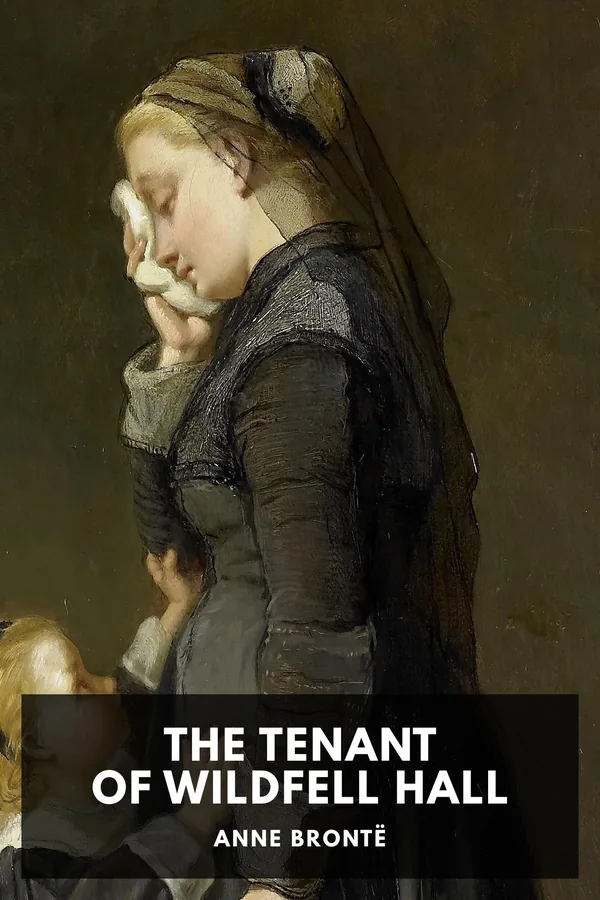
The Tenant of Wildfell Hall
📖 Click to Read the Opening Pages Online Preview
The opening of Chapter 1
You must go back with me to the autumn of 1827.
My father, as you know, was a sort of gentleman farmer in ——shire; and I, by his express desire, succeeded him in the same quiet occupation, not very willingly, for ambition urged me to higher aims, and self-conceit assured me that, in disregarding its voice, I was burying my talent in the earth, and hiding my light under a bushel. My mother had done her utmost to persuade me that I was capable of great achievements; but my father, who thought ambition was the surest road to ruin, and change but another word for destruction, would listen to no scheme for bettering either my own condition, or that of my fellow mortals. He assured me it was all rubbish, and exhorted me, with his dying breath, to continue in the good old way, to follow his steps, and those of his father before him, and let my highest ambition be to walk honestly through the world, looking neither to the right hand nor to the left, and to transmit the paternal acres to my children in, at least, as flourishing a condition as he left them to me.
“Well!—an honest and industrious farmer is one of the most useful members of society; and if I devote my talents to the cultivation of my farm, and the improvement of agriculture in general, I shall thereby benefit, not only my own immediate connections and dependants, but, in some degree, mankind at large:—hence I shall not have lived in vain.” With such reflections as these I was endeavouring to console myself, as I plodded home from the fields, one cold, damp, cloudy evening towards the close of October. But the gleam of a bright red fire through the parlour window had more effect in cheering my spirits, and rebuking my thankless repinings, than all the sage reflections and good resolutions I had forced my mind to frame;—for I was young then, remember—only four-and-twenty—and had not acquired half the rule over my own spirit that I now possess—trifling as that may be.
This is the opening of Gilbert Markham’s first letter to Halford. It stops as he walks home from the fields, twenty-four years old, on a cold October evening in 1827, before he has heard of Wildfell Hall or its new tenant.
Download Full EPUB1848
~164,000 words (estimated)
Approx. 9.1 hours
Standalone
Wildfell Hall in the West Riding of Yorkshire, 1827–1830
Fifty-three chapters grouped into twelve movements
EPUB · AZW3 · KEPUB
0.86 MB (EPUB) · 1.03 MB (AZW3) · 0.90 MB (KEPUB)
Public domain in the United States
Project Gutenberg #969 · Standard Ebooks
The Tenant of Wildfell Hall opens in the autumn of 1827, when a young widow called Mrs Graham rents the empty hall above a farming village in Yorkshire and refuses to explain where she came from. Gilbert Markham, a farmer of twenty-four, falls in love with her, but her reserve, her secrecy and the malice of local gossip turn admiration into scandal. Halfway through, the novel hands itself over to Helen Graham’s own diary, and the reader learns what the village has been guessing at: a charming husband, a house full of drink and gambling, and a wife planning a quiet escape.
Anne Brontë’s The Tenant of Wildfell Hall appeared in 1848 under the pen name Acton Bell, and its plainness about drunkenness, gambling and adultery made it the most criticised of the novels the Brontë sisters published that decade. A preface added to the second edition answers the charge of coarseness in the author’s own voice. Readers who know the book only by reputation should start at Chapter 16, where the heroine stops being a subject of village talk and speaks for herself. The text is available via Project Gutenberg #969 and Standard Ebooks.
The Tenant of Wildfell Hall by Anne Brontë: Summary, Characters & Themes
Anne Brontë published The Tenant of Wildfell Hall in 1848, the year before her death, and it is the most argumentative of the novels the three Brontë sisters brought out in that decade. This summary and analysis treats the book as what it is: the story of a bad marriage told by two voices, one a neighbour who cannot see what is in front of him and the other the wife who has lived it. Brontë had been a governess in two great houses and was a clergyman’s daughter, and she draws on both experiences. It was her second novel, published within months of Agnes Grey, and the preface notes that the same objection of coarseness had already been made to that book. The result reads at times like a case history, at times like a thriller, and never like an apology.
Gilbert Markham opens the novel in letters to his brother-in-law Halford and takes the reader back to the autumn of 1827. Wildfell Hall, an old mansion two miles from his mother’s farm at Linden-Car, has been let to a widow, Mrs Graham, who keeps a small son, one elderly servant and no explanations at all. Gilbert’s first kindness to the boy is answered with something close to terror, and his courtship meets coldness, then friendship, then a refusal he does not understand. The village supplies its own version of her: that she is proud, that she is hiding something, that the child resembles the young squire at Woodford. Jealousy ends in a blow with a whip handle, and Helen gives Gilbert her manuscript to stop the damage. The village’s certainty drives the first half of the book, and Gilbert’s share in it is exactly what Helen cannot forgive. The book is full of such small reversals: a boy who climbs a wall, a mother who says she has taught her son to hate wine, and a stranger who calls an empty house her asylum.
The manuscript is the novel’s great formal gamble. From Chapter 16 to Chapter 44 the narration belongs to Helen’s diary, which runs from June 1821 at her uncle’s house at Staningley, through her marriage to Arthur Huntingdon and the years at Grassdale Manor, to her flight in October 1827. It is a dated, first-person document, and it changes the temperature of the book: what was a village comedy of manners becomes the record of a household rotting from drink, gambling and adultery. Dates do the work that plot usually does, marking the distance between a hopeful engagement and a marriage that has stopped pretending. When the diary breaks off in the middle of a sentence, Gilbert resumes his letters, and the last chapters carry both stories to a close. The diary is also a defence: kept in secret, it becomes the one document in the book that the village cannot rewrite.
Readers who come to this novel from the other Brontë books will recognise the weather and the parsonage temperament and find a very different purpose. Jane Eyre keeps its heroine’s inner life behind a curtain of romance, and Wuthering Heights turns passion into weather; Brontë instead hands a wife a ledger of evidence and a plan. Her clear-eyed account of a woman who must earn money and hide her address also looks forward to later novels about women who refuse the life assigned to them, such as The Awakening. Read together, the four books show how quickly the English novel changed its mind about marriage, and how much of that change was made by writers who were assumed to be writing for young ladies. That confidence is why the book still reads as a living argument rather than a period piece.
This page follows the Standard Ebooks text, prepared for that project by David Grigg from David Price’s Project Gutenberg transcription and checked against scans of the 1848 edition. The same text is available from Project Gutenberg #969 and from Standard Ebooks, and both are public domain in the United States. Chapter numbers are the novel’s own fifty-three, quotations keep the original spelling, and the author’s preface to the second edition is printed where the novel prints it. The chapter groups below are editorial, added to help a reader follow the two narrators; nothing in the novel itself has been abridged or modernised.
Historical Context
The world of the novel is a landed one, and its power is exercised through ordinary things: keys, letters, visits, allowances and the question of who may take a child out of a house. When Helen finally asks Arthur to let her go with her son and what remains of her fortune, he refuses both, and her escape has to be arranged in secret with her brother, paid for in guineas and timed for dawn. Brontë is exact about that machinery. Helen paints to sell, sends her work to London under a false name, keeps her address from her husband and her plans from the servants, and the novel makes the reader feel how much courage administration can take. The same attention to small transactions makes the book feel modern: the two guineas left for the servant who helps her, the boxes addressed in a new name, the coach taken before daylight.
The book came out in 1848 from Thomas Cautley Newby under the name Acton Bell, and it was attacked for its plainness about drinking, gambling and a wife who walks out of her marriage. A preface written for the second edition and dated 22 July 1848 answers them in the author’s own voice. She says she wished to tell the truth, that she would rather warn her readers than leave them comfortable, and that the writer called Acton Bell is neither Currer nor Ellis Bell, and that it can matter very little whether that writer is a man or a woman. The preface also answers the charge of a morbid love of the coarse by arguing that the scapegrace’s proceedings are an extreme case, set down because they happen, not because they are typical. The objection made to Agnes Grey had already attached itself to the name Bell, and the new book confirmed the suspicion rather than allaying it.
The form was part of the argument. A framed memoir with a diary inside it, a heroine who sells her paintings and a hero who has to be told the truth by a manuscript gave reviewers a way to call the book coarse, and the charge stuck for a century. Yet the structure is the point: the village sees a suspicious widow, the diary sees a woman keeping a record, and the reader is asked to hold both pictures at once. The dates make the book read like evidence rather than invention, which is exactly why some readers found it unbearable. The final chapters return to Gilbert, who must accept that the story he wanted to be in was not the story she had lived. The suspense survives even when the ending is known, because it is suspense about character rather than event.
Key Characters & Literary Archetypes
- Gilbert Markham: A gentleman farmer of twenty-four when the novel opens, quick to love and quicker to take offence. He narrates the frame in letters to Halford, misreads almost everything he sees, and strikes the wrong man with a whip handle before he learns to look properly at a situation. He is honest about his own faults, which is what makes his account bearable.
- Helen Huntingdon: The novel’s second narrator, married at eighteen to a man she believed she could improve. She paints for money, keeps a diary as a record of evidence, and plans her escape for years. Proud, devout and unbending, she refuses to take her husband’s name again after she leaves him. Her painting is not a pastime but an income, and the novel never lets the reader forget it.
- Arthur Huntingdon: Helen’s husband: handsome, charming, generous with money and attention, and steadily ruined by drink, gambling and boredom. He is not a Gothic villain but a man who never denies himself anything, and the novel shows the cost of that in his household, his face and his death. His charm is real, which is what makes him dangerous.
- Frederick Lawrence: Helen’s brother, the young squire of Woodford and the owner of Wildfell Hall, who lets the house to his sister and keeps her secret. His reserve makes him look like a rival, and Gilbert’s suspicion of him drives the central mistake of the first half. He is feverish for weeks after the assault, and forgives it.
- Lord Lowborough: A gloomy, sickly nobleman first seen courting an heiress after gambling away his fortune. He marries Annabella Wilmot for money and position, is betrayed, and is one of the few characters the novel allows a second chance. His misery is treated with more sympathy than his morals deserve.
- Milicent Hargrave: Helen’s gentle friend from Staningley, married to the boisterous Ralph Hattersley. She is the novel’s counter-example of a wife who endures, and her household is finally reformed by her husband’s late repentance. She marries young, is mortified by him for years, and is rescued by nothing but time.
Core Literary Themes
- Marriage as a trap: The novel’s central fact is social and legal rather than romantic: a wife cannot carry her child or her money out of a bad marriage, and Helen’s escape depends on secrecy, a brother’s help and income she has earned herself. Brontë shows the trap from the inside, through the small negotiations over keys, letters, visitors and the governess, and she refuses to make Helen’s suffering decorative. The book is often called an argument against unequal marriage, and it earns that description by showing how many ordinary decisions a husband controls, down to who may sit at his table. Helen’s escape is a legal problem before it is a romantic one, and the novel treats it that way.
- Drink and self-destruction: Wine is the novel’s steady undertow. Arthur Huntingdon is charming when sober and cruel, silly or absent when not, and the diary records the progress from claret after dinner to brandy at noon with the patience of a nurse. Helen’s attempt to cure her son’s taste for wine with a bitter dose is one of the book’s strangest scenes, and its logic is the book’s logic: habits formed early are hard to break. Brontë does not preach teetotalism; she shows a household in which drink dissolves manners, money, marriage and finally a man’s body, and she shows it at the pace of ordinary evenings.
- Religion and conscience: Helen’s religion is not decoration. She argues with her aunt about eternal punishment before her marriage, reads the Bible for herself, and holds to a faith that makes conduct matter without making her husband’s damnation a satisfaction. The deathbed chapters test that faith: Huntingdon will not repent, and Helen prays for him without pretending that fear is repentance. Brontë keeps the theology inside the marriage, where it belongs, and lets the reader see how a creed about mercy survives contact with a man who has none. Her prayers are work, not consolation.
- Example and education: The novel begins with an argument about children. Helen will not let her son taste wine, will not leave him to be hardened by the world, and would rather see him dead than growing into a man of the world; Gilbert and his mother think her cruel. That disagreement runs through the book. Arthur Huntingdon’s friends are what early indulgence makes, and little Arthur is watched for signs of his father. Brontë’s position is severe and consistent: children learn by example, and a parent who shields a child from every consequence is not kind but careless with him.
- Gossip and reputation: Nothing in the novel travels faster than a rumour. The village decides what Mrs Graham is from her clothes, her visitors and the colour of her boy’s hair, and the vicar repeats the conclusion as fact. Brontë shows how slander works: a hint at a tea party, a servant’s confidence, a sister’s malice, and a woman’s name is gone. Gilbert’s own jealousy is part of the same machinery, and his worst act comes from believing a story he has invented. The diary is the answer to gossip, a first-person account that no one in the village is willing to read, and the novel’s last joke is that it is read by the one person who loves her. The final chapters show how a rumour can outlive the facts that produced it.
Why Download Our Custom E-Reader Edition of The Tenant of Wildfell Hall?
The novel is long, its narration changes hands twice, and its central section is a slow record of a household coming apart; a reader who loses the thread can mistake the book for a pamphlet, and a reader who starts in the middle can miss the fact that the diary is a document with a purpose.
This edition is arranged to prevent that. The chapter groups below follow the two narrators and mark the exact chapter where Helen’s diary takes over and the chapter where Gilbert takes the story back, so the shift from village gossip to marriage is visible rather than puzzling, and the introduction above compresses six hundred pages into a shape a reader can hold in mind before beginning.
The text is the Standard Ebooks text, and the same text underlies the edition at Project Gutenberg #969.
- Based on the Standard Ebooks Edition, via Standard Ebooks, whose text was prepared for that project from David Price’s Project Gutenberg transcription and checked against scans of the 1848 edition.
- Three formats, one text The novel is offered as EPUB, AZW3 and KEPUB, so it opens on a phone, a Kindle or a Kobo without conversion or reformatting.
- A guide to the two narrators The chapter groups name the chapters where Gilbert’s letters stop, where Helen’s diary begins, and where he takes the story back.
- The 1848 preface included The author’s preface to the second edition, dated 22 July 1848, is part of the novel as printed and is not cut from this text.
- Jane Eyre — free EPUB, AZW3 & KEPUB
- Wuthering Heights — free EPUB, AZW3 & KEPUB
- The Awakening — free EPUB, AZW3 & KEPUB
Chapter summaries
The novel has fifty-three chapters and two narrators. Gilbert Markham’s letters run from Chapter 1 to the middle of Chapter 15 and resume at Chapter 45; Helen’s diary fills Chapters 16 to 44, beginning in June 1821 and breaking off in October 1827 when she tears out the final pages. The groups below follow that shape rather than the calendar, and the chapter numbers in each label are the novel’s own.
- Chapters 1–5 — A widow at Wildfell Hall: Gilbert Markham introduces his mother’s farm, his sister Rose and his brother Fergus, and the village of Linden-hope; then Wildfell Hall is let to a widow with a small son. A first kindness to the boy is rebuffed, an argument about wine becomes a debate about raising children, and a party on 5 November gives the neighbourhood its first good look at her and Gilbert his first reason to distrust the squire. The chapter ends with the party, and with a suspicion that will not go away.
- Chapters 6–10 — Friendship and slander: Winter passes. Gilbert sketches with Helen by the brook, learns that she sells her paintings in London, and hears her call the empty hall an asylum. At the same time the vicarage begins to talk: Jane Wilson and Eliza Millward hint that the widow’s respectability is doubtful, and the gossip reaches Gilbert’s mother and finally Helen herself, who refuses to answer it.
- Chapters 11–15 — The blow and the manuscript: Calling her his sister, Gilbert is warned by Rose and insulted by the vicar. He proposes, is refused, and sees Helen in the moonlight with a man she calls Frederick. Jealousy drives him to strike Frederick Lawrence with a whip handle; Helen meets him in the hay-field and gives him a manuscript to read, and the narration passes to her diary without warning or apology. From here the book is Helen’s, and the village version of her is finished.
- Chapters 16–20 — Staningley, and Mr Huntingdon: June 1821. Helen is eighteen and living with her uncle and aunt Maxwell, courted by the dull Mr Boarham and the old profligate Mr Wilmot. At Mr Wilmot’s dinner she meets Annabella Wilmot, Milicent Hargrave and the sinister Grimsby, and then Arthur Huntingdon, whose charm she mistakes for a nature she can improve. The proposal, the aunt’s discovery and the consent follow in quick order.
- Chapters 21–24 — A wedding and a first year: Helen and Arthur marry at Christmas, and the diary jumps to Grassdale Manor in February 1822. The bridal tour is rushed, his friends are worse than she expected, and the first quarrels are about church, money and his drinking. He is bored, affectionate, indiscreet and increasingly absent, and the first year ends with plans for London and a wife who has begun to keep accounts. The reader has already seen where this is going, which is part of the ache.
- Chapters 25–29 — London, and a mother’s fear: A London season goes sour and Helen comes home alone. The Lowboroughs visit, Annabella performs as a wife, and Arthur’s flirtation with her becomes visible at the piano. In December 1823 Helen’s son is born, and the diary turns from a wife’s disappointment to a mother’s fear for a child being trained to drink by the men around him.
- Chapters 30–35 — The shrubbery: Arthur returns drunk, leaves for the Continent and comes back worse. An autumn party brings Walter Hargrave’s chess game and Rachel’s warning; Helen follows the guests into the shrubbery and hears Annabella and her husband together. She confronts him that night, refuses to give up her son, and stays as housekeeper rather than wife, a distinction the novel takes seriously.
- Chapters 36–40 — Cold war at Grassdale: The household settles into a truce without affection. Lady Lowborough is insolent, Hargrave’s attentions become a temptation, and Helen’s struggle is now with her own bitterness as much as with her husband. The diary records years of small cruelties, the corruption of the child, and a plan that begins as a daydream and slowly becomes a timetable with money attached to it.
- Chapters 41–44 — The flight: Helen cures her son’s taste for wine with a bitter dose, hides her money and writes to her brother. In October 1827 Arthur brings home a governess who is plainly his mistress, and Helen leaves at dawn, travelling by coach to the empty hall her brother owns and taking her mother’s maiden name. The diary breaks off in the middle of a sentence, and the missing pages are the point. The six months that follow are the novel’s quietest and most painful stretch of waiting.
- Chapters 45–48 — Gilbert resumes: Gilbert reads to the end, learns that Frederick is Helen’s brother, and goes to Woodford to apologise. They agree that no letters shall pass until six months are out; Helen leaves Wildfell, the village keeps slandering her, and in November Lawrence shows Gilbert a letter saying that Huntingdon is dying after a fall from his horse.
- Chapters 49–51 — The sickroom: Helen nurses the husband who ruined her while Gilbert waits at home, ashamed of wishing for a death. Huntingdon refuses to repent, is terrified of dying, and dies in December. Lawrence goes to Grassdale for the funeral, the vicar still blames Helen for having left, and Gilbert is left to guess what she means to do with the rest of her life.
- Chapters 52–53 — The Christmas rose: Gilbert drives to Grassdale and finds the family gone; a coachman reports Hargrave’s marriage and the dispersal of the household. At Staningley he paces the drive meaning to leave unseen, and Helen’s carriage arrives with her aunt and her son. The rose she throws from the window, and his scramble to retrieve it, end the book on a promise rather than a wedding.
The Tenant of Wildfell Hall: Frequently Asked Questions
Is The Tenant of Wildfell Hall difficult to read?
Who narrates the novel?
Should I read it before or after Jane Eyre?
Is the novel autobiographical?
Why was the book considered shocking?
How long will it take to read?
Is it a novel about temperance?
Where can I download The Tenant of Wildfell Hall?
Part of: Classic Fiction · Victorian era