Ivanhoe by Walter Scott: Free EPUB, AZW3 & KEPUB Download
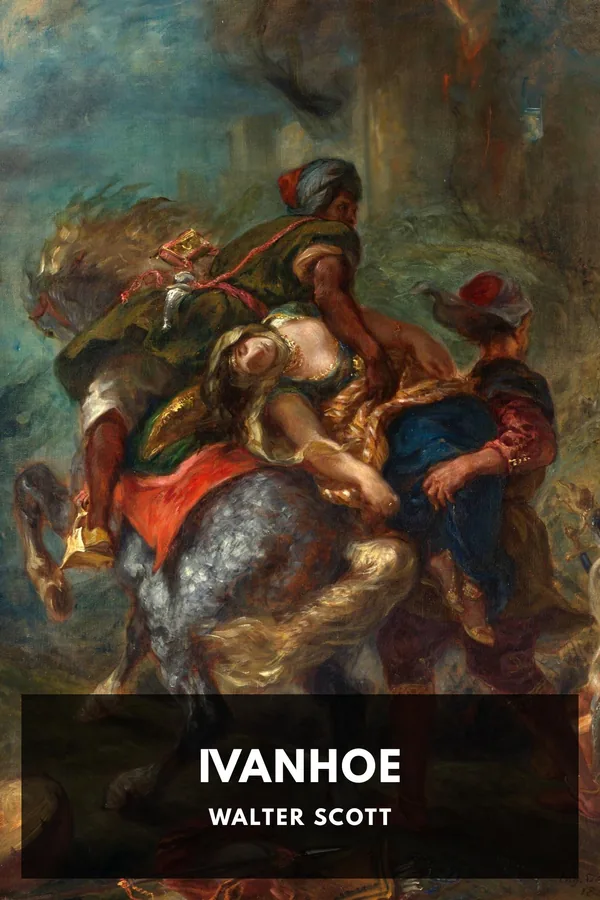
Ivanhoe
📖 Click to Read the Opening Pages Online Preview
The opening of Chapter 1
In that pleasant district of merry England which is watered by the river Don, there extended in ancient times a large forest, covering the greater part of the beautiful hills and valleys which lie between Sheffield and the pleasant town of Doncaster. The remains of this extensive wood are still to be seen at the noble seats of Wentworth, of Warncliffe Park, and around Rotherham. Here haunted of yore the fabulous Dragon of Wantley; here were fought many of the most desperate battles during the Civil Wars of the Roses; and here also flourished in ancient times those bands of gallant outlaws, whose deeds have been rendered so popular in English song.
Such being our chief scene, the date of our story refers to a period towards the end of the reign of Richard I, when his return from his long captivity had become an event rather wished than hoped for by his despairing subjects, who were in the meantime subjected to every species of subordinate oppression. The nobles, whose power had become exorbitant during the reign of Stephen, and whom the prudence of Henry the Second had scarce reduced to some degree of subjection to the crown, had now resumed their ancient license in its utmost extent; despising the feeble interference of the English Council of State, fortifying their castles, increasing the number of their dependants, reducing all around them to a state of vassalage, and striving by every means in their power, to place themselves each at the head of such forces as might enable him to make a figure in the national convulsions which appeared to be impending.
The situation of the inferior gentry, or Franklins, as they were called, who, by the law and spirit of the English constitution, were entitled to hold themselves independent of feudal tyranny, became now unusually precarious. If, as was most generally the case, they placed themselves under the protection of any of the petty kings in their vicinity, accepted of feudal offices in his household, or bound themselves by mutual treaties of alliance and protection, to support him in his enterprises, they might indeed purchase temporary repose; but it must be with the sacrifice of that independence which was so dear to every English bosom, and at the certain hazard of being involved as a party in whatever rash expedition the ambition of their protector might lead him to undertake. On the other hand, such and so multiplied were the means of vexation and oppression possessed by the great Barons, that they never wanted the pretext, and seldom the will, to harass and pursue, even to the very edge of destruction, any of their less powerful neighbours, who attempted to separate themselves from their authority, and to trust for their protection, during the dangers of the times, to their own inoffensive conduct, and to the laws of the land.
The excerpt below quotes the opening three paragraphs of Chapter 1, which set the story in the forest between Sheffield and Doncaster, date it to the last years of Richard I’s reign while the king is a prisoner in Austria, and describe the pressure the Norman barons put on the lesser Saxon gentry.
Download Full EPUB1820
Novel
~192,000 words (estimated)
Approx. 10.7 hours
Standalone
England in the last years of Richard I’s reign, from the forest around Rotherwood and the tournament at Ashby-de-la-Zouch to the castle of Torquilstone, the Preceptory of Templestowe and the Minster at York.
Forty-four chapters grouped into twelve movements
EPUB · AZW3 · KEPUB
0.95 MB (EPUB) · 1.18 MB (AZW3) · 1.00 MB (KEPUB)
Public domain in the United States
Project Gutenberg #82 · Standard Ebooks
Ivanhoe is Walter Scott’s novel of 1820, set in England near the end of Richard I’s reign. Wilfred of Ivanhoe, disinherited by his father Cedric for following Richard to Palestine, comes home from the crusade in disguise and fights as the unknown Disinherited Knight at the tournament at Ashby-de-la-Zouch. Wounded, he is nursed by Rebecca, the daughter of Isaac of York, and the two are carried off when Cedric’s household is seized and taken to Torquilstone. The castle is stormed and burned by the Black Knight, Locksley and the Saxon outlaws. Rebecca is then tried for sorcery at Templestowe, and Ivanhoe must fight for her against Brian de Bois-Guilbert.
The novel is a romance of disguise and recognition, and the disguises are the plot: a palmer, a knight with no name, a king in black armour, an outlaw captain and a jester in a friar’s frock. Around the adventures Scott sets the long quarrel of Saxon and Norman, the usury and persecution that surround Isaac and Rebecca, and the fanaticism of the Temple. Wikipedia’s article on Ivanhoe follows the book’s reception and its place in the historical novel. — The text is available via Project Gutenberg #82 and Standard Ebooks.
Ivanhoe by Walter Scott: Summary, Characters & Themes
This page offers a summary and analysis of Ivanhoe, with its forty-four chapters set out in reading order, the people of the story described, and the tournament, the siege and the trial read against the history Scott borrows. Walter Scott published the novel in 1820, and the edition that carried it was Archibald Constable’s, in Edinburgh. The book opens with a long Introduction and a Dedicatory Epistle to Dr. Dryasdust, both of them front matter rather than scenes in the story; the Introduction is Scott’s own account of the risk of repeating himself and of the book’s success, and the Epistle is addressed to the antiquary. The narrative begins in chapter 1 with a forest in Yorkshire. What the novel does is put a disinherited son back into his father’s country in disguise, and let the country decide what it owes him. The page follows the chapters in order, so it can be read beside a copy rather than instead of one.
Ivanhoe is Wilfred, son of Cedric the Saxon, who has been banished for taking Richard’s part and for loving Cedric’s ward Rowena, the Saxon heiress his father means for Athelstane. He comes home from Palestine as a palmer, then as a knight who will not give his name, wins the tournament at Ashby-de-la-Zouch, and is carried from the lists with a lance wound in his side. Rebecca, daughter of Isaac of York, nurses him; her father has fitted him with horse and armour on credit, and she sends a purse after him to settle the account. The text this page describes is the Standard Ebooks edition, and a complete reading text also sits at Project Gutenberg #82. The chapter numbers here are the edition’s, and nothing is abridged.
The middle of the book belongs to other people. Cedric’s household is waylaid on the road, and the prisoners are taken to Torquilstone, the castle of Reginald Front-de-Boeuf. De Bracy wants Rowena, Bois-Guilbert wants Rebecca, and Front-de-Boeuf tortures Isaac on the bars for his money. The castle is besieged by an alliance of Saxons, outlaws and a knight in black armour, and it burns with its lord inside it; the old woman Ulrica, whose family Front-de-Boeuf’s father destroyed, sets the fire. Rebecca is carried off to the Preceptory of Templestowe, where the Grand Master of the Temple has her tried as a sorceress. The last third is a trial by combat, and the champion who comes forward is a wounded man on a borrowed horse.
Scott keeps the story moving between three kinds of scene: the hall, the lists and the forest. The hall is Cedric’s Rotherwood, where a Saxon thane keeps the old customs and a Norman prior and a Templar invite themselves to supper. The lists are at Ashby, where the tournament is staged with five challengers, a queen of love and beauty and a prize of a warhorse. The forest belongs to Locksley and his yeomen, who rob priors and ransom Jews but keep a kind of law, and whose captain is named Robin Hood before the book is out. The outlaw band and the chivalry of the lists are the two poles of the novel, and Scott lets each judge the other. Gurth the swineherd and Wamba the jester carry the other argument, about service and freedom: Gurth is a bondman who wins his freedom, and Wamba is a fool whose wit is worth more than his master’s dignity. Le Morte d’Arthur is the older book behind the tournament and the vows.
Ivanhoe is the book in which Scott turned from Scotland to England, and his Introduction says the novel was highly successful and won him leave to write of both countries. Scott’s Saxons and Normans are a fiction with a purpose: the novel asks whether two peoples can become one nation, and answers with a marriage. Scott also notes that Rebecca found such favour with readers that he was censured for not marrying her to Wilfred. The book gives Robin Hood a place in its own story: Locksley, Friar Tuck and Allan-a-Dale are named here, and the outlaws are given a captain, a code and a court under the Trysting-tree. The Canterbury Tales offers the medieval England Chaucer saw, and the shelf of adventure and sea stories holds more books of journey and rescue. Both are free on this site.
Historical Context
The England of the novel is a conquered country. Scott’s first chapter explains that four generations had not blended the blood of the Normans and the Anglo-Saxons, and that the Norman nobility held the power while the Saxon population carried the defeat. The barons fortify their castles, the forest laws keep the yeomen from the deer, and the king is a prisoner in Austria. Prince John, in league with Philip of France, works to prolong his brother’s captivity. The novel takes this state of things as given and builds its plot out of it: a Saxon thane who will not speak French, a Norman Templar who despises him, and a royal brother who is in no hurry for the king to come home.
The Jews of the novel live under the same disorder with less protection. Isaac of York is a moneylender, and the nobles who borrow from him repay with contempt or with violence. Scott shows the humiliation as a public habit: Prince John robs Isaac in the stands at Ashby, the crowd laughs, and Isaac smiles because he must. Rebecca’s trial for sorcery at Templestowe turns the same prejudice into a legal charge, and the Grand Master’s reasoning is that a Jewish physician who cures a Christian peasant must be working by enchantment. The novel does not pretend that this is unusual for its period; it makes the persecution visible and lets Rebecca answer it.
The chivalry of the book is period furniture with an edge. Tournaments were the great spectacle of the age, and Scott stages one with five challengers, two days of jousting and a queen chosen by the victor. The Knights Templar were a military order with a rule against women, a Grand Master and houses in England; the novel uses their discipline as a cage for Bois-Guilbert. Trial by combat was a legal procedure, and Rebecca’s challenge of her accusers to a judicial duel is the book’s final test of whether the law can be just. Scott published the novel in 1820, when the Middle Ages were a fashion, and he wrote a learned preface to explain what he was doing with them.
Key Characters & Literary Archetypes
- Wilfred of Ivanhoe: Son of Cedric, disinherited for following Richard to Palestine and for loving Rowena. He returns as a palmer and then as the Disinherited Knight, beats five challengers at Ashby, and is wounded in the second day’s melee. He keeps his word, rides to Templestowe with an unhealed wound, and is the novel’s example of a knight whose loyalty costs him everything.
- Rebecca: Daughter of Isaac of York, a healer and a Jewess. She nurses Ivanhoe after Ashby, is carried off to Torquilstone by Bois-Guilbert, and is tried for sorcery at Templestowe. She refuses Bois-Guilbert’s offer of safety at the price of her faith and honour, challenges her accusers to trial by combat, and leaves England for Granada after Ivanhoe marries Rowena.
- Rowena: Cedric’s ward, descended from the Saxon royal line and intended by Cedric for Athelstane. She is named Queen of Love and Beauty at Ashby by the Disinherited Knight’s choice, and she bears De Bracy’s wooing at Torquilstone with contempt. She marries Ivanhoe at York Minster with Cedric’s consent, and receives Rebecca’s farewell and her gift of diamonds.
- Cedric the Saxon: A thane of Rotherwood, proud of the old customs and hostile to everything Norman. He has disinherited his son and works to marry Rowena to Athelstane in the hope of restoring a Saxon line. He is a prisoner at Torquilstone, escapes in Wamba’s friar’s frock, fights in the assault, and is finally brought to acknowledge Richard and to pardon Ivanhoe.
- Brian de Bois-Guilbert: A Knight Templar and the novel’s most dangerous man. He desires Rebecca, carries her from the burning castle, and is forced to appear as her accuser’s champion at Templestowe. He offers her safety if she will yield, is refused, and dies in the lists without a blow, of the conflict of his own passions.
- Locksley: The captain of the forest outlaws, a yeoman who wins the archery at Ashby by splitting Hubert’s arrow and then a willow wand. He names himself Locksley and is later known as Robin Hood. He besieges Torquilstone with the Black Knight, ransoms Prior Aymer, spares De Bracy, and gives Richard his horn and his hand.
Core Literary Themes
- Saxon and Norman: Scott builds the plot on the unfinished conquest. Four generations after William, the Normans hold the castles and the offices, and the Saxons hold the memory of lost kings. Cedric will not speak French, Athelstane is descended from the old royal line, and Rowena is ‘the descendant of Alfred’ in Cedric’s phrase. The novel tests the division in every register: the curfew, the forest laws, the contempt for Saxon names, the barons’ private wars. Its answer is a marriage. Ivanhoe and Rowena’s wedding is offered as a pledge between the races, and Richard’s justice is offered as the political version of the same settlement. The book knows the settlement is a story, and tells it anyway.
- Chivalry and its other face: The tournament at Ashby is the novel’s picture of chivalry at its most splendid: five challengers, two days of jousting, a queen of love and beauty, ransoms of horses and armour. The same code is then shown from the inside. Front-de-Boeuf tortures a prisoner in his own castle, De Bracy carries off a ward to force a marriage, and Bois-Guilbert uses the Templars’ power to hold a woman he desires. The outlaws, who have no code of knighthood, keep a better law than the knights who despise them. Scott does not abolish the romance; he lets the tournament and the torture sit in the same book until the reader feels the distance between them.
- Persecution and the Jew: Isaac and Rebecca carry the novel’s argument about a people outside the protection of the law. Isaac is a usurer, and the nobles who borrow from him repay with mockery, robbery and the dungeon. Scott shows the habit as public: Prince John takes Isaac’s purse in the stands, the crowd laughs, and Isaac smiles because he must. Rebecca’s trial turns the same prejudice into a charge of sorcery, with a healing balsam and a Hebrew scroll as evidence. The novel gives her the dignity of a faith it does not share, and the last word on its Christians, and it does not pretend that her England is safe for her.
- Disguise and recognition: The book runs on people who are not what they seem. Ivanhoe comes home as a palmer, then as a knight with no name; Richard rides as the Black Knight; Locksley is a yeoman captain who keeps his other name for the last act; Wamba wears a friar’s frock; Rebecca goes veiled through a Christian crowd. Recognition is the plot’s engine: the helmet cut loose at Ashby, the whisper in De Bracy’s ear, the horn on the baldric, the name spoken in the lists. Scott uses disguise for suspense, but also for argument: a country that cannot see who stands in front of it has to be shown, and the unveiling is the novel’s favourite scene.
- Mercy and the judgment of God: The last third of the novel is a legal and religious test. Rebecca’s trial by combat assumes that God will show the right, and the novel stages the judgment with a champion who can barely sit his horse and an accuser who dies without a blow. Richard’s mercy to Fitzurse, his release of De Bracy, and Ivanhoe’s refusal to dishonour Bois-Guilbert’s body all belong to the same theme. The phrase the book returns to is that God’s arm, not a human hand, struck the blow. Mercy in Ivanhoe is not softness; it is the recognition that the powerful could do otherwise, and that the good ones sometimes do.
Why Download Our Custom E-Reader Edition of Ivanhoe?
The download is the whole novel: forty-four chapters, from the forest in the opening lines to Rebecca’s farewell in the last, with the chapter numbers the edition prints and nothing abridged. The text is the Standard Ebooks edition, set from the Project Gutenberg transcription and the digital scans behind it, and the spelling and punctuation are the edition’s. The verse epigraphs at the head of the chapters are printed as the edition prints them. The chapter numbers match the edition, so a passage found here can be looked up in the novel.
Around the text the page supplies what a long romance needs: twelve grouped chapter summaries that stop where their chapters stop, six character notes, five themes, and a note on the Norman settlement, the forest laws and the Templars. The groups are ours; the chapters and their numbering are not, and no chapter titles have been invented for chapters that have none. The Introduction and the Dedicatory Epistle are left where the edition prints them, as front matter rather than story.
The files come in three formats with the same text and the same chapter breaks. The EPUB opens in Apple Books, Calibre and most Android readers; the AZW3 is the file for a Kindle, by USB or through Send to Kindle; the KEPUB is the one Kobo devices read best. No account is needed for any of them. Nothing in the downloads is locked, watermarked or time limited.
- Based on the Standard Ebooks Edition, via Standard Ebooks, whose text of Ivanhoe is set from the Project Gutenberg transcription and digital scans from Google Books.
- Complete text in forty-four chapters Every chapter from the forest of Rotherwood to the lists at Templestowe, numbered as the edition numbers them, with no chapter text abridged.
- Chapter summaries in reading order Twelve grouped summaries from the tournament at Ashby to Rebecca’s farewell, each keyed to the chapters it covers and stopping at their end.
- EPUB, AZW3 and KEPUB files The same text in three formats, for Apple Books, Kindle and Kobo, with the chapter breaks and the chapter numbers intact.
- Malory’s fifteenth-century cycle of Arthur, Lancelot and the Grail, the older romance of knighthood that Scott’s tournament, vows and quests stand on, and the book most often read beside this one. — free EPUB, AZW3 & KEPUB
- Chaucer’s 1387 pilgrimage frame, with its gallery of talkers, its medieval England seen from the road, and the English life that goes on around Scott’s castles. — free EPUB, AZW3 & KEPUB
- The shelf of journeys, captures and rescues, where Ivanhoe sits beside the sea stories and the books of return, all free to download. — free EPUB, AZW3 & KEPUB
Chapter summaries
The novel has forty-four chapters and prints no titles. The edition numbers them and keeps them plain, so the chapter numbers here are the edition’s, and the twelve group names are ours, added to make the book easy to follow. The edition also prints an Introduction and a Dedicatory Epistle; both are front matter, not story, and neither is summarised here. Each group begins where its first chapter begins and stops where its last chapter stops. Chapters are cited by number throughout, and the numbering is the same in all three downloads.
- Chapters 1–6 — Rotherwood and the road to Ashby: Gurth the swineherd and Wamba the jester argue in the forest about Norman rule. At Rotherwood, Cedric the Saxon receives Prior Aymer and Brian de Bois-Guilbert, then the Jew Isaac of York and a palmer just returned from Palestine. The palmer is Ivanhoe, and Cedric does not know him. The palmer and Isaac leave Rotherwood together before dawn, and Ivanhoe appears at Ashby as the unknown knight.
- Chapters 7–10 — The first day at Ashby-de-la-Zouch: The lists are pitched near Ashby. Prince John mocks Isaac and Rebecca in the stands and tries to force the Saxons to yield place to them. Five challengers hold the field, and an unknown knight, the Disinherited Knight, defeats all five, naming Rowena Queen of Love and Beauty. Isaac has fitted the knight with horse and armour on credit; after the first day Rebecca sends a purse after him.
- Chapters 11–13 — The second day and the archers: Gurth is stopped by outlaws on the road, beats the Miller at quarterstaff, and is let go with his master’s money. On the second day the melee goes against the Disinherited Knight until a stranger in black armour breaks through and saves him. He is proclaimed victor, kneels to Rowena, and collapses from a lance wound in his side; Rebecca’s litter carries him from the lists. Prince John then sets the archers to shoot, and Locksley splits Hubert’s arrow and then a willow wand.
- Chapters 14–17 — The prince’s feast and the hermit: Prince John holds a feast at Ashby and tries to win the Saxon thanes, while a letter from France frightens him. Waldemar Fitzurse rallies the Norman lords for a meeting at York and a crown for John. The Black Knight leaves the tournament and spends a night at the hermitage of Copmanhurst, where the Clerk of Copmanhurst, Friar Tuck, feeds him venison and answers him song for song.
- Chapters 18–20 — The ambush in the forest: Cedric’s party leaves Ashby with Rowena, Athelstane and the wounded Ivanhoe, and takes up Isaac and Rebecca on the road. In the forest they are set upon by De Bracy’s men in disguise; the rest are taken, Wamba escapes, and Gurth is missed in the confusion. Wamba and Gurth find Locksley, who learns that the prisoners are being carried to Torquilstone, and the outlaws gather at the Trysting-tree with the Black Knight.
- Chapters 21–24 — Prisoners in Torquilstone: At Torquilstone, De Bracy woos Rowena and is refused; Front-de-Boeuf tortures Isaac on the bars for his money; Bois-Guilbert presses Rebecca in her turret, where old Urfried guards her. A horn sounds at the gate, and the castle braces for a siege.
- Chapters 25–27 — The cartel and Ulrica’s story: Wamba and Gurth send a mock-heroic challenge to the castle, and Wamba goes in disguised as a friar to find Cedric. He changes clothes with his master so that Cedric can carry word out, and stays behind in his place. In the turret the old woman names herself Ulrica, daughter of Torquil, and tells Cedric how Front-de-Boeuf’s father destroyed her family; she promises to signal from the tower. The assault begins.
- Chapters 28–31 — The storm of Torquilstone: Front-de-Boeuf leaves the wounded Ivanhoe to Ulrica’s care, and Ulrica leaves him to Rebecca; the red flag goes up. The besiegers cross the moat on a raft, the Black Knight takes the barbican, and De Bracy yields after a whispered name. Ulrica fires the castle, Front-de-Boeuf dies in the flames, and Bois-Guilbert carries Rebecca off through the smoke. Athelstane is struck down, and the Black Knight carries Ivanhoe out.
- Chapters 32–34 — The outlaws’ court and the news at York: At the Trysting-tree Locksley divides the spoil, Cedric frees Gurth and makes him a landholder, and De Bracy is released. The Friar brings in Isaac, Prior Aymer is ransomed for six hundred crowns and Isaac for a thousand. Locksley gives the Black Knight his horn, and the two part without names. At York, Prince John hears that Torquilstone has fallen and begins to fear his brother’s return.
- Chapters 35–39 — The trial at Templestowe: Isaac goes to Templestowe to ransom Rebecca and is driven out. The Grand Master, Lucas de Beaumanoir, finds Rebecca in the Preceptory and has her tried for sorcery; Malvoisin and Mont-Fitchet produce witnesses. Rebecca appeals to trial by combat and throws down her glove. Bois-Guilbert visits her cell, offers to save her if she yields, and is refused; he resolves to appear in the lists.
- Chapters 40–42 — The king in the greenwood: Richard leaves the Priory of Saint Botolph with Wamba and is ambushed by Waldemar Fitzurse; Wamba’s horn brings the outlaws, and Richard is revealed and pardons Fitzurse. Robin Hood is named, feasts the king, and leads him to Coningsburgh. There Richard asks Cedric for Ivanhoe’s pardon and Rowena’s hand; Athelstane returns alive, renounces Rowena, and Ivanhoe rides for Templestowe.
- Chapters 43–44 — The lists and the farewell: Ivanhoe arrives as Rebecca’s champion, barely able to sit his horse. In the first charge his horse goes down, but Bois-Guilbert falls dead without a blow, and the Grand Master pronounces Rebecca free. Richard arrives, Malvoisin is arrested, and the Templars leave. Ivanhoe marries Rowena at York Minster; Rebecca visits the bride, gives her a necklace of diamonds, and sails for Granada.
Ivanhoe: Frequently Asked Questions
What is Ivanhoe about?
Who is Ivanhoe and why was he disinherited?
Who is Rebecca?
Who is Brian de Bois-Guilbert?
Is Locksley Robin Hood?
What happens at the tournament at Ashby-de-la-Zouch?
How does Ivanhoe end?
How do I read the free downloads?
On screen
Ivanhoe has six screen versions we can verify between 1913 and 1986, four for cinema and two for television. All of them are listed below.
| Year | Version | Format |
|---|---|---|
| 1913 | Ivanhoe | film |
| 1913 | Ivanhoe | film |
| 1952 | Ivanhoe | film |
| 1982 | Ivanhoe | TV film |
| 1983 | The Ballad of the Valiant Knight Ivanhoe | film |
| 1986 | Ivanhoe | TV film |
All versions are checked against Wikipedia and IMDb; the filmed classics index compares the thirteen best-covered novels side by side.
Part of: Adventure & Sea Stories · Classic Fiction