The Critique of Pure Reason by Immanuel Kant: Free EPUB, AZW3 & KEPUB Download
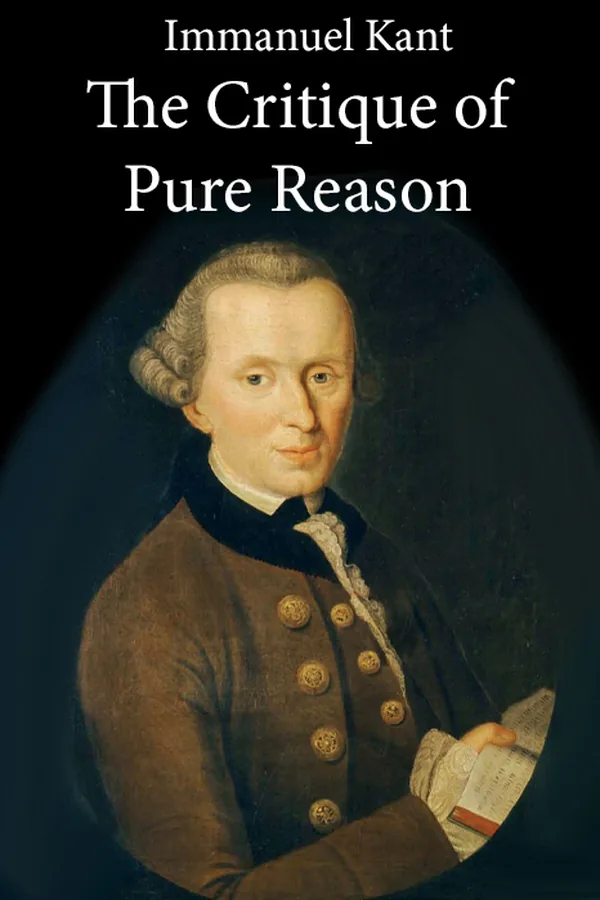
The Critique of Pure Reason
📖 Click to Read the Opening Pages Online Preview
The opening of the Introduction
That all our knowledge begins with experience there can be no doubt. For how is it possible that the faculty of cognition should be awakened into exercise otherwise than by means of objects which affect our senses, and partly of themselves produce representations, partly rouse our powers of understanding into activity, to compare to connect, or to separate these, and so to convert the raw material of our sensuous impressions into a knowledge of objects, which is called experience? In respect of time, therefore, no knowledge of ours is antecedent to experience, but begins with it.
But, though all our knowledge begins with experience, it by no means follows that all arises out of experience. For, on the contrary, it is quite possible that our empirical knowledge is a compound of that which we receive through impressions, and that which the faculty of cognition supplies from itself (sensuous impressions giving merely the occasion), an addition which we cannot distinguish from the original element given by sense, till long practice has made us attentive to, and skilful in separating it. It is, therefore, a question which requires close investigation, and not to be answered at first sight, whether there exists a knowledge altogether independent of experience, and even of all sensuous impressions? Knowledge of this kind is called à priori, in contradistinction to empirical knowledge, which has its sources à posteriori, that is, in experience.
But the expression, “à priori,” is not as yet definite enough adequately to indicate the whole meaning of the question above started. For, in speaking of knowledge which has its sources in experience, we are wont to say, that this or that may be known à priori, because we do not derive this knowledge immediately from experience, but from a general rule, which, however, we have itself borrowed from experience. Thus, if a man undermined his house, we say, “he might know à priori that it would have fallen;” that is, he needed not to have waited for the experience that it did actually fall. But still, à priori, he could not know even this much. For, that bodies are heavy, and, consequently, that they fall when their supports are taken away, must have been known to him previously, by means of experience.
The excerpt below is the first three paragraphs of the Introduction, in which Kant opens with the sentence that all our knowledge begins with experience, grants that in time no knowledge of ours precedes it, and then separates that concession from the further question whether all of it arises out of experience. The third paragraph narrows the term a priori to knowledge independent of all experience, and tests it on a man who has undermined his house: he may expect it to fall, but only because experience has already taught him that bodies are heavy.
Download Full EPUB1781
Treatise
~212,000 words (estimated)
Approx. 11.8 hours
Standalone
Königsberg in 1781, and the schools of the 1780s: the dogmatic systems Kant names after Wolff, the aesthetics of Baumgarten, and the account of causation Hume had left philosophy with.
Two prefaces, the Introduction and eight parts
EPUB · AZW3 · KEPUB
0.49 MB (EPUB) · 0.80 MB (AZW3) · 0.53 MB (KEPUB)
Public domain in the United States
Project Gutenberg #4280
The Critique of Pure Reason asks what the human mind can know before it has learned anything from experience, and answers that the mind’s own forms are the source of that knowledge. Space and time, Kant argues, are forms of our intuition, and the categories are forms of our thought; together they make experience possible, and together they confine knowledge to appearances. Whatever lies beyond appearances, God, freedom and immortality, cannot be known by speculation, though it can still be thought and, in the practical sphere, believed. The book is a critique of the faculty, not of systems.
After the Introduction it moves in four steps: an Aesthetic on space and time, an Analytic that derives the categories from the forms of judgement and argues them to be the conditions of experience, a Dialectic that exposes the soul, the world and God as ideas of reason, and a closing Doctrine of Method on how reason should discipline itself. The argument is technical and its sentences are long, but the design is plain. The Wikipedia article on the Critique of Pure Reason sets out the structure and the long argument over it. The text is available via Project Gutenberg #4280.
The Critique of Pure Reason by Immanuel Kant: Summary, Ideas & Arguments
This page offers a summary and analysis of The Critique of Pure Reason, with the eleven parts set out in reading order, the step each one takes described, and the terms the argument depends on explained as they come up. Immanuel Kant published the book in 1781 and brought out a second edition in 1787 with a new and much longer preface; this text prints both prefaces, the Introduction, the Doctrine of Elements and the Doctrine of Method, in J. M. D. Meiklejohn’s translation. It is, as its author says, a treatise on method rather than a system of the science. Kant wrote for readers who would work through the book, and he says in the first preface that he has left out the examples and illustrations that would have made it easier. It belongs with the rest of the Philosophy Classics on this site.
The question the book turns on is how judgements that do not rest on experience can still be true of the world. Kant calls knowledge a priori when it is independent not of this or that experience but of all experience, and synthetic when the predicate adds something not already contained in the subject; the arithmetic sentence 7 + 5 = 12 is his example, since no analysis of seven and five yields twelve. Knowledge that is both a priori and synthetic would be knowledge of the world gained before the world is met, and the whole Critique asks how that is possible. The word transcendental names that inquiry: it is concerned with the conditions under which objects can be known at all, not with the objects themselves. Hume had argued that causation rests on habit, and the Enquiry Concerning Human Understanding is the short statement of the problem Kant is answering.
The first part, the Aesthetic, argues that space and time are not features of things in themselves but forms of our sensibility, so that whatever we intuit is intuited under them. Intuition here means the immediate presentation of an object to the mind, and for us it is always through the senses. The second part, the Analytic, derives the categories, the pure concepts of the understanding, from the forms of judgement, and argues that they apply to objects only because they are conditions of any experience at all. Its centre is the deduction, where Kant maintains that the ‘I think’ must be able to accompany all my representations, and that the unity of self-consciousness is what makes a connected world of objects possible for us. Between the deduction and the chapter on noumena stands the doctrine of judgement, where a schema, a determination of time, is what allows a pure concept to be applied to what the senses give.
The Analytic ends by distinguishing phenomena, the objects of possible experience, from noumena: a noumenon is a thing considered apart from our mode of intuiting it, and Kant keeps the word as a limit rather than as a second world we might inspect. The Dialectic then follows reason when it tries to use its ideas beyond that limit. A paralogism is an argument whose form is valid but whose conclusion is false, and the four paralogisms of rational psychology turn the bare ‘I think’ into a substantial, simple and identical soul that could exist apart from the body. An antinomy is a pair of proofs, thesis and antithesis, that seem equally strong and cannot both be true; there are four, on the world’s beginning, its divisibility, freedom, and a necessary being. The Ideal of Pure Reason then examines the three proofs of God’s existence.
What remains after the criticism is not nothing. The Doctrine of Method asks what reason may do with itself once its limits are known; it treats discipline, canon, architectonic and the history of the schools, and it reduces the whole interest of reason to three questions: what can I know, what ought I to do, what may I hope. Kant’s answer is that knowledge stops at appearances while the ideas of God, freedom and immortality keep a practical use, which is what his sentence about abolishing knowledge to make room for belief means. The Project Gutenberg #4280 text is the one this page follows. Readers who want the same questions in shorter compass can take Bertrand Russell’s The Problems of Philosophy. The Doctrine of Method also explains the book’s shape, since a system, Kant says, is an organism and not an aggregate, and its parts can only be understood from the whole.
Historical Context
The book appeared in 1781, when metaphysics was still pursued as a deductive science on the model of Wolff, whose name Kant gives to the dogmatic method in his last chapter. The first preface opens on the failure of that science: reason is driven to questions it cannot decline and cannot answer, its contests have produced no permanent possession, and the fashionable response is indifference. Kant proposes a tribunal instead, a critical examination of the faculty itself, and he insists that his subject is not books and systems but the powers of reason. The second edition of 1787 added a new preface, much longer than the first, which recasts the design as an experiment on the model of Copernicus.
Locke, Hume and Leibniz stand behind the argument. Locke had tried to derive the pure concepts from experience, and Hume had shown that causation, taken that way, is only habit, with the result that metaphysics loses its ground and mathematics is left unexplained; Kant’s reply is that both men were right about the origin of the concepts in experience and wrong about their title, and the deduction is written to supply the missing title. Leibniz, whose system he treats in the appendix on the amphiboly of reflection, is the third target: he intellectualised phenomena, Kant says, just as Locke sensualised the conceptions of the understanding. The Critique is aimed at escaping all three, and at the scepticism that follows when the schools fail.
Kant calls his an age of criticism, in which everything must submit to examination, and he presents the Critique as the book that carries the same demand into philosophy. He is careful to say what the loss costs: the proofs of the soul’s simplicity, of freedom and of God that the schools relied on cannot be sustained, but the convictions of ordinary people, he says, do not rest on them and are not harmed. The translation printed here is Meiklejohn’s, which keeps the Latin of the schools, ens realissimum, quid juris, mundus sensibilis, and adds an occasional note of its own where a figure needs explaining, as at the comparison of sunlight and moonlight. Both prefaces are given in full, so the two statements of the design can be read against each other.
Key Ideas & Arguments
- The a priori: Knowledge independent of all experience, not merely of this or that experience. Kant separates it from the empirical by necessity and strict universality, and insists on the stronger sense: a rule borrowed from experience, like expecting an undermined house to fall, is not a priori. Pure a priori knowledge has no empirical element in it.
- The synthetic a priori: Analytic judgements unpack what is already in the subject, as extension is in body; synthetic judgements add something, as weight is added to body. Kant holds that mathematics and pure physics consist of judgements that are both synthetic and a priori, and that 7 + 5 = 12 is seen only by going outside the concepts to an intuition, five fingers or five points.
- Intuition: The immediate presentation of an object to the mind, as opposed to thinking it through a concept. All our intuition, Kant argues, is sensuous: objects are given only as they affect us, under the forms of space for outer sense and time for inner sense, which lie in the mind before any perception. Geometry rests on space as a pure intuition.
- The categories: The pure concepts of the understanding, in four classes of three: quantity, quality, relation and modality. Kant derives them from the forms of judgement and calls them, after Aristotle, categories, while complaining that Aristotle’s list was collected at haphazard. The deduction argues that they are conditions of experience; beyond experience their use is empty.
- The noumenon: A thing considered so far as it is not an object of our sensuous intuition, which is the negative sense; positively, a noumenon would be the object of an intellectual intuition, and we have none. Kant keeps the word as a limit that restrains sensibility, and denies that the categories can determine anything by it.
- The antinomy: A conflict of reason with itself, in which thesis and antithesis are proved with equal force and neither can appeal to experience. The four concern the world’s beginning and limits, the simple and the composite, freedom and natural necessity, and a necessary being. Kant denies that the world is a thing in itself, so that the first two questions lose their object and both sides fall.
Core Arguments & Influence
- The Copernican turn: The second preface states the experiment: instead of assuming that our cognition must conform to objects, assume that objects must conform to our cognition, as Copernicus assumed that the spectator moves while the stars stand still. If intuition had to follow the nature of objects, nothing about them could be known in advance, while if objects follow the nature of our intuition, synthetic a priori knowledge becomes intelligible, at the price of knowing things only as they appear. Kant calls the comparison a hypothesis, to be proved in the body of the work; the first edition reaches the same conclusion by a longer road, from the analysis of what experience contains.
- The limit of knowledge and the room left for belief: The criticism is negative in its immediate use and positive in its effect: by showing that the proofs of God, freedom and immortality overstep the limits of experience, it clears the ground for a practical use of the same ideas, and Kant says that he must abolish knowledge in order to make room for belief. The unconditioned cannot be known, but it can be thought, and the moral law gives it a warrant that speculation could not supply. The Dialectic’s appendix works this out as a regulative use of ideas, which directs inquiry without pretending to constitute its object; that is why the book is critical rather than sceptical, since it does not doubt that knowledge exists but asks what it covers.
- Illusion that survives refutation: Transcendental illusion is not a mistake that clears up once it has been pointed out: it arises from the nature of reason, which demands the unconditioned for every conditioned, and it returns after criticism has exposed it, as the moon still looks larger at its rising to an astronomer who knows better. Dialectic therefore cannot remove the illusion, only mark it and block the judgements that rest on it, which is why it is a critique of illusion rather than a doctrine, and why its three ideas, the soul, the world and God, remain legitimate as ideas while failing as objects of knowledge. The exposure is a permanent task rather than a cure.
- Freedom and nature: The third antinomy sets natural necessity against a causality of freedom, and the critical solution lets both stand by distinguishing the phenomenal from the intelligible: every event in experience has a cause in experience, so nature is closed, but the same subject, considered as it is in itself, may be the spontaneous ground of its actions. Kant adds that the practical conception of freedom rests on this idea, and that the interest of reason in the antinomies is practical throughout, the thesis guarding morality and religion, the antithesis guarding the empirical study of nature. That is why he can call the same act free and determined without contradiction.
- The critical path: The last chapter surveys the schools and divides them by object, sensualists and intellectualists, by origin, empiricists and noologists, and by method, naturalistic or scientific; Kant names Wolff for dogmatism and Hume for scepticism, and says that the critical path alone is still open. The Doctrine of Method gives that path its rules, and its image for the whole book is an architect’s, since the tower meant to reach heaven had materials only for a dwelling, though the dwelling is roomy enough for all terrestrial purposes and high enough to survey the plain of experience. The chapter gives ideas rather than dates, as Kant says at the start of it.
Why Download Our Custom E-Reader Edition of The Critique of Pure Reason?
The download is the whole book. Both prefaces are here, the first of 1781 and the longer one of 1787, then the Introduction, the Aesthetic, the Analytic with its deduction and its principles, the chapter on phenomena and noumena with its appendix, the whole Dialectic from the paralogisms to the Ideal, and the Doctrine of Method. Kant’s own footnotes are kept, and no part of the argument is summarised in place of itself.
The page is arranged to be read beside the text. Eleven groups follow the book’s own divisions and stop where each division stops; six notes explain the terms the argument turns on; five themes follow the Copernican turn, the limit set to knowledge, the naturalness of illusion, the problem of freedom and the claim of the critical method. A short historical section gives the schools Kant is answering, and the two prefaces are set side by side so that the change of statement can be seen.
The files come in three formats with the same text and the same divisions. The EPUB opens in Apple Books, Calibre and most Android readers; the AZW3 is the file for a Kindle; the KEPUB is the one Kobo devices read best. No account is needed for any of them, and nothing in the downloads is locked, watermarked or time limited. The translation is Meiklejohn’s throughout, so a passage found here can be looked up in any printing of it.
- Project Gutenberg transcription, via Project Gutenberg #4280 — the complete text, unabridged, with both prefaces, the Introduction, the Aesthetic, the Analytic, the Dialectic and the Doctrine of Method, and Kant’s own notes.
- Both prefaces in full The preface of 1781 and the longer preface of 1787 are printed as Kant wrote them, so the two statements of the design can be compared directly, and the second can be read as the recasting it is.
- Eleven groups, one for each part Every division of the book has its own summary, from the first preface to the History of Pure Reason, and each stops at the end of the part it covers rather than running ahead of it.
- EPUB, AZW3 and KEPUB files The same text in three formats, for Apple Books, Kindle and Kobo, with the part divisions intact and nothing to install beyond the reading app you already use.
- Hume’s Enquiry, the short statement of the problem about causation that the Critique answers, and the book to read first if the deduction seems to come from nowhere. It is the argument Kant is replying to throughout the Analytic. — free EPUB, AZW3 & KEPUB
- Russell’s Problems of Philosophy, which asks some of the same questions about a priori knowledge, matter and universals in a fraction of the length, and without the Latin. — free EPUB, AZW3 & KEPUB
- The shelf where this edition sits, with the rest of our free philosophy in EPUB, AZW3 and KEPUB, from Plato and Aristotle to Hume and Nietzsche. — free EPUB, AZW3 & KEPUB
Chapter summaries
The eleven groups below follow the edition’s own divisions, in the order it prints them: the two prefaces, the Introduction, the Aesthetic, the two books of the Analytic, the chapter on phenomena and noumena with its appendix, the three books of the Dialectic, and the Doctrine of Method. Nothing has been merged or renamed, and no group covers a part of the book that does not exist under that title. Each summary states the step the part takes, and stops where the part stops.
- Part 1 — Preface to the first edition (1781): Reason is driven to questions it can neither decline nor answer, and metaphysics is a battlefield where no side keeps its ground. Kant compares the science to a fallen queen, notes the dogmatists and sceptics, and proposes a tribunal in which reason examines its own claims. The book is not a criticism of systems, and examples have been cut for brevity.
- Part 2 — Preface to the second edition (1787): Logic since Aristotle, mathematics from the Greeks, physics from Bacon, Galileo, Torricelli and Stahl: Kant asks what made these sciences secure, and answers that reason questions nature as a judge questions witnesses. He proposes the same experiment for metaphysics, objects conforming to our cognition, on the model of Copernicus. We know appearances only, so he abolishes knowledge to make room for belief.
- Part 3 — Introduction: Experience begins all knowledge, but not all of it arises out of experience. Kant separates analytic from synthetic judgements, finds the synthetic a priori in mathematics and pure physics, and puts the problem in one formula: how are synthetic a priori judgements possible? Hume came nearest and stopped at causation. The science divides into a doctrine of the elements and a doctrine of method.
- Part 4 — Transcendental Aesthetic: Sensibility is isolated, and space and time are exhibited as its pure forms. The metaphysical exposition shows that neither is an empirical concept and that both are necessary and singular; the transcendental exposition shows that geometry requires space to be a pure intuition. Both are empirically real and transcendentally ideal. An objection about change is answered, and Kant separates his idealism from Berkeley’s.
- Part 5 — Analytic of Concepts: Concepts rest on functions, so the table of the forms of judgement yields the categories in four classes of three. Kant then asks the question of right, how pure concepts can apply to objects a priori, and answers in the deduction: the ‘I think’ must accompany all representations, and the unity of apperception makes an object possible. The categories apply only to experience.
- Part 6 — Analytic of Principles: Judgement needs schemata, and a schema is a determination of time: number for quantity, the filled or empty moment for reality, permanence, succession and coexistence for relation. The principles follow: intuitions are extensive quantities, perceptions have degree, and experience requires necessary connections of perceptions, given in the three analogies. The postulates close the list.
- Part 7 — Phenomena and noumena, with the Appendix: The principles of the understanding are principles of possible experience, and the chapter closes with the island of truth surrounded by a stormy ocean of illusion. The noumenon is admitted negatively, as a limit, and refused positively, since that would need an intellectual intuition. The Appendix charges Leibniz with intellectualising phenomena and Locke with sensualising the concepts.
- Part 8 — Dialectic, the Introduction and the paralogisms: Dialectic is the logic of illusion, and transcendental illusion survives the exposure that dispels logical error. Reason seeks the unconditioned, and its three ideas are the soul, the world and God. Rational psychology deduces the soul from ‘I think’, and four paralogisms make it a substance, a simple thing, a person, a being independent of the body; Mendelssohn’s proof of permanence is refuted.
- Part 9 — Dialectic, the antinomies: Four pairs of proofs, each argued with equal force: the world’s beginning and limits, the simple and the divisible, freedom and natural necessity, a necessary being. Kant lets the conflict run as a sceptical method, then weighs the interest of reason in it. The solution denies that the world is a whole in itself, so the questions fall away and freedom can stand beside nature.
- Part 10 — Dialectic, the Ideal of Pure Reason: An ideal is an idea in the individual; the ideal of pure reason is the ens realissimum, and Kant examines the three proofs of God’s existence that reason builds from it. The ontological proof fails because existence is not a real predicate, and a hundred real dollars are no more than a hundred possible ones; the cosmological rests on it; the physico-theological cannot reach its idea. The ideas keep a regulative use.
- Part 11 — Transcendental Doctrine of Method: The last part turns from materials to plan. Discipline, canon, architectonic and history are taken in turn: reason is disciplined in dogmatism, polemics, hypothesis and proof; its interest is gathered into three questions, what can I know, what ought I to do, what may I hope; and the canon ends with opinion, belief and knowledge. A system is an organism, not an aggregate.
The Critique of Pure Reason: Frequently Asked Questions
What is The Critique of Pure Reason about?
What does a priori mean, and what is a synthetic a priori judgement?
What are space and time for Kant?
What is a category?
What is a noumenon?
What is an antinomy, and how is it solved?
What is a paralogism?
How do I read the free downloads?
Part of: Philosophy Classics · Immanuel Kant