The Essays of Michel de Montaigne by Michel de Montaigne: Free EPUB, AZW3 & KEPUB Download
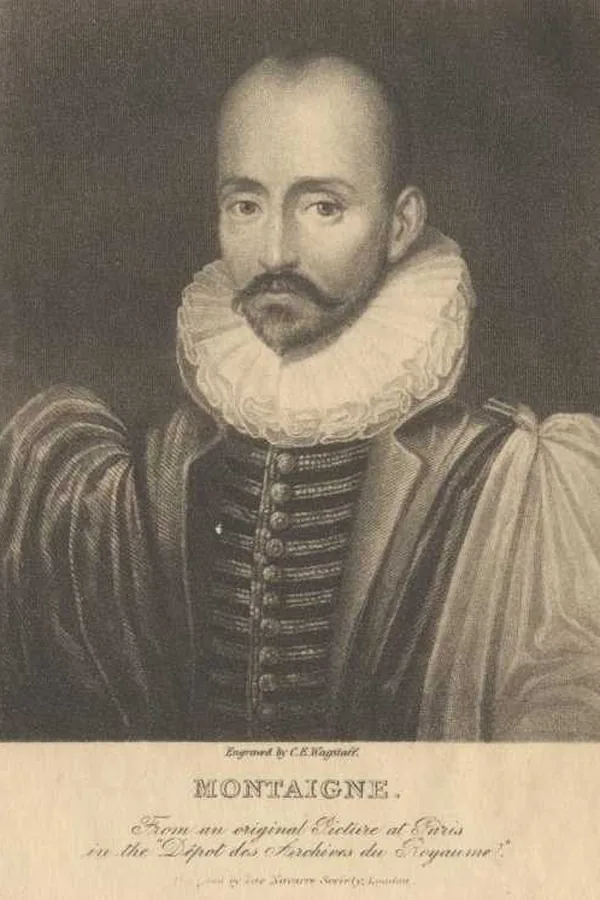
The Essays of Michel de Montaigne
📖 Click to Read the Opening Pages Online Preview
The opening of Book I, Essay I
The most usual way of appeasing the indignation of such as we have any way offended, when we see them in possession of the power of revenge, and find that we absolutely lie at their mercy, is by submission, to move them to commiseration and pity; and yet bravery, constancy, and resolution, however quite contrary means, have sometimes served to produce the same effect.—[Florio’s version begins thus: “The most vsuall waie to appease those minds wee have offended, when revenge lies in their hands, and that we stand at their mercie, is by submission to move them to commiseration and pity: Nevertheless, courage, constancie, and resolution (means altogether opposite) have sometimes wrought the same effect.”—] [The spelling is Florio’s D.W.]
Edward, Prince of Wales [Edward, the Black Prince. D.W.] (the same who so long governed our Guienne, a personage whose condition and fortune have in them a great deal of the most notable and most considerable parts of grandeur), having been highly incensed by the Limousins, and taking their city by assault, was not, either by the cries of the people, or the prayers and tears of the women and children, abandoned to slaughter and prostrate at his feet for mercy, to be stayed from prosecuting his revenge; till, penetrating further into the town, he at last took notice of three French gentlemen,—[These were Jean de Villemure, Hugh de la Roche, and Roger de Beaufort.—Froissart, i. c. 289. {The city was Limoges. D.W.}]—who with incredible bravery alone sustained the power of his victorious army. Then it was that consideration and respect unto so remarkable a valour first stopped the torrent of his fury, and that his clemency, beginning with these three cavaliers, was afterwards extended to all the remaining inhabitants of the city.
Scanderbeg, Prince of Epirus, pursuing one of his soldiers with purpose to kill him, the soldier, having in vain tried by all the ways of humility and supplication to appease him, resolved, as his last refuge, to face about and await him sword in hand: which behaviour of his gave a sudden stop to his captain’s fury, who, for seeing him assume so notable a resolution, received him into grace; an example, however, that might suffer another interpretation with such as have not read of the prodigious force and valour of that prince.
The excerpt below is the first three paragraphs of Book I, Essay I, That Men by Various Ways Arrive at the Same End. It sets out the most usual way of appeasing men one has offended, which is submission, then gives two cases where the opposite means worked: Edward, Prince of Wales, stayed from his revenge at Limoges by three French gentlemen who fought on alone, and Scanderbeg, Prince of Epirus, disarmed by a soldier who turned to face him sword in hand.
Download Full EPUB1580
Essays
~517,000 words (estimated)
Approx. 28.7 hours
Standalone
The round library on the third storey of Montaigne’s tower at Saint-Michel-de-Montaigne, and the roads of France, Germany and Italy he took in 1580 and 1581.
Three books, twelve groups of essays
EPUB · AZW3 · KEPUB
1.31 MB (EPUB) · 2.09 MB (AZW3) · 1.44 MB (KEPUB)
Public domain in the United States
Project Gutenberg #3600
The Essays are three books of short pieces on whatever came into their author’s head: fear, liars, drunkenness, sleep, custom, friendship, cannibals, coaches, cripples, smells. The first two books were printed at Bordeaux in 1580 and enlarged in 1582, 1587 and 1588, when the third was added. Montaigne says in his address to the reader that he had no end but a domestic and private one, and that he paints himself; the book is the record of a mind taking its own measure, doubting what it knows, and coming back to death, to custom and to the ordinary conduct of life.
The subjects run from the fear of death to the taste of wine, and the argument is carried by examples from Plutarch, Seneca, Livy and the wars of his own time. The edition prints the address to the reader, Hazlitt’s preface, the life of Montaigne and sixteen letters as well as the essays themselves. Cotton’s English dates from 1685, and Hazlitt’s notes name the author quoted at each turn, so a passage can be traced back to Plutarch or Livy. The Wikipedia article on the Essays gives the three books, their dates and their reception. — The text is available via Project Gutenberg #3600.

The Essays of Michel de Montaigne by Michel de Montaigne: Summary, Ideas & Arguments
This page offers a summary and analysis of The Essays of Michel de Montaigne, with the three books set out in reading order, the argument of each group described, and the ideas the book turns on, custom, fortune, the imagination, friendship and the question What do I know?, explained as they come up. Michel de Montaigne published the first two books at Bordeaux in 1580 and kept adding to them in the editions of 1582, 1587 and 1588. This text is Charles Cotton’s translation as edited by William Carew Hazlitt in 1877, and it is complete: the address to the reader, the preface, the life, the letters and all three books. Hazlitt dates his preface from Kensington in November 1877. The letters are printed between the life and the essays, and they begin with Montaigne’s account of the last illness and death of La Boetie. The essay titles are the edition’s own.
Book I holds fifty-seven essays and most of the pieces that are read first. It opens with That Men by Various Ways Arrive at the Same End, on submission and on courage as ways of disarming an angry man, and goes on through grief, fear, idleness, liars and constancy to the ceremony of princes. That to Study Philosophy is to Learn to Die makes the whole of philosophy a preparation for death, and says the utility of living consists not in the length of days but in the use of time. Of Custom calls habit a violent and treacherous schoolmistress. Of Pedantry and Of the Education of Children ask what learning is for, Of Friendship describes the friendship with Etienne de La Boetie, and Of Cannibals turns the word barbarous back on the people who use it. Of Idleness, near the start, compares an unoccupied mind to untilled ground that spends its strength in weeds.
Book II has thirty-seven essays and begins with the inconstancy of our actions, which sets the tone: a man is not one thing long enough to be judged once. Drunkenness, the custom of the Isle of Cea, conscience and the affection of fathers to their children come first, then Of Books, which sets out what he reads and how, Virgil and Lucretius, Plutarch and Seneca, and asks to be judged by his method rather than by his matter. At the twelfth essay stands the Apology for Raimond Sebond, written to answer two objections to his translation of Sebond’s Natural Theology; it is the longest essay of the three books, and it ends by doubting whether the senses or reason can establish anything. Cruelty, just before it, is where Montaigne separates virtue from good nature, since virtue, he says, presupposes difficulty and an opponent. The book closes with the resemblance of children to their fathers.
Book III, thirteen essays written for the edition of 1588, is the most personal. Of Profit and Honesty asks what an honest man may do for the state and ends with Epaminondas; Of Repentance says he paints not being but passage, and that he rarely repents; Of Three Commerces sets out the three societies he keeps, with men, with women and with books, and gives the round library on the third storey of his tower, five rows of shelves about him and three prospects. Of Vanity wanders through his travels and his mayoralty, Of Managing the Will says a man should lend himself to others and give himself only to himself, and adds that the Mayor of Bordeaux and Montaigne were ever two by very manifest separation. Of Experience, the last essay, closes the book on living according to nature.
The Essays were read at once by Bacon and Shakespeare; Hazlitt’s preface says the book was a magazine out of which such minds did not disdain to help themselves, and calls the essays a sort of literary anatomy, a diagnosis of the writer’s mind made by himself. Emerson took Montaigne as the type of the sceptic who keeps his freedom, and his essay on him stands in Essays: First and Second Series, which is free here. The account of the self in these pages has a sharp opposite in Leviathan, where Hobbes builds the commonwealth on a different view of human nature. Hazlitt adds that Montaigne has outlived detraction: Malebranche and the writers of Port Royal were against him, Pascal did not spare his reproaches, and La Bruyere and Madame de Sevigne were for him. A complete reading text also sits at Project Gutenberg #3600, and the rest of the shelf is at Philosophy Classics.
Historical Context
Montaigne was born at the chateau of Saint-Michel-de-Montaigne on the last day of February 1533. The Life printed here follows him from a childhood in which he learned Latin before French, through the College of Guienne at Bordeaux and the friendship with La Boetie, to his thirty-eighth year, when he had a Latin inscription cut into the wall of his chateau and withdrew into his library. The first two books were printed at Bordeaux in 1580, the year he set out for Germany and Italy. He was elected mayor of Bordeaux while he was away in Italy, and held the office for four years; he died at the chateau on 13 September 1592. His father, Pierre Eyquem, had been mayor before him, and it was for his father that he translated Sebond’s Natural Theology in 1569.
The book was written into the wars of religion. Montaigne was commissioned to negotiate between Henry of Navarre and the Duke of Guise and sat through the States-General at Blois in 1588, and the essays say plainly enough that public employment was not to his taste. The third book belongs to the years when the troubles went on, and its asides on parties, on obedience and on the danger of changing a law received belong to that decade. The Life says that he carried a motto, otio et libertati, and that he went home from Blois to write a chapter on the inconvenience of greatness rather than take a part in affairs. The address to the reader is dated 1580, and the text carries the marks of the editions of 1582, 1587 and 1588, in which passages were added and some of them corrected.
The English text is Charles Cotton’s, first printed in three volumes in 1685 and 1686. Hazlitt’s edition of 1877 collated it with the variorum French edition of 1854, restored the passages Cotton had left out, dropped Cotton’s own additions into the notes, and put parallel passages from Florio’s earlier translation at the foot of the page. The edition of 1685 and 1686 was the only one Cotton lived to see; he died in 1687. Florio’s version had come earlier, and Hazlitt quotes it where it helps to explain the text. Hazlitt prints sixteen letters and the life, and warns that the correspondence survives only in fragments. Hazlitt thanks his father, whose edition of Montaigne had appeared in 1842, for help in verifying and retranslating the quotations, which he says were in a most corrupt state.
Key Ideas & Arguments
- Custom: Custom, in the essay of that name, is a violent and treacherous schoolmistress who slips in her authority by degrees and then shows a furious face. She makes us call barbarous whatever is not our own practice, and she can make a bell that shakes the whole tower pass unnoticed. Montaigne adds that the laws keep their credit because they are laws, not because they are just.
- The question What do I know?: The Apology ends in doubt, and Montaigne says he bears the interrogation What do I know? with the emblem of a balance. The Pyrrhonists, he says, could not put their position into ordinary speech, since every sentence of ours is affirmative; the senses contradict one another, reason rests on reason, and nothing constant can be established.
- Death: In That to Study Philosophy is to Learn to Die, death is the necessary object of our aim, and the vulgar remedy of not thinking of it is to bridle the ass by the tail. Montaigne would have us frequent death, disarm it of its strangeness, and reckon up our acquaintance to see how many died before our age.
- The education of judgment: Of Pedantry and Of the Education of Children attack a learning taken on trust: a parrot could say as much, and a man may be full and not nourished. The tutor is to form the judgment rather than stuff the memory, and the great world is the book the young gentleman should study with most attention.
- Friendship: Of Friendship separates friendship from the four ancient kinds, natural, social, hospitable and venereal, and from the love of women, which he calls a fever with intermissions. The friendship with Etienne de La Boetie is the one he will not compare with anything, and the essay gives a reason for it that has no other ground: because it was he, because it was I.
- The New World: Of Cannibals reports a servant who had lived ten or twelve years in Antarctic France and turns the word barbarous back on Europe; Of Coaches returns to the conquest of the Indies, to Cusco and Mexico, and to the cruelty that came with it. In both the measure taken is the custom of the observer, not the virtue of the observed.
Core Arguments & Influence
- The self-portrait: The address to the reader says that the author is himself the matter of his book. Of Friendship opens with the figure of a painter who fills the middle of his panel with a finished picture and the space around it with grotesques, and Montaigne says his own scribbling is the grotesques. In Of Repentance he adds that he paints not being but passage, from day to day and from minute to minute, so that he may contradict himself without contradicting the truth. Of Experience says he studies himself more than any other subject, and calls it his metaphysic and his physic. The book is a portrait made in motion, offered as a private record rather than a lesson.
- Scepticism without despair: The Apology for Raimond Sebond is the longest statement of the case. Reason, Montaigne argues, cannot establish the articles of faith, and the attempt to do so dishonours both; from there he goes through the uncertainty of the senses, the contradictions of the schools, and the way custom shapes what we take for nature, until he reaches the question on his emblem. The plague of man, he says, is the opinion of wisdom. The doubt is not a conclusion but a discipline: it clears the ground for faith and takes away the pretence that the mind has mastered things. The same method is carried into the essays on custom, on presumption and on cripples.
- Custom, law and civil war: Custom is treated as the second nature that governs most of what we call reason, and the essay on it runs from the calf carried daily to the bell that no longer wakes the sleeper. From custom Montaigne passes to law, and says the laws keep their credit because they are laws and not because they are just. That position makes him cautious in politics: he had lived through the wars of religion, and he argues that whoever takes on himself to alter a law usurps the office of judging, and that a public peace is too high a price for a private opinion. Obedience is his practical answer, without any claim that the laws are wise.
- Death, pain and the ordinary life: The fear of death runs through all three books. Montaigne’s remedy is not an argument but a habit: to have death continually before him, to visit it in others, and to take the ordinary term of life as already exceeded. The same temper appears in the last essay, where he says he loves life and cultivates it, that nature is a gentle guide, and that the fairest lives are those which accommodate themselves to the common and human model. Pleasure and necessity are not to be divorced. The body is not a prison to be escaped but a charge to be kept, and the book ends on that acceptance rather than on any doctrine.
- Travel and the measure of other nations: The journey of 1580 and 1581 gave Montaigne the habit of comparing, and the essays use it against the assumption that our own arrangements are natural. Of Cannibals says every one gives the title of barbarism to everything not in use in his own country, and describes a people whose wars are fought for valour and who covet no more than necessity requires. Of Coaches goes further and sets the roads and buildings of Peru against the magnificence of Europe. The comparison is not a romance of the noble savage: it is a way of making his own customs visible to him, and of showing how little reason has to do with what we call usage.
Why Download Our Custom E-Reader Edition of The Essays of Michel de Montaigne?
The download is the whole book: the address to the reader, Hazlitt’s preface of 1877, the life of Montaigne, the sixteen letters, and all three books of essays, from That Men by Various Ways Arrive at the Same End to Of Experience. Nothing is cut, and no essay is summarised in place of itself. The text is Cotton’s, set from the first edition of his version, and the notes keep the sources of the quotations. The essay titles are printed as the edition prints them, chapters numbered through each book.
Around the text the page supplies what a book of this size needs: twelve summaries that follow the order of the three books, six notes on the arguments and the ideas they turn on, five themes that carry the argument across the whole, and a short account of the wars, the library and the translation the English text comes from. The groups follow the edition’s own numbering, so a passage found here can be looked up in any copy that prints the chapters.
The files come in three formats with the same text and the same divisions. The EPUB opens in Apple Books, Calibre and most Android readers; the AZW3 is the file for a Kindle, by USB or through Send to Kindle; the KEPUB is the one Kobo devices read best. No account is needed for any of them, and nothing in the downloads is locked, watermarked or time limited. The three books come in one file, so there is no second download to fetch for the rest of the essays.
- Project Gutenberg transcription, via Project Gutenberg #3600 — the complete text, unabridged, in Charles Cotton’s translation as edited by William Carew Hazlitt, with the preface, the life, the letters and the three books.
- Complete text of all three books Fifty-seven essays in the first book, thirty-seven in the second and thirteen in the third, with the address to the reader and the letters, and no passage abridged or replaced by a summary.
- One summary for each group of essays Twelve groups in the order of the three books, each covering a run of consecutive essays and stopping where the run stops, so that the page can be read beside the book.
- EPUB, AZW3 and KEPUB files The same text in three formats, for Apple Books, Kindle and Kobo, with the book and chapter divisions kept and no reader software to install beyond the one you already use.
- Emerson’s two series of essays, including the piece in which he treats Montaigne as the type of the sceptic who keeps his freedom. — free EPUB, AZW3 & KEPUB
- Hobbes’s Leviathan of 1651, which builds the commonwealth on a very different account of the self, and makes the sharpest contrast with the essays. — free EPUB, AZW3 & KEPUB
- The shelf where this edition sits, with the rest of our free philosophy in EPUB, AZW3 and KEPUB. — free EPUB, AZW3 & KEPUB
Chapter summaries
The edition prints the essays in three books, numbered as chapters: fifty-seven in the first book, thirty-seven in the second and thirteen in the third, each with its title. The twelve groups below follow that order and keep the edition’s own titles; where a group covers a run of essays, the run is named by its first and last numbers, and the divisions are ours. Each summary covers the essays in its group and stops where the group stops.
- Book I, Essays I–XIV — Submission, sorrow and the mind’s false objects: The book begins with the several ways of appeasing an offended man, then turns to grief that stupefies instead of weeping, to passions spent on objects that cannot receive them, to parley, to the intention behind an act, to idleness and lying, and to the obstinate defence of a fort.
- Book I, Essays XV–XXIV — Fear, death, imagination and custom: Cowardice, ambassadors, fear itself, and the question whether a man can be called happy before he is dead lead into the longest piece so far, That to Study Philosophy is to Learn to Die. The force of imagination follows, then the profit of one man and the damage of another, custom as a violent schoolmistress, and pedantry.
- Book I, Essays XXV–XXXV — Education, friendship and the New World: The education of children, addressed to Madame Diane de Foix, argues for a well-made judgment over a well-filled head; then come the folly of measuring truth by our own capacity, the friendship with Etienne de La Boetie, moderation, the cannibals of the New World, and shorter pieces down to the custom of wearing clothes.
- Book I, Essays XXXVI–XLVI — Cato, solitude and the opinion of good and evil: Cato the Younger, laughter and tears at the same thing, solitude and its reasons, Cicero, and the argument that the relish of good and evil depends on the opinion we hold of them carry the middle of the book; then honour, inequality, sumptuary laws, sleep, the battle of Dreux and names.
- Book I, Essays XLVII–LVII — Judgment, names and the vanity of words: The first book closes on the uncertainty of judgment, war horses, ancient customs, Democritus and Heraclitus, the vanity of words, the parsimony of the ancients, a saying of Caesar, vain subtleties, smells, prayers, and age, with the Roman examples still carrying the argument. The pieces are short and the subjects small.
- Book II, Essays I–XI — Inconstancy, conscience and cruelty: The second book starts from the inconstancy of our actions, passes through drunkenness, the custom of the Isle of Cea, to-morrow’s a new day, conscience and use, then the affection of fathers to their children, the arms of the Parthians and books, and ends on cruelty, where virtue is said to need an opponent.
- Book II, Essay XII — The Apology for Raimond Sebond: The longest essay in the book was written, Montaigne says, to answer two objections to his translation of Sebond’s Natural Theology. It argues that human reason cannot establish the articles of faith, and goes on through the uncertainty of the senses and of custom to the question he bears on his emblem, What do I know?
- Book II, Essays XIII–XXV — Glory, presumption and the taste of things: Judging the death of another, the mind that hinders itself, glory, presumption, the giving of the lie, liberty of conscience, and the argument that we taste nothing pure, run into shorter pieces on idleness, posting, ill means to a good end, Roman grandeur, counterfeited sickness and thumbs.
- Book II, Essays XXVI–XXXVII — Virtue, anger and the resemblance of children: The second book ends with thumbs, cowardice as the mother of cruelty, the season of all things, virtue, a monstrous child, anger, the defence of Seneca and Plutarch, Spurina, Caesar’s way of war, three good women, the most excellent men, and the resemblance of children to their fathers.
- Book III, Essays I–V — Profit, repentance and the three commerces: The third book begins with profit and honesty, then repentance, where Montaigne says he paints not being but passage, then the three commerces of men, women and books, diversion, on the way a grief is drawn off by other thoughts, and the long essay upon some verses of Virgil, which is about love, marriage and age.
- Book III, Essays VI–IX — Coaches, greatness and the art of conference: Coaches carries the argument about the New World and the customs of its peoples; the inconvenience of greatness follows, then the art of conference, on the use and abuse of argument, and vanity, one of the longest pieces of the third book, which wanders through his travels, his mayoralty and his own humour.
- Book III, Essays X–XIII — The will, cripples, physiognomy and experience: The last group begins with the managing of the will, passes to cripples, where the witches of his neighbourhood and the new calendar come in, then to physiognomy and Socrates, and ends with Of Experience, which closes the book on the pleasure of living according to nature.
The Essays of Michel de Montaigne: Frequently Asked Questions
What are the Essays of Montaigne?
Who was Michel de Montaigne?
What does the question What do I know? mean?
What is the Apology for Raimond Sebond?
Which translation is this?
What does Montaigne say about death?
How is the book arranged in this edition?
How do I read the free downloads?
Part of: Philosophy Classics · Michel de Montaigne