The Social Contract by Jean-Jacques Rousseau: Free EPUB, AZW3 & KEPUB Download
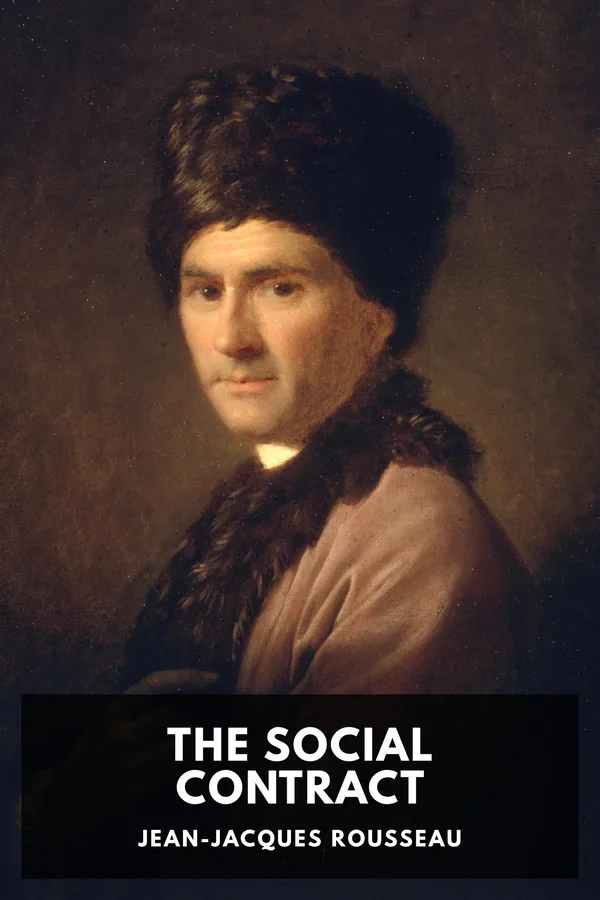
The Social Contract
📖 Click to Read the Opening Pages Online Preview
The opening of Book I
Man is born free; and everywhere he is in chains. One thinks himself the master of others, and still remains a greater slave than they. How did this change come about? I do not know. What can make it legitimate? That question I think I can answer.
If I took into account only force, and the effects derived from it, I should say: “As long as a people is compelled to obey, and obeys, it does well; as soon as it can shake off the yoke, and shakes it off, it does still better; for, regaining its liberty by the same right as took it away, either it is justified in resuming it, or there was no justification for those who took it away.” But the social order is a sacred right which is the basis of all other rights. Nevertheless, this right does not come from nature, and must therefore be founded on conventions. Before coming to that, I have to prove what I have just asserted.
The excerpt is the first two paragraphs of Book I, chapter 1: the sentence on men being born free and everywhere in chains, the two questions about how that change came about and what can make it legitimate, and the argument that the social order is a sacred right founded on conventions rather than on nature.
Download Full EPUB1762
Treatise
60,728 words
3.4 h
Standalone
Venice and France, 1743-1762
Four books in eleven groups
EPUB · AZW3 · KEPUB
0.58 MB (EPUB) · 0.57 MB (AZW3) · 0.60 MB (KEPUB)
Public domain in the United States
Project Gutenberg #46333 · Standard Ebooks
Rousseau asks one question: what makes political authority legitimate? Men are born free, yet they live everywhere in chains, and force cannot turn obedience into a duty. The answer is built in four movements. A multitude becomes a people only through a compact in which each gives himself to all, and what each receives back is a share of a common self. Sovereignty, so constituted, is the exercise of the general will, and it can neither be alienated nor represented. Government is a separate body, a revocable commission rather than a contract, and it presses constantly against the sovereign it was made to serve. The four books then take up, in order, the questions of right, of law, of government and of the practices that keep a sovereign alive.
Book I clears away false titles to rule and states the compact; Book II turns to law, the legislator and the fit people; Book III separates the sovereign from the government and follows the forms of government into their decay; Book IV asks how the sovereign keeps itself alive, through voting, elections, the Roman assemblies, the tribunate, the dictatorship, the censorship and finally civil religion. Rousseau writes as a citizen of Geneva and takes the city-state, not the nation, as his model. The book appeared in 1762, the same year as Emile. The text is available via Project Gutenberg #46333 and Standard Ebooks; the argument has its own article at The Social Contract.
The Social Contract by Jean-Jacques Rousseau: Summary, Ideas & Arguments
This page gives a summary and analysis of The Social Contract, Jean-Jacques Rousseau’s treatise on political right, in G. D. H. Cole’s translation. Rousseau was born a citizen of Geneva in 1712 and spent most of his working life in France, moving among the philosophers of Paris; the book was published in 1762. The short preface states the question: whether, in the civil order, there can be any sure and legitimate rule of administration, men being taken as they are and laws as they might be. The answer is a compact, a general will, and a government held strictly apart from the sovereign. Cole’s introduction, printed in this edition, sets the book against Hobbes and Locke and reads the general will as a rational will, the ancestor of Kant’s autonomy. The author’s life is sketched at Jean-Jacques Rousseau.
Book I clears the ground. The family is the first model of political society, but it dissolves when the children no longer need the father, and the analogies drawn from it by Grotius and Hobbes turn fact into right. Aristotle and Caligula supply the slave’s and the despot’s versions of the same error; force can produce obedience but not duty, and to renounce liberty is to renounce being a man. War is a relation between States, not between individual men, so conquest gives no title over a people. The way out is a first convention, an act in which a scattered multitude becomes a people by putting its persons and powers in common under the general will. That act creates a collective body which is State when passive and Sovereign when active, and whose members are citizens as participants and subjects as obeyers. The chapter on the civil state describes the change the compact works in a man, and the chapter on real property sets the conditions under which the right of the first occupier becomes a true title.
Book II turns to sovereignty and law. Sovereignty is the exercise of the general will, so it cannot be alienated, and it cannot be divided into the pieces that political theorists carve out for convenience. The general will is always right, but the people is often deceived; the will of all is not the general will, and partial associations that aggregate private interests destroy it. Law is the act by which the whole people decrees for the whole people, which is why a law can never name a person. The people wills the good but does not always see it, so Rousseau introduces the legislator, an extraordinary office that is neither magistracy nor sovereignty, and grants that it would take gods to give men laws. Book II closes with the fit people and the fit territory, the balance of liberty and equality, and the division of laws into political, civil and criminal, with manners and opinion as the keystone of the arch. Rousseau’s test of an act of sovereignty is that it binds all alike, and his test of a law is that its object stays general.
Book III separates the sovereign from the government. The government is an intermediate body between the subjects and the sovereign, charged with executing the laws; its members are magistrates, its corporate self is the prince, and its authority is a commission that can be revoked. The more numerous the magistrates, the weaker the government; democracy suits small States, aristocracy those of middle size, monarchy great ones, and climate and soil set limits on what a people can support. Governments degenerate by contracting, and the body politic, like the human body, begins to die as soon as it is born. Book IV asks how the sovereign keeps itself alive: by fixed assemblies, by voting, by elections, and by the Roman comitia that Rousseau studies at length. He denies that sovereignty can be represented, and observes that the English are free only at the moment they elect their members of parliament. The book ends with the tribunate, the dictatorship, the censorship and civil religion.
The book brought Rousseau persecution and, later, a double reputation: it gave the French Revolution its language of popular sovereignty, and critics have asked ever since whether a State that frees itself may not enslave its members, a question Cole’s introduction answers at length. Cole presents the general will as a rational will, continuous with Kant’s autonomy, and calls the Social Contract the best of all textbooks of political philosophy. The treatise stands beside two older attempts at the same question: Hobbes’s Leviathan, whose absolute sovereign Rousseau sets out to answer, and Plato’s Republic, which asks what justice is before asking who should rule. Both are free here, and the philosophy classics shelf collects the rest. The text is free from Project Gutenberg and Standard Ebooks.
Historical Context
Rousseau was born in Geneva in 1712 and always wrote as a citizen of a free State. In 1743, attached to the embassy at Venice, he conceived a large work on political institutions; the announcement of a prize offered by the Academy of Dijon in 1749 gave him the occasion to write, and his first discourse won it and made him famous in Paris. The Discourse on Inequality followed in 1755, prefaced by a dedication to the Republic of Geneva, and from 1750 to 1762 he evolved the views that the Social Contract and Emile published together in that year. Cole dates the maturity of his thought to those twelve years and treats the Social Contract as the only complete statement of his constructive politics.
The book belongs to the Europe of absolute monarchies, and it was written by a man who had to be careful. Cole notes that the French monarchy and the Genevese aristocracy did not love outspoken criticism, so Rousseau generalised where it was unsafe to particularise; his abstractions are partly a strategy of survival. His models are the city-states of ancient Greece and, in his own day, the Swiss free cities, Berne and above all Geneva. Representative government he judged a mockery in England and practically absent in France, and he concluded that self-government was possible only in a small State, wishing the nation-states of Europe replaced by federative leagues of independent cities. Geneva, oligarchic in fact, was the free city he kept in view.
Cole’s translation was first published in 1913, with an introduction of some fifteen thousand words that is a substantial essay in its own right. It traces the contract theory from its medieval and theological forms through Hooker, Milton, the Mayflower declaration, Grotius, Hobbes and Locke, and argues that Rousseau states the doctrine in its purest and most logical form. Cole reads the general will as a universal and rational will, finds in Book I, chapter VIII the germ of the Kantian moral philosophy, and places Rousseau as the forerunner of German and English Idealism. That introduction is printed here as the edition’s introduction, not as part of Rousseau’s text.
Key Ideas & Arguments
- General will: The will that citizens have as a body, directed to the common good. It is always right in itself, but the people may be deceived about it, and it is not the sum of private wishes.
- Sovereignty: The exercise of the general will. It is inalienable and indivisible, cannot be represented, and must not be confused with the government that executes its laws.
- Social compact: The act by which a multitude becomes a people, each putting his person and power in common under the supreme direction of the general will and receiving a share of the whole in return.
- Civil liberty: What a man gains in exchange for natural liberty: a bounded right to what he possesses, secured by the general will, together with moral liberty, which is obedience to a law he gives himself.
- Legislator: The extraordinary founder who drafts the laws. He holds neither magistracy nor sovereignty and cannot be the people, so he must persuade without force and, in practice, appeal to the gods.
- Government: The intermediate body between sovereign and subjects, charged with executing the laws. Its members are magistrates, its corporate person is the prince, and its power is a revocable commission.
Core Arguments & Influence
- Freedom and legitimate authority: Rousseau’s question is how obedience can be a duty. He rejects every answer that makes right out of fact: the family, force, conquest, slavery, the alienation of liberty to a king. The compact is the only act that can bind a free being, because each then obeys a law he has given himself. The phrase about being forced to be free is the paradox at the centre: the general will is the individual’s own will as a citizen, so compulsion by the whole body is not foreign rule but the recovery of a self that private interest obscures. That is why the book’s key words keep returning to freedom rather than to order.
- The general will against the will of all: The will of all is the sum of private preferences; the general will is what remains when the pluses and minuses cancel one another. It cannot be discovered by adding votes as they stand, and factions can defeat it. Rousseau’s remedy is both procedural and moral: no partial societies, or many equal ones, and citizens who vote with the common good in view. Cole reads the general will as a rational will that is never fully actual, only more or less realised in a State, which is why Rousseau can call it indestructible even when it falls silent.
- No representation, only assemblies: Sovereignty lies in the general will, and a will cannot be handed over, so the people must assemble and legislate in person. Deputies are stewards, not representatives, and a law not ratified in person is null. Rousseau knows the objection that an assembly of the people is a chimera in a large State, and answers with the Roman example, fixed and periodic meetings, and the warning that a people which lets itself be represented is no longer free. The English, he says, are free only while they elect their parliament.
- Governments age and die: The government is not the sovereign but a commission, and it has a life of its own. Its corporate will presses constantly against the general will, and it contracts as it degenerates: democracy into aristocracy, aristocracy into monarchy, monarchy into tyranny or despotism. Rousseau states the principle in medical terms. The body politic begins to die as soon as it is born, the legislative power is its heart and the executive its brain, and when the heart stops the animal dies. Periodic assemblies and the right to change the form of government are the defences. He adds that a constitution which cannot be changed is a constitution that will be broken.
- Civil religion and the modern state: The last chapter asks what religion a citizen can hold. Rousseau divides it into the religion of man, the religion of the citizen and the religion of the priest, and argues that the third, with its two codes and two masters, divides the State against itself. He admires the pagan unity of cult and law and blames Christianity for separating the kingdom of heaven from the city. His solution is a civil profession of faith with few dogmas and one negative dogma, intolerance. The chapter became a reference point for later arguments about laicism and political religion.
Why Download Our Custom E-Reader Edition of The Social Contract?
The Social Contract is short but not simple: four books, a chain of definitions, and a set of terms that later writers used for opposite purposes. A reader who wants the argument rather than a handful of quotations needs the text in front of him. This page keeps Rousseau’s order and adds a map of the groups in which the argument turns, so the book can be read straight through or consulted one chapter at a time. Each group can be read in a sitting, and the whole argument can be followed in an afternoon.
The translation is Cole’s, and the Project Gutenberg transcription carries the same text; this edition adds the Books’ own chapter titles, clean typography and a table of contents. Cole’s introduction is a substantial essay in its own right, and it is printed here because it shows how the book was read in 1913, not because Rousseau wrote it.
Above all, the treatise is a working argument, not a monument. Its questions about consent, about the limits of majority rule and about whether a large State can govern itself are still asked, and its answers are still contested. That is the reason to read them in Rousseau’s own words rather than in a digest of conclusions he did not draw. The page is a reading edition, not a substitute for one.
- Based on the Standard Ebooks Edition, via Standard Ebooks, whose text follows Cole’s translation with the 1913 introduction, the foreword and the four Books in full.
- Typography made for reading Paragraph spacing, no page-number debris, and a table of contents that follows the Books and their chapters.
- Free in three formats EPUB for most readers, AZW3 for Kindle and KEPUB for Kobo, with no account and no payment.
- A map of the argument The chapter groups name what each stretch of the book is doing, and the related pages point to the writers Rousseau was answering.
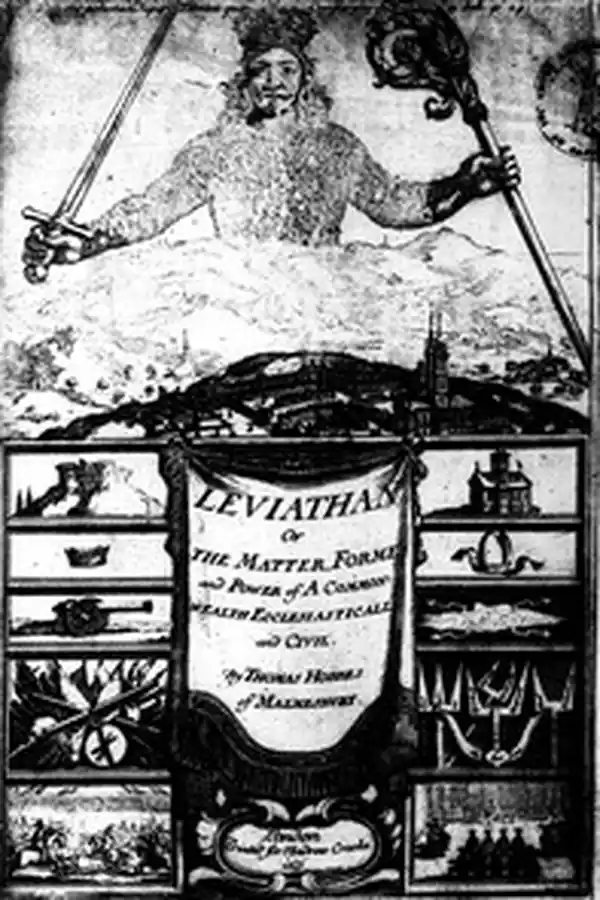
- Hobbes builds the case for absolute sovereignty that Rousseau spends Book I and Book III taking apart. Rousseau’s replies to it run through the whole of Book I. — free EPUB, AZW3 & KEPUB
- Plato’s dialogue on justice, the oldest of the books that ask what a political order is for. — free EPUB, AZW3 & KEPUB
- The shelf gathers the political and moral philosophy titles that belong beside this one. It is the natural place to start if this is the first of the three you read. — free EPUB, AZW3 & KEPUB
Chapter summaries
This edition prints Cole’s introduction, Rousseau’s short foreword, the four Books and the Conclusion. The eleven groups below follow the Books and split the long ones where the argument turns; the chapter titles are the edition’s own and the labels are editorial.
- Book I, part 1 — Families, force and the first societies: Rousseau opens with the family as the first model of political society and the error of reading mastery out of it. Grotius and Hobbes turn fact into right, Aristotle and Caligula supply the slave’s and the despot’s versions of the same mistake, and force is shown to produce obedience but never duty. The strongest is never strong enough to be master unless he converts strength into right, and right perishes with the force behind it. The group ends by asking what a family, a herd or a kingdom can actually prove about right.
- Book I, part 2 — Slavery, war and the first convention: Alienation of liberty is examined and rejected: to sell oneself is to renounce being a man, and a people cannot give itself to a king before it exists as a people. War is a relation between States, not between individual men, so conquest gives no title over a population. The chapter group ends with the argument that majority rule itself rests on a convention, and that a first unanimous act must therefore be presupposed. Rousseau’s target is the theory that liberty can be traded like a piece of property.
- Book I, part 3 — The social compact and the sovereign: The compact is stated as a problem and solved: a form of association that defends each associate while leaving him as free as before. Each gives himself and his powers to the whole under the general will, and the result is a moral and collective body which is State when passive, Sovereign when active. The sovereign cannot bind itself by a fundamental law, particular wills must yield, and the chapter on property makes the community master of goods while turning possession into a legitimate title. The compact is presented as the solution to a problem, not as a historical event, and the chapters that follow work out who is bound by it and to what.
- Book II, part 1 — Sovereignty and the general will: Sovereignty is the exercise of the general will, so it cannot be alienated or divided, and the theorists who carve it into legislative and executive pieces are refuted. The general will is always right, but the people is often deceived; the will of all must be distinguished from it, and factions destroyed. The limits of sovereign power, the right of life and death, and the difference between a decree aimed at a person and a law aimed at all are set out in sequence. The right of life and death shows how far the sovereign’s general power reaches over particular persons, and why the criminal is treated as an enemy of the State rather than as a private offender.
- Book II, part 2 — Law and the legislator: Law is defined as the act by which the whole people decrees for the whole people, which is why its object must always be general and it can never name an individual. The people wills the good but does not always see it, so a legislator is needed: an extraordinary intelligence, holding neither magistracy nor sovereignty, who changes human nature and founds a people. Because he cannot persuade by force or by argument alone, he appeals to the gods, and the chapter ends by answering Warburton on religion as an instrument of politics. The legislator has to make citizens feel their dependence on the whole before the institutions exist that would teach it, which is why the founder needs an authority that is no authority.
- Book II, part 3 — Peoples, territory and the laws: The legislator must survey his ground: a people is docile only in its youth, and liberty once lost is not recovered. A State too large loses strength, so territory and population must be balanced, and the moment of lawgiving must be one of peace and plenty. Rousseau names Corsica as the one country in Europe still capable of receiving laws. The greatest good is liberty and equality, and the laws divide into political, civil and criminal, with manners and opinion as the keystone. Rousseau measures a constitution against its climate, its soil and the character of its people, and reserves his praise for the small republic that can still assemble its citizens.
- Book III, part 1 — Government and its forms: Government is defined as the intermediate body that executes the laws, with magistrates as its members and the prince as its corporate self. The larger the State the fewer the rulers it can bear, and the more numerous the magistrates the weaker the government. Democracy, aristocracy and monarchy are distinguished and judged against the size and condition of the State, and mixed governments are treated as the ordinary case rather than an exception. The proportion between sovereign, government and people is stated geometrically and then qualified, because moral quantities do not allow of geometrical accuracy.
- Book III, part 2 — Climate, degeneration and the death of the State: Liberty is not a fruit of all climates: monarchy suits wealthy nations, aristocracy middling ones, democracy small and poor ones. The mark of a good government is population, and the government’s own tendency is to contract, from democracy toward monarchy, until it usurps the sovereign. Rousseau compares the body politic to the human body, which begins to die as soon as it is born, and distinguishes the tyrant who breaks the laws from the despot who sets himself above them. A government too strong for its State will contract, and one too weak will dissolve; the art of the legislator is to keep the two forces in balance.
- Book III, part 3 — Assemblies, deputies and usurpation: The sovereign lives only in assembly, and Rousseau prescribes fixed periodic meetings that the government cannot prorogue. When the people is lawfully assembled the executive is suspended and the meanest citizen is as inviolable as the first magistrate. Deputies are stewards, not representatives, and a people that lets itself be represented is no longer free. The institution of government is a law, not a contract, and the assembly votes separately on whether to keep the form of government and whether to keep the men in charge. The two questions put to the assembly are a test of whether the people still wants the government it has and the men who are running it.
- Book IV, part 1 — Voting, elections and the Roman comitia: The general will is indestructible while the social bond holds, but it can be eluded by those who sell their votes. Apart from the founding compact the majority binds, and the rules for unanimity and for ordinary majorities vary with the gravity of the question. Elections use choice or lot, and Rousseau then turns to Rome, tracing the curiae, the centuries of Servius and the tribal assembly, and reading the long survival of the Republic as a lesson in adapting laws to a corrupted people. The Roman chapter is the longest in the book, and Rousseau uses it to show how a constitution can be adapted, and what happens to a people that stops adapting it.
- Book IV, part 2 — Tribunate, dictatorship and civil religion: The tribunate is the preserver of the laws, able to prevent anything and to do nothing; the dictatorship suspends the laws when the State’s existence is at stake; the censorship declares public opinion without judging it. The book closes with civil religion, its three kinds, and the charge that the religion of the priest divides the State between two masters. Rousseau allows the sovereign a civil profession of faith with few dogmas and one negative dogma, intolerance, and ends by admitting that the external relations of States lie beyond his scope. The Conclusion admits that the law of nations, commerce, war and treaties would need another book, and that the present one has kept to a narrower sphere.
The Social Contract: Frequently Asked Questions
What is The Social Contract about?
What is the general will?
Is the general will just majority rule?
What does it mean to be forced to be free?
Why does Rousseau reject representative government?
What does Rousseau say about religion?
Who translated this edition, and what does it contain?
Where can I download the free ebook?
Part of: Philosophy Classics · Jean-Jacques Rousseau