The Lost World by Arthur Conan Doyle: Free EPUB, AZW3 & KEPUB Download
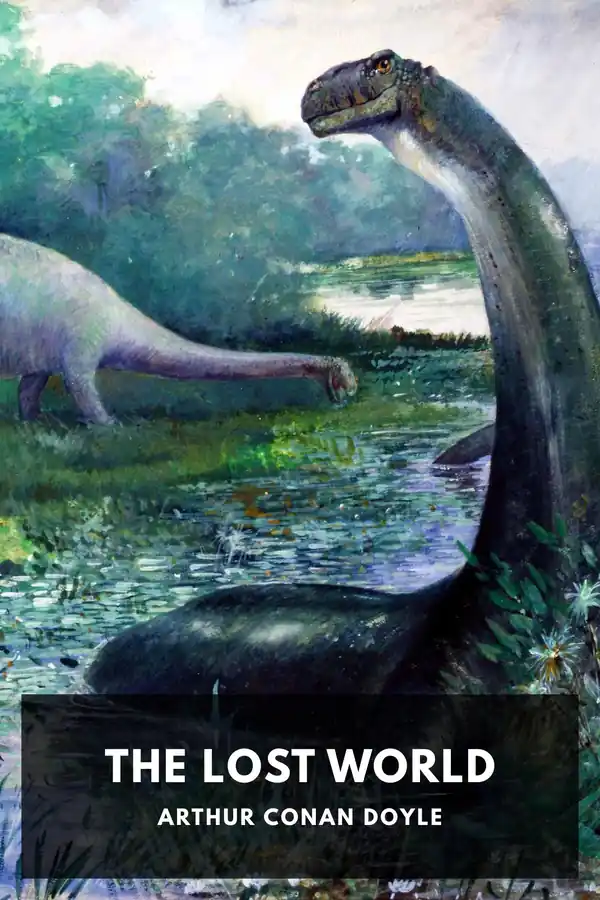
The Lost World
📖 Click to Read the Opening Pages Online Preview
A tactless father: the opening of The Lost World
Mr. Hungerton, her father, really was the most tactless person upon earth—a fluffy, feathery, untidy cockatoo of a man, perfectly good-natured, but absolutely centered upon his own silly self. If anything could have driven me from Gladys, it would have been the thought of such a father-in-law. I am convinced that he really believed in his heart that I came round to the Chestnuts three days a week for the pleasure of his company, and very especially to hear his views upon bimetallism, a subject upon which he was by way of being an authority.
For an hour or more that evening I listened to his monotonous chirrup about bad money driving out good, the token value of silver, the depreciation of the rupee, and the true standards of exchange.
“Suppose,” he cried with feeble violence, “that all the debts in the world were called up simultaneously, and immediate payment insisted upon—what under our present conditions would happen then?”
The preview stops after the opening of chapter 1, while the whole novel, all sixteen chapters, is in the download.
Download Full EPUB1912
~80,000 words (estimated)
Approx. 4.4 hours
Standalone
London and the Amazonian plateau of Maple White Land, 1912
16 chapters in one narrative
EPUB · AZW3 · KEPUB
0.68 MB (EPUB) · 0.72 MB (AZW3) · 0.70 MB (KEPUB)
Public domain in the United States
Project Gutenberg #139 · Standard Ebooks
Edward Malone, a young reporter on the Daily Gazette, wants to prove himself to a girl who will only marry a man of action. His editor sends him to interview Professor George Edward Challenger, a zoologist of enormous reputation and worse temper, who has come back from South America claiming that dinosaurs still live on a plateau no one can reach. The evidence looks like a hoax until Malone sees the photographs and a dead man’s sketchbook. Within weeks a committee of the Zoological Institute is on a Booth liner for the Amazon: Challenger, his sneering rival Summerlee, Lord John Roxton the hunter, and Malone as correspondent. This free edition keeps the whole adventure, its comedy and its strange ending.
The Lost World is Arthur Conan Doyle’s 1912 expedition novel, published a year before The Poison Belt brought Challenger back for a second outing. It mixes natural history with broad comedy: the professor’s tantrums, Lord John’s hunting anecdotes, and a plateau named after a dead American sketcher. Readers who know only Sherlock Holmes will find the same narrative grip turned toward an Amazonian tableland where iguanodons still graze. Background on the book, its author and its film adaptations sits in its Wikipedia entry. The text is available via Project Gutenberg #139 and Standard Ebooks.
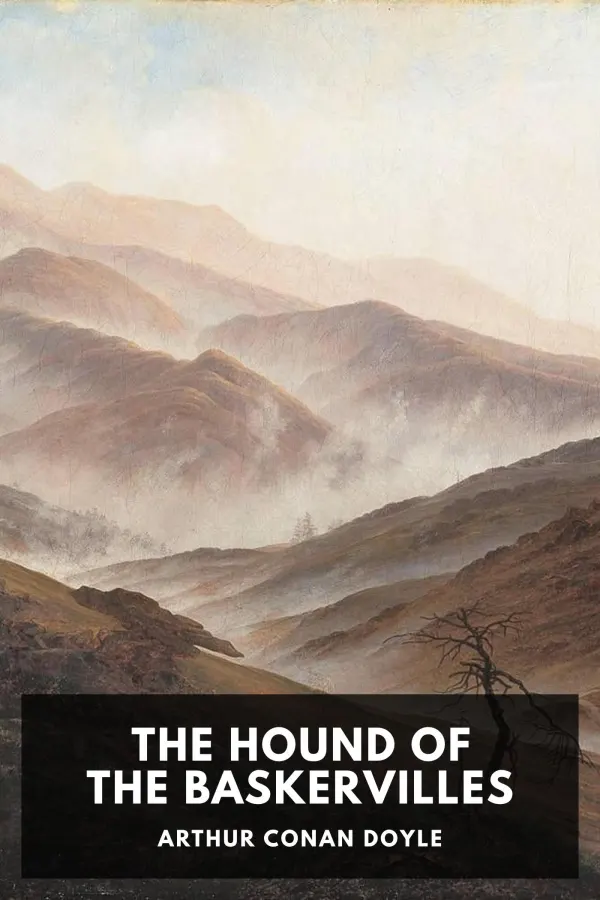
The Lost World by Arthur Conan Doyle: Summary, Characters & Themes
This page offers a summary and analysis of The Lost World, Arthur Conan Doyle’s expedition romance of 1912, together with a free EPUB, AZW3 and KEPUB edition prepared for e-readers. Doyle was in his early fifties when the book appeared, long famous for Sherlock Holmes and restless under him. Arthur Conan Doyle had shipped as a whaling surgeon and practised as an eye specialist before fiction paid, and he had spent years arguing in public about the Boer War and the Congo; the appetite for evidence, quarrel and controversy that drives this novel is not invented. He wrote it quickly for the Strand Magazine, and it reads like a man enjoying his own invention.
The story opens in London. Edward Malone, a rugby-playing reporter on the Daily Gazette, is refused by Gladys Hungerton, who wants a man of action rather than a poet of the hearth. His editor sends him instead to interview Professor Challenger, a zoologist who claims to have seen living dinosaurs on a South American plateau and who has a habit of throwing journalists down the stairs. Malone survives an abusive letter, a scuffle in the street and a public meeting at the Zoological Institute, and ends up attached to a committee of investigation bound for the Amazon with Challenger, his mocking rival Professor Summerlee, and the hunter Lord John Roxton.
The expedition reaches a cliff four hundred feet high, finds the skeleton of the American artist Maple White, and crosses onto the plateau on a felled beech tree. A half-breed guide levers the trunk into the abyss, and the four are marooned among iguanodons, pterodactyls and ape-men. They free a band of red-skinned Indian prisoners, take their side in a war and win it, climb down through a forked cave in the dark, and sail home to a crowded hall in Regent Street. The closing chapters, in which a live pterodactyl escapes across the chandeliers, are as good a comic set piece as Doyle ever wrote, and The Hound of the Baskervilles shows the same appetite for a rational explanation at the edge of the credible.
Analysis usually begins with the narrator, and rightly. Malone is not a scientist but a journalist, which lets Doyle explain the science without a lecture and mock the scientists without malice. Challenger is a bully and a genius in the same body; Summerlee is the sceptic who has to be converted; Roxton is the man of violence whose competence keeps everyone alive. The book’s comedy sits close to cruelty, and its treatment of race and empire is very much of 1912. Readers who enjoy the descent into an older world should try A Journey to the Centre of the Earth, and those who prefer their evolution bleak and brief can move on to The Time Machine.
This edition follows the Standard Ebooks text, proofread against the 1912 Hodder & Stoughton printing; spelling and punctuation are British and Edwardian, and the original chapter titles are kept. Nothing has been cut. The novel runs to roughly 79,600 words, and the e-reader files in the download were built from that text rather than from a screen scrape. If you want a second copy for comparison, Project Gutenberg #139 has a plain transcription, and Standard Ebooks maintains the master files. The chapter numbering and the em dashes have been checked against the print record, so the book should read as it did to a reader in 1912. The foreword, in which Challenger withdraws his injunction, is included, as it always should be.
Historical Context
The Lost World appeared in 1912, at the tail end of the age of heroic exploration and at the high tide of the popular scientific magazine. Amundsen had reached the South Pole in December 1911; Scott’s party was still missing when Doyle’s serial ran; the Titanic sank in April of the same year. Newspapers had learned to sell wonder, and the Strand Magazine, which had made Sherlock Holmes famous, was the natural home for a professor who claimed to have found a prehistoric plateau. Doyle wrote about the Amazon from a reading-room, and the novel’s geography is a brilliant collage rather than a survey.
Scientifically, 1912 was a year of large claims. The Piltdown skull was announced in December, and the argument about human antiquity was at its noisiest; dinosaur palaeontology was a public spectacle, with theatrical mountings and bitter disputes over priority. Challenger’s profession, comparative anthropology, stood at the centre of that noise. The novel borrows the language of the disputed paper: specimens, photographs, committees, amendments. Even the ape-men, an embarrassment to read now, belong to the period’s obsession with a missing link between humans and the great apes, an idea that carried as much anxiety as curiosity. Doyle’s readers took the claim seriously, and the novel uses that credulity as fuel.
The literary context is just as visible. Haggard’s King Solomon’s Mines and She had made the lost civilisation a bestseller, and Verne had already taken readers under the earth and under the sea. Doyle’s contribution was tone: he kept the wonders and dropped the solemnity, letting Challenger bellow and Roxton boast. He wrote the book while campaigning against miscarriages of justice and quarrelling in the newspapers, and something of both habits sits in it, a determination to make the sceptics look at the evidence and a suspicion that the experts are not to be trusted. It is an adventure written by a man who had lately been a celebrity with a grievance.
Key Characters & Literary Archetypes
- Edward Malone: The narrator, a rugby forward good enough for a reserve place with Ireland and a reporter on the Daily Gazette. He is brave, modest and easily flattered, and he goes to the Amazon less for science than to become the man Gladys described. Doyle gives him the best comic material in the book, including the night in the forest and the closing scene at Gladys’s door, and lets him grow from a romantic young fool into a competent member of the party.
- Professor George Edward Challenger: Born at Largs in 1863, Edinburgh-trained, briefly an assistant keeper at the British Museum before resigning after a quarrel. He is huge, black-bearded, brilliant and insufferable, and his temper is a comic engine: he accuses Malone of fraud, wrestles him into the street, and then sulks until he is apologised to. His obsession is the plateau he named Maple White Land, and his vindication at the Queen’s Hall is the book’s last great scene.
- Professor Summerlee: Summerlee is the thin, dry, sarcastic opponent of Challenger, and the novel’s sceptic. He joins the expedition to disprove the claim, and his conversion, staged at night by a pterodactyl in the moonlight, is the most satisfying turn in the book. He is more generous than Challenger and braver than he looks, and he carries the weight of the scientific method through the story. His final address to the Zoological Institute, careful and honest, is a good man’s summary of what he saw.
- Lord John Roxton: Roxton is the sportsman of the party, a lean, hawk-faced man who has shot in Africa and South America and whose conversation is a series of anecdotes about slaughter. He is also, quietly, the most useful person on the plateau: he scouts ahead of the party, drives off a dinosaur with a blazing branch and builds the cage that catches a young pterodactyl. His nickname, the Flail of the Lord, is his own cheerful report of a reputation he enjoys. He ends the book richer by a small fortune in diamonds.
- Gladys Hungerton: Gladys is the reason Malone leaves London. She refuses him kindly and firmly, telling him that she cannot marry a man who has done nothing, and her wish for someone who could act sends him into the Gazette’s office and onward to the Amazon. She appears in two scenes, the first and the last, and the joke of the final one, her marriage to a colourless solicitor’s clerk, is one of the book’s sharpest turns. She is a plot device, but a well-aimed one.
- Zambo: Zambo is the party’s hired man from Pará, a giant whom Malone describes, with the casual condescension of 1912, as willing as a horse and not much cleverer. He cannot climb the plateau, so he keeps station at the cliff foot with the Indians and becomes the expedition’s only link to the outside world: he catches Malone’s purse and letter, and his promised Indians are waiting with ropes and stakes when the four come down. He is loyal, resourceful and brave, and the narrative treats him better than it treats the two half-breed traitors.
Core Literary Themes
- The need to be a man of action: The novel opens with a rejection and a definition: Gladys tells Malone that she could love a man who did things, not one who wrote about them. The whole plot is set in motion by that sentence. Doyle treats the ambition comically, since Malone’s attempt at heroism is to accept an interview with a lunatic, but he does not treat it as absurd. Every man in the party is measured by what he dares to do, and the final meeting between Malone and Gladys quietly dismantles the ideal he started with.
- Science as theatre: Challenger is a scientist who cannot separate discovery from performance. He lectures, storms, accuses, produces photographs like a conjuror and finally pulls a live pterodactyl from a packing case. Doyle, who had seen the Royal Society and the popular lecture hall at first hand, understands that evidence is only half the argument; the other half is the audience. The novel makes a running joke of this, but it also makes a serious point, that a claim is worthless until it can be shown to people who are determined not to believe it.
- Empire and the blank spaces of the map: The plateau functions as a last blank space, a place still outside the reach of London, with its own fauna, its own human population and no government. The expedition arrives assuming it has the right to map, collect and explain, and the narrative rarely questions that assumption. The Indians are brave and useful and mostly silent; the half-breeds are treacherous; Zambo is faithful. These are the reflexes of 1912, and a modern reader should notice them rather than smile past them. The book is a document of imperial confidence as well as an adventure.
- The comedy of expert vanity: Doyle’s two professors spend the expedition quarrelling about nomenclature while beasts approach. Challenger cannot bear a correction; Summerlee cannot let a claim pass; both are happier classifying a dinosaur than surviving one. The comedy is affectionate, and it is structural: each chapter sets pedantry against danger, and danger keeps winning, usually from a direction nobody has looked. That is the book’s shrewdest observation about institutions, that a committee of experts will argue over the label on a specimen while the specimen eats the committee.
- Proof, testimony and the eyewitness: The novel turns on credibility rather than discovery. Malone is a journalist, so his evidence is a narrative; Challenger’s is a photograph and a sketchbook; Summerlee’s is his own eyes; the Zoological Institute wants none of it. Doyle, who had spent years pressing unpopular versions of the truth on a sceptical public, builds the last chapter around a refusal to believe even a live animal in a room. The question the book finally asks is not whether the plateau exists, but what evidence would satisfy men who have already decided.
Why Download Our Custom E-Reader Edition of The Lost World?
Because the adventure still works. The Lost World has been filmed badly many times and adapted into stories about forbidden valleys with dinosaurs, but the book is stranger and funnier than the films: a comedy of manners with an iguanodon in it. Our edition gives you the complete text, the original chapter titles, clean paragraphing, a working table of contents and no DRM. The files are built for reading on small screens, on e-ink and on the phone you already own, and the chapter breaks fall where Doyle put them.
Because we tell you what you are reading. The text follows the Standard Ebooks master, which was proofread against the 1912 Hodder & Stoughton printing. Where a sentence seemed doubtful we checked it against the old transcription at Project Gutenberg #139, and we keep the British spelling rather than substituting American forms. Nothing is abridged, modernised or rewritten. If a sentence looks odd, it is Doyle’s sentence, and the foreword in which Challenger withdraws his injunction is included because the book is incomplete without it.
Because a web page is a poor place for a novel. Sixteen chapters of close print are hard work in a browser and worse on a phone in line at the supermarket. Download the file once and the novel becomes a book again: page numbers, bookmarks, your own notes, a swipe instead of a scroll. It costs nothing, it carries no account requirement and it will still open in ten years on whatever device you have then.
- Based on the Standard Ebooks Edition, via Standard Ebooks proofread the novel against the 1912 Hodder & Stoughton printing, keep the original chapter titles and release the result into the public domain. We rebuilt the e-reader files from their text rather than from a scan, so the spelling is consistent throughout.
- Complete and unabridged All sixteen chapters, the foreword and the closing scenes at the Queen’s Hall. No cuts, no simplified vocabulary, no study notes tacked on at the back and no modernised dialogue.
- Three formats in one download EPUB for Kobo, Apple Books and most readers; AZW3 for sideloading onto a Kindle; KEPUB for Kobo page numbers and reading progress. Take the one your device wants.
- Checked, not merely converted Every file is opened and inspected before it is offered: chapter navigation, italics, em dashes, curly quotes and no stray conversion markup. If something breaks, we fix it.
- The Hound of the Baskervilles — free EPUB, AZW3 & KEPUB
- A Journey to the Centre of the Earth — free EPUB, AZW3 & KEPUB
- The Time Machine — free EPUB, AZW3 & KEPUB
Chapter summaries
Sixteen chapters, gathered here into twelve summaries. Doyle builds the book out of Malone’s despatches, so the pace is episodic: a London interview, a voyage, a trap, a war, and a public meeting that turns into a trial of the witnesses. The labels keep the novel’s own chapter titles alongside the numbers, so you can find your place in any edition, printed or digital.
- Chapter 1 — There Are Heroisms All Round Us: Malone calls on the Hungertons at The Chestnuts, proposes to Gladys, and is refused with a kindness worse than scorn. She tells him she could only love a man who had done something, and her father, who talks about bimetallism at breakfast, is no help at all. Malone goes back to his rooms convinced that his life is a failure of the most ordinary kind, and the chapter sets the whole novel going: a young man needs a deed, and a hero needs a story.
- Chapter 2 — Try Your Luck with Professor Challenger: At the Gazette’s office McArdle, redheaded and round-backed, offers Malone the one assignment nobody wants: an interview with Professor Challenger, who has returned from South America with an incredible story and a habit of throwing journalists out of his house. McArdle reads out the file, including the resigned assistant keepership and the Crayston Medal, and warns his reporter to wear chain mail. Malone, who has just been told that he is not a man of action, says yes.
- Chapter 3 — an impossible person: Challenger answers Malone’s note with a furious letter, and the interview that follows goes wrong from the first minute. The professor is huge, bearded and delighted by his own rudeness, and when Malone asks one sceptical question he is seized, hustled through the hall and flung into the street. The scuffle, the torn coat and the humiliation are reported by Malone with rueful honesty, and the scene establishes Challenger as a man who cannot bear to be doubted.
- Chapter 4 — It’s Just the Very Biggest Thing in the World: A second visit, arranged by Challenger’s small, frightened wife, changes everything. The professor, contrite in his own fashion, shows Malone a box of photographs of the plateau and the sketchbook of Maple White, the American artist who died there. He demonstrates the scale of the discovery, mocks Malone’s newspaper, and delivers the phrase that gives the chapter its title. Malone leaves a convert, and the novel shifts from comedy of manners into expedition.
- Chapter 5 — Question!: The Zoological Institute packs a hall to hear Challenger, and the audience is hostile before he begins. He lectures, loses his temper and is howled down; Summerlee, thin and sarcastic, rises to oppose him, and a young reporter’s account of the meeting fills the newspapers next morning. Out of the uproar comes a proposal for a committee of investigation, and by the end of the evening Challenger, Summerlee and Roxton are committed to a journey, with Malone as their correspondent.
- Chapter 6 — I Was the Flail of the Lord: Roxton takes Malone to his rooms in the Albany, where the walls are hung with trophies and the conversation turns to his career as a hunter. He describes his nickname, his expeditions and his taste for danger with a cheerful bloodthirstiness that the novel finds funny and slightly alarming. The two men shop, arrange passage and take leave of Challenger at the station. Doyle uses the chapter to put the expedition on a business footing, and to show Malone being drawn into a world of men who do things.
- Chapter 7 — Tomorrow We Disappear Into the Unknown: The party sails on a Booth liner, spends a week at Pará, and takes a river steamer through the narrows of Obidos to Manaus. There they charter the launch Esmeralda and hire their crew: Gomez and Manuel, two half-breeds from Pará, the negro Zambo, and three Indians. Malone writes up the preparations in his notebook, records Challenger’s instructions and Roxton’s kit, and the chapter ends with the last telegraph message and the sense of a door closing behind them.
- Chapter 8 — The Outlying Pickets of the New World: Up-river by launch, then by two canoes, the party reaches an Indian village and the edge of the unknown. The Esmeralda is sent back to Manaus, one of the Indians returns with an injured foot, and the cliff wall appears across the forest: the outlying pickets of Maple White Land. Doyle slows the pace here to let the river and the forest do their work, and the chapter ends with the travellers camped under a rock face that no map shows.
- Chapter 9 — Who Could Have Foreseen It?: They follow the cliffs, find the skeleton of Maple White with bamboo growing through his ribs, and follow his white chalk arrows to a cave whose roof has fallen in. A boulder almost kills them; a pterodactyl passes in the moonlight and converts Summerlee on the spot. Challenger finds a way up a rock pinnacle, and the party crosses to the plateau on a felled beech tree. Gomez levers the tree into the abyss, and the four are stranded.
- Chapter 10 — The Most Wonderful Things Have Happened: The plateau is named Maple White Land, and the first day delivers everything the reader has been promised. The party finds three-toed tracks, watches a herd of five iguanodons at the water and is attacked by pterodactyls in a swamp. Doyle plays the discovery for comedy as well as wonder: Challenger is bitten by a blood-tick, the professors argue about classification, and Roxton notices the blue clay in a volcanic vent that will matter later.
- Chapters 11–12 — For Once I Was the Hero; It Was Dreadful in the Forest: A huge carnivorous dinosaur circles the camp at night and Roxton drives it off with a burning branch. In the morning the party examines the dead beast, and Malone climbs a tree to be the first of them to see the central lake, which he asks to have named for Gladys. Unable to sleep, he wanders out of camp and returns to find the thorn bushes torn down and his three friends gone. He throws a note and his purse to Zambo and follows alone.
- Chapters 13–16 — A Sight Which I Shall Never Forget; Those Were the Real Conquests; Our Eyes Have Seen Great Wonders; A Procession! A Procession!: Malone finds the ape-men’s settlement and sees his friends among red-skinned prisoners. The party shoots its way out, frees the Indians and takes their side in a war that ends with the ape-men driven over the cliff. Later chapters bring an escape through a forked cave and a rope descent in the dark, then a London meeting where Challenger produces a pterodactyl from a packing case. Gladys’s marriage and Roxton’s diamonds close the book.
The Lost World: Frequently Asked Questions
Is The Lost World in the public domain?
Is this edition the complete novel?
Do I need to have read Sherlock Holmes first?
Is it suitable for children?
Which file should I choose, EPUB, AZW3 or KEPUB?
Did Conan Doyle write more Challenger stories?
How accurate is the science?
Where can I check the text against another copy?
Part of: Adventure & sea stories · 1900s era