Le Morte d’Arthur by Thomas Malory: Free EPUB, AZW3 & KEPUB Download
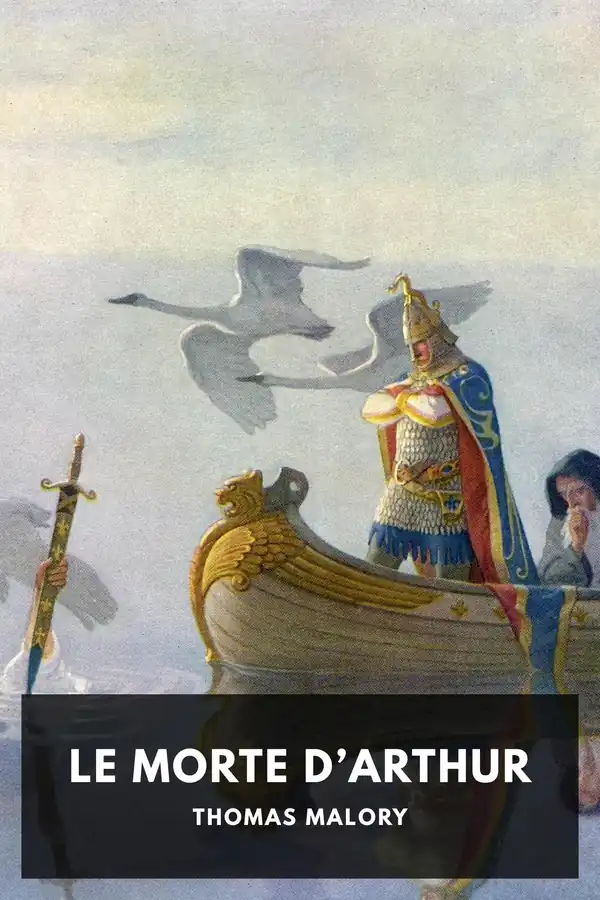
Le Morte d’Arthur
📖 Click to Read the Opening Pages Online Preview
The opening of Book I
It befell in the days of Uther Pendragon, when he was king of all England, and so reigned, that there was a mighty duke in Cornwall that held war against him long time. And the duke was called the Duke of Tintagil. And so by means King Uther sent for this duke, charging him to bring his wife with him, for she was called a fair lady, and a passing wise, and her name was called Igraine.
So when the duke and his wife were come unto the king, by the means of great lords they were accorded both. The king liked and loved this lady well, and he made them great cheer out of measure, and desired to have lain by her. But she was a passing good woman, and would not assent unto the king. And then she told the duke her husband, and said, I suppose that we were sent for that I should be dishonoured; wherefore, husband, I counsel you, that we depart from hence suddenly, that we may ride all night unto our own castle. And in like wise as she said so they departed, that neither the king nor none of his council were ware of their departing. All so soon as King Uther knew of their departing so suddenly, he was wonderly wroth. Then he called to him his privy council, and told them of the sudden departing of the duke and his wife.
Then they advised the king to send for the duke and his wife by a great charge; and if he will not come at your summons, then may ye do your best, then have ye cause to make mighty war upon him. So that was done, and the messengers had their answers; and that was this shortly, that neither he nor his wife would not come at him.
The preview stops after the first three paragraphs of Book I, quoted from the Standard Ebooks text; the whole of the twenty-one books is in the free download below.
Download Full EPUB1485
~350,000 words (estimated)
Approx. 19.4 hours
Standalone
Britain and the courts of Europe in the legendary age of Arthur, from Camelot and Cornwall to the last battle in the west.
Twenty-one books in eight tales
EPUB · AZW3 · KEPUB
1.64 MB (EPUB) · 1.85 MB (AZW3) · 1.77 MB (KEPUB)
Public domain in the United States
Project Gutenberg #1251 · Standard Ebooks
Le Morte d’Arthur is the English prose cycle that gave the modern world its King Arthur: the boy who draws a sword out of a stone, the sword Excalibur handed up from the lake, the Round Table and its hundred and fifty knights, the quest of the Sangreal, and the last battle in which the wounded king is carried away to Avalon. Sir Thomas Malory gathered the French romances of Lancelot, of Tristram and of the Grail into a single continuous narrative in the ninth year of Edward IV, and ended it with the ruin of the fellowship those romances had built. William Caxton printed it at Westminster in 1485, dividing it into twenty-one books and five hundred and seven chapters, and in that shape it has been read ever since.
The book is not one story but many, joined end to end: the making of a king in Book I, the Roman war in Book V, the long middle of Lancelot and Tristram, the Grail quest that empties the Round Table, and the treason of Mordred that brings it down. This page follows Caxton’s order and keeps the forms of the names as he printed them, so that the summary reads like the book rather than like a report on it. Wikipedia’s article on Le Morte d’Arthur covers the manuscript history, including the Winchester manuscript found in 1934. The text is available via Project Gutenberg #1251 and Standard Ebooks. The Standard Ebooks text is based on Project Gutenberg #1251 and has been proofread for consistent spelling and paragraphing, and every passage quoted on this page comes from it.
Le Morte d’Arthur by Thomas Malory: Summary, Characters & Themes
This page is a summary and analysis of Le Morte d’Arthur, the prose romance that Sir Thomas Malory finished in the ninth year of King Edward IV and that William Caxton printed at Westminster in 1485. It follows the twenty-one books in order, from the sword in the stone to the barge that carries the wounded king into the vale of Avilion. Each book is summarised in the form a reader meets it, with the adventures that matter, the people who carry them, and the promises the narrative makes and then breaks. The page is written for readers who want to know what happens, in what order, and why it still matters, rather than for specialists in Middle English bibliography.
The shape of the book is unusual. Malory worked from French prose romances and from two English poems, and he cut and joined until the whole runs from the birth of Arthur to the death of Lancelot without a break, though the seams show. Caxton made the joins official by dividing the work into twenty-one books and five hundred and seven chapters, and he wrote the rubrics himself. Editors since Eugène Vinaver read the same material as eight separate tales, and both descriptions are true: it is one book made of eight tales, and the tale of the Sangreal sits at its centre like a door that closes behind the knights who pass through it.
Almost nothing about the author is certain. He names himself at the close as ‘Sir Thomas Maleore, knight’ and asks his readers to pray for his good deliverance, which sounds like a man in prison, and he dates the book to the ninth year of Edward IV. The identification most often accepted is with Sir Thomas Malory of Newbold Revel in Warwickshire, a knight who sat in Parliament, was charged with robbery and extortion in the 1450s, escaped from custody and died in 1471. Wikipedia’s article on Thomas Malory sets out the evidence and the rival candidates, and none of them has been proved.
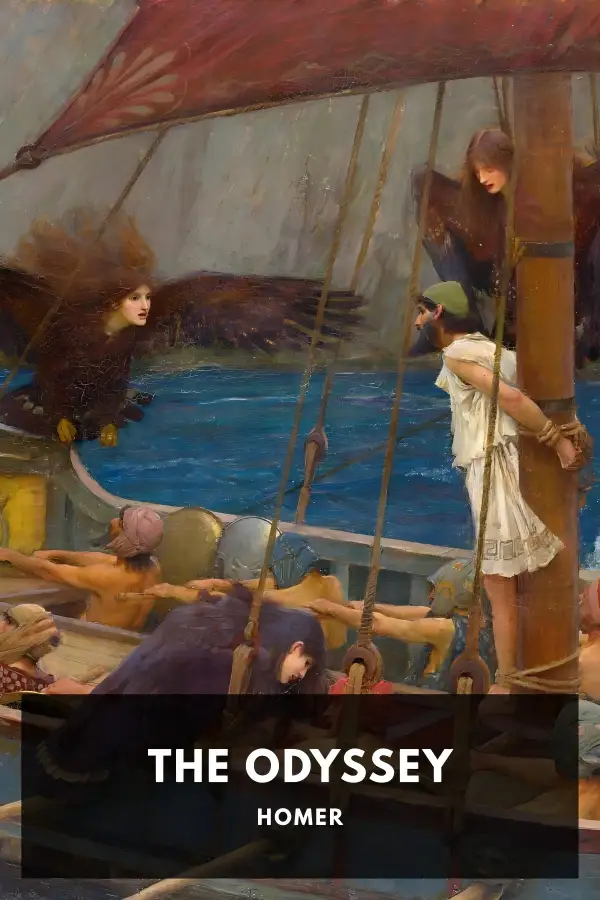
Readers who come to Malory from the older epics will recognise the materials. The Odyssey supplies the voyage, the monsters and the long way home that the Grail quest turns into a spiritual journey; Beowulf supplies the hall, the sworn fellowship and the funeral that follows the last fight; The Monk supplies the later medieval appetite for temptation, penance and a fall that cannot be undone. Each is free on this site in the same reader-ready format, and each makes the company of Malory’s knights a little easier to understand.
The text quoted here comes from the Standard Ebooks edition, which is set from the Project Gutenberg #1251 transcription of Caxton’s printing and proofread for consistent spelling and paragraphing. Book and chapter numbers follow Caxton, not the Winchester manuscript, so a reader comparing this page with a modern scholarly edition will sometimes find a chapter in a different place. Nothing has been abridged, and the quotations keep Malory’s words, with only the pointing and the capitals normalised.
Historical Context
The author is one of the great unknowns of English literature. The closing words of the book name ‘Sir Thomas Maleore, knight’ and ask the reader to pray for his deliverance, and the work was finished in the ninth year of Edward IV, that is between March 1469 and March 1470. No manuscript in his hand survives, and everything known about the text depends on Caxton’s printing. The identification now usually accepted is with Sir Thomas Malory of Newbold Revel in Warwickshire, a knight who sat in Parliament, was accused of robbery and extortion, was held in several prisons and escaped from one of them, and died in 1471. It is probable rather than proved, and a few scholars have argued for other candidates.
William Caxton, the first printer in England, set up his press at Westminster in 1476 and issued this book on the last day of July 1485. In his preface he describes gentlemen asking him for the history of the king, and his own answer that some men hold there was never such a person. He replies with the evidence he had: the tomb at Glastonbury, the print of Arthur’s seal in red wax at St Edward’s shrine in Westminster, Gawaine’s skull at Dover, the Round Table at Winchester. He then explains what he did to the text, that he divided it into twenty-one books and five hundred and seven chapters, and that he supplied the chapter headings himself. Two copies of his printing survive, and one of them is imperfect.
Malory worked from French prose romances, above all the cycle of Lancelot and the Grail, the Merlin attributed to Robert de Borron, and the prose Tristan, together with two English poems, the alliterative Morte Arthure and the stanzaic Morte Arthur. He cut, abridged and joined, and the joins are sometimes visible, which is why editors since Vinaver have read the book as eight tales rather than one novel. The discovery in 1934 of a manuscript at Winchester College, copied before Caxton printed, confirmed that the tales had circulated separately and let scholars see what the printer had changed. The afterlife has been long: Tennyson drew his Idylls of the King from Malory, and T. H. White’s Once and Future King and the musical Camelot carried the story into the modern world.
Key Characters & Literary Archetypes
- Arthur: Arthur is the king the book is named for and the least inward of its great figures. He is begotten on Igraine at Tintagil as the price of Merlin’s help, given to Sir Ector to raise, and made king by pulling a sword out of a stone in a churchyard at Christmas. He founds the Round Table, takes Guenever to wife, conquers Rome, and rules for years without seeing what everyone at court can see. His end is the slow discovery of the love between his queen and his best knight, and then a war he cannot win, fought against his own kin.
- Guenever: Guenever, daughter of King Leodegrance, brings the Round Table to Arthur as part of her dowry and becomes the centre of the court’s idea of itself. She is brave, quick and generous, and she is loved by Lancelot with a love the book never calls simple. Accused of treason by Sir Meliagrance, she is defended by Lancelot in the lists, and when the king is forced to condemn her to the fire it is Lancelot who takes her away, killing Gareth and Gaheris in the rescue and starting the war that ends the realm. She finishes her life at Almesbury, refuses to see Lancelot again, and dies half an hour before he reaches her.
- Lancelot: Lancelot du Lake is the best knight in the world, ‘but if it were by treason or enchantment’, and the book spends hundreds of pages proving it. He wins tournaments, kills giants, comes through the Chapel Perilous and rides in a cart for the queen’s sake. He is also the man whose love destroys the fellowship he belongs to, and he knows it. Tricked into fathering Galahad, he goes mad for two years, sees the Grail only from a distance, kills Gareth by mischance, and ends as a hermit in the chapel by Glastonbury, buried at Joyous Gard.
- Merlin: Merlin is the engine of the first four books. He takes the shape of Igraine’s husband so that Arthur can be begotten, carries the child away to Sir Ector, counsels the Archbishop of Canterbury to call the realm together at Christmas, and gets Excalibur for the king from the Lady of the Lake. He knows what will happen and says so, in riddles that everyone ignores. His own end is the book’s first warning about love: he falls into dotage over Nimue, one of the damsels of the lake, and she shuts him in a rock under a stone, where he dies.
- Mordred: Mordred is Arthur’s son by his own sister Morgawse, and the book treats him as the bill for the king’s first sin. Arthur tries to be rid of him at birth by sending for every child born on May Day and putting them to sea in a ship, and Mordred alone survives. He is made regent when Arthur crosses to France, forges letters saying the king is dead, has himself crowned at Canterbury and tries to marry Guenever. In the last battle Arthur kills him with a spear, and takes his own death wound in the same stroke.
- Galahad: Galahad is the son of Lancelot and Elaine of Corbenic, conceived by enchantment and raised by his mother and King Pelles. He comes to court at Pentecost, draws Balin’s sword out of the stone that floats on the water, and sits in the Siege Perilous, the seat no other knight could take. He is the only knight who achieves the Sangreal completely, anoints the Maimed King with the blood of the spear, is made king at Corbenic, and asks to die. His death is the calmest in the book.
Core Literary Themes
- Knightly fellowship and its failure: The Round Table is a project rather than a fact. Leodegrance sends a hundred knights with his daughter, Merlin is sent to find fifty more and can find only twenty-eight, and the Bishop of Canterbury blesses the sieges under that short number, with two of them left void. The oath binds the company to one another rather than to the king. What destroys it is not an enemy but the working out of its own loyalties: kin protect kin, Gawaine’s feud outlives a papal peace, and the best knight in the world cannot be punished without splitting the fellowship in two. Malory shows the failure from inside, sympathetically, which is why the last books feel like a loss rather than a lesson.
- Love and treason: The central love of the book is adulterous and it is also the finest thing in it. Lancelot and Guenever love each other long before the court has a name for it, and the narrative treats the love as a fact of nature rather than a crime, until Agravaine and Mordred make it a matter of law. Around them Malory sets other loves: Tristram and Isoud drinking the potion meant for someone else, the Fair Maid of Astolat dying for a knight who will not have her, King Mark’s jealousy, Morgan le Fay’s appetite. Love in Malory gives and takes away, usually in the same scene.
- Providence and fortune: The characters live in a world of signs. Dreams arrive before battles, hermits explain what the dreams meant, and the phrase ‘by fortune and adventure’ covers almost everything that happens. Merlin’s prophecies are accurate and useless. Fortune turns her wheel on the first page and keeps turning it: the sword that makes Arthur king is the sword that makes Balin’s sorrow, the child saved from the May Day ships kills his father, and the Grail that blesses the kingdom empties it of knights. Malory lets providence and chance stand together, without reconciling them.
- The quest: The Sangreal is the book’s great test, and it is designed to be failed. The knights swear the quest at Pentecost and ride out in a body; within a year they are scattered, and only three come to the end of it, Galahad, Percivale and Bors, all of them virgins. The Grail rewards chastity rather than prowess, and the best knight in the world is turned back at the threshold because his love is earthly. When the quest is over the Round Table is smaller than it was before, and the book never recovers its numbers. The adventure meant to crown the fellowship is the one that ends it.
- The death of the king: Everything in the book is pointed at the ending. Arthur is wounded in the last battle, and the last rites are a dialogue between a king and a reluctant servant. Bedivere lies about the sword twice, and when he finally throws it a hand comes out of the water and takes it. The barge of ladies carries Arthur away, and Malory refuses to say that he died: the women weep, the king says he must go into the vale of Avilion, and a new tomb is found in a chapel the next morning. The reader is left with two versions and no way to choose, which is the oldest form of the story.
Why Download Our Custom E-Reader Edition of Le Morte d’Arthur?
This page is a guide to a very long book, arranged so that a reader can use it before, during or after the reading. It gives the twenty-one books in twelve units, with the main action of each, the characters who carry it and the passages that matter. The chapter section can be read straight through as a narrative of the whole cycle, or consulted one book at a time. The character notes and the theme notes are kept short on purpose, and the questions at the end answer what readers ask most often, including how to read a book that is really eight books.
The download is built for reading rather than for archiving. The edition keeps Caxton’s book and chapter divisions, so the navigation in the file matches the divisions used on this page, and the text reflows on a phone, a tablet and an old e-reader alike. EPUB, AZW3 and KEPUB are offered because the three big reading systems fragment a long book differently, and each file carries the complete text, the cover and a working table of contents. Nothing is abridged and nothing is locked. The summaries on this page stay outside the book, where they cannot get between a reader and Malory’s sentences.
A word about how to begin. The book is long, and the usual advice is to read Book I for the making of the king, then Books XX and XXI for the last battle and the passing, and only afterwards go back to the middle with the ending in view; the Grail quest in Books XIII to XVII makes better sense once the fellowship it destroys has been seen whole. Readers who want to check a passage against the original transcription can use Project Gutenberg #1251, which has the text with its older pointing. Take the format that suits your reader and the whole cycle is yours.
- Based on the Standard Ebooks Edition, via Standard Ebooks prepared the text from the Project Gutenberg transcription and proofread it for consistent spelling, punctuation and paragraphing; the book and chapter divisions used in the summaries below follow that edition, so the page and the file agree throughout.
- Twenty-one books, twelve reading units The chapter guide groups Caxton’s books into twelve units, from the making of the king to the passing into Avalon, so that the shape of the whole cycle is visible at a glance without losing the order of the original.
- Free EPUB, AZW3 and KEPUB files One download per format, each with a working table of contents and the complete text. EPUB for most readers, AZW3 for Kindle, KEPUB for Kobo, all three carrying the same twenty-one books and none of them locked to a single device.
- No account, no paywall, no DRM The book is public domain in the United States, and there is nothing to sign up for. The file is yours to keep, copy between devices and reread, and it will still open in ten years on a reader that has never heard of this site.
- The Odyssey — free EPUB, AZW3 & KEPUB
- Beowulf — free EPUB, AZW3 & KEPUB
- The Monk — free EPUB, AZW3 & KEPUB
Chapter summaries
Caxton divided the work into twenty-one books and five hundred and seven chapters, and editors since Vinaver read the same material as eight tales knitted into that frame. The twelve units below follow the order a reader actually meets: the making of the king, the Roman war, the middle years of Lancelot and Tristram, the Grail, and the last battle. Each entry gives the main action and the people it concerns, with the book numbers Caxton used.
- Book I, the birth of Arthur: Uther Pendragon loves Igraine, wife of the duke of Tintagil, and Merlin arranges the night that begets Arthur in exchange for the child. Arthur is raised by Sir Ector, pulls the sword out of the stone at Christmas, and is crowned against the rebel kings. Merlin saves him from King Pellinore, gets him Excalibur from the Lady of the Lake, and the book closes with the May Day ships and the one child who survives them.
- Book II, the tale of Balin: A damosel brings a sword that only a good man may draw, and Balin, a poor knight of Northumberland, draws it and can never sheathe it again. He kills a knight whose lady then kills herself, meets his brother Balan, takes King Rience to Arthur, and smites the dolorous stroke in King Pellam’s hall. The brothers kill each other before they know each other, and Merlin sets the sword in a stone for a later knight to draw.
- Books III and IV, the Round Table and Merlin’s end: Arthur marries Guenever, and her father sends the Round Table with a hundred knights; Merlin is sent for fifty and can find only twenty-eight, and the Bishop of Canterbury blesses the sieges at Pentecost. The wedding brings the white hart adventure and the making of Sir Gawaine. In the fourth book Merlin dotes on Nimue and is shut in a rock for ever, five kings make war on Arthur, and Morgan le Fay steals Excalibur for her lover Accolon.
- Book V, the war with Rome: Twelve aged ambassadors from Rome demand the truage unpaid since Uther’s day, and Arthur answers with war. The kings of the realm promise their aid, Arthur dreams in his cabin at sea, and he kills the giant of St Michel’s Mount, who had devoured children seven years and taken the Duchess of Brittany. Gawaine carries the war to Lucius, the Romans are broken, and Arthur is crowned emperor in Rome before turning home.
- Books VI and VII, Lancelot and Gareth: The sixth book introduces Lancelot du Lake, who passes all knights but by treason or enchantment: he rescues Lionel from Sir Turquine, comes through the Chapel Perilous with a piece of a dead man’s cloth, and takes Guenever’s favour. The seventh is the comedy of Beaumains, Gareth of Orkney, who asks three favours at Pentecost, spends a year in the kitchen mocked by Sir Kay, and wins the Lady Lionesse by beating the Red Knight of the Red Launds.
- Books VIII to X, Tristram of Lyonesse: The longest stretch belongs to Tristram, born in Cornwall to Meliodas and Elizabeth, who dies at his birth. He kills Sir Marhaus for the truage of Cornwall, is healed by La Beale Isoud, and drinks with her the potion meant for King Mark. At Mark’s court he jousts, quarrels with Lamorak, befriends Dinadan and fights Palomides, and smites down Arthur over a shield from Morgan le Fay. His story stops, wounded; Malory never shows the death the romance gives him.
- Books XI and XII, Galahad and Lancelot’s madness: At Whitsunday a hermit asks about the Siege Perilous, and Lancelot comes to King Pelles, where the Sangreal feeds the hall and Elaine of Corbenic is brought to his bed by enchantment. Galahad is born. Lancelot, told what was done to him, loses his wits and runs wild in the forest for two years, living on fruit and water, until a horse-litter and a hermitage bring him back. These two books are the hinge on which the whole cycle turns.
- Books XIII to XVII, the quest of the Sangreal: Galahad comes to court at Pentecost, draws Balin’s sword out of the stone, and takes the Siege Perilous. The Sangreal appears, the knights swear the quest, and the fellowship scatters. Percivale, Bors and Lancelot each ride a road of temptations, hermits and ships, and Lancelot is shown that he is not yet worthy. Only Galahad, Percivale and Bors come to Corbenic, where Galahad anoints the Maimed King, is made king, and dies, and the Grail is taken up to heaven.
- Book XVIII, the Fair Maid of Astolat: The court returns to the world. Lancelot forgets the promise he made to live chastely, and the Fair Maid of Astolat, Elaine, loves him and is refused. She dies, and her body comes down the Thames in a black barget with a letter in her hand, and the court reads it and weeps. Lancelot offers the mass-penny, the barge goes back down the river, and the old life resumes as though nothing had been learned.
- Book XIX, the queen and the cart: Guenever rides a-Maying into the woods by Westminster with ten knights, and Sir Meliagrance takes her and wounds them. A child carries her ring to Lancelot, who follows in a cart and rescues her; when Meliagrance accuses the queen of treason, Lancelot answers for her in the lists, one side unarmed and his left hand bound, and kills him. Sir Urre is healed by his hands, and a tournament of a hundred knights closes the book.
- Book XX, the fall of the fellowship: Agravaine and Mordred tell the king what the court has known for years, and Arthur, unable to punish the queen without breaking his fellowship, gives them licence to take Lancelot in the act. He is taken, fights in his shirt, kills Colgrevance, Agravaine and a dozen knights, and the queen is condemned to the fire. Lancelot rescues her and kills Gareth and Gaheris unarmed, and Gawaine’s demand for war outlives a papal peace and ends at the siege of Benwick.
- Book XXI, the last battle and the passing: Mordred crowns himself at Canterbury and would marry the queen, and Arthur comes home to Dover, where he loses Gawaine. An adder breaks the treaty, and the last battle is fought on a down by the sea, where Arthur kills Mordred and takes his death wound. Bedivere throws Excalibur into the water, a barge of ladies takes the king away, and the book ends with the tomb in the chapel by Glastonbury, the queen at Almesbury and Lancelot’s death.
Le Morte d’Arthur: Frequently Asked Questions
What is Le Morte d’Arthur about?
Who wrote it, and when?
Is it a translation of the French romances?
How is the book organised?
Who are the main characters?
Is it difficult to read?
What is the Sangreal, and why does the quest matter?
Where can I download the free EPUB, AZW3 and KEPUB?
Part of: Classic Fiction · Thomas Malory