The Master of Ballantrae by Robert Louis Stevenson: Free EPUB, AZW3 & KEPUB Download
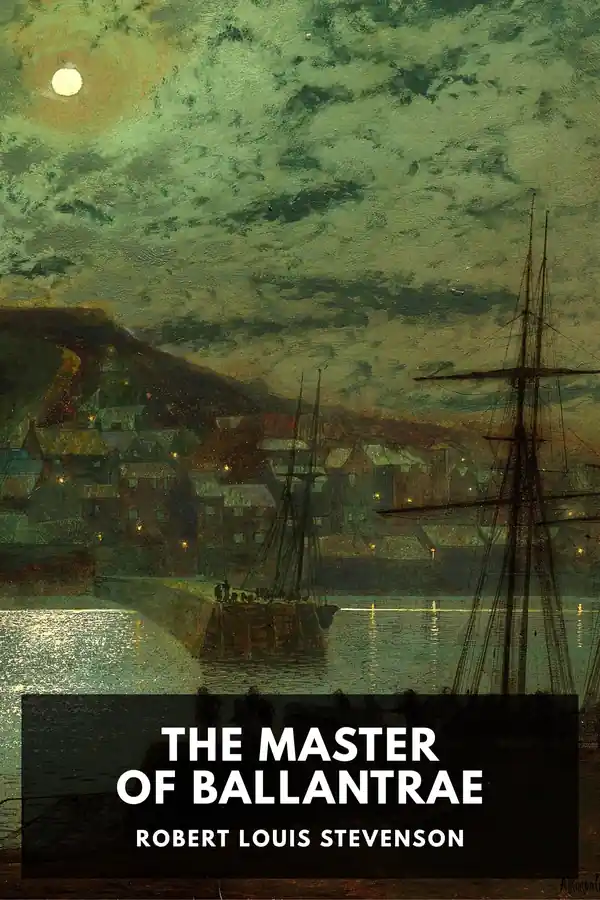
The Master of Ballantrae
📖 Click to Read the Opening Pages Online Preview
A coin tossed in a hall — the opening of Chapter 1
The full truth of this odd matter is what the world has long been looking for, and public curiosity is sure to welcome. It so befell that I was intimately mingled with the last years and history of the house; and there does not live one man so able as myself to make these matters plain, or so desirous to narrate them faithfully. I knew the Master; on many secret steps of his career I have an authentic memoir in my hand; I sailed with him on his last voyage almost alone; I made one upon that winter’s journey of which so many tales have gone abroad; and I was there at the man’s death. As for my late Lord Durrisdeer, I served him and loved him near twenty years; and thought more of him the more I knew of him. Altogether, I think it not fit that so much evidence should perish; the truth is a debt I owe my lord’s memory; and I think my old years will flow more smoothly, and my white hair lie quieter on the pillow, when the debt is paid.
The Duries of Durrisdeer and Ballantrae were a strong family in the southwest from the days of David First. A rhyme still current in the countryside—
“Kittle folk are the Durrisdeers, They ride wi’ ower mony spears”—
The preview stops inside Chapter 1. All twelve chapters are in the free download below.
Download Full EPUB1889
~85,000 words (estimated)
Approx. 4.7 hours
Standalone
Scotland, India and North America, between 1745 and 1764
12 chapters
EPUB · AZW3 · KEPUB
0.95 MB (EPUB) · 1.01 MB (AZW3) · 0.98 MB (KEPUB)
Public domain in the United States
Project Gutenberg #864 · Standard Ebooks
The Master of Ballantrae is Robert Louis Stevenson’s 1889 novel of two Scottish brothers who take opposite sides in the Jacobite rising and then spend nineteen years paying for the bargain. James Durie, the Master, rides north with Prince Charles Edward Stuart; his younger brother Henry stays at Durrisdeer, keeps the estate and marries the woman James was promised to. News comes that the Master died at Culloden, and the household begins to heal, until letters and then the man himself prove otherwise. What follows is not a war but a long, patient persecution, carried from a Galloway house to Paris, to India and at last to a grave in the American wilderness.
The novel has been read as a study of hatred between brothers, as a Scottish family tragedy, and as one of Stevenson’s coldest experiments in narrative. It was serialised in Scribner’s Magazine in 1888 and 1889, and reviewers then and since have ranked it among his most ambitious books. For the publication history and the early notices, see Wikipedia’s article on The Master of Ballantrae. The text is available via Project Gutenberg #864 and Standard Ebooks, and both give the complete novel — twelve chapters, two narrators, no abridgement — free to read on any device or to download for later.
The Master of Ballantrae by Robert Louis Stevenson: Summary, Characters & Themes
This page is a summary and analysis of The Master of Ballantrae, Robert Louis Stevenson’s novel of 1889, subtitled A Winter’s Tale. It is a book about a household rather than a campaign: the Duries of Durrisdeer, a laird’s family whose house stands near St Bride’s on the Solway shore, and two sons who are set against each other by the rising of 1745 and can never afterwards be parted. Stevenson tells the story through documents — a steward’s memoir, a Jacobite officer’s recollections, letters, gossip and a trader’s sworn narrative — so the reader must weigh one witness against another. The result is a short, cold, gripping novel that reads like a case file compiled by a man who loved the family he is describing. Its reputation has grown slowly, and it now looks like the hinge between Stevenson’s adventure stories and the darker books of his last years.
The choice that starts everything is made in an afternoon. Which brother should ride for the Prince and which should stay at home to keep the estate safe whichever side wins? The Master proposes a coin: heads, Henry goes; shield, Henry stays. The coin falls shield, and James rides north with a dozen tenants’ sons and the white cockade in every hat. Henry keeps the letter of loyalty, marries Alison Graeme — the woman his brother was betrothed to, and the heiress whose money the mortgaged estate needs — and is hated for it by the whole countryside. The bargain is a cheating at cards, as Henry calls it, and the novel is the settling of that hand. Stevenson had explored the same rising a few years earlier in Kidnapped, and this novel begins in the long interval between the defeat and its consequences.
The Master is reported killed at Culloden, and for a time the family believes itself safe. Then Colonel Burke brings letters, and then the Master himself arrives at Durrisdeer, charming, penniless and entirely without shame. What he wants is money, and what he enjoys is the ruin of his brother’s peace. Eight thousand pounds pass abroad in seven years, and Henry, sworn to secrecy, lets the neighbourhood call him a miser rather than explain. Mackellar, the steward who narrates most of the book, watches the persecution with a rage close to his master’s own, and his account of the night of 27 February 1757 — a quarrel, a pair of swords in the dark, and a body that is not there in the morning — is one of the great set pieces of Victorian fiction, and the chapter where Mackellar stops being a servant and becomes a partisan.
After the duel the story opens out. Burke’s memoir carries the reader to a walled garden in India, where the Master lives as a silent sage with his companion Secundra Dass; the family then sails for New York, and the Master follows, setting up as a goldsmith under the style of James Durie, formerly Master of Ballantrae, with Secundra Dass, decayed gentleman of India, doing the fine work. From there the book moves into the American wilderness, where a buried treasure, a crew of doubtful adventurers and a winter journey end in the strangest scene Stevenson ever wrote. Readers who know his pirate novel Treasure Island, or his Wars of the Roses tale of a disputed inheritance, The Black Arrow, will recognise the pull of buried money, though here the hoard buys nothing at all.
The Master of Ballantrae appeared when Stevenson was already the author of Treasure Island, Kidnapped and The Strange Case of Dr Jekyll and Mr Hyde, and it is usually read as his darkest study of a divided self. It has never been as popular as those books, and it is the better for it: the plot is spare, the moral judgment withheld, and the last chapter leaves the reader with a stone in a forest and two names on it. Readers who come to it from Kidnapped often find it colder, and the coldness is the point. For the details of the life behind the fiction, see Stevenson’s life. The complete text is at Project Gutenberg #864, and a carefully proofread edition is at Standard Ebooks.
Historical Context
Prince Charles Edward Stuart landed in the Hebrides in the summer of 1745 and raised his standard at Glenfinnan a few weeks later. By September his army held Edinburgh; in April 1746 it was destroyed on Culloden Moor. The government’s revenge was thorough: Jacobite estates were forfeited, Highland dress and weapons were banned, prisoners were transported, and men who had taken the Prince’s commission had to make careers abroad — in the French service, in the Scots regiments, or in the company armies of India. Stevenson’s family is not famous; it is a laird’s house on the wrong side of a border, calculating what one son’s choice might save.
Land in eighteenth-century Scotland was not simply owned; it was entailed, mortgaged and married. A family’s standing depended on an heir, a settlement and a dowry, and a great house with a long name could be ruined by two bad harvests and a lawsuit. Durrisdeer is exactly this kind of property: the old lord keeps the letter of the law, the estate is in debt, and Alison Graeme’s money is the only thing standing between the family and the moneylenders. The novel turns this arithmetic into a moral trap, because Henry can save the estate only by taking his brother’s promised bride, and every penny he saves is money his brother will later demand.
Stevenson began The Master of Ballantrae in the winter of 1887 and 1888 at Saranac Lake, in the Adirondack mountains of New York, where he had gone for his lungs, and the frozen woods and the long march through snow that close the novel owe something to that stay. It was serialised in Scribner’s Magazine in 1888 and 1889 and published in London by Cassell in 1889, the year before Stevenson’s last voyage to the South Seas. By then his reputation rested on adventure stories, and this book puzzled some readers by refusing to give them a hero. It was written at the edge of the empire it describes, by a man who was already ill and already leaving.
Key Characters & Literary Archetypes
- James Durie, the Master of Ballantrae: The elder son, a gambler, duellist and charmer who rides for the Prince in 1745, survives the defeat and comes home to live off the family he despises. He is the household’s favourite and the novel’s engine, and even his enemies cannot stop watching him. His courage is real, his cruelty is casual, and he knows exactly how much his brother’s conscience can bear. He is a monster of the drawing room, and the drawing room loves him.
- Henry Durie, Lord Durrisdeer: The younger son, silent, diligent and proud, who keeps the estate, marries in pity and is slandered as a Judas for staying at home. His patience curdles into rage, and the duel of 1757 and his death in the wilderness are the two ends of that rage. He is neither eloquent nor lucky, and the sympathy he earns is uncomfortable, because he is not charming and knows it. The estate is saved, and the man who saved it is spent.
- Alison Graeme: Betrothed to the Master, married to Henry on 1 June 1748, and never quite free of either. Her money saves Durrisdeer, her loyalty is divided, and she is the one person in the book who sees both brothers clearly and forgives neither. She keeps house, holds her tongue and makes the one decisive plan in the story. Her marriage is a bargain she makes with her eyes open, and her patience is not consent.
- Ephraim Mackellar: The steward who narrates most of the novel, a Lowland Scot with a lawyer’s habits and a partisan’s heart. He calls himself a witness in a court, quotes and edits the papers of other men, and hates the Master with an ardour he never quite admits. His prose is why the book feels like evidence; his partiality is why it never quite is. He is the only man in the house who guesses the truth early and the only one who keeps it.
- Secundra Dass: The Indian gentleman who follows the Master from India to Scotland and then to America, patient, courteous and utterly devoted. He speaks for his master while the master pretends to be a mute sage, and at the grave he works through the night to bring a dead man back. He speaks little, endures much, and is treated by the Scots as a curiosity and a threat. He is the last person in the book who is not for sale.
- John Mountain: A trader who joins the treasure expedition and comes out of the wilderness with the story of the Master’s last days. His sworn narrative gives Mackellar evidence he could get no other way, and his terror at the grave is the reader’s own. He is a plain man who would rather not be involved, and his account is more terrible for being so matter of fact. He asks after Secundra before he asks after anything else, which tells you what he saw.
Core Literary Themes
- The double and the divided self: The brothers are two halves of one man: the Master has all the charm and none of the conscience, Henry all the duty and none of the ease. Stevenson never lets the reader decide which of them is the mask. The novel’s horror is that each needs the other in order to exist, and that one grave can hold them both. The book was written after Jekyll and Hyde, and the same question is at work here: whether the respectable man or the charming one is the real person.
- Inheritance, debt and the house: Durrisdeer is a name, a mortgage and a set of obligations. Every marriage in the book is a settlement, every kindness is an investment, and the estate outlives the people who ruin themselves for it. Henry’s tragedy is that he saves the property and loses everything the property was meant to protect. The name on the stone at the end matters more than the money, which is buried where nobody can spend it. A house is saved by the brother who stays, and the brother who stays is never thanked for it.
- Pride, hatred and good manners: The Master’s cruelty is delivered with exquisite courtesy, and Henry’s decency with a snarl. Stevenson is fascinated by the way good manners can carry the worst intentions, and by the fact that hatred, kept long enough, becomes a kind of intimacy. The Master calls the family his own, and the claim is both a threat and a confession. Henry’s politeness breaks down into drunken quarrels, and the Master’s never breaks at all. The two men cannot leave each other alone, and the book is honest enough to call that love as well as hate.
- Testimony and the unreliable witness: The novel is assembled from a memoir, letters, a memoir within a memoir and a trader’s statement, all selected by Mackellar. He tells us he is a witness, yet he burns a letter unopened and admits his hatred. Stevenson makes the reader feel the weight of evidence while showing how little of it can be trusted. The reader is put in the position of a lawyer reading a bundle of depositions, aware that the man who assembled them had reasons of his own. Nothing in the book is told by a neutral hand.
- The return of the dead and the edge of empire: The Master comes back from Culloden, from India and at last from the grave, and each return strips the household of another certainty. Around the domestic story Stevenson sets a wider map — Paris, the Coromandel coast, Albany, the fur trade — where a Scottish gentleman can vanish and a fortune can be buried. The colonial episodes are brief, but they set the price of the tragedy: men go abroad to be forgotten, and fortunes are made and lost at that distance. The last grave is in a country that is home to neither brother, and that is part of the point.
Why Download Our Custom E-Reader Edition of The Master of Ballantrae?
Because the novel rewards a clean text. Its dates, its legal language and its two narrators are easy to lose in a careless reprint, and the twelve chapters here are set for reading rather than for scanning. The same complete text is at Project Gutenberg #864 if you would like to compare, but this edition is the one built for a long evening.
Because Mackellar’s voice deserves the page. The steward’s dry asides, his dates, his sudden rages and his stubborn loyalty are the engine of the book, and an edition that respects his paragraphs makes the persecution feel as slow and as personal as it is. Nothing is summarised for you here, and he is the only narrator who tells us plainly when he has done wrong.
Because it is short enough to finish and strange enough to keep. Twelve chapters carry you from a Galloway house to a grave in the snow, and the last page is one of the few endings in Victorian fiction that a reader never quite forgets. It is also the best of Stevenson’s novels for anyone who has already read the famous ones.
- Based on the Standard Ebooks Edition, via Standard Ebooks produced the proofread text behind this edition, with their usual care over spelling, punctuation and chapter divisions.
- Set for comfortable reading Generous margins, clear headings and a chapter list that opens each of the twelve sections without clutter.
- Both narrators, in order Mackellar’s memoir, Burke’s recollections and Mountain’s statement are kept in their original sequence, with nothing cut.
- Free EPUB, AZW3 and KEPUB files Download once and read on a phone, a tablet, a Kobo or a desktop reader, with no account and no cost.
- Kidnapped — free EPUB, AZW3 & KEPUB
- Treasure Island — free EPUB, AZW3 & KEPUB
- The Black Arrow — free EPUB, AZW3 & KEPUB
Chapter summaries
The novel runs to twelve chapters, told for the most part in Mackellar’s hand and interrupted by the memoirs of a Jacobite officer and a trader’s sworn statement.
- Chapter 1 — The Durrisdeer brothers and the rising of 1745: The house of Durrisdeer holds four people: the old lord, his heir James, his younger son Henry, and Alison Graeme, the heiress betrothed to James. News of Prince Charles Edward Stuart’s landing divides them. A coin is spun to decide which brother rides and which stays, and James goes north. Culloden follows, the Master is reported dead, and Alison, whose money the estate needs, is pressed to marry Henry. The chapter ends with a marriage that is a peace offering, a business arrangement and an act of pity at once.
- Chapter 2 — A steward arrives at a house in mourning: Mackellar comes to Durrisdeer in December 1748 and finds a family living under the shadow of a dead man. Henry is disliked by the tenants, Alison is cold, and the old lord keeps the Master’s memory alive at his brother’s expense. On 7 April 1749 Colonel Burke arrives with letters from the Master, who is alive, and with a request for money. The household’s long ordeal begins, and Mackellar’s first impressions set the tone for everything he writes afterwards.
- Chapter 3 — Colonel Burke’s account of the Master’s wanderings: Burke’s memoir takes up the story after Culloden. He and the Master leave Ruthven, come ashore with a treasure, quarrel over it and struggle through a swamp and a desert until a party from Fort St. Frederick picks them up. Burke’s portrait of the Master is admiring and edged with fear, and the chapter ends with Mackellar admitting that the two men separated and that much remains unknown. It is the first of the novel’s documents, and it shows how Stevenson hands the story to witnesses who cannot see the whole of it.
- Chapter 4 — Seven years of extortion and a night of swords: Money begins to leave Durrisdeer for Paris, carried by free-traders: eight thousand pounds in seven years, and Henry keeps it secret. Mackellar tells Alison the truth, and for a while husband and wife are closer. Then a letter from Burke announces the Master’s rising fortunes, and the Master himself wants more. A quarrel on 26 February 1757 sets up the duel that follows. Mackellar’s decision to speak to Alison is the one act of plain decency in the chapter, and it changes the marriage for a season.
- Chapter 5 — What passed on the night of 27 February 1757: A dinner, a game of cards and a studied insult bring the brothers to a pair of naked swords in the dark. Henry’s fury carries him through the Master’s guard, and the Master falls. Mackellar and Alison find blood on the ground and no body, hide the truth, and watch Henry collapse under the belief that he has killed his brother. The chapter is the novel’s hinge and its most famous scene, and it asks a question the rest of the book never answers: how a wounded man left a frozen shrubbery with no help.
- Chapter 6 — The Master’s second absence and Henry’s long fever: Henry lies ill for weeks, and the household lives with a silence that neither husband nor wife can break. The old lord dies, and Henry becomes Lord Durrisdeer. His son Alexander is born in July 1757, and for a time the family prospers quietly, though Mackellar notices that Henry’s temper and his drinking are changing. The Master is abroad, and no one knows where. The chapter is the quietest in the book and the hardest to bear, because it shows what the family becomes when it has nothing to fear but memory.
- Chapter 7 — Chevalier Burke in India and the garden at night: Burke, now a chevalier of the order of Saint Louis, tells how he found the Master alive in an Indian city, living in a walled garden as a silent sage with his companion Secundra Dass. The Master pretends to understand no English; Secundra translates for him; Burke plays along until the comedy turns dangerous. The chapter plants the figure of the servant who will follow his master to the end. Stevenson never explains how the Master reached India, and the omission is deliberate: the man is a rumour as much as a person.
- Chapter 8 — The enemy in the house returns in 1764: In the spring of 1764 the Master walks back into Durrisdeer with Secundra Dass and takes up residence as if he had never left. The household cannot turn him out, cannot satisfy him and cannot ignore him. Alison, worn out, makes the decision that drives the last third of the book: the family will sell, pack in secret and sail for New York, and the Master must not learn of it. The chapter is a study in how a household can be occupied by one man without a blow being struck.
- Chapter 9 — Mr Mackellar’s voyage with the Master: The flight to Glasgow and the Atlantic passage become a journey shared with the Master, who has learned of the plan and who makes the voyage a season of needling talk, old stories and quiet menace. Mackellar, alone with him at the rail in a storm, considers a solution and cannot bring himself to it. The chapter ends in New York harbour with the family’s plan already failing. The voyage is also the closest the two men ever come to ordinary company, which makes the temptation more disturbing rather than less.
- Chapter 10 — Passages at New York: In New York the Master sets up as a goldsmith with Secundra Dass and begins to cultivate the town at his brother’s expense. Henry, now Lord Durrisdeer, drinks and declines, and the brothers reach a bargain that satisfies neither. A letter to Captain Harris, a suspicious adventurer, opens the way to the treasure the Master says he buried in the wilderness years before, and Henry decides to follow. The goldsmith’s sign, with its two names and its careful respectability, is one of the novel’s cruellest jokes.
- Chapter 11 — The journey into the wilderness: Henry, Mackellar, Sir William Johnson and a party of soldiers and Indians go up the Hudson and into the woods, ostensibly on a diplomatic errand. John Mountain, a trader, comes out of the forest with the story of the treasure expedition, the Master’s illness, the cruelty of his companions and his death by the way. The chapter ends with the Master in a shallow grave and Secundra Dass refusing to leave it. Mountain’s narrative is the plainest prose in the book, and the plainest account of how a gentleman of genius dies among thieves.
- Chapter 12 — The grave, the frost and the two brothers: Henry insists on returning to the grave, and Secundra Dass, who believes his master can be revived, digs through the frost with his hands. The body is uncovered, the dead man’s eyes open, and Henry falls to the ground a corpse. The two brothers are buried in one grave, and Mackellar chisels on a boulder the inscription that closes the novel. The last pages are swift and almost silent, and that inscription is the only epitaph either brother gets.
The Master of Ballantrae: Frequently Asked Questions
Is this edition really free?
Who narrates the novel?
Do I need to read Kidnapped first?
How is the book structured?
Is The Master of Ballantrae a Gothic novel?
What is the connection with Treasure Island?
Is the Scots dialect difficult?
Where can I get the text and the files?
Part of: Adventure & Sea Stories · Victorian Literature