The Genealogy of Morals by Friedrich Nietzsche: Free EPUB, AZW3 & KEPUB Download
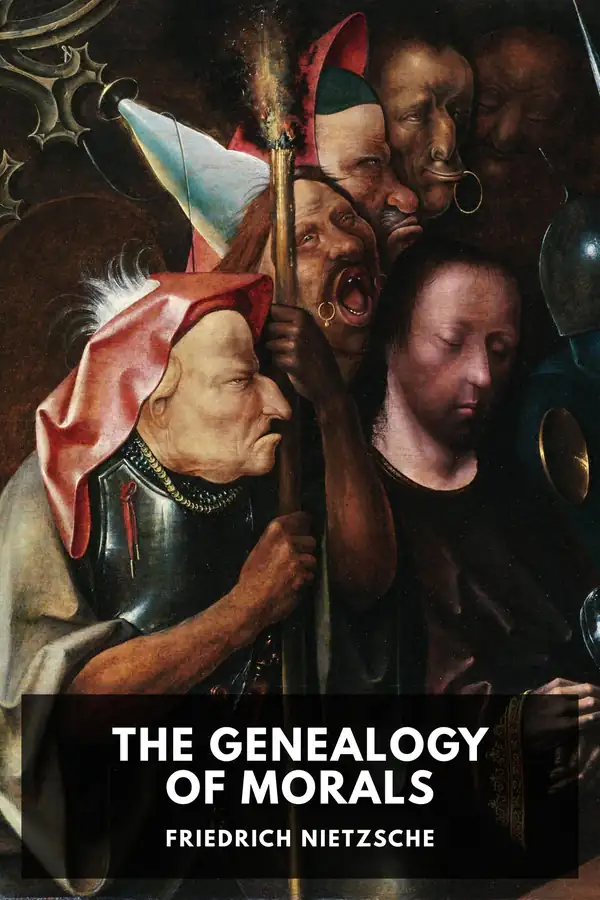
The Genealogy of Morals
📖 Click to Read the Opening Pages Online Preview
‘We are unknown, we knowers, ourselves to ourselves’ — the opening of the Preface
We are unknown, we knowers, ourselves to ourselves: this has its own good reason. We have never searched for ourselves—how should it then come to pass, that we should ever find ourselves? Rightly has it been said: “Where your treasure is, there will your heart be also.” Our treasure is there, where stand the hives of our knowledge. It is to those hives that we are always striving; as born creatures of flight, and as the honey-gatherers of the spirit, we care really in our hearts only for one thing—to bring something “home to the hive!”
As far as the rest of life with its so-called “experiences” is concerned, which of us has even sufficient serious interest? or sufficient time? In our dealings with such points of life, we are, I fear, never properly to the point; to be precise, our heart is not there, and certainly not our ear. Rather like one who, delighting in a divine distraction, or sunken in the seas of his own soul, in whose ear the clock has just thundered with all its force its twelve strokes of noon, suddenly wakes up, and asks himself, “What has in point of fact just struck?” so do we at times rub afterwards, as it were, our puzzled ears, and ask in complete astonishment and complete embarrassment, “Through what have we in point of fact just lived?” further, “Who are we in point of fact?” and count, after they have struck, as I have explained, all the twelve throbbing beats of the clock of our experience, of our life, of our being—ah!—and count wrong in the endeavour. Of necessity we remain strangers to ourselves, we understand ourselves not, in ourselves we are bound to be mistaken, for of us holds good to all eternity the motto, “Each one is the farthest away from himself”—as far as ourselves are concerned we are not “knowers.”
My thoughts concerning the genealogy of our moral prejudices—for they constitute the issue in this polemic—have their first, bald, and provisional expression in that collection of aphorisms entitled Human, All Too Human, a Book for Free Minds, the writing of which was begun in Sorrento, during a winter which allowed me to gaze over the broad and dangerous territory through which my mind had up to that time wandered. This took place in the winter of 1876–77; the thoughts themselves are older. They were in their substance already the same thoughts which I take up again in the following treatises:—we hope that they have derived benefit from the long interval, that they have grown riper, clearer, stronger, more complete. The fact, however, that I still cling to them even now, that in the meanwhile they have always held faster by each other, have, in fact, grown out of their original shape and into each other, all this strengthens in my mind the joyous confidence that they must have been originally neither separate disconnected capricious nor sporadic phenomena, but have sprung from a common root, from a fundamental “fiat” of knowledge, whose empire reached to the soul’s depth, and that ever grew more definite in its voice, and more definite in its demands. That is the only state of affairs that is proper in the case of a philosopher.
The preview stops after the third paragraph of the Preface. All seventy-eight sections are in the free download below.
Download Full EPUB1887
~52,000 words (estimated)
Approx. 2.9 hours
Standalone
Europe, in the aftermath of the Christian moral tradition
78 numbered sections in 12 groups
EPUB · AZW3 · KEPUB
0.63 MB (EPUB) · 0.64 MB (AZW3) · 0.65 MB (KEPUB)
Public domain in the United States
Project Gutenberg #52319 · Standard Ebooks
The Genealogy of Morals is Nietzsche’s three-essay attack on the assumption that our moral ideas are self-evident. The first essay asks where the pair good and evil came from, and finds two systems instead of one, a morality spoken by masters and a morality invented by slaves. The second follows guilt and bad conscience back to the ledger of debt, and to cruelty turned inward when it could no longer go out. The third asks what the ascetic ideal means, and why a creature that needs a reason to suffer will choose nothingness rather than no meaning at all. The Preface opens with knowers who are unknown to themselves.
The book began as a quarrel. Nietzsche had read Paul Rée’s Origin of the Moral Sensations in 1877, admired it, and then spent a decade answering it; the Preface says as much. He wrote the Preface at Sils-Maria in July 1887, and C. G. Naumann published the three essays in Leipzig that year. The first printing sold badly and the reviews were few, and the fame arrived after the collapse of 1889, through other people’s editions. Wikipedia’s article on The Genealogy of Morality follows the book’s long afterlife. The text is available via Project Gutenberg #52319 and Standard Ebooks.
The Genealogy of Morals by Friedrich Nietzsche: Summary, Characters & Themes
This page is a summary and analysis of Friedrich Nietzsche’s The Genealogy of Morals, published in Leipzig in 1887 by C. G. Naumann. The book is a Preface and three essays, and the essays are built of numbered sections rather than chapters: eight in the Preface, seventeen in the first essay, twenty-five in the second, twenty-eight in the third. Nietzsche had written in aphorisms for most of his career; here he argues at length, and the numbering lets him stop, turn, and begin again without losing the thread. His subject is not a set of rules but a history: where moral values came from, what they cost, and what they are worth.
The First Essay, Good and Evil, Good and Bad, goes after the English psychologists who derived the idea of good from utility. Their account, Nietzsche says, is not a history but a story about forgetting: it takes the valuation for granted and then explains how it was forgotten. His own answer is social and etymological. In the languages he cites, good first meant noble, aristocratic, powerful, and bad meant plain, common, low. The noble man called his own way of living good because it was his; the pathos of distance between him and the common man is the origin of the judgement, and the priest, who could not fight, found another way to rule.
The Second Essay, Guilt, Bad Conscience, and the Like, is about time. How does an animal that forgets learn to promise? Nietzsche’s answer is cruelty: pain was the mnemonic that fixed an obligation in the body, and the morality of custom made man calculable. From the relation of creditor and debtor he takes the word guilt, which in German also means debt, and follows it into the community, into punishment, and into the conscience. Bad conscience is the instinct for freedom that could no longer turn outward, so it turned inward and became the will to torture itself. Its hero is the sovereign individual, who can answer for himself because the long discipline has become his own nature.
The Third Essay, What Is the Meaning of Ascetic Ideals?, is the longest and the strangest. It answers its question with a typology: in artists the ideal means nothing or too much, in philosophers a discipline, in priests their instrument of power. The ascetic priest is the book’s most disturbing figure, a physician who is himself sick and who treats his patients with a poison that keeps them alive. The last pages turn on truth, and on the sciences that believe they have escaped the ideal while standing on its ground. Wikipedia’s article on Friedrich Nietzsche covers the life behind the book, and readers coming to it from the tradition it attacks can follow the argument back to The Republic, where justice is defined in a city rather than in a conscience.
The translation is Horace B. Samuel’s, published in 1907 and still the version most English readers meet. It keeps Nietzsche’s long sentences, his italics and his exclamation marks, and it does not soften the rhetoric. The book sold badly in 1887 and was barely reviewed; Nietzsche collapsed at Turin in January 1889, and the fame arrived afterwards, through editions and arguments made by other people. It has been read since as psychology, as polemic, as diagnosis and as a method. The Prince and the Nicomachean Ethics are the other ends of the same argument about how a life should be judged. The text here follows Project Gutenberg #52319 and the Standard Ebooks edition.
Historical Context
Nietzsche had been a professor of classical philology at Basel before he became a philosopher, and the training is visible everywhere in this book: the First Essay turns on etymology, and its examples are drawn from Greek, Latin, German and Sanskrit. He had read Schopenhauer as a young man and had taken from him the idea that the will is the ground of everything, together with a deep suspicion of pity as a moral value. By 1887 he had broken with Schopenhauer’s resignation and with Wagner’s Christianity, and the books of the middle period had already turned the moral sense into something to be explained rather than obeyed.
The immediate occasion was a small book by Paul Rée, Origin of the Moral Sensations, published in 1877. Nietzsche admired it, then quarrelled with it, and the Preface says plainly that he wrote against it. Rée derived morality from utility, habit and forgetting; Nietzsche wanted a history that could account for the cruelty inside it. He had sketched that history in Human, All Too Human a decade earlier, and the essays of 1887 are the finished version. He dated the Preface at Sils-Maria in July, and C. G. Naumann brought the book out in Leipzig before the end of the year.
The first printing did not sell, and the reviews were few. Nietzsche’s collapse in January 1889, and the work of the friends who edited and promoted his manuscripts, made him famous in the 1890s, and this book travelled with that fame. Its influence on moral philosophy has been long and quarrelsome. It stands behind the genealogy as a method, behind the suspicion that moral concepts have a history, and behind a good deal of twentieth-century psychology; Foucault and Deleuze took the method, and Freud’s generation took the psychology. It is also the book that made the value of truth a question, which is why it still finds the readers it was written for.
Key Characters & Literary Archetypes
- The sovereign individual: The late fruit of the Second Essay’s long discipline: the man who can promise because he is master of himself. His autonomy is measured by what he can guarantee with his own word. Nietzsche gives him a proud consciousness of power and freedom, a feeling of human perfection, and calls him super-moral, since autonomous and moral exclude each other. He is rare, late, and hard to grow; the essay’s whole account of memory and punishment exists to explain how such a creature could be bred.
- The slave: The man of ressentiment, who cannot act and so imagines. His morality begins as a negation: he needs an enemy before he can have a value, and his first invention is evil, which he pins on the noble, the strong, the happy. What the noble calls good he calls a threat, and he renames his own weakness goodness, patience, humility. Nietzsche admires his intelligence and despises his direction: the slave is clever, patient and creative, and the values he made have ruled Europe for two thousand years.
- The ascetic priest: The shepherd of the sick and the most dangerous figure in the book. He is himself ill, and he treats illness with a meaning: he tells the sufferer that his pain is a fault, and the fault a debt, and the debt something he can pay. That interpretation saves man from the void, and deepens the sickness by turning suffering into sin. His power is the will to nothingness in commanding form, and Nietzsche grants him greatness while counting the damage: the priest proves that a meaning can be worse than none.
- The blond beast: The noble predator of the First and Second Essays: the magnificent, roaming animal who takes what he wants and forgets it by morning. Nietzsche uses the figure against the civilized reader, to say that the same beast sleeps under the floor of every orderly society and comes out in war, in punishment and in the founding of states. It is a rhetorical animal rather than a zoological one, and it has been read with suspicion since the mid-twentieth century, which is one reason the phrase is quoted more often than the argument around it.
- The criminal: The debtor who cannot pay. In the Second Essay the criminal is the man who has broken his word, and punishment is the creditor’s claim on his body, staged as a festival. Nietzsche refuses the modern story that punishment was invented by anger or by deterrence: it is older than either, and its oldest form is the pleasure of watching a debt being paid in pain. The criminal is also the figure through whom the essay asks what it means to be made responsible, and what the making cost.
- The knower: Nietzsche’s name for himself and for his readers: the ones who are unknown to themselves. The Preface’s first sentence is their motto, and the whole book is written from inside that ignorance, since the value of knowledge cannot be established by more knowledge. The knower is a hive-builder, a creature of flight who brings everything home to the hive and never asks who is keeping it. At the end of the Third Essay the knower’s honesty becomes the last form of the ascetic ideal, which is the book’s most uncomfortable turn.
Core Literary Themes
- Master morality and slave morality: Nietzsche’s most quoted distinction is also the most misread. Master morality begins with a yes: the noble man calls his own strength good, and whatever is weak, timid and anonymous bad, without needing an enemy. Slave morality begins with a no, and its good is the shadow of an evil it has already invented. The two are not equal parties in a debate; the second is a revaluation of the first, achieved by people who could not act and so thought. The essay’s historical claims are loose, and its psychology is exact.
- Ressentiment and the workshop of ideals: Ressentiment is the imagination of revenge in a person who cannot take it. Nietzsche treats it as a creative force: the weak, denied action, produce values, and their values are the inversion of the strong man’s. The First Essay stages this as a tour of a workshop where ideals are manufactured, and the tour is written as an ironic monologue in the whisperers’ own voice. The point is not that the weak are wicked but that their values are born from a negation, and that a culture which inherits them has inherited the illness with the cure.
- Guilt, debt and bad conscience: The Second Essay’s argument is a piece of wordplay with a history behind it: guilt and debt are the same word in German, and Nietzsche follows the pun into law, religion and the body. Obligation begins as a commercial relation, becomes a moral one, and ends as an inward torture. Bad conscience is what happens when the instinct for freedom is blocked and turns on its owner. The essay’s claim is that the inner life of modern man, with its sense of sin and its bad dreams, is the internalised form of cruelty that once was practised openly.
- The ascetic ideal and the will to nothingness: The Third Essay asks what an ideal that says no to life is doing in a creature that needs to live. Its answer is that the ideal gives suffering a meaning, and that a meaning is worth more to man than happiness. The ascetic priest is the technician of that meaning, and the will to nothingness is his creed: not a wish to die, but a will that has turned against its own conditions. Nietzsche ends by admitting the ideal has no rival, which is why the book’s last sentence describes the human animal rather than promising anything.
- The will to truth and the death of the Christian God: The book closes on a question it has been circling: what is the value of truth? Science thinks it has escaped religion, but it rests on the same unconditional faith that truth is worth more than appearance, and that faith is the residue of the ascetic ideal. Nietzsche’s answer to what has conquered the Christian God is Christian morality itself, whose honesty finally turned on its own beliefs. The alternative he leaves open is art, which is allowed to will illusion. It is the most modern argument in the book, and the least resolved.
Why Download Our Custom E-Reader Edition of The Genealogy of Morals?
Because the book is short and it is complete. Seventy-eight numbered sections, a Preface and three essays, with nothing cut and nothing modernised: Horace B. Samuel’s translation, the italics, the exclamation marks and the long sentences as he set them. The text is the Standard Ebooks edition, prepared from the Project Gutenberg transcription, and it is checked against the section numbering of the printing, so the divisions you see on this page match the file you download.
The argument is difficult in the way that a good argument is difficult, and it rewards a reader who can stop, go back and check a claim. Having the whole text in one file makes that easier than reading it in excerpts: the First Essay’s etymology, the Second Essay’s account of punishment and the Third Essay’s typology of the ascetic ideal are meant to be read against one another. If you want to compare a passage with the source transcription, Project Gutenberg #52319 is the obvious place to look, and the two texts agree section by section.
Read it beside this page rather than instead of it. The summary, the notes on the recurring figures and the context above are meant to be useful before and after the essays, not to replace them, and the chapter summaries stop short of the last pages. The book has no plot to spoil, only an argument to follow, and it reads differently the second time, when the rhetorical machinery is visible and the questions are still open.
- Based on the Standard Ebooks Edition, via Standard Ebooks, whose editors prepared this text from the Project Gutenberg transcription and checked it against scans of the 1887 printing; the section numbering used in the summaries below is theirs, so the divisions on this page match the file you download.
- Complete text in seventy-eight sections The Preface and all three essays, entire, with the numbered sections kept as Nietzsche left them, and no abridgement, no modernised spelling and no silent rewriting of the harder sentences.
- EPUB, AZW3 and KEPUB One download per format, so the book opens on Kindle, Kobo, Apple Books and every other reader without conversion, with a table of contents that works on all of them, including older devices that dislike nested navigation.
- Free and DRM-free Public domain in the United States, with no account, no sample chapter and no lock on the file; download it once and it is yours to keep, to move between devices and to reread, with nothing to renew and nothing to lose.
- The Republic — free EPUB, AZW3 & KEPUB
- The Prince — free EPUB, AZW3 & KEPUB
- Nicomachean Ethics — free EPUB, AZW3 & KEPUB
Chapter summaries
Seventy-eight numbered sections in four parts, from the Preface of 1887 to the last page of the Third Essay; these twelve summaries follow the essays in order.
- Preface, sections 1–8 — The knowers and their unknown selves: The book opens with a confession: we knowers are unknown to ourselves, and the search for knowledge has kept us from the one thing we were looking for. Nietzsche then recounts how the problem of good and evil took hold of him at thirteen, how he gave up a supernatural answer for a historical one, and how Paul Rée’s little book of 1877 provoked him into writing. The Preface ends at Sils-Maria in July 1887, with a warning that his aphorisms are meant to be ruminated rather than read.
- First Essay, sections 1–5 — Good and evil, good and bad: Nietzsche begins with the English psychologists, who explained the idea of good as the residue of utility, habit and forgetting. Their history is not a history: it assumes the judgement rather than explaining it. The real origin of good, he argues, is the noble man’s affirmation of himself, and the pathos of distance between him and the common. The evidence is etymological: good means noble, aristocratic, pure, while bad means plain and low. A priestly aristocracy pushes the same logic towards pure and impure.
- First Essay, sections 6–10 — The slave revolt in morals: Priestly valuation branches off from knightly valuation and turns the pair good and bad into good and evil. The people, the slaves, the herd have won, Nietzsche says, and the essay sets out to explain how. The slave revolt in morals begins when resentment becomes creative: the weak man, who cannot act, imagines a revenge and calls it justice. His first invention is the evil enemy, and only afterwards the good man, who is himself. The noble man’s bad is a lesser thing than the slave’s evil.
- First Essay, sections 11–17 — Ressentiment and the workshop of ideals: These are the book’s most quoted and most dangerous pages: the blond beast, the predator at the heart of noble society, and then the long ironic monologue of the men of ressentiment, who whisper in the workshop where ideals are manufactured. Impotence becomes goodness, baseness becomes meekness, and the kingdom of heaven is the revenge of the last. The essay closes with the thousand-year fight between Rome and Judaea, between good and bad and good and evil, and a note calls on philologists and physiologists to take the questions further.
- Second Essay, sections 1–7 — The animal that can promise: The Second Essay starts from a strange task: to breed an animal that can promise. That means memory, and memory was made with pain, since only what hurts stays. Nietzsche describes the morality of custom, the sovereign individual who is the late fruit of that discipline, and then the creditor and debtor relation in which the word guilt, which also means debt in German, has its cradle. Justice, punishment and the pleasure of cruelty are worked out from that beginning, and the essay refuses every soft explanation of them.
- Second Essay, sections 8–12 — Debt, punishment and justice: The community, like a creditor, holds its members to their obligations, and as it grows stronger it takes offences less seriously. Nietzsche uses that movement to attack the idea that justice began in resentment: justice is a balance between roughly equal powers, and the active man’s justice is not revenge but the making of a measure. He then separates the origin of punishment from its purpose, and lists the uses punishment has been put to, including the making of a memory and the staging of a festival.
- Second Essay, sections 13–18 — The bad conscience: Punishment, Nietzsche says, is a bundle of meanings that history has tied together, and the knot cannot be undone by etymology. He turns to the bad conscience and explains it as an instinct driven inward: when man was shut inside a society and could no longer discharge his aggression outward, he turned it on himself. The founding of the state by conquerors, the beast of prey who imposes form on a formless people, belongs to the story, and the essay insists that the change was not gradual and not voluntary.
- Second Essay, sections 19–25 — Guilt before the gods: Bad conscience is an illness, Nietzsche says, but an illness like pregnancy. The essay follows the debt to the gods, from the clan’s ancestors to the one God whose creditor is mankind, and finds in that relation the origin of the consciousness of sin. The last sections look back over the argument and ask whether an ideal has been set up or pulled down, and the essay ends by refusing to answer, on the ground that the answer belongs to a stronger age than the present one.
- Third Essay, sections 1–6 — What the ascetic ideal means: The Third Essay opens with an epigraph from Zarathustra and the question of the whole book: what does the ascetic ideal mean? Nietzsche answers with a list, nothing in artists, a discipline in philosophers, a seduction in women, a weapon in priests, a form of madness in saints, and then tests the list on Wagner, who turned to chastity in old age. The artist, he concludes, is never the best witness to his own work, and the ascetic ideal in art means nothing or too much.
- Third Essay, sections 7–12 — The philosopher and the priest: Philosophers come next. Schopenhauer’s aesthetics, and the ascetic habits that made his thinking possible, are examined with respect and without mercy: the philosopher’s celibacy and poverty are conditions of his work, not proofs of his virtue. From there Nietzsche turns to the ascetic priest, and the question stops being a curiosity and becomes serious, because the priest is the one who gives the suffering herd a meaning. The priest’s will is a will against life, and it is still a will.
- Third Essay, sections 13–19 — The priest as physician: The ascetic priest is a physician who is himself sick, and his remedies are the book’s darkest comedy: he deadens feeling, prescribes mechanical work and small joys, organises the herd, and then, for the harder cases, produces emotional excess. Guilt is his great instrument, and sin is his masterpiece, the interpretation that turns suffering into a debt and a fault. Nietzsche does not deny that the treatment works; he says that it makes the patient more ill, and that its history is written in the great hysterias of Europe.
- Third Essay, sections 20–28 — Sin, science and the will to nothingness: The essay closes with the moderns. Science believes it has escaped the ascetic ideal, but it rests on the same overvaluation of truth, and the will to truth is the ideal’s own kernel. Art, which sanctifies appearance, is the truer opponent. The last pages ask what has triumphed over the Christian God and answer with Christian morality itself, whose honesty has turned against its own beliefs. The book ends with the sentence it has been moving towards: man would rather will nothingness than not will at all.
The Genealogy of Morals: Frequently Asked Questions
What is The Genealogy of Morals about?
Do I need to read Nietzsche’s other books first?
What is master morality and slave morality?
What does ressentiment mean?
What is the blond beast?
What is the ascetic ideal?
Which translation is this, and how does it read?
Where can I download the free EPUB, AZW3 and KEPUB?
Part of: Philosophy classics · Victorian books