Roughing It by Mark Twain: Free EPUB, AZW3 & KEPUB Download
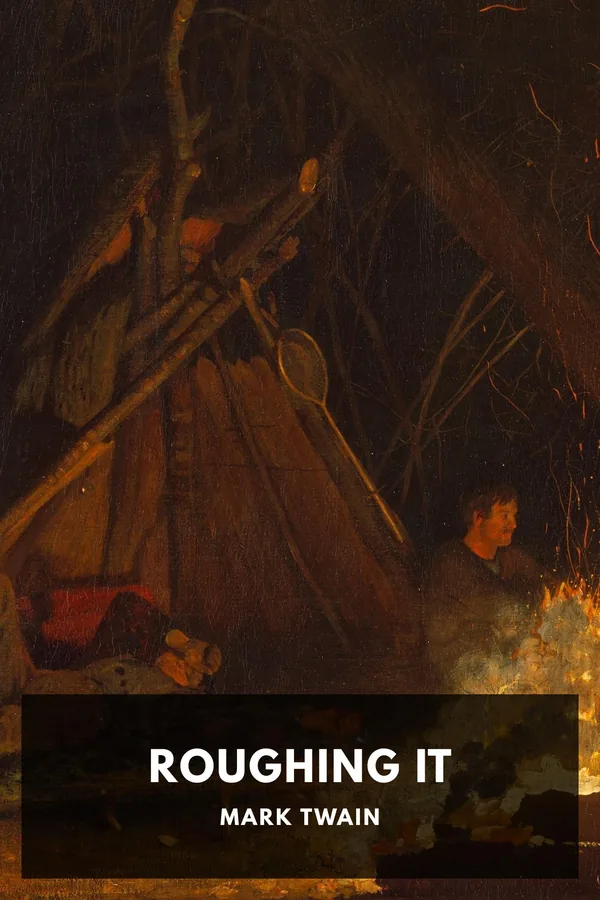
Roughing It
📖 Click to Read the Opening Pages Online Preview
The opening of Chapter 1
My brother had just been appointed Secretary of Nevada Territory-an office of such majesty that it concentrated in itself the duties and dignities of Treasurer, Comptroller, Secretary of State, and Acting Governor in the Governor’s absence. A salary of eighteen hundred dollars a year and the title of “Mr. Secretary,” gave to the great position an air of wild and imposing grandeur. I was young and ignorant, and I envied my brother. I coveted his distinction and his financial splendor, but particularly and especially the long, strange journey he was going to make, and the curious new world he was going to explore. He was going to travel! I never had been away from home, and that word “travel” had a seductive charm for me. Pretty soon he would be hundreds and hundreds of miles away on the great plains and deserts, and among the mountains of the Far West, and would see buffaloes and Indians, and prairie dogs, and antelopes, and have all kinds of adventures, and maybe get hanged or scalped, and have ever such a fine time, and write home and tell us all about it, and be a hero. And he would see the gold mines and the silver mines, and maybe go about of an afternoon when his work was done, and pick up two or three pailfuls of shining slugs, and nuggets of gold and silver on the hillside. And by and by he would become very rich, and return home by sea, and be able to talk as calmly about San Francisco and the ocean, and “the isthmus” as if it was nothing of any consequence to have seen those marvels face to face. What I suffered in contemplating his happiness, pen cannot describe. And so, when he offered me, in cold blood, the sublime position of private secretary under him, it appeared to me that the heavens and the earth passed away, and the firmament was rolled together as a scroll! I had nothing more to desire. My contentment was complete. At the end of an hour or two I was ready for the journey. Not much packing up was necessary, because we were going in the overland stage from the Missouri frontier to Nevada, and passengers were only allowed a small quantity of baggage apiece. There was no Pacific railroad in those fine times of ten or twelve years ago-not a single rail of it.
I only proposed to stay in Nevada three months-I had no thought of staying longer than that. I meant to see all I could that was new and strange, and then hurry home to business. I little thought that I would not see the end of that three-month pleasure excursion for six or seven uncommonly long years!
I dreamed all night about Indians, deserts, and silver bars, and in due time, next day, we took shipping at the St. Louis wharf on board a steamboat bound up the Missouri River.
The excerpt runs from the opening of Chapter 1 and stops at the departure from the St. Louis wharf, where the narrator still thinks the trip will last three months.
Download Full EPUB1872
~165,000 words (estimated)
Approx. 9.1 hours
Standalone
Missouri, Nevada, California and the Sandwich Islands, 1861–1866.
Seventy-nine chapters in thirteen groups
EPUB · AZW3 · KEPUB
0.87 MB (EPUB) · 1.02 MB (AZW3) · 0.93 MB (KEPUB)
Public domain in the United States
Project Gutenberg #3177 · Standard Ebooks
Roughing It is Mark Twain’s record of the six or seven years he spent in the American West and the Sandwich Islands, published in 1872. He crosses the plains by Overland stage in 1861 as his brother’s private secretary, survives the tall tales of drivers and station-keepers, watches the pony riders pass, and reaches Carson City. Then come the silver mills at Esmeralda, claims on the Comstock, a blind lead that makes him a millionaire for ten days, and the reporter’s desk at the Virginia City Territorial Enterprise. The book ends at the crater of Kilauea and on a lecture platform in San Francisco.
Twain built the book out of newspaper letters and notebooks, and it keeps the looseness of that origin: anecdotes, set pieces, burlesque history and long stretches of plain reportage follow one another without much plot. Later readers have taken it as the best account of the Comstock in its flush times and as the book in which his platform manner was worked out. Wikipedia’s entry on the book covers its publication and its place among the travel books. The text is available via Project Gutenberg #3177 and Standard Ebooks.
Roughing It by Mark Twain: Summary, Characters & Themes
Roughing It is Mark Twain’s account of a pleasure trip that would not end, published in 1872 and still the liveliest picture of the American West in its silver years. This page gives a summary and analysis of the whole book, a chapter guide, the historical setting and the running jokes. Twain left for Nevada in 1861 as his brother’s private secretary, meaning to stay three months; he stayed six or seven, and the narrative follows him from the Missouri river to Carson City, into the quartz mills of Esmeralda, onto the staff of the Virginia City Territorial Enterprise, and at last to the Sandwich Islands. The narrator is the young Mark Twain of the newspaper years, and the bracketed footnotes are signed ‘M. T.’
The book opens with a prefatory note in which the author promises a personal narrative and claims, with a straight face, to be handing on information about the rise of the silver-mining fever. Seventy-nine numbered chapters follow, headed with Roman numerals and nothing else, and the volume closes with a short Moral and three appendices on Mormon history, the Mountain Meadows massacre and a Gold Hill editor’s account of an assault. There are no chapter titles in the text, and this edition keeps the plain numbering, so the names in the guide below are ours. Readers who want the novel that grew out of the same years should try Tom Sawyer, written a few years later and set on the Mississippi.
The first third is a road book. The coach is ‘an imposing cradle on wheels’, the stations are adobe huts with tin washbasins and condemned army bacon, and the passengers include a woman who talks all night and a young man named Bemis who is chased up a tree by a wounded buffalo. Twain reports the scenery and the discomfort with the same relish, and he stops for the set pieces that made his name: the coyote as ‘a living, breathing allegory of Want’, the driver kings of the Overland, the pony rider with the flake of white foam on the mail sack, and the division-agent Slade, feared west of Fort Kearney ‘a great deal more than the Almighty’. The mixture of reportage and invention here set the pattern for A Connecticut Yankee in King Arthur’s Court, which drops nineteenth-century machinery into an older world and lets it make its own jokes.
Then the book becomes a mining book and a newspaper book. Twain takes up claims he cannot work, lives on assessments, learns the stamps and pans of a six-stamp quartz mill, and misses his one great chance when a note from his partner lies unread on the cabin floor for nine days while he nurses a sick friend at a ranch; the blind lead is relocated at midnight on the tenth day, and he is worth a million dollars for ten days and nothing afterwards. The Virginia City chapters are the best thing in the book: the flush times, the nabobs, Buck Fanshaw’s funeral, the desperadoes who fill the first twenty-six graves, and the Territorial Enterprise, where an editor named Goodman tells him never to write ‘we learn’ but to ‘go to headquarters and get the absolute facts’. Out of that newsroom came the western voice of Huckleberry Finn.
The last third crosses the Pacific. Sent to the Sandwich Islands to write letters for the Sacramento Union, Twain describes Honolulu, the legislature, a royal funeral, the crater of Kilauea by night, the lava floor by lantern, Captain Cook’s death at Kealakekua and the City of Refuge at Honaunau, and he closes with a lecture tour of Nevada and California, a practical joke played on him by highwaymen, and the voyage home by the Isthmus. The book sold well and has stayed in print because it is funny on nearly every page and accurate about nearly everything. This edition follows the Standard Ebooks text of the 1872 American printing, and the whole of it can be read at Project Gutenberg as well.
Historical Context
Nevada in 1861 was a new territory cut out of Utah. Twain’s brother had just been appointed its Secretary, and the book opens with the pair travelling west to take up an office that paid eighteen hundred dollars a year. The silver lodes had been found in 1858, Californians had poured in, and a territorial government had been improvised before Congress acted; its machinery, as Twain describes it, was a stone building lent rent free by Abe Curry, a canvas partition charged to the Secretary’s salary, and a legislature that sat sixty days and passed toll-road franchises until every citizen owned about three franchises. Virginia City sat on the Comstock lode, seven thousand feet up Mount Davidson, and half its population worked underground.
The distance from St. Joseph to Sacramento was about nineteen hundred miles, the schedule allowed eighteen or nineteen days and the coaches sometimes made it in fifteen, and the line was divided into divisions of two hundred and fifty miles, each with an agent who carried a navy six-shooter and occasionally used it. The pony express charged five dollars a letter, changed horses every ten miles and rode fifty miles at a stretch; the telegraph was going up along the same road as Twain passed, and a message went ahead of his coach to Governor Nye at Carson City. The emigrant trains he overtakes had walked eight weeks over ground the stage covered in eight days.
The Sandwich Islands in these years were a kingdom in decline. Twain arrives on the propeller Ajax in the middle of winter, finds Honolulu a town of twelve or fifteen thousand people, and reports on a legislature sitting in a coral-and-adobe capital, a court with two hundred and thirty uniformed soldiers who were mostly brigadier-generals, the missionaries’ war on the hula, and a royal funeral that turned the town out. He gives the native population as fifty-five thousand against four hundred thousand in Captain Cook’s estimate. The months he spent there produced a stream of letters for the Sacramento Union, and he drew on them for years afterwards.
Key Characters & Literary Archetypes
- The narrator: Twain’s younger self, travelling west in 1861 as a private secretary with nothing to do and no salary, then a pocket miner, a mill hand, a reporter and a correspondent. He is vain, lazy, easily gulled and good company, and he lets the joke land on himself: he buys a horse that bucks him off, loses a million dollars by missing a note, and stands in a snowy road with his hands up while a highwayman explains what he wants. The footnotes signed ‘M. T.’ are his.
- Slade: The division-agent of the Overland, the most feared man on the road, with twenty-six dead people to account for. Twain breakfasts with him, is politely poured the last of the coffee, and then prints the vigilante narrative of his end: the People’s Court, the writ torn up, the miners marching six hundred strong, and the hanging at the corral while his wife rides twelve miles too late. He is the book’s one study in real violence, set beside the comic desperadoes of Virginia City.
- Brigham Young: The Mormon leader whom Twain visits in Great Salt Lake City, and the only man in the book who governs. Twain calls Utah an absolute monarchy and Brigham Young its king, gives him the last word in the interview about the overland telegraph (‘carry them out to the letter, if it makes paupers of you!’), and treats him with a respect unusual in the book’s comedy. The appendix on Mormon history is a good deal angrier than the chapter, and the difference is worth noticing.
- Mr. Higbie: Twain’s partner in the Esmeralda and Mono Lake chapters, a miner who knows the country and believes in the cement mine. He is the one who crawls down the shaft at the Wide West, recognizes the rock and shouts that it is a blind lead, the claim that makes them both millionaires for ten days. He is away when it lapses, and his note, thrown through the broken window, lies unread on the floor. Twain’s last word about him is a letter from a California camp, where Higbie thinks he can raise twenty-five hundred dollars and means to go into fruit.
- Scotty Briggs: A Virginia City fireman sent by ‘the boys’ to arrange Buck Fanshaw’s funeral, and the book’s great turn on frontier speech. In his red flannel shirt and fire helmet he asks the Eastern divinity student whether he is ‘the duck that runs the gospel-mill next door’, explains that the deceased has ‘gone up the flume’, and threatens to lick any man who will not attend. He ends, years later, as the only convert the Virginia roughs ever gave to religion.
- Dick Baker: A pocket miner of Dead-Horse Gulch, met in the Tuolumne hills, who talks about his cat Tom Quartz as if the animal were a colleague. Tom Quartz has more natural sense than any man in the camp, despises quartz mining, and after being blown a mile and a half into the air by a blast refuses to go near a burning fuse. Baker’s monologue is the purest specimen in the book of the tall tale told in dialect by a man who does not know he is funny.
Core Literary Themes
- The tall tale and the professional liar: Roughing It is full of men who improve on the truth, and the book is candid about it: if Bemis was not a liar, the narrator says, he only missed it by the skin of his teeth. Eckert in Siam lies about a cat that eats coconuts, the old Admiral manufactures a whaling history out of a magazine, Markiss in Lahaina caps every story with a bigger one, and Jim Blaine never reaches the point of his grandfather’s ram at all. The joke is never simply that the liars lie. It is that the listener wants the story, and that a good lie is a social accomplishment, which is also Twain’s own position as he writes.
- Silver, credit and the arithmetic of hope: The mining chapters are a comedy of paper wealth. Claims are held by doing ten days’ work, feet of stock pass as money, assessments arrive instead of dividends, and an assayer can be ruined by a piece of grindstone that assays at a thousand dollars a ton. Twain is honest about his own part in it: he takes up claims he never works, buys feet on the strength of a newspaper notice, and loses the blind lead because he is nursing a sick friend nine miles away. The blind-lead chapter is the book’s central parable, and its moral, that a fortune you never quite had is still worth boasting about, is delivered with a straight face.
- Violence and the law: Nevada in the flush times went armed, and the book is a catalogue of what that meant: the first twenty-six graves in the Virginia cemetery were filled by murdered men, a person was not respected until he had killed his man, and the jury system, as Twain describes it, set aside every juror who had read a newspaper. Against Slade, who is genuinely dangerous, he sets the swaggering restaurant desperado with his filed teeth and his private graveyard, and against both he sets Captain Ned Blakely, who hangs a man from a yardarm with a Bible in one hand and a rope in the other.
- Journalism as an education: The Territorial Enterprise chapters are the hinge of the book. Goodman’s rule, never write ‘we learn’ or ‘it is reported’ but go to headquarters and get the absolute facts, is quoted approvingly by a man who has just described inventing sixteen hay trucks out of one, and the irony is the point: the reporter learns the form of the fact before he has any facts to put in it. The newspaper extracts reprinted later, with their shootings and inquests, show the raw material, and the hoaxes Twain practised on his readers show what he learned to do with it.
- Landscape and the comic sublime: Twain can write landscape when he wants to: Lake Tahoe at dawn, the Sink of the Carson, the alkali plain, Mono Lake under its belt of flies, and the crater of Kilauea at night. Then he deflates it. The finest description in the book ends with ham and eggs, the sublime view from Haleakala leaves him looking up at his scenery instead of down, and the traveller who has just seen the most beautiful sight in the Pacific complains about the arithmetic of a waterfall. The deflation is not a failure of feeling. It is the method, and it is why the serious passages survive the jokes.
Why Download Our Custom E-Reader Edition of Roughing It?
Roughing It has been reprinted continuously since 1872, and most cheap editions are set from whatever copy was nearest to hand. The text is long, the chapters carry no titles, and the tall tales are easy to cut; a shortened version loses the accumulation that makes the book work. This edition follows a prepared text of the 1872 American printing, with the prefatory note, the Moral, the three appendices and the chapter numbering intact, so a reader can move from the summary above to the passage itself without wondering which version is being quoted.
The arrangement of this page follows the book’s own divisions. The seventy-nine chapters are gathered into thirteen groups that trace the journey: the stage road, Salt Lake, Lake Tahoe, the claims, the mill, Virginia City, California, the islands, the lecture tour. Each group is short enough to read before the chapters, and the guide says where the famous set pieces sit, from Bemis’s buffalo and the pony rider to Buck Fanshaw’s funeral, the blind lead, Jim Blaine’s ram and the crater at night.
Because the book is out of copyright, the whole text can be compared for free. The complete Roughing It is at Project Gutenberg, where it can be read online or downloaded as plain text, and setting a passage from this edition beside it takes only a minute. The chapter divisions, the footnotes signed ‘M. T.’ and the appendices are the same, which is the point of using a prepared text rather than a scan.
- Based on the Standard Ebooks Edition, via Standard Ebooks, whose text is prepared from the Project Gutenberg transcription and checked against scans of the 1872 printing; the chapter numbering and the byline follow that edition.
- A guide to the whole book, not only the famous episodes Thirteen chapter groups cover all seventy-nine chapters, and the mining, the newspaper years and the islands get as much room as the buffalo hunt and the pony rider, which is how Twain himself balances the book.
- History kept in its own section The page separates what Twain says from what later writers add, so the summary never attributes to the book a fact that is not in it.
- Clean text for e-readers The EPUB, AZW3 and KEPUB files are built from the same prepared text, with working contents links and the author’s footnotes in place.
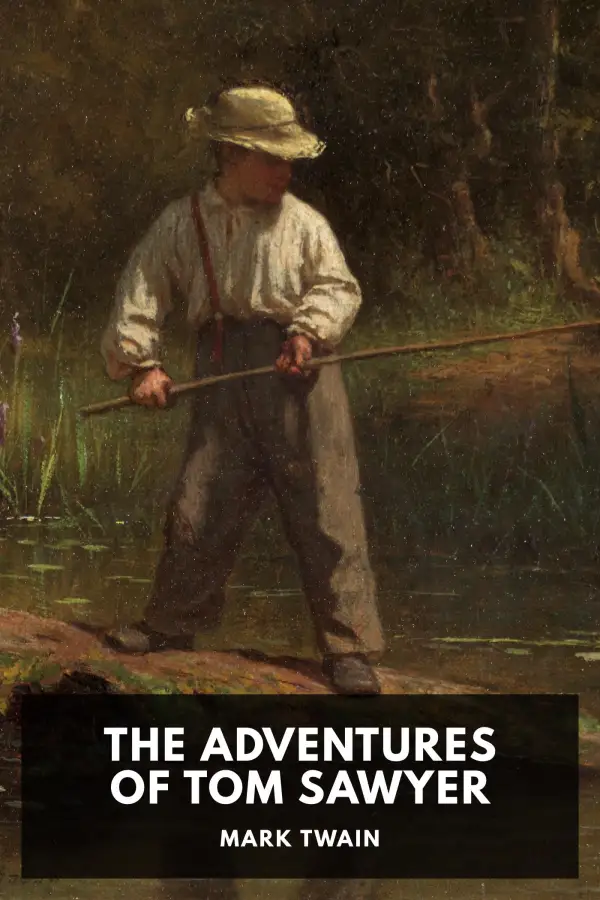
- The Adventures of Tom Sawyer — the novel that followed, in which Twain turned the river childhood behind these western years into fiction. — free EPUB, AZW3 & KEPUB
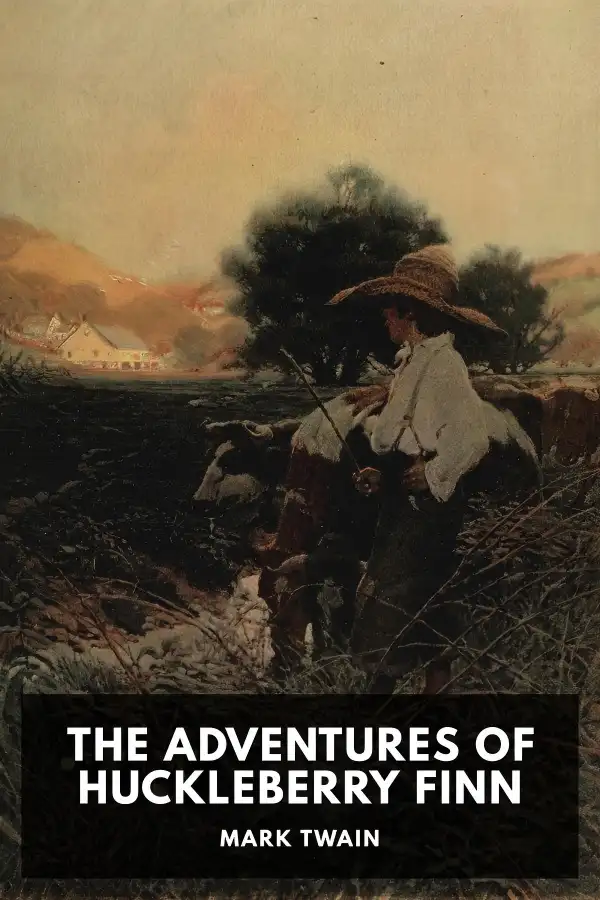
- Adventures of Huckleberry Finn — the novel in which the reporter’s eye and the liar’s tongue of the Enterprise years became a first-person voice. — free EPUB, AZW3 & KEPUB
- A Connecticut Yankee in King Arthur’s Court — Twain’s next experiment in dropping nineteenth-century machinery into an older world, told by another talkative narrator. — free EPUB, AZW3 & KEPUB
Chapter summaries
The Standard Ebooks edition prints the prefatory note, seventy-nine numbered chapters headed only with Roman numerals, a short Moral, and three appendices on Mormon history, the Mountain Meadows massacre and a Gold Hill editor’s account of an assault. There are no chapter titles in the text; the names below are ours.
- Chapters 1–5 — The overland stage from St. Joseph: Twain’s brother is appointed Secretary of Nevada Territory, and Twain goes along as his private secretary, meaning to stay three months. They take a steamboat up the Missouri to St. Joseph, pay a hundred and fifty dollars each for seats in the Overland coach, and are allowed twenty-five pounds of baggage apiece. The thoroughbrace breaks before dawn on the road, the stations turn out to be adobe huts with tin washbasins and condemned army bacon, and the long apprenticeship in discomfort begins.
- Chapters 6–11 — Buffalo, the pony rider and Slade: At Overland City the coach gives way to a mud-wagon, and the mud-wagon to a buffalo hunt in which Bemis is chased up a tree by a wounded bull and afterwards tells a story about the bull climbing after him. Then the pony rider sweeps past with the mail, and the book turns to the Indian country, the murdered driver, and Slade, the division-agent who has killed twenty-six men and is hanged by vigilantes in Montana.
- Chapters 12–17 — Salt Lake City and the Mormons: A Mormon emigrant train that has walked eight weeks is passed in a morning; the coach crosses South Pass, Green River and the Echo Canyon, and comes down into Great Salt Lake City. Twain interviews Brigham Young, admires the straight streets and the water running in every one of them, reads the Mormon Bible and calls it chloroform in print, and leaves after two days with the story of the Mountain Meadows massacre and a supply of ham, bread and hard-boiled eggs.
- Chapters 18–23 — The desert, Carson City and Lake Tahoe: The road crosses the alkali desert and the Great American Desert, passes the Goshoot Indians, whom Twain calls the wretchedest type of mankind. The twentieth day brings Carson City, a wooden capital of two thousand people, where Twain lodges behind muslin partitions and the Governor sets the Irish Brigade to survey a railroad to the Atlantic. Then Tahoe, a timber claim, and a brush house that burns.
- Chapters 24–28 — A horse, a government and the silver fever: Twain buys a Genuine Mexican Plug for twenty-seven dollars and is bucked off, a lesson in the price of hay. The book then explains how Nevada was carved out of Utah, how the territory was governed on borrowed stone and canvas partitions, and how the silver fever took hold: Gould and Curry rising from three hundred to eight hundred dollars a foot while a correspondent promised the richest mineral region on God’s footstool. Four men set out for Humboldt with a wagon, two miserable horses and eighteen hundred pounds of provisions.
- Chapters 29–35 — Claims, a flood and a snowstorm: They take up the Monarch of the Mountains, sink twelve feet of shaft, and resign; then a tunnel, with the same result. A flood at Honey Lake Smith’s inn strands them for eight days with a drunk named Arkansas and a Swede who knows one song; the Swede walks off into the snow and is never heard of again. Lost in a blizzard without matches, they say their goodbyes and prepare to freeze, then learn that the station is fifteen steps away. The next chapter tries the case of a ranch that slid downhill onto its neighbour.
- Chapters 36–41 — The quartz mill and the blind lead: Twain goes to work in a six-stamp mill at ten dollars a week, feeds the stamps, watches the weekly cleanup, and learns how an assay is done, along with the story of the assayer ruined by a piece of grindstone. He joins the hunt for the Whiteman cement mine and holidays at Mono Lake, and then, at the Wide West, Higbie crawls down a shaft, recognizes the rock and shouts that it is a blind lead. They claim six hundred feet, plan a house on Russian Hill, and lose everything when the claim is relocated at midnight on the tenth day.
- Chapters 42–47 — The Enterprise and the nabobs: Out of money and out of mining, Twain takes a job as city editor of the Virginia Daily Territorial Enterprise at twenty-five dollars a week, and learns to report: courts, bullion returns, cleanups and inquests, with an inquest about every day. The flush times arrive, Virginia City roars, and the chapters that follow are the best in the book: the reporters paid in feet of stock, the Sanitary Fund flour sack auctioned for a hundred and fifty thousand dollars, and the teamsters who became nabobs overnight.
- Chapters 48–53 — Desperadoes, a literary paper and the mines: The first twenty-six graves in the Virginia cemetery were occupied by murdered men, and Twain explains the jury system that let their killers go. Buck Fanshaw’s funeral produces Scotty Briggs and the gospel-mill, a literary weekly produces a novel wrecked by a drunken contributor, and Twain prints his own ballad in its place. Then a sober chapter on the Comstock in 1863, with five hundred miners in one mine and twenty-five million dollars of bullion, and Jim Blaine’s story of his grandfather’s old ram, which never arrives.
- Chapters 54–59 — Chinatown, California and the crash: Twain describes the Chinese quarter of Virginia City, the opium and the lotteries. Goodman leaves him in charge of the paper for a week and he resigns after six days, a silver-mine sale takes him to San Francisco, and on the way he sees the flag over Mount Davidson glowing at night because a telegraph operator had learned that Vicksburg had fallen. California is summer, the mining towns are dead, the stock market breaks, and he loses a three-million-dollar mine by missing a ship. Then the Golden Era and two months of slinking with a single ten-cent piece.
- Chapters 60–66 — Pocket mining and the Sandwich Islands: Twain goes back to the Tuolumne hills to look at pocket mining, listens to Dick Baker on his cat Tom Quartz, and ends the California chapters with a glossary of miners’ words. Then he is sent to the Sandwich Islands to write letters for the Sacramento Union, sails on the propeller Ajax with an old whaling admiral who has been at sea sixty-one years, and lands at Honolulu. The chapters that follow are a holiday: Diamond Head, the cantering girls, poi and awa, the legislature, the mimic court and the funeral of the King’s sister.
- Chapters 67–73 — The court, Captain Cook and the City of Refuge: Twain sits through the Hawaiian legislature, describes the royalty and the two hundred and thirty soldiers who are mostly brigadier-generals, and reports a royal funeral with its kahilis. Then he crosses to Hawaii itself, rides through the Kona country, meets a mad preacher with a Greeley letter about turnips, visits Kealakekua Bay where Captain Cook was killed, and paddles to the City of Refuge at Honaunau, where a murderer was safe once inside the wall.
- Chapters 74–79 — Kilauea, Maui and the lecture tour: The crater of Kilauea by night, the descent to the lava floor with a lantern and a stranger named Marlette, and a ride round the island of Hawaii on a ten-dollar mule; then Maui, the Iao valley and the sunrise from the rim of Haleakala, and a man in Lahaina who caps every story with a bigger one. Twain sails home, gives his first lecture in San Francisco, is held up by masked highwaymen who turn out to be friends, and goes back east by the Isthmus. The Moral and the three appendices follow.
Roughing It: Frequently Asked Questions
Is Roughing It a novel or a memoir?
How much of Roughing It is true?
What was the Overland stage route?
Who was Slade?
Why did Twain go to Nevada?
What happens in the Sandwich Islands chapters?
Where do the famous episodes sit?
Where can I get the free EPUB, AZW3 and KEPUB files?
Part of: Classic Fiction · Victorian era