Mansfield Park by Jane Austen: Free EPUB, AZW3 & KEPUB Download
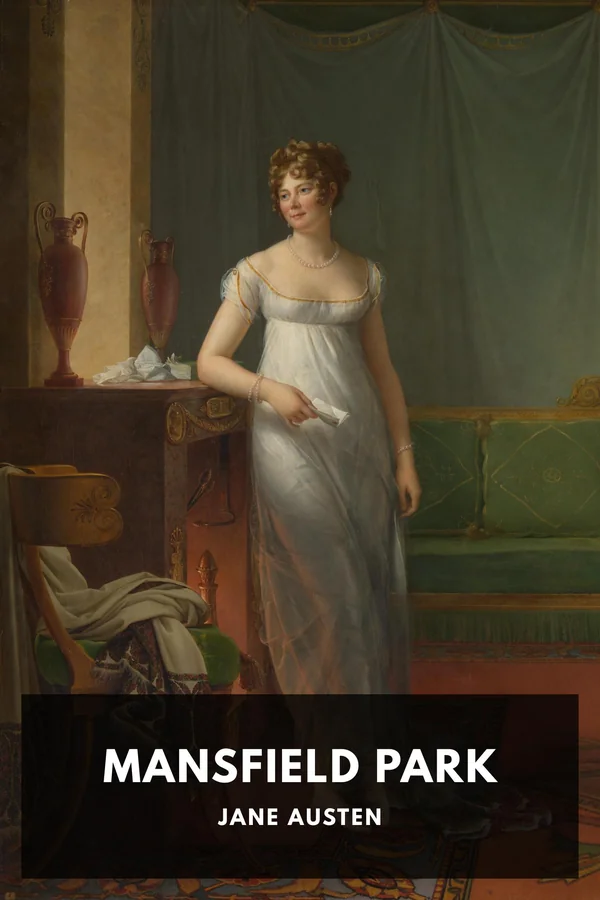
Mansfield Park
📖 Click to Read the Opening Pages Online Preview
About thirty years ago: the opening of Mansfield Park
About thirty years ago Miss Maria Ward, of Huntingdon, with only seven thousand pounds, had the good luck to captivate Sir Thomas Bertram, of Mansfield Park, in the county of Northampton, and to be thereby raised to the rank of a baronet’s lady, with all the comforts and consequences of an handsome house and large income. All Huntingdon exclaimed on the greatness of the match, and her uncle, the lawyer, himself, allowed her to be at least three thousand pounds short of any equitable claim to it. She had two sisters to be benefited by her elevation; and such of their acquaintance as thought Miss Ward and Miss Frances quite as handsome as Miss Maria, did not scruple to predict their marrying with almost equal advantage. But there certainly are not so many men of large fortune in the world as there are pretty women to deserve them. Miss Ward, at the end of half a dozen years, found herself obliged to be attached to the Rev. Mr. Norris, a friend of her brother-in-law, with scarcely any private fortune, and Miss Frances fared yet worse. Miss Ward’s match, indeed, when it came to the point, was not contemptible: Sir Thomas being happily able to give his friend an income in the living of Mansfield; and Mr. and Mrs. Norris began their career of conjugal felicity with very little less than a thousand a year. But Miss Frances married, in the common phrase, to disoblige her family, and by fixing on a lieutenant of marines, without education, fortune, or connections, did it very thoroughly. She could hardly have made a more untoward choice. Sir Thomas Bertram had interest, which, from principle as well as pride—from a general wish of doing right, and a desire of seeing all that were connected with him in situations of respectability, he would have been glad to exert for the advantage of Lady Bertram’s sister; but her husband’s profession was such as no interest could reach; and before he had time to devise any other method of assisting them, an absolute breach between the sisters had taken place. It was the natural result of the conduct of each party, and such as a very imprudent marriage almost always produces. To save herself from useless remonstrance, Mrs. Price never wrote to her family on the subject till actually married. Lady Bertram, who was a woman of very tranquil feelings, and a temper remarkably easy and indolent, would have contented herself with merely giving up her sister, and thinking no more of the matter; but Mrs. Norris had a spirit of activity, which could not be satisfied till she had written a long and angry letter to Fanny, to point out the folly of her conduct, and threaten her with all its possible ill consequences. Mrs. Price, in her turn, was injured and angry; and an answer, which comprehended each sister in its bitterness, and bestowed such very disrespectful reflections on the pride of Sir Thomas as Mrs. Norris could not possibly keep to herself, put an end to all intercourse between them for a considerable period.
Their homes were so distant, and the circles in which they moved so distinct, as almost to preclude the means of ever hearing of each other’s existence during the eleven following years, or, at least, to make it very wonderful to Sir Thomas that Mrs. Norris should ever have it in her power to tell them, as she now and then did, in an angry voice, that Fanny had got another child. By the end of eleven years, however, Mrs. Price could no longer afford to cherish pride or resentment, or to lose one connection that might possibly assist her. A large and still increasing family, an husband disabled for active service, but not the less equal to company and good liquor, and a very small income to supply their wants, made her eager to regain the friends she had so carelessly sacrificed; and she addressed Lady Bertram in a letter which spoke so much contrition and despondence, such a superfluity of children, and such a want of almost everything else, as could not but dispose them all to a reconciliation. She was preparing for her ninth lying-in; and after bewailing the circumstance, and imploring their countenance as sponsors to the expected child, she could not conceal how important she felt they might be to the future maintenance of the eight already in being. Her eldest was a boy of ten years old, a fine spirited fellow, who longed to be out in the world; but what could she do? Was there any chance of his being hereafter useful to Sir Thomas in the concerns of his West Indian property? No situation would be beneath him; or what did Sir Thomas think of Woolwich? or how could a boy be sent out to the East?
The letter was not unproductive. It reestablished peace and kindness. Sir Thomas sent friendly advice and professions, Lady Bertram dispatched money and baby-linen, and Mrs. Norris wrote the letters.
The preview stops after the opening paragraphs of chapter 1. All forty-eight chapters are in the free download below.
Download Full EPUB1814
~163,000 words (estimated)
Approx. 9.0 hours
Standalone
Mansfield Park in Northamptonshire and Portsmouth, in the early 1800s
48 chapters in three volumes
EPUB · AZW3 · KEPUB
0.68 MB (EPUB) · 0.84 MB (AZW3) · 0.73 MB (KEPUB)
Public domain in the United States
Project Gutenberg #141 · Standard Ebooks
Mansfield Park is the quietest and most argued-over of Jane Austen’s novels. Fanny Price, a shy niece taken in at ten by her wealthy uncle Sir Thomas Bertram, grows up on the edge of her cousins’ world, grateful, observant and rarely consulted. Then Henry and Mary Crawford arrive from London, bringing charm, ease and a looser morality, and the household begins to shift under them. While Sir Thomas is away in Antigua the young people stage Lovers’ Vows, and Fanny watches her cousins make choices that will cost them. Austen follows her heroine through neglect, temptation and exile to a happiness she has to earn, testing whether patience and principle can hold their ground against charm.
Mansfield Park appeared in 1814, the third of the novels published in Austen’s lifetime, and it has divided readers ever since: some find Fanny priggish, others the most carefully examined conscience in English fiction. Its subject is not courtship alone but education, money and the damage that charm can do. It is the most inward of her six novels, and the one whose moral arithmetic has annoyed and fascinated readers in equal measure. Read Wikipedia’s article on Mansfield Park for the publication history and the long argument about its heroine. The text is available via Project Gutenberg #141 and Standard Ebooks.
Mansfield Park by Jane Austen: Summary, Characters & Themes
This page is a summary and analysis of Mansfield Park, the novel Jane Austen published in 1814, when she was in her late thirties and living at Chawton in Hampshire. It was the third of her novels to reach print, after Sense and Sensibility and Pride and Prejudice, and the first she had written after the move to the cottage there. Its heroine is not witty, not beautiful by the standards of the drawing room and not inclined to assert herself, and the book has been argued over ever since for exactly that reason. Austen gives Fanny Price the smallest share of the talk and the largest share of the judgment, then tests that judgment against people who are far better company than she is. Read Jane Austen’s biography on Wikipedia for the circumstances of her career and the publication of the novel.
Mansfield Park is the estate of Sir Thomas Bertram, a baronet with a wife, four children and an income that is not quite as comfortable as it looks. The novel opens thirty years earlier with the three Ward sisters of Huntingdon: Maria marries Sir Thomas, the eldest marries a clergyman, and Frances marries a lieutenant of marines and is cast off. When the Prices are struggling in Portsmouth, their eldest daughter, ten-year-old Fanny, is brought to Mansfield as a dependent. She grows up beside her cousins Tom, Edmund, Maria and Julia, is snubbed by her aunt Norris and steadied by Edmund. Then the Crawfords arrive, the household puts on a play, and every arrangement in the house is tested.
Fanny is the least dramatic heroine Austen ever wrote, and the novel’s method depends on that. She cannot act, cannot perform, cannot even join a rehearsal without distress; her power is attention. She watches what other people say and remembers it, and the reader is invited to do the same. Austen’s irony works differently here than in Emma, where the joke is at the heroine’s expense: in Mansfield Park the irony is aimed at the charming, and Fanny’s judgments are usually right, which is exactly what has made her unpopular. The book asks whether a person with no money, no beauty and no talent for display can still be the moral centre of a house.
The world of the novel is the world of 1814: a landed estate that pays for everything, a Church of England living that provides for a younger son, a navy that can make a midshipman’s fortune, and a fashionable taste for improving grounds. Edmund’s ordination is treated as a career decision, not a vocation, and Mary Crawford’s objection to the cloth is a social judgment as much as a religious one. Sir Thomas’s money comes from Antigua, and the novel mentions the slave trade once, in a question Fanny asks and nobody answers. The marriage market of Pride and Prejudice is present here too, but Austen has moved the argument from wit to character: what a person will do when no one is watching.
Two centuries of readers have fought over the book. Some have found in Fanny a prig set up for admiration, others a portrait of endurance under real pressure; her defenders point to the novel’s treatment of the Bertrams’ neglect, the Crawfords’ charm and the sheer cost of other people’s mistakes. It has been adapted for film and television, and it remains the Austen novel most likely to divide a book group. Its admirers usually begin by conceding that Fanny is hard to like and end by arguing that this is exactly the point. Persuasion is also on this site, with its own summaries, and the source text used here is the public-domain transcription at Project Gutenberg #141, prepared for reading by Standard Ebooks.
Historical Context
Austen wrote Mansfield Park between 1811 and 1813 at Chawton, in Hampshire, in the middle of the long war with France, and Thomas Egerton published it in May 1814 in three volumes. It came out without her name on the title page, advertised as the work of the author of Pride and Prejudice, and the reviews were respectful and a little puzzled. The war is almost absent from its pages, yet the institutions it paid for are everywhere: a navy that employs William Price, a Church crowded with younger sons looking for livings, and landowners whose incomes come from the West Indies.
Evangelical seriousness was reshaping English manners in these years. The campaigns against the slave trade and against vice had made personal conduct a public question, and the novel’s insistence on principle, on Sunday observance and on self-denial belongs to that climate, though Austen keeps her distance from any party. Edmund’s ordination is treated as a professional choice: he must have a living, and the living depends on patronage. Sir Thomas controls the Mansfield living, Dr Grant holds it, and the doctor’s death at the end of the novel is also Edmund’s promotion. The clergy are not a joke here, as they can be in her other books; they are a career with a moral test attached.
Mansfield Park is a house that must be paid for. Sir Thomas’s income comes from an Antigua sugar estate, and the novel appeared seven years after the Slave Trade Act of 1807 had made the trade illegal in the British Empire while leaving slavery itself intact. Austen mentions the trade once, when Fanny asks her uncle about it, and the conversation moves on. Money is just as visible in the Portsmouth chapters, where a lieutenant’s half-pay and a crowded house make dependence concrete, and in the fashion for improving grounds, which Mr Rushworth pursues at Sotherton on a landscape gardener’s advice and with very little sense.
Key Characters & Literary Archetypes
- Fanny Price: The niece brought to Mansfield Park at ten, the eldest daughter of a Portsmouth lieutenant and a mother who married beneath her family’s hopes. Small, shy and easily tired, she is educated as a poor relation and taught to be grateful for very little. What she has instead is attention: she watches, remembers and judges, and her judgment turns out to be the most reliable in the house. Her refusal of Henry Crawford is the hinge of the novel.
- Sir Thomas Bertram: Master of Mansfield Park and a baronet, a man of principle and of business who runs his family as he runs his estate. He is away in Antigua for much of the novel, and his return ends the theatricals. He means well by his children, but he has taught them to value fortune and appearance, and he cannot see Fanny’s worth until he needs it. His pressure on her to accept Henry Crawford is the hardest test she faces.
- Edmund Bertram: The second son, intended for the Church, and the only Bertram who is consistently kind to Fanny when she arrives. He lends her books, calms her fears and becomes the standard by which she measures other men. His weakness is Mary Crawford: he loves her wit and her beauty and believes he can separate them from her worldliness. His long education in her character, and his slow recognition of Fanny, occupy the last third of the book.
- Mary Crawford: Henry’s sister, brought up in London by an admiral and a fashionable aunt, and the most entertaining woman in the novel. She plays the harp, talks with wit and candour, and is genuinely fond of Fanny while never understanding her. She dislikes the clergy, treats a scandal as a matter of management and cannot imagine a principle that costs anything. Edmund falls in love with her, and the novel’s argument is with her world.
- Henry Crawford: A man of fortune and no profession, who arrives at Mansfield with his sister and amuses himself by making women fall in love with him. He flirts with Maria although she is engaged, then turns to Fanny, half in earnest and half as a game. He is charming, perceptive and capable of better feeling, which is what makes him dangerous. His elopement with Maria destroys what he might have become and settles the fate of nearly everybody.
- Mrs Norris: Lady Bertram’s sister and the widow of the former clergyman, a busy, stingy woman who lives on the edge of Mansfield Park and manages other people’s lives. She takes credit for Fanny’s arrival and then makes her position harder, denies her a fire and a horse, and pushes Maria towards Mr Rushworth. Her favour is a burden and her disapproval a kind of weather. She ends the novel in exile with the ruined Maria.
Core Literary Themes
- Education and self-command: Mansfield Park is a novel about how people are formed. Sir Thomas educates his daughters to be accomplished and marriageable, and Mrs Norris teaches them to think well of themselves; the result is Maria and Julia. Fanny is educated by neglect, by Edmund’s books and by her own conscience, and her self-discipline is shown as an achievement rather than a temperament. Austen asks what a good education actually is, and whether it can be given by people who do not possess it themselves. The answer lies in the novel’s closing words about hardship and discipline.
- Money, inheritance and dependence: Everything in the novel is priced. Mansfield Park is entailed on Tom, Edmund must wait for a living, and Fanny owns nothing but her good behaviour. Henry Crawford’s income makes him welcome everywhere, and Mr Rushworth’s estate buys him a wife. Marriage is a financial arrangement before it is a romantic one, and the book shows how dependence shapes character: Fanny cannot refuse an invitation, and Mrs Norris’s economies are a form of power. Austen never lets the reader forget who is paying for the ball.
- Charm against principle: The Crawfords are the most attractive people in the book, and Austen gives them the best lines. Mary’s wit and Henry’s attentions are real pleasures, and the novel does not pretend otherwise; that is why Fanny’s resistance is difficult and why her refusal costs her so much. The amateur theatricals make the theme visible: everyone in the house is performing a part, and Fanny alone declines to act. Charm is not condemned as false, but it is shown to be insufficient, especially when it is asked to carry the weight of a promise.
- Home, exile and belonging: Fanny is moved between houses for most of the novel: Portsmouth to Mansfield, Mansfield to Portsmouth, and back again. Her room in the East room, cold and seldom used, becomes the place where she keeps her own mind, and the noisy house in Portsmouth teaches her what Mansfield was worth. The book is full of displaced people: the Grants at the parsonage, the Crawfords without a settled home, Maria sent away in disgrace, Mrs Norris in exile. The ending, with Fanny installed at the Mansfield parsonage, is a settlement in the strict sense.
- Silence, observation and judgment: Fanny’s power is that she looks. She sits through the rehearsal, the dinner and the ball, notices what is said and what is meant, and the reader is placed beside her. Austen uses letters, a newspaper paragraph and long stretches of waiting to make judgment the central action of the book, and she lets the reader test Fanny’s conclusions against the evidence she has been given. The narrator’s irony keeps the reader from settling into simple admiration, and the result is a novel that asks to be judged as much as read.
Why Download Our Custom E-Reader Edition of Mansfield Park?
This edition is built for reading, not for a shelf. The text is the Standard Ebooks edition of Austen’s 1814 novel, prepared from the public-domain transcription at Project Gutenberg #141, with the forty-eight chapters in their original order and the chapter breaks left where Austen put them. There is no abridgement, no modernised dialogue and no editorial essay inserted into the middle of a scene. What you download is the novel, set cleanly, with a table of contents that works on an e-reader rather than only in a browser.
The chapters run straight through from one to forty-eight, so the three volumes of the original printing can still be followed without guesswork. The contents list is built for navigation, the paragraphing follows the printed book, and the long letters that carry so much of the plot are set as letters rather than swallowed into the narrative. If you are reading the novel for a course or a book group, the twelve summaries on this page use the same divisions, so the page and the file stay in step.
Three formats are offered because readers are not all using the same device: EPUB for Kobo, Apple Books and most phones and tablets, AZW3 for Kindle, and KEPUB for Kobo’s own reading system. Each file is complete, each has a working table of contents and a cover, and none of them is locked with DRM or tied to an account. Download once, keep the file, and it will still open in ten years.
- Based on the Standard Ebooks Edition, via Standard Ebooks, whose editors prepared this text from the Project Gutenberg transcription and checked it against scans of the printed book; their chapter numbering is the one used in the summaries below, so the divisions on this page match the novel you download. Nothing here is an abridgement, and the spelling and punctuation follow the printed edition rather than a modern resetting.
- Complete forty-eight-chapter text All three volumes are here entire, from the Ward sisters’ marriages to the last paragraph about the Mansfield parsonage, with the letters, the newspaper paragraph and the Portsmouth chapters as Austen wrote them. No chapter is folded into another, no subplot is trimmed for length, and the novel is not smoothed for modern taste. What you get is the book as it was printed in 1814, in one clean file.
- EPUB, AZW3 and KEPUB One file per format, so the novel opens on Kindle, Kobo, Apple Books and most other readers without conversion, with a working table of contents, proper chapter breaks and a cover that survives being sent to a device. The files stay small enough for an old reader and complete enough for a new one, and every chapter is a separate stop in the table of contents.
- Free and DRM-free Public domain in the United States, with no account, no subscription and no lock on the file. Download it once and it is yours to keep, to copy between devices and to reread, with nothing to renew and nothing that expires. There is nothing hidden in the file and nothing to install before it opens.
- Emma — free EPUB, AZW3 & KEPUB
- Pride and Prejudice — free EPUB, AZW3 & KEPUB
- Persuasion — free EPUB, AZW3 & KEPUB
Chapter summaries
Forty-eight chapters in three volumes, from the Ward sisters’ marriages on the first pages to Edmund’s proposal and the move into the Mansfield parsonage. These twelve summaries follow the Standard Ebooks text in order, grouping the chapters where the action runs straight on.
- Chapters 1–4 — the Ward sisters; Fanny arrives: The three Ward sisters of Huntingdon make three very different marriages. Maria captivates Sir Thomas Bertram of Mansfield Park; the eldest marries a clergyman, Mr Norris; and Frances, the prettiest and poorest, marries a lieutenant of marines and is dropped by her family. Years later the Prices’ eldest daughter, ten-year-old Fanny, is taken in at Mansfield as an act of charity. She is homesick, frightened by her cousins and bullied by her aunt Norris, and only Edmund is consistently kind. Mr Norris dies, the Grants take the parsonage, and the Crawfords come to stay.
- Chapters 5–8 — the Crawfords; Sotherton planned: The Crawfords are a success. Mary is beautiful, quick and musical, and her brother Henry is plain at first and then irresistible. Edmund falls in love with Mary and lends her the horse that was meant for Fanny, whose rides and health suffer. Henry flirts with both Bertram sisters, and Mr Rushworth, engaged to Maria, talks of nothing but improving Sotherton. A visit to his estate is arranged, and Mrs Norris arranges everything else, mostly at Fanny’s expense. The novel settles into the rhythm of visits, dinners and small cruelties that Austen uses so well.
- Chapters 9–12 — the day at Sotherton; news from Antigua: The Sotherton party tours the house, the chapel and the grounds. Maria, engaged to Rushworth, walks into the wilderness with Henry Crawford and is left, with Fanny, at the iron gate; Julia’s temper darkens; and Fanny is forgotten on a bench for half an hour. Letters from Antigua then announce that Sir Thomas will return in November, and the household begins to calculate. Tom comes home, the Rushworth wedding settlement is discussed, and the family’s pleasures acquire a deadline.
- Chapters 13–17 — Lovers’ Vows; the casting: Tom brings home the Honourable John Yates, fresh from a collapsed theatrical scheme, and the house catches fire with the idea of acting. They settle on Lovers’ Vows, the casting begins, and Maria and Julia compete for Henry Crawford’s attention through the parts they are given. Edmund objects to the whole business, then takes the role of Anhalt so that a stranger will not play opposite Mary. Fanny is left to copy parts, run messages and watch. Sir Thomas’s absence in Antigua is what makes the scheme possible.
- Chapters 18–21 — Sir Thomas returns; the play abandoned: Rehearsals go on, the curtain is hung and the seats are arranged. Fanny, who has refused to act, is sent on errands and left to worry. Sir Thomas comes home unexpectedly in the middle of a rehearsal, and the play ends where it stands. He is coldly angry, the theatre is taken down, Yates leaves, and Edmund is forgiven more easily than the others. Maria’s wedding to Rushworth goes forward, Julia goes to Brighton with the Rushworths, and Mansfield settles into a stricter order in which Fanny is suddenly visible.
- Chapters 22–25 — Maria married; Henry’s attentions: Maria is married and gone, and Fanny becomes the only young woman in the drawing room. Her consequence rises, Mary Crawford seeks her company, and Henry Crawford, staying on, begins to pay her attentions that are half amusement and half experiment. Edmund is absorbed in Mary and blind to Fanny’s feelings, which have settled into a hopeless love. The household runs on visits, dinners and the parsonage’s hospitality, and Fanny learns to watch the man she loves court a woman who does not believe in his profession.
- Chapters 26–30 — William’s visit; the ball: William Price, now a midshipman, visits Mansfield, and Sir Thomas, pleased with the young man, gives a ball in Fanny’s honour. William brings his sister an amber cross, Mary Crawford presents her with a chain, and Edmund gives her a plain gold chain that fits it. The ball is the happiest night of Fanny’s life and the beginning of her trial, for Henry Crawford’s attentions become serious and Sir Thomas begins to see a match. William’s promotion to lieutenant is hoped for, and the family waits for news.
- Chapters 31–34 — the proposal refused; Edmund returns: The proposal comes on the day the news of William’s promotion arrives. Henry Crawford, who procured the promotion through his uncle’s interest, asks Fanny to marry him, and she refuses. Sir Thomas cannot understand it, Lady Bertram is puzzled, and Henry stays on before leaving; Mary urges the match. Edmund comes back from London, learns what has happened and is surprised, and his own hopes of Mary have weakened. Fanny’s misery deepens, and the household’s approval of Henry becomes a weight she has to carry.
- Chapters 35–38 — the Crawfords leave; the road to Portsmouth: The Crawfords leave Mansfield. Edmund advises his father to say no more to Fanny and let time work, but Sir Thomas decides that she has been too much at Mansfield and sends her to Portsmouth for two months with William. The journey south is cheerful; the arrival is not, for the Prices’ house is crowded, noisy and short of everything, and Fanny’s health suffers. William’s ship, the Thrush, is at Spithead, and he is the one comfort of the visit.
- Chapters 39–42 — Portsmouth; Henry at the Prices’: Portsmouth wears Fanny down: her mother is worn out, her father coarse, the servants impossible and the meals barely edible. William sails, and the weeks stretch. Mary writes about Edmund in London, and Edmund’s silence worries her. Then Henry Crawford arrives at the Prices’ door, walks her to the dockyard and joins the family at chapel and on the ramparts, where he presses her about her health and her return. His attentions are more serious than before, and Fanny’s discomfort grows with her sense that he has improved.
- Chapters 43–45 — Tom’s illness; Julia’s elopement: Mary writes to say that Henry has been in Portsmouth and to defend him, treating the rumours as a misunderstanding. Edmund’s long letter then brings the news that Tom is dangerously ill at Newmarket after a neglected fall and heavy drinking, and that Julia has run away to Scotland with John Yates. Fanny’s distress is doubled by her distance from Mansfield. Lady Bertram’s letters follow, Tom’s danger passes, and Edmund’s letters show his hopes of Mary failing as he sees what she is willing to excuse.
- Chapters 46–48 — the newspaper; Fanny comes home: Mary’s next letter warns Fanny against a scandalous rumour. That Sunday her father reads aloud from the newspaper that Mrs Rushworth has gone off with Mr Crawford, and Fanny understands the full disaster. Mary’s letters show how lightly she takes it; Sir Thomas sends for her; she comes home with Susan. Mansfield is in mourning, Maria is ruined and Mrs Norris goes with her, and Edmund finally breaks with Mary. In the quiet that follows he turns to Fanny, proposes and is accepted; Dr Grant dies, and they move into the parsonage.
Mansfield Park: Frequently Asked Questions
What is Mansfield Park about?
Who is Fanny Price?
Does Fanny marry Edmund?
Why is Mansfield Park considered controversial?
What happens to Maria and Julia?
Why does Sir Thomas go to Antigua?
How does Mansfield Park end?
Where can I download the free EPUB, AZW3 and KEPUB?
Part of: Classic fiction · Victorian era